Category Archives: Microbiology Investigations

USA – How to Report Seafood-Related Toxin and Scombrotoxin Fish Poisoning Illnesses

FDA

To help FDA effectively investigate, remove unsafe seafood products from the market, and develop new prevention strategies, the FDA relies on illness reporting from public health officials and healthcare providers. While most foodborne outbreaks are tracked through the FDA’s Coordinated Outbreak Response and Evaluation (CORE) network, seafood-related illnesses caused by natural toxins have a unique reporting mechanism. This web page provides information on commonly occurring seafood-related illnesses and how to report them to the FDA.  To report an illness from raw bivalve molluscan shellfish, email the FDA at shellfishepi@fda.hhs.gov.

The FDA receives reports of illnesses associated with the consumption of specific types of fish. These illnesses may originate from the activity of certain bacteria, toxins produced by marine algae, or hazards inherent in the fish.

Commonly occurring illness:

Illness and reporting information for the commonly occurring illnesses are provided in each section. Contact the FDA with any questions or need for clarification of the illness or reporting.

In addition to the illnesses listed above, reporting of other less frequently occurring illnesses from natural toxins may be accomplished by emailing the FDA at Seafood.Illness@fda.hhs.gov.  Refer to Chapter 6 of the “Fish and Fishery Products Hazards and Controls Guidance” for a comprehensive list of natural toxin illnesses. To report illnesses related to miscellaneous natural toxin illnesses, please email FDA at Seafood.Illness@fda.hhs.gov.

The FDA works with first responders, physicians, and state and local health departments to investigate illnesses and outbreaks, manage them, and learn how to lessen future occurrences.
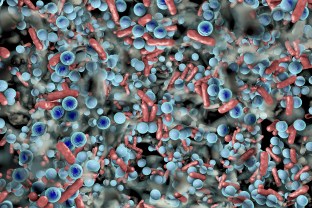
Research – A Multi-Skilled Mathematical Model of Bacterial Attachment in Initiation of Biofilms

MDPI

Biofilm of antibiotic resistant bacteria

The initial step of biofilm formation is bacteria attachment to biotic or abiotic surfaces and other bacteria through intra or interspecies interactions. Adhesion can be influenced by physicochemical conditions of the environment, such as iron. There is no available mathematical model of bacterial attachment giving realistic initiation rather than random adhesion. We describe a simple stochastic attachment model, from the simplest case in two dimensions with one bacterial species attaching on a homogeneous flat surface to more complex situations, with either several bacterial species, inhomogeneous or non-flat surfaces, or in three dimensions. The model depends on attachment probabilities (on the surface, laterally, or vertically on bacteria). Effects of each of these parameters were analyzed. This mathematical model is then applied to experimental oral microcolonies of Porphyromonas gingivalisStreptococcus gordonii, and Treponema denticola, either as mono-, two, or three species, under different iron concentrations. The model allows to characterize the adhesion of three bacterial species and explore the effect of iron on attachment. This model appears as a powerful tool for initial attachment analysis of bacterial species. It will enable further modeling of biofilm formation in later steps with biofilm initialization more relevant to real-life subgingival biofilms. View Full-Text

Research – Molecular Characterization of Staphylococcus aureus Strains Isolated from Mobile Phones

MDPI

Staph

The widespread use of mobile phones (MP) among healthcare personnel might be considered as an important source of contamination. One of the most pathogenic bacteria to humans is Staphylococcus aureus, which can be transmitted through the constant use of MP. Nevertheless, which specific type of strains are transmitted and which are their sources have not been sufficiently studied. The aim of this study is to determine the source of contamination of MP and characterize the corresponding genotypic and phenotypic properties of the strains found. Nose, pharynx, and MP samples were taken from a group of health science students. We were able to determinate the clonality of the isolated strains by pulsed-field gel electrophoresis (PFGE) and spa gene typing (spa-type). Adhesin and toxin genes were detected, and the capacity of biofilm formation was determined. Several of the MP exhibited strains of S. aureus present in the nose and/or pharynx of their owners. methicillin-susceptible Staphylococcus aureus (MSSA), hospital-acquired methicillin-resistant S. aureus (HA-MRSA), and community-acquired methicillin-resistant S. aureus (CA-MRSA) strains were found, which indicated a variety of genotypes. This study concludes that MP can be contaminated with the strains of S. aureus present in the nose and/or pharynx of the owners; these strains can be of different types and there is no dominant genotype. View Full-Text

Research – Comprehensive Review of Fungi on Coffee

MDPI

Coffee is grown in more than 80 countries as a cash crop and consumed worldwide as a beverage and food additive. It is susceptible to fungal infection during growth, processing and storage. Fungal infections, in particular, can seriously affect the quality of coffee and threaten human health. The data for this comprehensive review were collected from the United States Department of Agriculture, Agricultural Research Service (USDA ARS) website and published papers. This review lists the fungal species reported on coffee based on taxonomy, life mode, host, affected plant part and region. Five major fungal diseases and mycotoxin-producing species (post-harvest diseases of coffee) are also discussed. Furthermore, we address why coffee yield and quality are affected by fungi and propose methods to control fungal infections to increase coffee yield and improve quality. Endophytic fungi and their potential as biological control agents of coffee disease are also discussed.

Research – Selection of Microbial Targets for Treatments to Preserve Fresh Carrot Juice

MDPI

Fresh carrot juice presents nutritional and organoleptic qualities which have to be preserved. However, it is a fast perishable beverage, and its low-acidic pH promotes the development of foodborne pathogens and spoilage microorganisms. This study aims to assess the modification and variability of physicochemical and microbial indicators during storage of carrot juice, and to isolate and select microorganisms to be used as promoters of spoilage to quantify the effect of preservation treatments. To achieve that, 10 batches of carrot Daucus carota cv. Maestro juice were prepared independently, stored up to 14 days at 4 °C and analyzed. Volatile compound composition differed mainly according to the analyzed batch. During storage, an increase of the content of ethanol, ethyl acetate or 2-methoxyphenol, which are produced by different microorganisms, was noticed. Isolation of bacteria revealed Pseudomonas, lactic acid bacteria, and enterobacteria, some of them provoking odor modification of carrot juice at 4 °C. Assays in carrot juice with isolated yeasts and molds showed the ability of Meyerozyma guillermondii to induce texture modification and some isolates, e.g., Pichia guillermondii, resulted in gas production. Selected isolates able to induce spoilage are useful to test preservative treatments of fresh carrot juice under controlled conditions. View Full-Text

Research – The epidemiology of Shiga toxin-producing Escherichia coli serogroup O157 in England, 2009–2019

Cambridge Org

Shiga toxin-producing Escherichia coli (STEC) serogroup O157 is a zoonotic, foodborne gastrointestinal pathogen of major public health concern. We describe the epidemiology of STEC O157 infection in England by exploring the microbiological and clinical characteristics, the demographic and geographical distribution of cases, and examining changes in environmental exposures over 11 years of enhanced surveillance. Enhanced surveillance data including microbiological subtyping, clinical presentations and exposures were extracted for all cases resident in England with evidence of STEC O157 infection, either due to faecal culture or serology detection. Incidence rates were calculated based on mid-year population estimates from the Office of National Statistics (ONS). Demographics, geography, severity and environmental exposures were compared across the time periods 2009–2014 and 2015–2019. The number of cases reported to national surveillance decreased, with the mean cases per year dropping from 887 for the period 2009–2014 to 595 for the period 2015–2019. The decline in STEC O157 infections appears to be mirrored by the decrease in cases infected with phage type 21/28. Although the percentage of cases that developed HUS decreased, the percentage of cases reporting bloody diarrhoea and hospitalisation remained stable. The number of outbreaks declined over time, although more refined typing methods linked more cases to each outbreak. Integration of epidemiological data with microbiological typing data is essential to understanding the changes in the burden of STEC infection, assessment of the risks to public health, and the prediction and mitigation of emerging threats.

Research – Impact of Quercetin against Salmonella Typhimurium Biofilm Formation on Food–Contact Surfaces and Molecular Mechanism Pattern

MDPI

Quercetin is an active nutraceutical element that is found in a variety of foods, vegetables, fruits, and other products. Due to its antioxidant properties, quercetin is a flexible functional food that has broad protective effects against a wide range of infectious and degenerative disorders. As a result, research is required on food-contact surfaces (rubber (R) and hand gloves (HG)) that can lead to cross-contamination. In this investigation, the inhibitory effects of quercetin, an antioxidant and antibacterial molecule, were investigated at sub-MIC (125; 1/2, 62.5; 1/4, and 31.25; 1/8 MIC, μg/mL) against Salmonella Typhimurium on surfaces. When quercetin (0–125 μg/mL) was observed on R and HG surfaces, the inhibitory effects were 0.09–2.49 and 0.20–2.43 log CFU/cm2, respectively (p < 0.05). The results were confirmed by field emission scanning electron microscopy (FE-SEM), because quercetin inhibited the biofilms by disturbing cell-to-cell connections and inducing cell lysis, resulting in the loss of normal cell morphology, and the motility (swimming and swarming) was significantly different at 1/4 and 1/2 MIC compared to the control. Quercetin significantly (p < 0.05) suppressed the expression levels of virulence and stress response (rpoSavrA, and hilA) and quorum-sensing (luxS) genes. Our findings imply that plant-derived quercetin could be used as an antibiofilm agent in the food industry to prevent S. Typhimurium biofilm formation. View Full-Text

Research – Levels and genotypes of Salmonella and levels of Escherichia coli in frozen ready-to-cook chicken and turkey products in England tested in 2020 in relation to an outbreak of S. Enteritidis

PubMed

Frozen reformulated (FR) breaded chicken products have previously been implicated in causing human salmonellosis. A multi-country Salmonella enterica serovar Enteritidis outbreak involving several strains with >400 reported human cases in the UK occurred in 2020. Initially S. Infantis was detected in one sample from a case home but S. Enteritidis was then also isolated using a S. Enteritidis specific PCR in combination with isolation via a Craigie-tube. This prompted a survey to examine the presence and levels of Salmonella and E. coli in ready-to-cook FR poultry products in England in 2020. From a total of 483 samples, including two from cases’ homes, Salmonella was detected in 42 chicken samples, these originated from six out of 53 production plants recorded. Salmonella detection was associated with elevated levels of generic E. coli (OR = 6.63). S. Enteritidis was detected in 17 samples, S. Infantis in 25, S. Newport in four and S. Java, S. Livingstone and S. Senftenberg in one each. The highest levels of Salmonella were 54 MPN/g for S. Infantis and 28 MPN/g for S. Enteritidis; 60% of the Salmonella-positive samples had <1.0 MPN/g. S. Enteritidis was detected together with S. Infantis in five samples and with S. Livingstone in one. Where S. Enteritidis was detected with other Salmonella, the former was present at between 2 and 100-fold lower concentrations. The Salmonella contamination was homogeneously distributed amongst chicken pieces from a single pack and present in both the outer coating and inner content. The S. Enteritidis were all outbreak strains and detected in six products that were linked to four production plants which implicated a Polish origin of contamination. Despite S. Infantis being most prevalent in these products, S. Infantis from only two contemporaneous human cases in the UK fell into the same cluster as isolates detected in one product. Except for one human case falling into the same cluster as one of the S. Newport strains from the chicken, no further isolates from human cases fell into clusters with any of the other serovars detected in the chicken samples. This study found that higher E. coli levels indicated a higher probability of Salmonella contamination in FR chicken products. The results also highlight the importance of recognising co-contamination of foods with multiple Salmonella types and has provided essential information for detecting and understanding outbreaks where multiple strains are involved.

Research – Vital Surveillances: Phylogenetic Analysis of Serogroup O5 Vibrio cholerae that Caused Successive Cholera Outbreaks — Guangdong Province, China, 2020–2021

China CDC

Food Illness

  • Abstract

    IntroductionGastroenteritis caused by non-O1/non-O139 Vibrio cholerae exhibited an increasing trend in recent years in China. Whole genome sequence (WGS) data could play an important role both in the identification of the outbreaks and in the determination of the serogroup. Here, we present the employment of WGS data in the investigation of two outbreaks caused by non-O1/non-O139 V. cholerae in Guangdong, China, 2020–2021.

    MethodsWe obtained the whole genome sequence of 66 V. cholerae strains isolated in two outbreaks with next generation sequencing technology. We retrieved the publicly available WGS data of non-O1/non-O139 V. cholerae from public database. We used a pipeline integrated in China Pathogen Identification Net (PIN) to complete the phylogenetic analysis.

    ResultsTwo outbreaks caused by non-O1/non-O139 V. cholerae were identified using WGS data. These V. cholerae strains were determined as serogroup O5. Type 3 and 6 secretion systems were detected in these serogroup O5 strains. These serogroup O5 strains belonged to sequence type (ST) 88.

    ConclusionsOur analysis indicated the risk of non-O1/non-O139 V. cholerae of leading to outbreaks of diarrheal diseases. The application of genomic data played important role in the identification of the serogroup of non-O1/non-O139 V. cholerae in the lack of antiserum, which gave an example of the application of genome data in disease surveillance and public health emergency response.

  • Vibrio cholerae consists of more than 200 serogroups. The classification of serogroups is based on the O antigen of the lipopolysaccharide (LPS) (1). The classical method of serogroup determination is based on the immune agglutination reaction between the O antigen and the corresponding specific antiserum. The molecular mechanisms of different serogroups are based on the variation in structure of O-antigen polysaccharide (O-PS) coding sequence (2). Therefore, the phenotype of O-antigen is correlated with the molecular type of O-PS coding sequence. Till now, only serogroup O1 and O139 V. cholerae caused cholera epidemics and pandemics (3). V. cholerae does not belong to serogroup O1 and O139 and are designated as “non-O1/non-O139” V. cholerae. Usually, these non-O1/non-O139 V. cholerae only cause sporadic infections and seldomly cause outbreaks (4). Several kinds of toxins, such as a heat-stable toxin, cholera toxin, and other enterotoxins, have been detected in the non-O1/non-O139 V. cholerae that caused an outbreak. Except for the toxins, secretion systems, for example type 3 secretion system (T3SS) and type 6 secretion system, have been detected in some V. cholerae strains that caused cholera outbreaks (5).

    In China, toxigenic serogroup O1 and O139 V. cholerae strains were rarely isolated after 2010 (6). In contrast, sporadic cholera cases even small scale of outbreaks caused by non-O1/non-O139 V. cholerae were reported from time to time (4). Here we report successive cholera outbreaks caused by non-toxin-producing serogroup O5 V. cholerae in 2020 and 2021 in Guangdong Province, China.

Research – ‘Tainted’ audiobook now available

Food Safety News

Tainted by Phyllis Entis

Phyllis Entis’s new book “Tainted” is now available as an audiobook. The book is narrated by Entis herself.

The book is particularly topical as the first chapter talks about Cronobacter sakazakii, a dangerous bacterium that has caused an ongoing outbreak. The cronobacter outbreak has sickened at least five infants, killing two, and has been linked to Similac, Alimentum, and EleCare infant formulas recalled Abbott Nutrition.

“Tainted” tells readers that when it comes to food safety, conventional wisdom isn’t always enough. As Entis puts it, “the food preparation skills we learned from our parents and grandparents are no longer good enough to keep us safe.”

Phyllis Entis

The audiobook can be found here.