Category Archives: Microbiology Investigations

Research – Campylobacter in Southeast Asia infects about 7.8% according to new study

Food Poisoning News

Infections from the bacterium Campylobacter are among the most common causes of food poisoning, and a new study has found that these infections are also common in Southeast Asia.

The study published in the International Journal of Infectious Diseases, which was a meta-analysis and systematic review of data from 51 studies, found that the overall prevalence of Campylobacter infections in Southeast Asia is 7.8%. This means that for every 1,000 people in Southeast Asia, about 78 will have an infection from this bacterium at some point. The study also found that there is a lot of variation in the prevalence of these infections between different countries in Southeast Asia. For example, the prevalence in Thailand is 13.3%.

There are many different ways that people can get infected with Campylobacter, but the most common is through eating contaminated food. The bacteria can also be spread through contact with animals, particularly poultry. Symptoms of a Campylobacter infection include diarrhea, cramping, and fever. Most people will recover from the infection without any treatment, but in some cases it can lead to more serious problems like pneumonia or meningitis.

Research – Salmonella spp. Response to Lytic Bacteriophage and Lactic Acid on Marinated and Tenderized Raw Pork Loins

MDPI

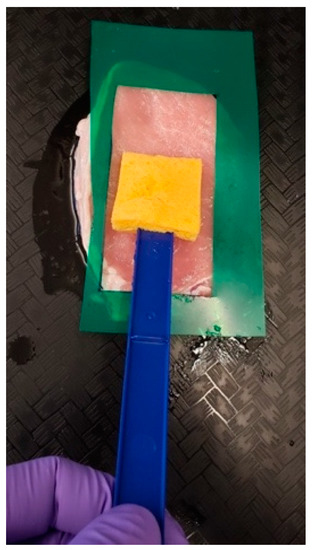
Bacterial food poisoning cases due to Salmonella have been linked with a variety of pork products. This study evaluated the effects of a Salmonella-specific lytic bacteriophage and lactic acid (LA) on Salmonella Enteritidis, Salmonella Montevideo, and Salmonella Heidelberg growth on raw pork loins. Pork loins were cut into approximately 4 cm thick slices. Pork slices were randomly assigned to five treatment groups (control, DI water, LA 2.5%, phage 5%, and LA 2.5% + phage 5%) with six slices per group per replication. Pork loins were inoculated with 106 CFU/mL of Salmonella spp. and stored at 4 °C for 30 min. After 1 h of treatment application and marination, phage 5% significantly (p < 0.05) reduced the surface bacterial population by 2.30 logs when compared with the control group. Moreover, the combined treatment of LA 2.5% + phage 5% significantly (p < 0.05) reduced the surface bacterial population by more than 2.36 logs after 1 h of marination. In the post-tenderization surface samples, the combination of both phage and LA showed a significant reduction (p < 0.05) when compared with the control group. However, the treatments had no effect (p > 0.05) when analyzing the translocation of pathogens on pork loins. View Full-Text

Research – Water application method influences survival or growth of Escherichia coli on bulb onions during field curing

FDA

The impact of water application method on bacterial survival at or after the final irrigation was evaluated in bulb onions during commercially relevant field-drying (curing). A three-strain rifampin-resistant cocktail of Escherichia coli was introduced to onions via a single overhead spray application in two separate trials (5.22 [trial 1] or 2.40 [trial 2] log CFU per onion) 2 to 3 days after the final irrigation. Onions were lifted from the soil 8 days after spray inoculation and, in some cases, foliage was removed (topping); onions remained in the field for an additional ca. 2 weeks (total ca. 3 weeks of curing). E. coli populations declined on the onions in the first 4 h after spray inoculation. E. coli was recovered from 48% (38 of 80) or 35% (28 of 80) of whole-onion enrichments at the end of curing in trials 1 or 2, respectively. Topping did not significantly impact the percentage of E. coli–positive onions detected at the end of curing. From 8 h to 21 days, E. coli populations on positive onions ranged from 1 CFU per onion to 7 log CFU per onion in both trials, representing a potential risk of E. coli growth with overhead application of contaminated water at the end of onion production. In trial 2, additional rows of onions were inoculated via a 22-cm subsurface or surface drip irrigation line (1.94 log CFU/mL for 2.5 h). E. coli was detected in 0 of 50 (subsurface) or 4 of 50 (surface) whole-onion enrichments 3 h after the initiation of drip irrigation. Positive onions were detected at days 1 (4 of 50) and 7 (1 of 50) with subsurface drip inoculation, and at days 1 (7 of 50), 7 (2 of 50), or 14 (2 of 50) with surface drip inoculation. E. coli was not detected in whole-onion enrichments at the end of curing when inoculated by subsurface (0 of 50) or surface (0 of 50) drip irrigation. Application of contaminated water through drip irrigation, when coupled with field curing, results in low rates of contamination of bulb onions at the time of harvest.

Research – Evaluation of the Persistence and Characterization of Listeria monocytogenes in Foodservice Operations

MDPI

Listeria monocytogenes is a major foodborne pathogen that can contaminate food products and colonize food-producing facilities. Foodservice operations (FSOp) are frequently responsible for foodborne outbreaks due to food safety practices failures. We investigated the presence of and characterized L. monocytogenes from two FSOp (cafeterias) distributing ready-to-eat meals and verified FSOp’s compliance with good manufacturing practices (GMP). Two facilities (FSOp-A and FSOp-B) were visited three times each over 5 months. We sampled foods, ingredients, and surfaces for microbiological analysis, and L. monocytogenes isolates were characterized by phylogenetic analyses and phenotypic characteristics. GMP audits were performed in the first and third visits. A ready-to-eat salad (FSOp-A) and a frozen ingredient (FSOp-B) were contaminated with L. monocytogenes, which was also detected on Zone 3 surfaces (floor, drains, and a boot cover). The phylogenetic analysis demonstrated that FSOp-B had persistent L. monocytogenes strains, but environmental isolates were not closely related to food or ingredient isolates. GMP audits showed that both operations worked under “fair” conditions, and “facilities and equipment” was the section with the least compliances. The presence of L. monocytogenes in the environment and GMP failures could promote food contamination with this pathogen, presenting a risk to consumers. View Full-Text

Research – Viability of Shiga Toxin-Producing Escherichia coli, Salmonella spp., and Listeria monocytogenes During Preparation and Storage of Fuet, a Traditional Dry-Cured Spanish Pork Sausage

Journal of Food Protection

We monitored viability of Shiga toxin-producing Escherichia coli (STEC), Salmonella spp., and Listeria monocytogenes during preparation and storage of fuet. Coarse ground pork (ca. 35% fat) was mixed with salt (2.5%), dextrose (0.3%), starter culture (ca. 7.0 log CFU/g), celery powder (0.5%), and ground black pepper (0.3%), and then separately inoculated with a multi-strain cocktail (ca. 7.0 log CFU/g) of each pathogen. The batter was stuffed into a ca. 42-mm natural swine casing and fermented at 23°C and ca. 95% relative humidity (RH) to ≤pH 5.3 (≤ 48 h). Sausage were then dried at 12°C and ca. 80% RH to a w 0.89 (within 33 days) or a w  0.86 (within 60 days). A portion of each batch of fuet was subjected to high pressure processing (HPP; 600 MPa/3 min) before chubs were vacuum-packaged and stored for 30 days at 20°C. After fermentation, pathogen numbers remained relatively unchanged (≤0.35 log CFU/g reduction), whereas reductions of ca. 0.8 to 3.2 log CFU/g were achieved after drying fuet to a w 0.89 or 0.86. Regardless if fuet was or was not pressure treated, additional reductions of ca. 2.2 to ≥5.3 log CFU/g after drying were achieved following 30 days of storage at 20°C. For non-HPP treated fuet dried to a w 0.89 and stored for 30 days at 20°C, total reductions of ≥5.3 log CFU/g in levels of STEC or Salmonella spp. were achieved, whereas levels of L. monocytogenes were reduced by ca. 3.6 log CFU/g. Total reductions of ≥5.3 log CFU/g in levels of all three pathogens were achieved after drying non-HPP treated fuet to a w 0.86. For fuet dried to a w 0.89 or   0.86, pressure treated, and then stored for 30 days at 20°C, total reductions of >6.2 log CFU/g in levels of all three pathogens were achieved. The processing parameters tested herein, with or without application of HPP, validated reductions of ≥2.0- or ≥5.0-log CFU/g in levels of STEC, Salmonella spp., and L. monocytogenes were achieved during preparation and storage of fuet.

Research – Surveillance of Antimicrobial Resistance (AMR) in E. coli and Campylobacter from retail turkey meat and E. coli from retail lamb in 2020/21-FS102109

APHA

ecoli

This report presents results of the surveillance of antimicrobial resistance (AMR) in specific bacteria, i.e., Campylobacter and Escherichia coli (E.coli)from lamb and turkey meats on retail sale in the UK between October 2020 and February 2021.
The aim was to test by culture approximately 200 samples each of lamb and turkey meat for E.coli, and also to test the turkey samples for Campylobacter. The FSA requested testing of lamb and turkey meat as the majority of AMR surveys on UK retail meats have focused on beef, chicken and pork.
As such there is an evidence gap for AMR in lamb and turkey meat. E. coli is a normal inhabitant of the mammalian and avian gut and most isolates do not cause observable clinical disease in healthy animals and humans. Therefore, E.coli isolates can be useful “indicators” of AMR in gut bacteria. Campylobacter is frequently present in the gut of healthy poultry, and thermophilic species (Campylobacter jejuni and Campylobacter coli) typically cause food poisoning in humans.
The monitoring of lamb and turkey meat for AMR is not mandatory as part of the European Directive 2003/99/EC, but the methodology used in this survey was broadly based on the current EU methodologies for the testing of retail beef, chicken and pork. These methodologies involve culture of E. coli on selective agar media containing the antimicrobial drug cefotaxime. Growth of E. coli on such plates indicate resistance to third generation cephalosporin antimicrobial drugs, including extended-spectrum beta lactamase (ESBL) and Amp C type resistance. Such isolates should be further tested for susceptibility to a panel of antimicrobials by determining minimum inhibitory concentration (MIC) values using a broth dilution method based on EN ISO 20776-1:2006.As recommended by the EU, additional selective cultures were performed on samples to isolate any E.coli resistant to carbapenem antimicrobials. Carbapenems are termed ‘last resort’ drugs, used to treat severe infections when other treatment options are ineffective because of multiple resistances in the target Gram negative bacteria.

6At the request of the FSA (non-harmonised testing outside the remit of Decision 2013/652/EU) further screening was performed for E.coli strains resistant to colistin (another ‘last resort’ human antimicrobial drug) and those specifically producing ESBL resistance enzymes. Colistin-resistant strains may harbour mcr resistance genes, which are located on plasmids that can transfer between bacteria.

Research – Evaluation of Hygiene Indicators and Sampling Plan for Detecting Microbial Contamination in Health Functional Foods

Journal of Food Protection

This study aimed to monitor microbial contamination level in a variety of health functional foods and to establish new microbial criteria. Indicator organisms (i.e., aerobic bacteria, coliform bacteria, and Escherichia coli ) were monitored in 10 health functional food categories (743 items, 3,715 samples). The mean total aerobic counts of ginseng and Korean red ginseng were -0.35 and -0.74 log10 CFU/g; and their mean total coliform counts were -1.4 and -1.39 log10 CFU/g, respectively. In addition, the mean total coliform counts of fiber and protein products were -1.34 and -1.22 log10 CFU/g, respectively. However, no aerobic or coliform cells were detected in any other health functional food products (vitamins, minerals, probiotics, milk thistle extract, propolis, eicosapentaenoic acid, docosahexaenoic acid, or lutein products), and no E. coli was detected in any of the categories. These results can potentially be used to update the microbial criteria of the Health Functional Food Code.

Research – Quantitative Microbial Risk Assessment of Listeria monocytogenes and Enterohemorrhagic Escherichia coli in Yogurt

MDPI

Listeria monocytogenes can survive in yogurt stored at a refrigeration temperature. Enterohemorrhagic Escherichia coli (EHEC) has a strong acid resistance that can survive in the yogurt with a low pH. We estimated the risk of L. monocytogenes and EHEC due to yogurt consumption with @Risk. Predictive survival models for L. monocytogenes and EHEC in drinking and regular yogurt were developed at 4, 10, 17, 25, and 36 °C, and the survival of both pathogens in yogurt was predicted during distribution and storage at home. The average initial contamination level in drinking and regular yogurt was calculated to be −3.941 log CFU/g and −3.608 log CFU/g, respectively, and the contamination level of both LM and EHEC decreased in yogurt from the market to home. Mean values of the possibility of illness caused by EHEC were higher (drinking: 1.44 × 10⁻⁸; regular: 5.09 × 10⁻⁹) than L. monocytogenes (drinking: 1.91 × 10⁻¹⁵; regular: 2.87 × 10⁻¹⁶) in the susceptible population. Both pathogens had a positive correlation with the initial contamination level and consumption. These results show that the foodborne illness risk from L. monocytogenes and EHEC due to yogurt consumption is very low. However, controlling the initial contamination level of EHEC during yogurt manufacture should be emphasized.

Research – Plant Extract and Essential Oil Application against Food-Borne Pathogens in Raw Pork Meat

MDPI

Herbal and plant extracts are being applied for a wide range of foods against different types of food-borne pathogens. In the present study, ethanolic and aqueous extracts (2% w/v) from cranberry (Vaccinium macrocarpon) and pomegranate (Punica granatum L.) plants were applied alone or in combination with two essential oils (thyme and oregano in a concentration of 0.150 μg/g) in pork meatballs and their antimicrobial activity was estimated. The extracts exhibited promising results (aqueous and ethanolic extracts of pomegranate and cranberry in a food-compatible concentration of 2% w/v) were applied to raw pork meatball production and their antimicrobial activity was recorded versus Enterobacteriaceae, total mesophilic bacteria, yeasts/molds, Staphylococcus spp., Pseudomonas spp. and lactic acid bacteria (LAB). The outcome demonstrated that meatballs containing aqueous extracts of pomegranate were more resistant to spoilage compared to all the other samples since they were preserved for more days. The chemical profiles of plant extracts were determined through LC-QTOF/MS and the chemical composition of the essential oils applied was determined with the use of GC/MS in order to identify the substances involved in the observed antimicrobial activity. Phenolic acids (quinic acid, chlorogenic acid), monoterpenes (p-cymene, carvacrol, thymol, limonene), organic acids (citric acid) and phenols were the main constituents found in the plant extracts and essential oils applied. These extracts of plant origin could be used as natural preservatives in meat products, even in low concentrations. View Full-Text

Food poisoning or hangover? Here’s how you can tell the difference

Food Poisoning News

When you drink too much alcohol at night, you may wake up feeling sick the next day. The majority of people assume it’s another awful hangover, but there’s a chance that food poisoning or even alcohol poisoning could be to blame. Because both food poisoning and a hangover might induce nausea, vomiting, and headaches, determining whether you’re experiencing one of them can be tough.

A few key characteristics can help you figure out if it’s food poisoning or a hangover. If you have a fever, chills, and body aches, it’s more likely to be food poisoning. If you have a throbbing headache and feel very thirsty with a dry mouth, it’s more likely to be a hangover. Other symptoms like diarrhea are common to both conditions.

Let’s look into both hangovers and food poisoning in further detail at the link above.