Category Archives: Microbiology Investigations

USA – Daily Harvest Issues Voluntary Recall of French Lentil + Leek Crumbles Due to Potential Health Risk

FDA

Company Announcement Date:
FDA Publish Date:
Product Type:
Food & Beverages
Vegetable Protein Product
Foodborne Illness
Reason for Announcement:
Gastrointestinal illness and potential liver function issues
Company Name:
Daily Harvest
Brand Name:
Daily Harvest
Product Description:
French Lentil + Leek Crumbles

Company Announcement

June 23, 2022, Daily Harvest, Inc., New York, NY.  Daily Harvest has voluntarily recalled all French Lentil + Leek Crumbles due to consumer reports of gastrointestinal illness and potential liver function issues.

From April 28 to June 17, 2022, approximately 28,000 units of the recalled product were distributed to consumers in the continental United States through online sales and direct delivery, as well as through retail sales at the Daily Harvest store in Chicago, IL and a “pop-up” store in Los Angeles, CA. Samples were also provided to a small number of consumers. Daily Harvest directly notified by email those consumers who were shipped the affected product, and other consumers for whom the company had contact information, and consumers were issued a credit for the recalled product.

Consumers who may still have the recalled product in their freezers should immediately dispose of it.

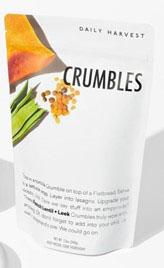
French Lentil + Leek Crumbles is a frozen product packaged in a 12oz white pouch with the words “Daily Harvest” at the top, a large “CRUMBLES” immediately below the top and the words “French Lentil + Leek” in bold, as shown below. All lot codes of the French Lentil + Leek Crumbles are affected.  No other Daily Harvest products are affected or part of this recall.

To date, the company has received approximately 470 reports of illness or adverse reactions. Consumer safety is our highest priority, and we have taken immediate steps to stop production and distribution of the product and conduct a root cause investigation, which is ongoing.

This recall is being made in cooperation with the U.S. Food and Drug Administration.

Consumers who have questions or would like to report adverse reactions should contact Daily Harvest by email at crumbles-recall@daily-harvest.com or by visiting https://www.dailyharvest.com/content/french-lentil-leek-crumbles-advisory#External Link Disclaimer or by calling 1-888-302-0305 9am – 9pm Eastern Time, 7 days a week.


Company Contact Information

Consumers:
Daily Harvest
 1-888-302-0305
 crumbles-recall@daily-harvest.com

Product Photos

India – Two dozen students fall sick due to food poisoning

Daily Pioneer

In a shocking incident of negligence, about two dozen students of Kaushal Vikash Kendra, Mango fell victim to food poisoning at their hostel on Tuesday. The students fell sick after eating egg curry and ‘puri’ for breakfast this morning.

One of the victims said she fell sick after consuming egg curry and puri this morning. “ Though a section of girls have other versions but I must say all the girls fell sick after almost an hour of consuming breakfast only,” she said.

Significantly, none of the people from the Kaushal Vikash Kendra management was available for comment on the issue.

Another section of the students claimed that they fell sick due to eating food brought online during a birthday party on Monday night. “It was my friend’s birthday on Monday. We celebrated the occasion by throwing a party at the hostel. She had bought cake, fast food from Mango. In the morning, all those who enjoyed the party had started suffering from loose motion and vomiting. Then we were brought to the MGM medical college hospital by the management,” informed a student.

However, one of the five ailing students who were admitted to the medical college hospital’s emergency ward, could not say anything about five other girls from the same centre found undergoing treatment lying in the corridor of the emergency block.

Arun Kumar, superintendent, MGM Medical College Hospital said that in all two dozen girls were brought for the treatment at noon. “The girls were down due to food poisoning. Six of the girls were sent back after first-aid, but the rest of them were admitted for treatment,” said Kumar, adding that the condition of all the girls is stable.

Research – Manuscript type: Research Paper Development of a modelling tool to assess and reduce regulatory and recall risks for cold-smoked salmon due to Listeria monocytogenes contamination

Journal of Food Protection

While public health risk assessments for Listeria monocytogenes (Lm) have been published for different foods, firm-level decision making on interventions targeting Lm involves considerations of both public health and enterprise risks. Smoked seafood is a ready-to-eat product with a high incidence of Lm contamination and associated with several recalls. We thus used cold-smoked salmon as a model product to develop a decision support tool (the Regulatory and Recall Risk [3R] Model) to estimate (i) baseline regulatory and recall (RR) risks (i.e., overall risks of a lot sampled and tested positive [e.g., by food regulatory agencies]) due to Lm contamination and (ii) the RR risk reduction that can be achieved through interventions with different underlying mechanisms: (i) reducing the prevalence and/or level of Lm and (ii) retarding or preventing Lm growth. Given that a set number of samples (e.g., 10) are tested for a given lot, the RR risk equals the likelihood of detecting Lm in at least one sample. Under the baseline scenario, which assumes a 4% Lm prevalence and no interventions, the median predicted RR risk for a given production lot was 0.333 (95% credible interval: 0.288, 0.384) when 10 25-g samples were collected. Nisin treatments, which reduce both the prevalence and initial level of Lm, reduced RR risks in a concentration-dependent manner to 0.109 (0.074, 0.146; 5 ppm), 0.049 (0.024, 0.083; 10 ppm), and 0.017 (0.007, 0.033; 20 ppm). In general, more effective reduction in RR risks can be achieved by reducing Lm prevalence, compared to retarding Lm growth, as the RR risk was reduced to 0.182 [0.153, 0.213] by a 50% prevalence reduction, while only to 0.313 [0.268, 0.367] by bacteriostatic growth inhibitors. In addition, sensitivity analysis indicates that prevalence and initial level of Lm, as well as storage temperature have the largest impact on predicting RR risks, suggesting that reliable data for these parameters will improve model performance.

Research – Impact of COVID-19 non-pharmaceutical interventions on the extent of Norovirus contamination in oyster production areas in Ireland during winter 2020/21

Journal of Food Protection

A significant decrease in norovirus prevalence and concentration was observed in oyster production areas in Ireland during winter 2020/21.  Oyster production areas impacted by human wastewater discharges that were under-going norovirus surveillance since 2018 were investigated. Samples collected in the winter seasons of 2018/19 and 2019/20, prior to when the COVID-19 pandemic interventions were applied, showed a prevalence of 94.3% and 96.6% respectively and geometric mean concentrations of 533 and 323 genome copies per gram (gcg -1 ) respectively. These values decreased significantly during the winter of 2020/21 (prevalence of 63.2% and geometric concentration of <LOQ) coinciding with the control measures to mitigate the transmission of SARS-CoV-2. Divergence between norovirus GI and GII prevalence and concentrations was observed over the three year monitoring period. Norovirus GII was the dominant genogroup detected in winter 2020/21 with over half of samples positive although concentrations detected were significantly lower than pre-pandemic winters with a geometric mean concentration of <LOQ.

Canada – Irresistibles brand Sesame Asian Style Dressing recalled due to spoilage

CFIA

Summary

Product
Sesame Asian Style Dressing
Issue
Food – Microbial Contamination – Non harmful (quality or spoilage)
What to do

Do not use, sell, serve or distribute the affected product.

Audience
Retail
Affected products

Irresistibles brand Sesame Asian Style Dressing recalled due to spoilage.

The recalled product has been sold in Ontario and Quebec.

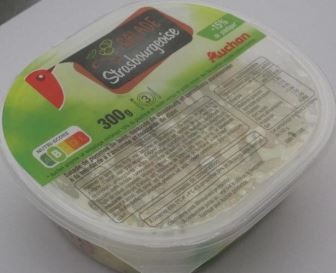
France – SALADE STRASBOURGEOISE 300g – Organoleptic Defect – Microbial Growth

Gov france

Identification information of the recalled product

  • Product category Feed
  • Product subcategory Others
  • Product brand name Auchan
  • Model names or references STRASBOURGEOISE SALAD AUCHAN 300g
  • Identification of products
    GTIN Lot Date
    3596710491513 22 150 003 Use-by date 20/06/2022
  • Packaging tray
  • Marketing start/end date From 06/01/2022 to 06/07/2022
  • Storage temperature Product to be stored in the refrigerator
  • Health markEMB61138B
  • Geographic area of ​​sale Whole France
  • Distributors Auchan and any brand selling Auchan-branded products

Practical information regarding the recall

  • Reason for recall organoleptic defect probably due to microbial growth
  • Risks incurred by the consumer Other biological contaminants
    Organoleptic changes

UK – Update: Waitrose recalls Waitrose Frozen Cooked & Peeled Jumbo King Prawns and Essential Frozen Cooked King Prawns because of possible presence of uncooked prawns

FSA

Waitrose is recalling Waitrose Frozen Cooked & Peeled Jumbo King Prawns and Essential Frozen Cooked King Prawns because they may contain raw, uncooked prawns. The possible presence of raw, uncooked prawns makes this product unsafe to eat.

Product details

Waitrose Frozen Cooked & Peeled Jumbo King Prawns
Pack size 200g
Batch code VN394
Best before end: All date codes up to and including June 2023
Essential Frozen Cooked King Prawns
Pack size 250g
Batch code VN394
Best before end: All date codes up to and including February 2024

Risk statement

The possible presence of raw, uncooked prawns in the products listed above.

Action taken by the company

Waitrose is recalling the above products. Point of sale notices will be displayed in all retail stores that are selling these products. These notices explain to customers why the products are being recalled and tell them what to do if they have bought the products. Please see the attached notice.

Our advice to consumers

If you have bought any of the above products do not eat them. Instead, return them to the store from where they were bought for a full refund.

Related alerts

Uganda – Uganda sets sights on reducing Aflatoxin burden

Food Safety News

The government of Uganda has started a campaign to tackle the high levels of aflatoxin in food.

The call, supported by Oxfam, the Uganda National Bureau of Standards (UNBS), the Grain Council of Uganda and the International Institute for Tropical Agriculture, came ahead of World Food Safety Day this year.

Aflatoxins are mycotoxins produced by moulds and can affect produce that is not well-dried. High levels can also contaminate food crops like cereals, legumes, oil crops and others, posing a serious health risk to humans and livestock. Based on past research, consuming foods with high aflatoxin levels increases the risk of liver cancer and other related diseases.

High aflatoxin limits were also described as a “major barrier” to the export of Uganda’s agricultural produce to the East African region and internationally. Contamination can also cause crop loss, contributing to hunger.

The campaign is aimed at creating awareness and training all stakeholders in the value chain, from the farm to the final consumer, on how to handle food to avoid contamination.

Cambodia – Food safety on radar as law takes effect

Phnom Penh Post

Thol Sreyleak, 35, is a resident of O’Bek Ka’am commune of Phnom Penh’s Sen Sok district. The last time she got food poisoning was in May and it was so severe she was admitted to hospital. The experience made her family of four start thinking about making their diet safer as this was the third time Sreyleak had suffered from food poisoning.

The food poisoning incidents took a lot of time away from her daily business, so Sreyleak and her family to decided to join a project to find organic and safe vegetables at the market.

“I was poisoned and had to be hospitalised. The first time was cauliflower poisoning, the second was soybean poisoning and the last was durian poisoning. In the case of durian poisoning, I had abdominal pain, diarrhoea and vomiting until I was hospitalised and I spent $140,” she said.

After her experiences with poisoning, she worried about her health. What makes it even more difficult for her is that her stomach and intestines are weak to begin with and she would feel the pain immediately if she ate bad vegetables or fruits.

“Every day I have to eat very carefully. I’m really worried because foods [recognised as safe] are expensive. I do not know if there is any food that I can eat that isn’t harmful to my health. If I want safe foods, I have to go to markets selling naturally-grown produce, but the cost is high compared to my daily income and it is not affordable,” she said.

Due to concerns about the impact that food safety was having on people’s health in the country, the government has enacted legislation like the law on food safety and the law on plant protection and phytosanitation.

On June 8, the Law on Food Safety was promulgated by King Norodom Sihamoni after sailing through the National Assembly on May 11 and the Senate on May 18.

Consisting of 11 chapters and 43 articles, the law applies to food quality and safety management that covers all stages of the food production chain and food businesses in Cambodia.

The law sets out the framework and mechanisms for managing and ensuring the safety, quality, hygiene and legitimacy of food at all stages of the food production chain in order to provide health protection and food safety to consumers, ensuring an honest and healthy food trade.

Pen Sovicheat, undersecretary of state and spokesman for the Ministry of Commerce, said that market and street vendors were one of the ministry’s targets for promoting good hygiene and better quality to attract tourists.

The ministry considers promoting the sale of foods in the markets and on the streets that is hygienic, safe and of high-quality as the main priority.

Germany – Mama Africa, shrimps smoked – smoked shrimp – Microbiological Safety

LMW

Alert type: Food
Date of first publication: 06/17/2022
Product name:

Mama Africa, shrimps smoked – smoked shrimp

Manufacturer (distributor): Alimenti dal mondo – Italia srl
Reason for warning:

microbiological risk

Packaging Unit: 50g
Contact to the competent authorities:

Bavaria: poststelle@lgl.bayern.de