Category Archives: Microbiological Risk Assessment

USA – Foodborne Illness Outbreaks at Retail Food Establishments — National Environmental Assessment Reporting System, 25 State and Local Health Departments, 2017–2019

CDC

Abstract

Problem/Condition: Each year, state and local public health departments report hundreds of foodborne illness outbreaks associated with retail food establishments (e.g., restaurants or caterers) to CDC. Typically, investigations involve epidemiology, laboratory, and environmental health components. Health departments voluntarily report epidemiologic and laboratory data from their foodborne illness outbreak investigations to CDC through the National Outbreak Reporting System (NORS); however, minimal environmental health data from outbreak investigations are reported to NORS. This report summarizes environmental health data collected during outbreak investigations and reported to the National Environmental Assessment Reporting System (NEARS).

Period Covered: 2017–2019.

Description of System: In 2014, CDC launched NEARS to complement NORS surveillance and to use these data to enhance prevention efforts. State and local health departments voluntarily enter data from their foodborne illness outbreak investigations of retail food establishments into NEARS. These data include characteristics of foodborne illness outbreaks (e.g., etiologic agent and factors contributing to the outbreak), characteristics of establishments with outbreaks (e.g., number of meals served daily), and food safety policies in these establishments (e.g., ill worker policy requirements). NEARS is the only available data source that collects environmental characteristics of retail establishments with foodborne illness outbreaks.

Results: During 2017–2019, a total of 800 foodborne illness outbreaks associated with 875 retail food establishments were reported to NEARS by 25 state and local health departments. Among outbreaks with a confirmed or suspected agent (555 of 800 [69.4%]), the most common pathogens were norovirus and Salmonella, accounting for 47.0% and 18.6% of outbreaks, respectively. Contributing factors were identified in 62.5% of outbreaks. Approximately 40% of outbreaks with identified contributing factors had at least one reported factor associated with food contamination by an ill or infectious food worker. Investigators conducted an interview with an establishment manager in 679 (84.9%) outbreaks. Of the 725 managers interviewed, most (91.7%) said their establishment had a policy requiring food workers to notify their manager when they were ill, and 66.0% also said these policies were written. Only 23.0% said their policy listed all five illness symptoms workers needed to notify managers about (i.e., vomiting, diarrhea, jaundice, sore throat with fever, and lesion with pus). Most (85.5%) said that their establishment had a policy restricting or excluding ill workers from working, and 62.4% said these policies were written. Only 17.8% said their policy listed all five illness symptoms that would require restriction or exclusion from work. Only 16.1% of establishments with outbreaks had policies addressing all four components relating to ill or infectious workers (i.e., policy requires workers to notify a manager when they are ill, policy specifies all five illness symptoms workers need to notify managers about, policy restricts or excludes ill workers from working, and policy specifies all five illness symptoms requiring restriction or exclusion from work).

Interpretation: Norovirus was the most commonly identified cause of outbreaks reported to NEARS, and contamination of food by ill or infectious food workers contributed to approximately 40% of outbreaks with identified contributing factors. These findings are consistent with findings from other national outbreak data sets and highlight the role of ill workers in foodborne illness outbreaks. Although a majority of managers reported their establishment had an ill worker policy, often these policies were missing components intended to reduce foodborne illness risk. Contamination of food by ill or infectious food workers is an important cause of outbreaks; therefore, the content and enforcement of existing policies might need to be re-examined and refined.

Public Health Action: Retail food establishments can reduce viral foodborne illness outbreaks by protecting food from contamination through proper hand hygiene and excluding ill or infectious workers from working. Development and implementation of policies that prevent contamination of food by workers are important to foodborne outbreak reduction. NEARS data can help identify gaps in food safety policies and practices, particularly those concerning ill workers. Future analyses of stratified data linking specific outbreak agents and foods with outbreak contributing factors can help guide the development of effective prevention approaches by describing how establishments’ characteristics and food safety policies and practices relate to foodborne illness outbreaks.
Research – Singapore Food Statistics 2022

SFA

The Singapore Food Agency (SFA)’s mission is to ensure and secure a supply of safe food for Singapore. Food security is an existential concern for Singapore.
We import more than 90% of the food we consume, making it impossible for us to insulate ourselves from global food supply shocks. In recent years, Singapore experienced first-hand the effects of supply chain disruptions caused by the COVID-19 pandemic, climate change, geopolitical disruptions and policy decisions taken by foreign governments.
SFA works closely with government agencies, businesses and consumers to manage food security risks, and transform the agri-food sector to be more productive, climate resilient and resource efficient.
To safeguard Singapore’s food security, SFA adopts a multi-pronged approach which includes diversifying food import sources, increasing local production and growing food overseas. SFA also has in place an integrated farm-to-fork food safety system to ensure that food for sale in Singapore is safe for consumption.
SFA’s food safety takes a risk-based approach that is guided by science and aligned to international standards. This Singapore Food Statistics publication describes the developments in Singapore’s food supply and food safety situation in 2022. 3SINGAPORE FOOD STATISTICS 2022

Singapore – Suspension of Nosh Cuisine Pte Ltd’s food business operations – Gastroenteritis Investigation

SFA

The Ministry of Health (MOH), the Singapore Food Agency (SFA), and the Early Childhood Development Agency (ECDA) are investigating three incidents of gastroenteritis reported at MindChamps preschools (MindChamps Preschool @ Bishan, MindChampsPreschool@ Changi Airport and MindChampsPreschool@ Tanglin).

As of 12pm, 30 May 2023, a total of 89 persons (79 children and 10 staff) reported gastroenteritis symptoms after consuming food prepared by Nosh Cuisine Pte Ltd between 17 May and 29 May 2023. Six were hospitalised and are in stable condition. The rest had either sought outpatient treatment, self-medicated, or recovered without treatment.

USA – Cricket Creek Farm Recalls Sophelise and Tobasi Cheeses Because of Potential Listeria Monocytogenes Contamination

FDA

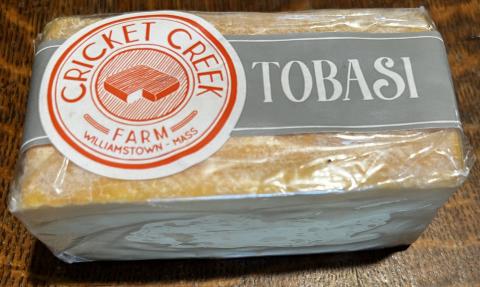
Image 1: Cricket Creek Farm square Tobasi Cheese front packaging/label

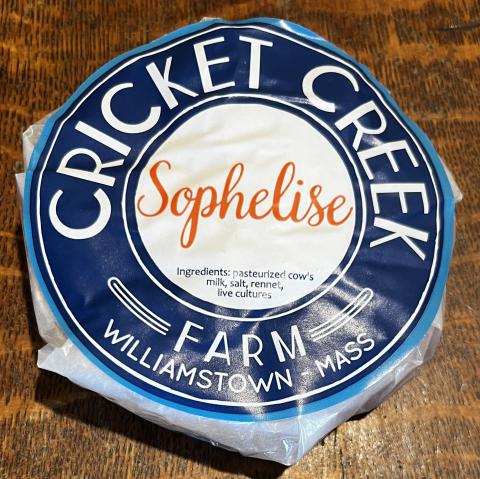
Image 2: Cricket Creek Farm circle Sophelise Cheese front packaging/label

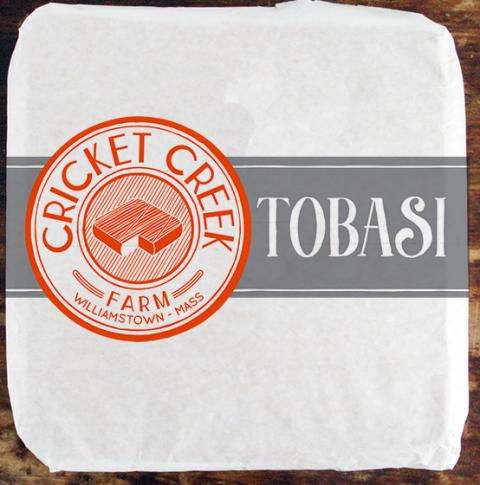
Image 3: Cricket Creek Farm rectangle Tobasi Cheese front packaging/label

Summary

Company Announcement Date:
FDA Publish Date:
Product Type:
Food & Beverages
Cheese/Cheese Product
Foodborne Illness
Reason for Announcement:
Potential Contamination with Listeria monocytogenes
Company Name:
Cricket Creek Farm, LLC
Brand Name:
Cricket Creek Farm
Product Description:
Sophelise Cheese and Tobasi Cheese

Company Announcement

Cricket Creek Farm of Williamstown, MA is recalling 165 units of Sophelise cheese and 149 pounds of Tobasi cheese because it has the potential to be contaminated with Listeria monocytogenes, an organism which can cause serious and sometimes fatal infections in young children, frail or elderly people, and others with weakened immune systems. Although healthy individuals may suffer only short-term symptoms such as high fever, severe headache, stiffness, nausea, abdominal pain and diarrhea, Listeria infection can cause miscarriages and stillbirths among pregnant women.

Sophelise and Tobasi were distributed in Massachusetts and New York through Wild Oats, Williamstown, MA; Provisions Williamstown, Williamstown, MA; McEnroe Organic Farm Market, Millerton, NY; New Lebanon Farmers Market; New Lebanon, NY, at restaurants, and farmers markets.

Sophelise product code: 087055 is a washed, pasteurized milk cheese with a soft rind and pinkish hue; the circular cheese measures 4 inches in diameter and roughly 1 inch tall. It is sold in semi-transparent packaging with a round blue label. Sophelise was distributed between March 29, 2023 and May 26, 2023.

Tobasi with a product label of 315, 341, 048 is a washed raw-milk cheese with an orange rind and creamy interior. When sold retail by Cricket Creek Farm, it is wrapped in clear packaging with a gray and orange label. When sold at retail stores, it is sold in small rectangular cuts. When sold wholesale, the cheese is a square format roughly 8”x8” and 1.25 inches tall. These batches of Tobasi were distributed between March 26, 2023, to May 26, 2023.

One hospitalization due to Listeria monocytogenes has been reported to date. Following this customer notification of illness, products purchased by this individual were tested by Biotrax Testing Laboratory and the current batch of Sophelise was determined to be positive for Listeria monocytogenes. The three batches of Tobasi are being recalled due to their proximity during storage to the exposed product.

Consumers who have purchased Sophelise, with product code 087055 or Tobasi cheese 315, 341, 048 on or after March 26, should not consume or distribute the product, and they are urged to return any remaining product to the place of purchase for a full refund. Consumers with questions may contact the company 8:00am – 5:00pm EST Monday – Friday at info@cricketcreekfarm.com or 413-458-5888.

Netherlands – Duo receives suspended sentences for selling Salmonella contaminated eggs

Food Safety News

hazegg.jpg

Two men have been handed suspended prison sentences of six months in the Netherlands for their roles in the sale of Salmonella contaminated eggs.

The director and a manager at the implicated company were also ordered to do 200 hours of community service. Both men, aged 43 and 51, are still working in the poultry sector.

This company was fined €80,000 ($86,000), which was lower than the €140,000 ($150,400) asked for by the Public Prosecution Service (OM). The court in Zwolle said this was because of the considerable time that had passed since the incident.

The business was found guilty of placing eggs contaminated with Salmonella on the market when it knew this was harmful to health and concealing this information from customers.

UK – Worrying levels of E. coli found inside some UK oysters

ITV

Exclusive research carried out by ITV News and Watershed Investigations found some shellfish areas have seven times the E. coli levels deemed safe for eating. See the video at the link above.

USA – Now over 50 with Salmonella linked to Los Amigos Taqueria in Brighton

Food Poison Journal

According to press reports, more than 50 confirmed cases of salmonella have now been linked to Los Amigos Taqueria’s Brighton restaurant, state health officials confirmed Friday.

The chain’s Brighton outpost was one of two ordered closed last week after health inspectors flagged multiple issues at each restaurant; the West Roxbury Los Amigos Taqueria also shut its doors temporarily.

As of Friday, there were 56 lab-confirmed salmonella cases among people who had eaten at the Brighton Los Amigos Taqueria before becoming ill, the Massachusetts Department of Public Health said. Of those cases, 37 are among Boston residents.

State health officials continue to receive additional reports of lab-confirmed and undiagnosed illnesses linked to the restaurant, according to DPH.

Food contaminated with Salmonella bacteria does not usually look, smell, or taste spoiled. Anyone can become sick with a Salmonella infection. Infants, children, seniors, and people with weakened immune systems are at higher risk of serious illness because their immune systems are fragile, according to the CDC.

Research – Cruise Ship Illness Cases Surpass 2019 Levels – What It Means

Cruise Hive

Recorded outbreaks of gastrointestinal illnesses have been reported aboard 12 cruises so far in 2023, already surpassing the total number of outbreaks in 2019, the last year of full data available. Does this mean that cruises have become unhealthier or at higher risk for such outbreaks?

12 Outbreaks in Less Than 5 Months

Only five months into 2023, a dozen outbreaks of gastrointestinal illnesses aboard cruise ships have been reported to the Vessel Sanitation Program (VSP) of the US Centers for Disease Control and Prevention (CDC).

UK – Large rise of E. coli O26 infections noted in England

Food Safety News

An increase in a type of E. coli over the past decade has prompted scientists to warn of an emerging threat to public health in England.

While part of the rise is because of better detection of non-O157 Shiga toxin-producing E. coli (STEC) in labs, there is evidence more people are actually getting sick.

Researchers looked at STEC O26:H11 clonal complex (CC) 29 in England. Between January 2014 and December 2021, 834 human isolates from 724 patients belonging to CC29 were sequenced at the UK Health Security Agency (UKHSA).

STEC O26:H11 notifications in 2021 were eight times higher than those recorded in 2014. Diagnoses of STEC O26 in England have increased each year from 19 in 2014 to 144 in 2021. Most cases were female and the highest proportion belonged to the 0 to 5 age group, found the study in the Journal of Infection.

Hemolytic Uremic Syndrome (HUS) was diagnosed in 40 cases and three children died. HUS is a severe complication associated with E. coli infections that causes kidney failure.

Researchers estimate Campylobacter costs in Germany

Food Safety News

Campylobacter infection and related illness is associated with a substantial economic burden in Germany, according to a study.

Researchers analyzed the use of health care and direct and indirect costs of Campylobacter and care-intensive long-lasting health issues of patients from health insurance data with 26 million members in Germany.

Claims data of insurants with at least one Campylobacter diagnosis in 2017 were provided, of which 9,945 were included in the analysis published in the journal Plos One.

This showed a lower rate of Campylobacter diagnoses than German surveillance data for 2017 but with similar age, gender, and regional distribution. According to both the surveillance and claims data, rates were lowest in the 5 to 14 age group and highest for females aged 20 to 24.

Some people developed post-infectious reactive arthritis, Guillain-Barré syndrome (GBS), inflammatory bowel disease (IBD), and/or irritable bowel syndrome (IBS).