Category Archives: Microbiological Risk Assessment

Research – Antimicrobial Efficacy and Spectrum of Phosphorous-Fluorine Co-Doped TiO2 Nanoparticles on the Foodborne Pathogenic Bacteria Campylobacter jejuni, Salmonella Typhimurium, Enterohaemorrhagic E. coli, Yersinia enterocolitica, Shewanella putrefaciens, Listeria monocytogenes and Staphylococcus aureus

MDPI

Yersinia p

Contamination of meats and meat products with foodborne pathogenic bacteria raises serious safety issues in the food industry. The antibacterial activities of phosphorous-fluorine co-doped TiO2 nanoparticles (PF-TiO2) were investigated against seven foodborne pathogenic bacteria: Campylobacter jejuniSalmonella Typhimurium, Enterohaemorrhagic E. coliYersinia enterocoliticaShewanella putrefaciens, Listeria monocytogenes and Staphylococcus aureus. PF-TiO2 NPs were synthesized hydrothermally at 250 °C for 1, 3, 6 or 12 h, and then tested at three different concentrations (500 μg/mL, 100 μg/mL, 20 μg/mL) for the inactivation of foodborne bacteria under UVA irradiation, daylight exposure or dark conditions. The antibacterial efficacies were compared after 30 min of exposure to light. Distinct differences in the antibacterial activities of the PF-TiO2 NPs, and the susceptibilities of tested foodborne pathogenic bacterium species were found. PF-TiO2/3 h and PF-TiO2/6 h showed the highest antibacterial activity by decreasing the living bacterial cell number from ~106 by ~5 log (L. monocytogenes), ~4 log (EHEC), ~3 log (Y. enterolcolitca, S. putrefaciens) and ~2.5 log (S. aureus), along with complete eradication of C. jejuni and S. Typhimurium. Efficacy of PF-TiO2/1 h and PF-TiO2/12 h NPs was lower, typically causing a ~2–4 log decrease in colony forming units depending on the tested bacterium while the effect of PF-TiO2/0 h was comparable to P25 TiO2, a commercial TiO2 with high photocatalytic activity. Our results show that PF-co-doping of TiO2 NPs enhanced the antibacterial action against foodborne pathogenic bacteria and are potential candidates for use in the food industry as active surface components, potentially contributing to the production of meats that are safe for consumption.

UK – Over 300 cats die in the UK from illness that could be linked to toxic pet food – Mycotoxins ?

ABC News

At least 330 cats in the United Kingdom have died from a rare illness that could be linked to toxins in cat foods that have been recently recalled.

The condition, called feline pancytopenia, is when the number of red blood cells, white blood cells and platelets decreases rapidly and results in serious illness, according to the Royal Veterinary College (RVC) in London.

The RVC first raised the alarm about the spike in severe feline pancytopenia cases in late May. To date, the cause of the deaths is yet to be officially identified.

The FSA said in a July 16 update that the presence of mycotoxins was identified “in a small number of samples of recalled cat food tested to date.

USA – Core Investigation Table Update

FDA

UK – Jumbo Importers recalls various KOO canned products because of defective cans – Possible Microbial Contamination

FSA

Jumbo Importers Ltd is recalling various KOO canned products on a precautionary basis because of a defective side seam weld in a small number of cans. This defect may cause the cans to leak and impact the safety of the product.

Product details

Koo Baked Beans in Tomato Sauce
Product code 15-4259-
Pack size 410g
Batch description All products with a manufacture date between 1 May 2019 to 5 May 2021.
Koo Butter Beans
Product code 15-10006-
Pack size 410g
Batch description All products with a manufacture date between 1 May 2019 to 5 May 2021.
Koo Baked Beans Chili Beans
Product code 15-10012-
Pack size 420g
Batch description All products with a manufacture date between 1 May 2019 to 5 May 2021.
Koo Baked Beans in Curry Sauce
Product code 15-2393-
Pack size 410g
Batch description All products with a manufacture date between 1 May 2019 to 5 May 2021.
Koo Baked Beans in Hot Chakalaka
Product code 15-2394-
Pack size 410g
Batch description All products with a manufacture date between 1 May 2019 to 5 May 2021.
Koo Cream Style Sweetcorn
Product code 15-4253-
Pack size 415g
Batch description All products with a manufacture date between 1 May 2019 to 5 May 2021.
Koo Veg Curry in Tangy Sauce
Product code 15-4161-
Pack size 420g
Batch description All products with a manufacture date between 1 May 2019 to 5 May 2021.
Koo Veg Curry Hot
Product code 15-4160-
Pack size 420g
Batch description All products with a manufacture date between 1 May 2019 to 5 May 2021.
Koo Veg Curry
Product code 15-10021-
Pack size 420g
Batch description All products with a manufacture date between 1 May 2019 to 5 May 2021.
Koo Mixed Vegetables
Product code 15-10018-
Pack size 410g
Batch description All products with a manufacture date between 1 May 2019 to 5 May 2021.

Risk statement

The defective packaging has the potential to cause the can to leak, which may result in potential secondary microbiological contamination. If the product becomes contaminated and is consumed it may cause illness.

Action taken by the company

Jumbo Importers Ltd is recalling the above product. Point of sale notices will be displayed in all retail stores that are selling these products. These notices explain to customers why the products are being recalled and tell them what to do if they have bought the product. Please see the attached notice.

Our advice to consumers

If you have bought any of the above products do not eat them. Instead, return the product to the store from where it was bought for a full refund. Please contact Jumbo Importers Ltd on 01753 684014 or at orders@jumboimporters.com for any further information.

Hong Kong – Roving Exhibitions on Food Safety in 2021

CFS

Roving Exhibitions on Food Safety in 2021

The Centre for Food Safety (CFS) holds a series of exhibitions in major shopping centres of public and private housing estates across the territory every year.  Panels covering different topics such as food safety and nutrition, and educational videos are shown to enhance public knowledge on how to make safe and suitable food choices. See dates at the link above.

USA – The Quest for Safer Chicken

Consumer Reports

Why are potentially deadly bacteria legally allowed in our poultry? And how can you and your family stay safe?

Amanda Craten used to love cooking, especially big Sicilian dinners prepared for her extended family, relishing the family bonding as much as the food. But that changed in 2013 after Craten’s son and mother-in-law became seriously ill with Salmonella Heidelberg, a virulent, antibiotic-resistant strain of bacteria that was traced to chicken from Foster Farms, a leading poultry processor.

That contaminated chicken was part of a salmonella outbreak that spanned 16 months and sickened 634 people across the country, more than a third of whom had to be hospitalized. And for Craten’s family, in Arizona, the consequences were devastating.

Hong Kong – CFS reminds public to pay more attention to food safety risks in summer

CFS

The Centre for Food Safety (CFS) of the Food and Environmental Hygiene Department (FEHD) today (July 20) released the findings of its Summer Food Surveillance Programme 2021. The results of over 2 000 food samples tested were satisfactory except for three samples that had been announced earlier. The overall satisfactory rate was 99.85 per cent. A CFS spokesman reminded members of the public to remain vigilant and pay more attention to food safety and environmental hygiene as the hot and humid climate of summer in Hong Kong facilitates the multiplication of bacteria.

The spokesman said, “The CFS collected 2,002 samples from market stalls, restaurants, food factories, fresh provision shops, online vendors, hawkers and premises in connection with intelligence, etc for tests.”

The samples comprised 180 samples of dairy products and frozen confections, 138 samples of cut fruit and salads, 97 samples of desserts and drinks, 54 samples of sandwiches, 251 samples of cooked meat products and 551 samples of other ready to eat foods. The CFS was notified of multiple food poisoning cases which involved consumption of raw oysters this summer and therefore enhanced the testing of aquatic products. A total of 731 samples of aquatic products such as sushi and sashimi, fish, crustaceans (such as shrimp and scampi), molluscs and other edible aquatic animals (such as oysters and venus clams) were collected for tests.

The spokesman said that 1,800 food samples were collected for microbiological tests, 132 samples for tests of metallic contaminants and 70 samples for tests of veterinary drug residues. Samples tested for microbiological tests and metallic contaminants were all satisfactory. As for the tests of veterinary drug residues, except for three samples (one for venus clam, one for clam and one for common oriental clam) in which chloramphenicol were found, the remaining samples were all satisfactory. The overall satisfactory rate was 99.85 per cent.

The CFS has announced the test results of the unsatisfactory samples and conducted follow-up actions, including instructing the concerned vendors to stop sales and remove the products from the shelves, tracing the source and informing the authority of the origin.

The spokesman pointed out that although unsatisfactory samples for microbiological tests were not found in the Summer Food Surveillance Programme 2021, bacteria grow faster in warmer environments in summer, and that the hot weather increases the risk of food poisoning caused by bacteria.

The spokesman reminded members of the public in particular that raw or undercooked foods are high-risk foods as there is not any, or inadequate, heat treatment to eliminate the microorganisms present that can pose risks to human health. Raw or undercooked foods are also associated with the risk of contracting antimicrobial resistance (AMR) microorganisms. Although these AMR microorganisms may not cause illnesses, they may transfer their antibiotic resistance genes to other bacteria inside the human body, therefore affecting the effectiveness of the future use of antibiotics when needed. Susceptible populations such as pregnant women, young children, the elderly and people with weakened immunity (i.e. people with chronic diseases or those on antibiotics treatment, antacid and long-term steroids or drugs given to prevent transplant rejection, etc) are of higher risk of being infected or having complications if they consume raw or undercooked foods due to their health status. They should therefore avoid eating raw and undercooked foods.

Members of the public should pay attention to food safety, especially in summer, and observe the following Five Keys to Food Safety in order to reduce the risk of foodborne diseases:

  • choose (choose safe raw materials);
  • clean (keep hands and utensils clean);
  • separate (separate raw and cooked food);
  • cook (cook thoroughly); and
  • safe temperature (keep food at a safe temperature).

Members of the public are also reminded to dine out in licensed and hygienic restaurants. Food premises selling sushi and sashimi or other high risk food require a special permit. The public should patronise only those with relevant licences or permits issued by the FEHD.

Ends/Tuesday, July 20, 2021

New Zealand – Koo, Hugo’s, Helderberg brand Canned Vegetables, Beans and Spaghetti products – Microbial Contamination

MPI

Several importers are recalling specific batches of Koo, Hugo’s and Helderberg brand canned vegetables, beans and spaghetti products due to a packaging fault, which may lead to a potential risk of microbial contamination in the products.

Product identification
Product type Canned goods
Name of product (size) Helderberg Fresh Garden Peas in Sweetened Brine (400g)

Hugo’s brand Baked Beans in Tomato Flavoured Sauce (410g)

Koo brand Baked Beans in Barbeque Flavoured Sauce (410g)

Koo brand Baked Beans in Chilli Sauce (420g)

Koo brand Baked Beans in Chilli Wors Flavoured Sauce (410g)

Koo brand Baked Beans in Hot Chakalaka Sauce (410g)

Koo brand Baked Beans in Hot Curry Sauce (420g)

Koo brand Baked Beans in Tomato and Herb Sauce (410g)

Koo brand Baked Beans in Tomato Sauce (410g)

Koo brand Baked Beans in Tomato Sauce Lite (410g)

Koo brand Butter Beans in Brine (410g)

Koo brand Butter Beans in Tangy Curry Sauce (410g)

Koo brand Butter Beans in Tomato Sauce (420g)

Koo brand Creamstyle Sweetcorn (415g)

Koo brand Fresh Garden Peas in Brine (410g)

Koo brand Garden Peas in Sweetened Brine (400g)

Koo brand Mixed Vegetables in Brine (410g)

Koo brand Mixed Vegetables in Cape Malay Curry Sauce (420g)

Koo brand Mixed Vegetables in Curry Sauce (420g)

Koo brand Mixed Vegetables in Durban Curry Sauce (420g)

Koo brand Mixed Vegetables in Hot Curry Sauce (420g)

Koo brand Mixed Vegetables in Sweet and Spicy Curry Sauce (420g)

Koo brand Short Spaghetti in Flavoured Tomato Sauce (410g)

Koo brand Whole Kernel Corn in Brine (410g)

Koo Surfmaid Petit Pois in Sweetened Brine (400g)

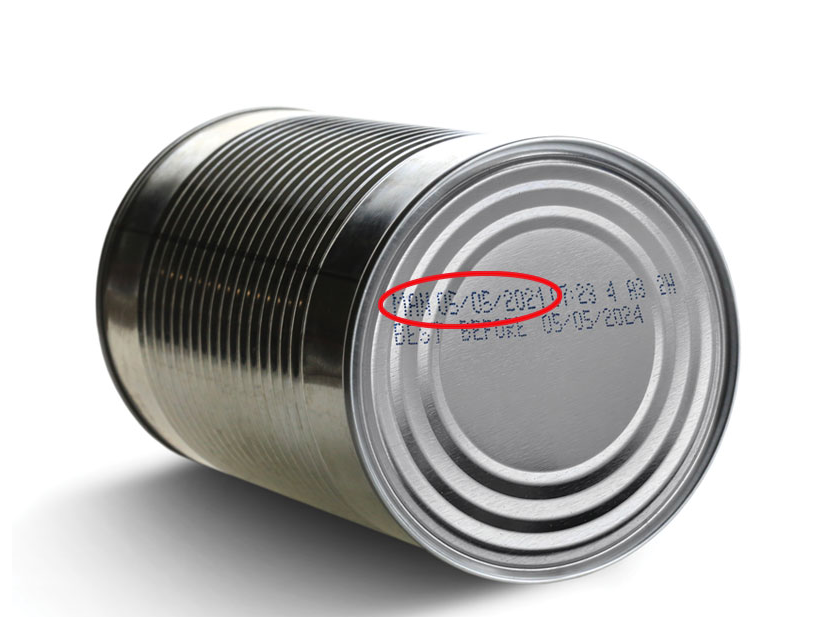
Date marking Produced from MAN 01/05/2019 up to and including MAN 05/05/2021
Package size and description The products are sold in various weights in tinned cans.
Distribution
Northland
Biltong + Ltd 273 Rodney Street, Wellsford
Bin Inn Whangarei 75 Walton Street, Whangarei
Auckland
FoodCulture 3/44 Fortunes Road,Halfmoon bay
Biltong Plus 273 Rodney Street, Wellsford
Freds Fine Foods 52 Oteha Valley Road, Northcross
OSSEWA Home baked Industries 573 Buckland Road, Buckland
Select Products Ltd (Howick) 170 Wellington Street, Howick
Tackle and Outdoor 12 Elizabeth Street, Wakword
Butcher Boy Shop 3 , 345 Chapel Road, Flat bush
The South African Shop Limited 1A Buscomb Ave Henderson
The South African Shop Limited 2B Arklow Lane Stanmore Bay
The South African Shop Limited 6 Rosedale Road, Windsor Park
Mama Africa Suite 8, 28 Subway Road, Pukekohe
SA Shop Whangaparoa 2B Arklow Lane, Stanmore Bay, Whangaparāoa
Inside Africa 2 Bishop Dunn Place, East Tamaki, Auckland
Inside Africa 24 Dunrobin Place, Half Moon Bay, Auckland
Inside Africa 7 Mercari Way, Albany
Waikato
Elite Meats Biltong and Dried Sausages 97 Fifth Avenue, Enderley, Hamilton
Little & Wild Café and SA Shjop 29 Totara Street, Tauppo
Meat ‘n Greet 718 Grey Street, Hamilton East
Rototuna FoodMart 412 Hukanui Road,Rototuna,Hamilton
The Lekker Shop 1 Grasslands Place, Frankton
Bay of Plenty
Big 5 Biltong & Braai Shop 5/38 Gravatt RoadPapamoa Beach
Boerewors NZ Unit 6, 70 Hotuhotu Street, Tauriko
Gateway to Africa 152 Eleventh Avenue,Tauranga
HawkesBay
The Saffa Shack 28 Havelock Road, Havelock North
 Gisborne
Yebo It’s Africa 79 Peel Street, Gisborne
Taranaki
Bok Shop Shop 10 ,The Richmond Centre, 4 Egmont Street, New Plymouth
Manawatu-Wanganui
eSANZ 73 Milson Line, Milson, Palmerston North
Mzansi South African Shop Palmerston North 11A Newhaven Place, Roslyn, Palmerston North
Greater Wellington
Biltong and Wors Shop 13 Collins Ave, Tawa, Wellington
Little Africa 70 Raglan Street, Landowne
Ontrays 38 Fitzherbert St, petone
South Island
Safari Meats and SA Shop 100 Carmen Road, Hornyby, Christchurch
South African Pantry 20 Main Road South, Coastlands Shopping Town
Taste of Africa Christchurch 189 Idris Road, Strowan, Christchurch
Afri-Kai 14 Clifton Terrace
Benhay Investments Ltd 7 Coronation Court, Milton, Otago
Blenheim Mart 31 Scott Street, Blenheim
Online:
Biltong + Ltd https://www.biltongplus.co.nz/
Gateway to Africa Limited https://gatewaytoafrica.co.nz/
Inside Africa https://insideafrica.nz/
The South African shop Ltd https://sashopnz.co.nz/
Notes The cans may have a defective side seam weld that could cause the can to leak or become swelled/bulged. The affected products should not be consumed regardless of the appearance. If a can is leaking or have become swelled/bulged, handle carefully as the can may explode.

This recall does not affect any other Koo, Hugo’s or Helderberg brand products.

Consumer advice

Customers are asked to check the date of manufacture on the bottom of the can.

Example of date of manufacture.

Affected products should not be consumed. There have been no reports of associated illness, however if you have consumed any of these products and have any concerns about your health, seek medical advice.

Customers should return the products to their retailer for a full refund.

Who to contact

If you have questions, contact the retailer you purchased the product from.

The products are imported by the following importers:

Gateway to Africa: 07 5710299

Inside Africa: 021 2735242

RWS – Export Ltd: 027 6196786

South African Bok Shop Ltd: 06 7572582

The South African Restaurant Group Ltd: 09 2139517

The South African Shop Ltd: 09 4788016

USA – Hawaii’s food safety agency uses embargo to drive raw milk sales off the islands

Food Safety News

State and local health departments went for months with no concerns other than the pandemic. But this summer, they are finding the time and personnel to work on other public health issues.

Hawaii, for example, has had an embargo underway for unpasteurized goat milk. The Hawaii Department of Health’s Food Safety Branch found numerous pet stores on O’ahu were selling raw goat milk.

Hawaii retailers and restaurants must purchase only pasteurized Grade A milk and milk products.

Raw milk is not safe for human consumption. As of July 1, the Food Safety Branch found about 20 O’ahu pet stores selling raw milk. Under the embargo, pet stores or any other retailer with raw milk in their possession were fined up to $10,000 a day unless they removed the raw goat milk from sale and destroyed the product.

UK project gets funding to monitor foodborne pathogens and AMR

Food Safety News

A project in the United Kingdom has received funding for the surveillance of foodborne pathogens and antimicrobial resistance.

Pathogen Surveillance in Agriculture, Food and the Environment (PATH-SAFE) involves the Food Standards Agency (FSA); Food Standards Scotland (FSS); Department of Environment, Food and Rural Affairs (Defra); Department of Health and Social Care (DHSC); Public Health England (PHE); and the Environment Agency.

The aim is to establish the infrastructure and sampling frameworks needed to monitor the source and spread of foodborne pathogens and antimicrobial resistance (AMR) genes between the environment, animals, food and people.