Category Archives: Microbiological Risk Assessment

Research – Do You Really Need to Wash Fruits and Vegetables?

AARP

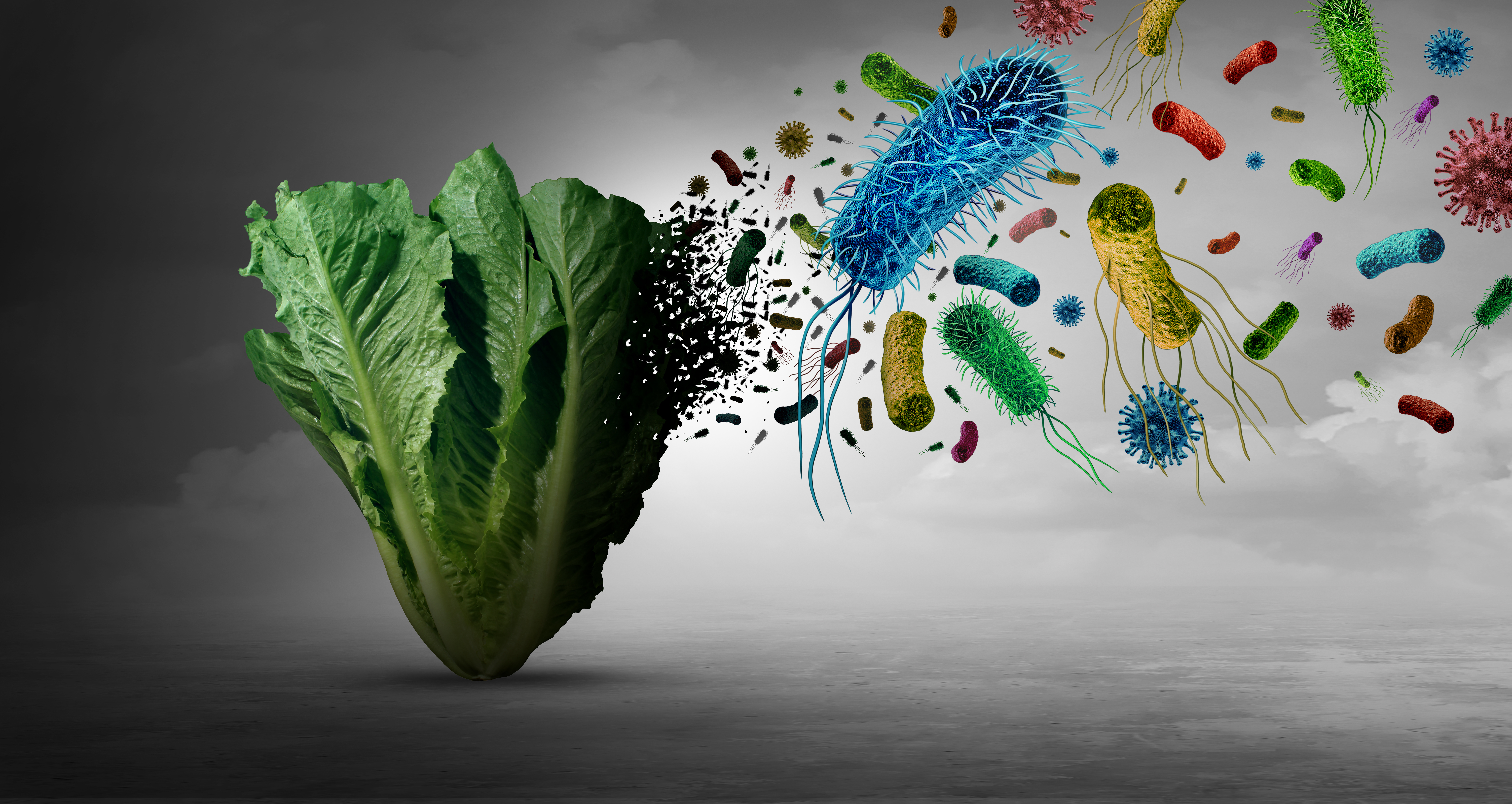
During the journey from farm to table, the fruits, vegetables and other foods we eat are exposed to countless people, places, substances and surfaces before ever reaching our mouths. It would seem a given, then, that everything we bring home from the grocery store needs to be thoroughly washed and sanitized.

“Produce comes from the environment; it comes from the ground. The way that it’s grown and harvested, it can have dirt on it and other bacteria,” says Meredith Carothers, technical information specialist at the U.S. Department of Agriculture (USDA). “Unlike meat and poultry, which is packaged, a lot of times produce is just out in the grocery store on display.”

From a food safety standpoint, experts say it’s not necessary to wash all foods. In fact, washing some foods can actually increase the risk of contamination and illness. To help clear up any confusion, we asked Carothers to break down the do’s and don’ts of food washing.

Rules for washing produce

Do rinse fruits and vegetables under running water. After produce is harvested, it gets sorted, delivered and put on display in the grocery store. During this process there are many opportunities for produce to encounter a number of hands and surfaces. Before consuming fresh produce, remove any torn or bruised parts (bacteria that can cause illness thrive in these places) and rinse under running water to remove germs and dirt.

Do scrub hard produce with a clean brush. Foods like potatoes or apples can be scrubbed to thoroughly remove dirt from the exterior, including crevices that rinsing alone may not reach.

Do dry rinsed produce on a clean surface. That means spreading a clean cloth or paper towel on a clean surface to avoid recontamination. If you use a salad spinner, make sure it’s clean before you add greens to it, and clean it again between batches.

Don’t wash produce labeled “prewashed” or “ready to eat.” It is already safe to eat out of the package. Just make sure that prewashed produce doesn’t encounter unclean surfaces or utensils — especially if those surfaces have had raw meat or its juices on them.

Don’t use soap to clean produce. The USDA does not recommend any type of detergent on fruits or vegetables because it can leave behind a film that is not intended to be consumed. Some produce is also porous and may absorb the soap. Although you can buy commercial produce washes, they aren’t approved or labeled by the Food and Drug Administration (FDA) and are not recommended.

Don’t soak produce. Soaking may remove the germs initially, but the now-tainted water can recontaminate your produce as well as nearby surfaces. When produce is rinsed under running water, the dirt and germs go down the drain.

Research – Pathogens can hitch a ride on plastic to reach the sea

Phys Org

Microplastics are a pathway for pathogens on land to reach the ocean, with likely consequences for human and wildlife health, according to a study from the University of California, Davis.

The study, published April 26 in the journal Scientific Reports, is the first to connect microplastics in the ocean with land-based pathogens. It found that microplastics can make it easier for disease-causing pathogens to concentrate in plastic-contaminated areas of the ocean.

The pathogens studied—Toxoplasma gondii, Cryptosporidium (Crypto) and Giardia—can infect both humans and animals. They are recognized by the World Health Organization as underestimated causes of illness from shellfish consumption and are found throughout the ocean.

“It’s easy for people to dismiss plastic problems as something that doesn’t matter for them, like, ‘I’m not a turtle in the ocean; I won’t choke on this thing,'” said corresponding author Karen Shapiro, an infectious disease expert and associate professor in the UC Davis School of Veterinary Medicine. “But once you start talking about disease and health, there’s more power to implement change. Microplastics can actually move germs around, and these germs end up in our water and our food.”

Research – Cryptosporidium: Still Open Scenarios

MDPI

water contamination

Cryptosporidiosis is increasingly identified as a leading cause of childhood diarrhea and malnutrition in both low-income and high-income countries. The strong impact on public health in epidemic scenarios makes it increasingly essential to identify the sources of infection and understand the transmission routes in order to apply the right prevention or treatment protocols. The objective of this literature review was to present an overview of the current state of human cryptosporidiosis, reviewing risk factors, discussing advances in the drug treatment and epidemiology, and emphasizing the need to identify a government system for reporting diagnosed cases, hitherto undervalued.

Research – Spanish study finds organic produce contamination

Food Safety News

Early findings from researchers in Spain has found organic produce can be contaminated with a range of bacteria.

The study suggests that amoebas that live on organic leafy vegetables can shelter human pathogens like Pseudomonas, Salmonella, and Helicobacter.

Details are based on a poster presentation at the European Congress of Clinical Microbiology and Infectious Diseases (ECCMID) in Lisbon, Portugal, from April 23 to 26. All abstracts were peer reviewed by a congress committee. There is no paper yet, but the research has been submitted to a medical journal for publication.

However, other scientists warned that while conclusions are interesting, the fact that data has not yet been peer reviewed means they cannot be put into context.

Research – An Evaluation of Food Safety Performance in Wineries

MDPI

Wine production has food safety hazards. A Hazard Analysis Critical Control Point (HACCP) system makes it possible to identify, evaluate, and control significant food safety hazards throughout the wine production process. The Prerequisites Programs (PPRs) and HACCP performance in Protected Denomination of Origin “Vinos de Madrid” wineries were analyzed. Winery performances were evaluated for every critical control point (CCPs) in each winemaking process stage, including their implementation of PPR and HACCP principles. This study was developed through a survey of 55 questions divided into 11 sections, and it was conducted on a sample of 21 wineries. The results revealed that the CCPs worst performance level are for the control of metals (Cd, Pb, As) in grapes and fungicides or pesticide control in the harvest reception. A total of 91.5% of the wineries had implemented a prerequisites program (PPRs), regardless of their annual wine production. However, there was variability in the type of prerequisite plans, training, level of knowledge of operators, and annual budget allocation. Three out of four wineries had an HACCP, although corrective action procedures and verification procedures had the lowest and the worst HACCP practical implementation. The significant barriers for HACCP performance in wineries are linked with a lack of food safety staff training, low involvement of all staff in food safety tasks, and poor application of CCP chemical and microbiologic control methods.

Research – Role of Lactic Acid Bacteria in Food Preservation and Safety

MDPI

Fermentation of various food stuffs by lactic acid bacteria is one of the oldest forms of food biopreservation. Bacterial antagonism has been recognized for over a century, but in recent years, this phenomenon has received more scientific attention, particularly in the use of various strains of lactic acid bacteria (LAB). Certain strains of LAB demonstrated antimicrobial activity against foodborne pathogens, including bacteria, yeast and filamentous fungi. Furthermore, in recent years, many authors proved that lactic acid bacteria have the ability to neutralize mycotoxin produced by the last group. Antimicrobial activity of lactic acid bacteria is mainly based on the production of metabolites such as lactic acid, organic acids, hydroperoxide and bacteriocins. In addition, some research suggests other mechanisms of antimicrobial activity of LAB against pathogens as well as their toxic metabolites. These properties are very important because of the future possibility to exchange chemical and physical methods of preservation with a biological method based on the lactic acid bacteria and their metabolites. Biopreservation is defined as the extension of shelf life and the increase in food safety by use of controlled microorganisms or their metabolites. This biological method may determine the alternative for the usage of chemical preservatives. In this study, the possibilities of the use of lactic acid bacteria against foodborne pathogens is provided. Our aim is to yield knowledge about lactic acid fermentation and the activity of lactic acid bacteria against pathogenic microorganisms. In addition, we would like to introduce actual information about health aspects associated with the consumption of fermented products, including probiotics.

USA – FDA and Stop Foodborne Illness to Co-Host Third Food Safety Culture Webinar

The U.S. Food and Drug Administration and Stop Foodborne Illness, a non-profit public health organization, are announcing a third webinar in their collaborative series that explores food safety culture.

The third webinar is called “Building a Coalition of Food Safety Culture Champions Across Your Organization.” It will take place on May 18, 2022, at 12:30-1:30 p.m. ET. The webinar will feature:

  • Charlean Gmunder, Chief Operating Officer at Blue Apron
  • Dale Estep, Corporate Food Safety & Quality Assurance Manager at McKee Foods Corporation
  • Ellison Beasley, R&D Food Safety Scientist at McKee Foods Corporation

The webinar series is entitled “Collaborating on Culture in the New Era of Smarter Food Safety.” It engages experts from the public and private sectors in a collaborative exchange of ideas and experiences related to the importance of a robust food safety culture in helping to ensure safe food production.

Food safety culture is one of the core elements in FDA’s New Era of Smarter Food Safety blueprint, which states that dramatic improvements in reducing the burden of foodborne illness cannot be made without doing more to influence the beliefs, attitudes, and, most importantly, the behaviors of people and the actions of organizations.

For More Information

To Register

To learn more about this webinar series and to listen to recordings of the first two webinars, visit Collaborating on Culture in the New Era of Smarter Food Safety.

USA – FDA Core Investigation Table Update

FDA

What’s New

  • For the investigation with a reference number 1064, the total adverse event reports have increased to 446.
  • For the Listeria monocytogenes outbreak in a not yet identified food (reference #1040), the case count has increased to 19 cases.
  • The investigation has closed for the Salmonella Saintpaul outbreak in an unidentified food.
  • For the Listeria monocytogenes outbreak in a not yet identified food (reference #1057), the case count has increased to 17 cases.
Date
Posted
Ref Pathogen or
Cause of Illness

Product(s)
Linked to
Illnesses

(if any)
Total
Case Count

Status
Outbreak
Status
4/20/

2022

1064 Not Yet
Identified
Dry Cereal 446

adverse
event

reports

Active Ongoing
See Advice
4/13/

2022

1057 Listeria
monocytogenes
Not Yet
Identified
17 Active Ongoing
See Advice
4/6/

2022

Not App Norovirus* Raw Oysters See
CDC Alert
Active Ongoing
See
Safety Alert
3/30/

2022

1060 Not Yet
Identified
Meal Replace

ment
Drink

6

adverse
event

reports

Active Ongoing
See Advice
3/16/

2022

1055 Salmonella
Saintpaul
Not Identified 60 Closed Ended
See Advice
2/17/

2022

1056 Cronobacter
sakazakii
Powdered
Infant
Formula
See
Advisory
Active Ongoing
See
Advisory
2/9/

2022

1040 Listeria
monocytogenes
Not Yet
Identified
19 Active Ongoing
See Advice
2/2/

2022

1054 Enteroinvasive
E. coli
O143:H26
Not
Identified
16 Closed Ended
See Advice
1/10/

2022

1050 E. coli
O121:H19
Romaine 4 Closed Ended
12/29/

2021

1052 E. coli
O157:H7
Packaged
Salad
See Outbreak
Advisory
Closed Ended
See Outbreak
Advisory
12/20/

2021

1039 Listeria
monocytogenes
Packaged
Salad
See Outbreak
Advisory
Closed Ended
See Outbreak
Advisory
12/15/

2021

1048 Listeria
monocytogenes
Packaged
Salad
See Outbreak
Advisory
Closed Ended
See Outbreak
Advisory

*Outbreaks associated with shellfish are managed by the FDA Division of Seafood Safety, not CORE Response Teams. This outbreak is included here for the convenience of the consumer and will be removed once the outbreak is over and the investigation is closed.

Research – Mechanisms of Inhibition of Quorum Sensing as an Alternative for the Control of E. coli and Salmonella

MDPI

Quorum sensing (QS) is a process of cell–cell communication for bacteria such as E. coli and Salmonella that cause foodborne diseases, with the production, release, and detection of autoinducer (AI) molecules that participate in the regulation of virulence genes. All of these proteins are useful in coordinating collective behavior, the expression of virulence factors, and the pathogenicity of Gram-negative bacteria. In this work, we review the natural or synthetic inhibitor molecules of QS that inactivate the autoinducer and block QS regulatory proteins in E. coli and Salmonella. Furthermore, we describe mechanisms of QS inhibitors (QSIs) that act as competitive inhibitors, being a useful tool for preventing virulence gene expression through the downregulation of AI-2 production pathways and the disruption of signal uptake. In addition, we showed that QSIs have negative regulatory activity of genes related to bacterial biofilm formation on clinical artifacts, which confirms the therapeutic potential of QSIs in the control of infectious pathogens. Finally, we discuss resistance to QSIs, the design of next-generation QSIs, and how these molecules can be leveraged to provide a new antivirulence therapy to combat diseases caused by E. coli or SalmonellaView Full-Text

RASFF Alert – Animal Feed – Salmonella – Premix NutriBlend Plus Dry – Raw Dog Food

RASFF

Salmonella spp. in premix NutriBind Plus Dry from Germany in Belgium

RASFF

Salmonella Diarizonae in raw dog feed from Norway in Denmark, France, Germany, Lithuania, Norway Sweden, Switzerland and the UK