Category Archives: microbial contamination

Research – Demystifying Cronobacter and Actions FDA is Taking to Keep the Food Supply Safe

FDA

Last year, following the February Abbott recall and subsequent shortage of infant formula, many households across the U.S. heard about a pathogen (bacterium) for the first time called Cronobacter sakazakii. This pathogen isn’t new to the food industry but is not well-known among the general public, so I thought I would catch up with you on some basics about Cronobacter.

What We Know about Cronobacter

Cronobacter is found naturally in the environment – for example, in our yards, kitchens, and living rooms. It can live on surfaces like kitchen counters, sinks, or also on food facility manufacturing equipment. While Cronobacter is harmless for most people, it can cause life threatening infections in infants, particularly those who are younger than two months old, premature, immunocompromised, or of low birth weight.

Evidence has pointed to Cronobacter contamination occurring both in the food facility manufacturing environment and in the home, as demonstrated in the CDC’s recent Morbidity and Mortality Weekly Report (MMWR). Because this pathogen is so ubiquitous in the environment, public health officials stress the importance of safe preparation and storage of powdered infant formula to avoid contamination at home, and the FDA sets certain requirements to help control for it in the manufacturing environment. As part of our work here at the agency to continue to enhance safety in the infant formula manufacturing environment, the FDA recently sent a letter to industry with recommendations for improvements that can be made industry wide.

Research – Meat Microflora and the Quality of Meat Products

MDPI

Meat and meat products are not only a source of nutrients for humans [1,2], but also an excellent substrate for the development of many microorganisms [3]. Fresh meat is always exposed to the action of many species of microorganisms, causing deterioration of its sensory quality and limiting its usefulness, both culinary and technological. The microbiological quality of meat is important both for consumers and from a safety point of view. Meat can be a habitat for saprophytic and pathogenic microorganisms that can deteriorate its quality or threaten the safety of consumers [1,4].
However, microorganisms present in meat products are not always a threat. Such microorganisms include lactic acid bacteria present in meat, which ferment sugars into lactic acid. This has a positive effect on the durability of the manufactured products. The presence and growth of lactic acid bacteria under controlled conditions have long been used in meat processing [5]. This enables the production of products with characteristic and desirable quality features, and at the same time with an extended shelf life. Running lactic acid fermentation processes in optimal conditions, however, often requires the use of highly selected microorganisms with precisely defined and stable characteristics. Such microorganisms are then deliberately introduced into meat in a certain amount during technological processes [5].
Due to the role played by starter cultures in meat products, they can be divided into the following groups: acidifying cultures, cultures supporting the curing process (denitrifying cultures) and stabilizing the curing color, cultures flavoring meat products and cultures stabilizing microbiological products (extending shelf life) [5,6].
A less durable raw material than the meat of animals is fish meat, which deteriorates faster and therefore should be frozen and stored at −20 °C. The cause of spoilage is most often psychrophilic microorganisms that develop at temperatures close to 0 °C. One way to improve the freshness and extend the shelf life of fish is multifunctional composite coatings. They are an interesting alternative to preserve the quality of fish fillets, but also to improve the quality of meat [7].
Appropriate use of selected strains of lactic acid bacteria may be useful in improving the microbiological quality of meat and meat products during storage. The purpose of this Special Issue was to compile original research and review papers covering various aspects of the impact of meat microflora on the quality characteristics and safety of meat and meat products.

Research – Foodborne Outbreak of Extended Spectrum Beta-lactamase Producing Shigella sonnei Associated with Contaminated Spring Onions in the United Kingdom

Science Direct

Shigella - kswfoodworld

Image CDC

Abstract

Globalization of the food supply chain has created conditions favorable for emergence and spread of multidrug-resistant (MDR) foodborne pathogens. In November 2021, the UK Health Security Agency detected an outbreak of 17 cases infected with the same strain of MDR extended spectrum beta-lactamase (ESBL)-producing Shigella sonnei. Phylogenetic analysis of whole-genome sequencing data revealed the outbreak was closely related to strains of S. sonnei isolated from travelers returning to the UK from Egypt. None of the outbreak cases reported travel and all 17 cases reported eating food from a restaurant/food outlet in the week prior to symptom onset, of which 11/17 (64.7%) ate at branches of the same national restaurant franchise. All 17 cases were adults and 14/17 (82.4%) were female. Ingredient-level analyses of the meals consumed by the cases identified spring onions as the common ingredient. Food chain investigations revealed that the spring onions served at the implicated restaurants could be traced back to a single Egyptian producer. The foodborne transmission of ESBL-producing bacteria is an emerging global health concern, and concerted action from all stakeholders is required to ensure an effective response to mitigate the risks to public health.

Research – German testing finds Listeria and E. coli in raw milk

Food Safety News

Listeria and E. coli have been found during testing of unpasteurized, raw milk from farms in Germany.

From 2020 to 2022, the Chemical and Veterinary Investigation Office (CVUA) in Stuttgart tested 54 raw milk samples from vending machines for a range of agents.

Parameters examined included somatic cell count, total germ count, spoilage organisms, hygiene indicator germs such as Enterobacteriaceae and E. coli, and pathogens like Salmonella, Listeria, Campylobacter, and Shiga toxin-producing E. coli (STEC).

The sale of raw milk is mostly prohibited but it can be sold directly on the farm via self-service vending machines. The producers should put up notices telling the consumers to boil raw milk before consumption.

Some findings were positive as 30 samples were compliant but 24 had issues. Results highlight the importance of regular cleaning of milking machines, pipes, and tanks at dairy farms, said scientists. Insufficient cooling can also lead to contamination of raw milk.

RASFF Alerts – Animal Feed – Salmonella – Rapeseed Expeller – Bovine Lung Feed

RASFF

Salmonella Give in rapeseed expeller from Belarus in Lithuania

RASFF

Salmonella spp. in compound feed (bovine lung) from Poland in Germany

RASFF Alert- Animal Feed – Mould/Mold – Corn Feed

RASFF

Mould in feed – corn from UA in Belgium. Poland and Ukraine

USA- FDA – Core Investigations of Foodborne Illness Outbreaks

FDA

What’s New

  • For the investigation with the not yet identified cause of illness (ref # 1152), preliminary information reported by Gallatin City- County Health Department and the Montana Department of Public Health and Human Services indicates that a food containing imported morel mushrooms consumed at a single restaurant in Montana may be the exposure of concern. This restaurant is temporarily closed. The product linked to illnesses has been updated to morel mushrooms (suspect), the case count has increased from 13 cases to 30 cases, and sample collection and analysis have been initiated. FDA is assisting in this investigation, but at this time it appears to be a localized issue and no illnesses have been identified outside of this restaurant cluster. This is an ongoing investigation and more information will be provided as it becomes available.
  • An Outbreak Advisory was issued for the outbreak of Salmonella Infantis (ref # 1141) linked to specific lots of General Mills Gold Medal Unbleached and Bleached All Purpose Flour. On 4/28/2023, General Mills, Inc. issued a voluntary recall.
Date
Posted
Ref Pathogen
or
Cause of
Illness
Product(s)
Linked to
Illnesses

(if any)
Total
Case
Count

Status
4/26/2023 1152 Not Yet Identified Morel Mushroom
(suspect)
30 Active
3/29/2023 1141 Salmonella Infantis Raw Flour See
Outbreak
Advisory
Active
3/1/2023 1143 Hepatitis A Virus Frozen Organic
Strawberries
See
Outbreak
Advisory
Active
2/15/2023 1123 Listeria
monocytogenes
Not Yet
Identified
See
CDC
Investigation
Notice
Active

USA – Foodborne Illness Outbreak at Dave’s Sushi Under Investigation; now up to 30 cases.

Food Poisoning News

Bozeman, Montana – The Gallatin City-County Health Department, the Department of Public Health and Human Services (DPHHS), and federal agencies are continuing their investigation into the foodborne illness outbreak at Dave’s Sushi, which has been linked to two recent deaths in the area. The outbreak appears to be isolated to customers who dined at Dave’s Sushi between March 31 and April 17, 2023. The restaurant remains closed, with no further risk to the public.

According to the DPHHS, at least 30 individuals have been identified as being associated with the outbreak, having eaten at the restaurant within the specified time frame. Of these, three individuals experienced severe outcomes, including hospitalizations, and two deaths are being investigated. Autopsy and toxicology results for the deceased individuals are still pending.

Preliminary investigative findings suggest that food containing morel mushrooms may be the source of concern. However, no specific pathogen or toxin has been identified as of yet. Both state and federal partners are continuing to test clinical and food samples.

The DPHHS has determined that the morel mushrooms served at Dave’s Sushi were not distributed to any other restaurants or businesses in Montana. The mushrooms were cultivated in China, shipped to a distributor in California, and subsequently sent to multiple states. At this time, no known associated illnesses in other states have been identified.

Canada – Critter Barn in Zeeland voluntarily closing for week after parasite outbreak

Holland Sentinel

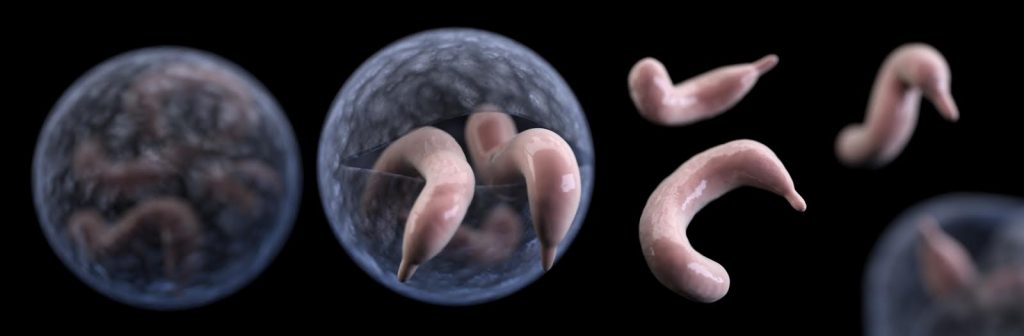
ZEELAND — Critter Barn in Zeeland is voluntarily closing for the week in response to an outbreak of a parasite, the nonprofit announced Tuesday, May 2.

More: Parasite infects three Critter Barn volunteers

Critter Barn at 2950 80th Ave. will clean, scrub and disinfect its farm as an extra measure of precaution, it wrote, expecting to reopen Tuesday, May 9.

The Ottawa County Department of Public Health told WOOD TV-8 on Friday, April 28, there have been eight confirmed cases and three probable cases of Cryptosporidium, a parasite commonly found in water and near farm animals, traced back to Critter Barn. No one has been hospitalized, according to the health department.

Research – Impact of gas ultrafine bubbles on the efficacy of antimicrobials for eliminating fresh and aged Listeria monocytogenes biofilms on dairy processing surfaces

Wiley Online

Abstract

Ultrafine bubbles (UFB) are a novel concept that has the potential to enhance the potency of antimicrobials to eliminate biofilms. This study investigated the impact of incorporating gas (air, CO2, and N2) UFB on the potency of chlorine (Cl2; 50, 100, and 200 ppm) and peracetic acid (PAA; 20, 40, and 80 ppm) antimicrobial (AM) solutions against fresh (3 days) and aged (30 days) Listeria monocytogenes biofilms on polypropylene, silicone, and stainless steel surfaces. Listeria monocytogenes biofilms were statically grown on polypropylene, silicone, and stainless steel coupons (7.62 × 2.54 cm) at 25°C for 3 or 30 days, by immersing in a three-strain cocktail of L. monocytogenes in brain heart infusion (BHI) broth. The coupons were treated by submerging in AM solutions with or without UFB for 1 min, then swabbed into Dey-Engley neutralizing broth and enumerated on BHI agar. Incorporation of air, CO2, and N2 UFB in AM solutions resulted in significantly increased log reductions (0.4–1.5 logs) of fresh and aged L. monocytogenes biofilms on polypropylene and stainless steel surfaces, whereas incorporation of CO2 UFB in AM solutions resulted in ~1 log greater reductions of fresh and aged L. monocytogenes biofilms on silicone surfaces compared with AM solutions without UFB. This study also demonstrated that 200 ppm Cl2 was most effective against fresh and aged L. monocytogenes biofilms on polypropylene, silicone, and stainless steel surfaces compared with 50 ppm Cl2, 20 ppm PAA, and 40 ppm PAA.