Category Archives: microbial contamination

Research – In vitro antimicrobial effects of Myristica fragrans essential oil on foodborne pathogens and its influence on beef quality during refrigerated storage

Wiley Online

Nutmeg (Myristica fragrans) seed was subjected to the hydro‐distillation method to extract its essential oil (NEO). Its main constituents were α‐pinene (20.16%), sabinene (14.45%), and β‐pinene (13.26%) with great antimicrobial and antioxidant actions. A novel edible coating was then fabricated based on the sage seed mucilage (SSM) and NEO, to ameliorate the quality and shelf‐life of beef slices. The NEO‐loaded SSM coating was able to significantly decrease the population of total viable count, Escherichia coli, Staphylococcus aureus, psychrotrophic bacteria, and fungi. Moreover, lipid oxidation of beef slices was remarkably suppressed upon the application of bioactive NEO‐loaded SSM edible coating, as compared with the control by Day 6. The coated beef sample, especially NEO‐rich SSM coated ones perceived a higher consumer acceptance and firmness than the SSM coated and noncoated samples. The SSM edible coating containing NEO could therefore have the potential to control the growth of pathogenic microorganisms and lipid oxidation, and to improve the color stability and sensory properties of meat and meat products.

Research – Bacteria killed by new light-activated coating

Science Daily

To stop the spread of disease, it could be used to coat phone screens and keyboards, as well as the inside of catheters and breathing tubes, which are a major source of healthcare-associated infections (HCAIs).

The most well known HCAIs are caused by Clostridioides difficile (C. difficile), methicillin-resistant Staphylococcus aureus (MRSA) and Escherichia coli (E. coli). They commonly occur during in-patient medical or surgical treatment, or from visiting a healthcare setting and pose a serious health threat, making them a key priority for the NHS to address*.

The research, published today in Nature Communications, is the first to show a light activated antimicrobial coating successfully killing bacteria in low intensity, ambient light (300 Lux), such as that found in wards and waiting rooms. Previously, similar coatings needed intense light (3,000 Lux), like that found in operating theatres, to activate their killing properties.

The new bactericidal coating is made of tiny clusters of chemically modified gold embedded in a polymer with crystal violet — a dye with antibacterial and antifungal properties.


Australia – Microbial recalls up but overall alerts down in Australia

Food Safety News

Undeclared allergens and microbial contamination were responsible for the majority of recalls in Australia this past year.

Undeclared allergens caused 32 of the 87 recalls in 2019 while 30 were due to microbial contamination. In 2018, 46 recalls were because of allergens and 20 due to microbial contamination out of 100.

Food Standards Australia New Zealand (FSANZ) collects data on Australian food recalls so trends can be identified as well as common problems in the industry.

Recalls are classified by FSANZ under microbial contamination, labelling, foreign matter, chemical/other contaminants, undeclared allergen, biotoxin and other.

Undeclared allergen and microbial recalls up
Between January 2010 and December 2019, FSANZ coordinated 707 recalls. The average per year for the last 10 years is 71.

The type mostly associated with a recall is mixed and/or processed food but this is likely due to the range in this category, including most long-life packaged food and manufactured items with multiple ingredients. Breads and bakery products, including biscuits, cakes and pastries, is the second largest type associated with recalls.


RASFF Alerts – Animal Feed – Salmonella – Dog Chews (dried tripe) – Organic Soyabean Cake – Soybean Meal

RASFF-Logo

RASFF – Salmonella enterica ser. Newport (presence /25g) and Salmonella enterica ser. Typhimurium (presence /25g) in dog chews (dried tripes) from India in Germany

RASFF – Salmonella enterica ser. Tennessee (presence /25g) in organic soybean cake from China in Germany

RASFF – Salmonella enterica ser. Liverpool (presence /25g) and Salmonella enterica ser. Senftenberg (presence /25g) in soybean meal from Germany in Finland

Research – As warming waters make shellfish toxic, a way of life becomes deadly for Native Alaskans.

Grist org

This summer, independent shellfish testing sites all over the state reported spikes in toxin levels, possibly related to the historic high temperatures in the water surrounding Alaska. And those warming waters are creating the ideal conditions for the algae that produce the toxin to propagate year-round, some researchers say.

Research – Campylobacter chicken liver outbreak adds to evidence of risk

Food Safety News

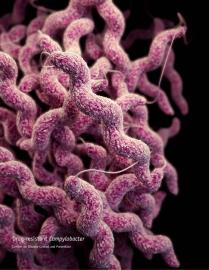
campy2

Image CDC

Researchers have called for increased awareness to reduce the risk of Campylobacter outbreaks linked to incorrectly cooked chicken liver dishes.

Communication from food safety and public health authorities may be required. Any strategy should ensure the risk profile of poultry liver-containing dishes is raised and availability of evidence-based preventative strategies for food preparation promoted, according to the study published in the journal Epidemiology and Infection.

There were 19 people who got campylobacteriosis linked to an outbreak in England 2016; seven confirmed and 12 probable cases. Chicken liver pâté was most strongly associated with illness. Three cases reported an incubation period of less than 24 hours, consistent with other outbreaks of campylobacteriosis associated with poultry liver.

Diversorium Ltd., the company which owned and operated the Downe Arms, a hotel in Wykeham near Scarborough, was fined £8,000 ($10,300) in November 2017 for two food hygiene related offences related to the outbreak.

Research -Foodborne Illness Pathogens And Fecal Contaminants Found On New Disposable Gloves

Yahoo Finance

New results of microbial testing of the surfaces of unused disposable gloves, in association with Eagle Protect PBC, have found bacterial genera and species specific to foodborne illnesses (FBI), food spoilage and skin infections. Strains of these microorganisms of concern were present on new and unused disposable gloves currently being used in the US food industry, and in some cases as medical exam gloves. Twenty-five (25) different brands of gloves were analyzed, providing specific profiles in respect to their manufacturing standards, or lack thereof. Food, dermal and respiratory pathogens as well as spoilage species were linked to the use of polluted water sources; sewage (fecal pollution); and human and animal gut bacteria introduced into glove production environments.


Research -Salmonella phage study underway on Kenyan poultry farms

Wattagenet

The use of bacteriophages to kill Salmonella in poultry flocks is currently being investigated in Kenya. The work, driven by concerns about antibiotic overuse and antibiotic resistance, should result in a commercially available product aligned to local needs and offering an alternative to antibiotics.

Full Article


Research – Eliminating viruses in our food with cranberries and citrus fruit

Science Daily

Fresh produce is a major vehicle for noroviruses, a group of viruses that are the most common cause of gastroenteritis in developed countries. However, the viruses are quite resistant to cold pasteurization treatments such as irradiation, which are used to destroy bacteria, moulds, parasites, and insects. The irradiation process uses gamma rays or X-rays to destroy these viruses but at the dose needed to eliminate them, it can affect the physicochemical properties of fresh produce.

Professor Monique Lacroix, a researcher at Institut National de la Recherche Scientifique (INRS), has developed an edible coating based on cranberry juice and citrus extract that makes noroviruses more sensitive to gamma irradiation, making it possible to eliminate them while preserving the quality of food, all without risk to consumers.

RASFF Alert – Suspicion of Bacterial Contamination – Canned Sardines

RASFF-Logo

RASFF – suspicion of bacterial contamination (swollen cans) in canned sardines from Morocco in the UK