Category Archives: microbial contamination

Research – Antimicrobial Resistance in Salmonella enterica Serovar Paratyphi B Variant Java in Poultry from Europe and Latin America

CDC

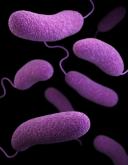
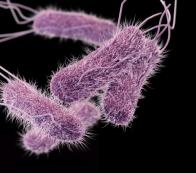
Salmonellaa

Image CDC

Salmonella enterica serovar Paratyphi B variant Java sequence type 28 is prevalent in poultry and poultry meat. We investigated the evolutionary relatedness between sequence type 28 strains from Europe and Latin America using time-resolved phylogeny and principal component analysis. We sequenced isolates from Colombia, Guatemala, Costa Rica, and the Netherlands and complemented them with publicly available genomes from Europe, Africa, and the Middle East. Phylogenetic time trees and effective population sizes (Ne) showed separate clustering of strains from Latin America and Europe. The separation is estimated to have occurred during the 1980s. Ne of strains increased sharply in Europe around 1995 and in Latin America around 2005. Principal component analysis on noncore genes showed a clear distinction between strains from Europe and Latin America, whereas the plasmid gene content was similar. Regardless of the evolutionary separation, similar features of resistance to β-lactams and quinolones/fluoroquinolones indicated parallel evolution of antimicrobial resistance in both regions.

Research – Quantitative Risk Assessment of Human Campylobacteriosis Associated With Thermophilic Campylobacter Species in Chickens

PubMed

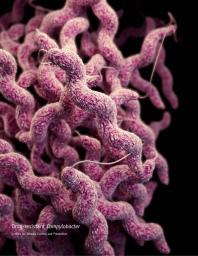
campy2

Image CDC

A quantitative risk assessment comprising the elements hazard identification, hazard characterization, exposure assessment, and risk characterization has been prepared to assess the effect of different mitigation strategies on the number of human cases in Denmark associated with thermophilic Campylobacter spp. in chickens. To estimate the human exposure to Campylobacter from a chicken meal and the number of human cases associated with this exposure, a mathematical risk model was developed. The model details the spread and transfer of Campylobacter in chickens from slaughter to consumption and the relationship between ingested dose and the probability of developing campylobacteriosis. Human exposure was estimated in two successive mathematical modules. Module 1 addresses changes in prevalence and numbers of Campylobacter on chicken carcasses throughout the processing steps of a slaughterhouse. Module 2 covers the transfer of Campylobacter during food handling in private kitchens. The age and sex of consumers were included in this module to introduce variable hygiene levels during food preparation and variable sizes and compositions of meals. Finally, the outcome of the exposure assessment modules was integrated with a Beta-Poisson dose-response model to provide a risk estimate. Simulations designed to predict the effect of different mitigation strategies showed that the incidence of campylobacteriosis associated with consumption of chicken meals could be reduced 30 times by introducing a 2 log reduction of the number of Campylobacter on the chicken carcasses. To obtain a similar reduction of the incidence, the flock prevalence should be reduced approximately 30 times or the kitchen hygiene improved approximately 30 times. Cross-contamination from positive to negative flocks during slaughter had almost no effect on the human Campylobacter incidence, which indicates that implementation of logistic slaughter will only have a minor influence on the risk. Finally, the simulations showed that people in the age of 18-29 years had the highest risk of developing campylobacteriosis.

RASFF Alert – Animal Feed – Moulds – Sunflower Seed Meal

RASFF-Logo

RASFF – sunflower seed meals from Ukraine infested with moulds in Poland

RASFF Alert – Animal Feed -Aflatoxin – Shelled Groundnuts

RASFF-Logo

RASFF – aflatoxins (B1 = 29.4 µg/kg – ppb) in shelled groundnuts from Argentina in the UK

RASFF Alerts – Animal Feed- Salmonella – Lamb meal – Organic Soya Bean Meal – Toasted Soya Beans

RASFF-Logo

RASFF – Salmonella (presence /25g) in lamb meal from Spain in Germany

RASFF – Salmonella enterica ser. Liverpool (presence /25g) and Salmonella enterica ser. Mbandaka (presence /25g) in organic soybean meal from the Netherlands in  Sweden

RASFF – Salmonella enterica ser. Agona (presence /25g) in toasted soy beans from Belgium in Belgium

Research – The fate of cold‐stressed or tetracycline‐resistant Vibrio spp. in precooked shrimp during frozen storage

Wiley Online

CDC Vibrio

Image CDC

We compared the fate of cold‐stressed (CS) or tetracycline‐resistant (TR) Vibrio parahaemolyticus, Vibrio vulnificus , and Vibrio cholerae in precooked shrimp during frozen storage. The recovery ability of viable but nonculturable (VBNC) Vibrio cells was compared at 25°C. Each suspension of nonstressed (NS), CS, or TR Vibrio cells inoculated into cooked shrimps were subjected to frozen storage at −20°C or three freeze–thaw cycles. CS and TR cells were more rapidly converted to VBNC state than NS cells. Most of VBNC Vibrio cells were observed as viable cells after frozen storage. Although there were differences in the recovery extent of cells depending on the types of stress and strain, VBNC cells were resuscitated at 25°C. The most resistant to tetracycline and the lowest injury rate were observed in V. cholerae cells during frozen storage.

RASFF Alerts – Animal Feed – Salmonella – Maize – Rape Seed Meal

RASFF-Logo

RASFF – Salmonella enterica ser. Infantis (presence /25g) in maize from Russia in Finland

RASFF – Salmonella (presence /25g) in rape seed meal from Russia in Finland

USA – Multistate outbreak of Salmonella Hadar infections linked to contact with backyard poultry

Outbreak News Today

The Centers for Disease Control and Prevention (CDC) and public health officials in several states report investigating an outbreak of Salmonella infections linked to contact with live poultry, such as chicks and ducklings, in backyard flocks.

Officials say a total of 97 people have been infected with the outbreak strain of Salmonella Hadar from 28 states. 17 people have been hospitalized. No deaths have been reported.

About 1/3 of the cases were in children younger than 5 years of age.

Epidemiologic evidence shows that contact with backyard poultry (such as chicks and ducklings) is the likely source of this outbreak.

People can get sick from Salmonella from touching live poultry or their environment. Birds carrying the bacteria can appear healthy and clean.

Spring and summer are always popular times for people to purchase chicks, ducklings, and other live poultry. As people tend to their new flocks, increases in Salmonella infections linked to live poultry are usually reported.

Information – Legionella risks during the coronavirus outbreak

HSE

CDC legionella

Image CDC


Employers, the self-employed and people in control of premises, such as landlords, have a duty to identify and control risks associated with legionella.

If your building was closed or has reduced occupancy during the coronavirus (COVID-19) outbreak, water system stagnation can occur due to lack of use, increasing the risks of Legionnaires’ disease. This may particularly affect:

For detailed guidance on Legionella and safer working during the coronavirus outbreak visit the HSE website.

USA – California firm ordered to stop Norovirus claims

BARF BLOG

CBS Los Angeles reports a federal court ordered a Lake Forest company to stop distributing hand sanitizer products it touts as being able to fight specific diseases.

Innovative BioDefense Inc. of Lake Forest was ordered Monday to stop distributing its Zylast hand sanitizer products until it obtains FDA approval or removes removes disease-specific claims from its product labeling, according to the U.S. Department of Justice.

The Zylast product line — which includes a broad spectrum antimicrobial antiseptic, an antiseptic lotion and an antiseptic foaming soap — is sold by Innovative BioDefense online, directly to consumers. According to a 2018 federal complaint, the company marketed their products as being effective against pathogens such as norovirus, rhinovirus, rotavirus, flu virus, Methicillin-Resistant Staphylococcus Aerus bacteria and Ebola.