Category Archives: microbial contamination

Research – Listeria monocytogenes Cold Shock Proteins: Small Proteins with A Huge Impact

MDPI

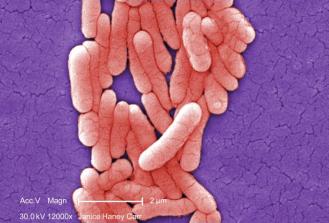
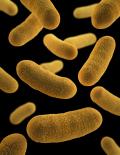
Listeria monocytogenes has evolved an extensive array of mechanisms for coping with stress and adapting to changing environmental conditions, ensuring its virulence phenotype expression. For this reason, L. monocytogenes has been identified as a significant food safety and public health concern. Among these adaptation systems are cold shock proteins (Csps), which facilitate rapid response to stress exposure. L. monocytogenes has three highly conserved csp genes, namely, cspAcspB, and cspD. Using a series of csp deletion mutants, it has been shown that L. monocytogenes Csps are important for biofilm formation, motility, cold, osmotic, desiccation, and oxidative stress tolerance. Moreover, they are involved in overall virulence by impacting the expression of virulence-associated phenotypes, such as hemolysis and cell invasion. It is postulated that during stress exposure, Csps function to counteract harmful effects of stress, thereby preserving cell functions, such as DNA replication, transcription and translation, ensuring survival and growth of the cell. Interestingly, it seems that Csps might suppress tolerance to some stresses as their removal resulted in increased tolerance to stresses, such as desiccation for some strains. Differences in csp roles among strains from different genetic backgrounds are apparent for desiccation tolerance and biofilm production. Additionally, hierarchical trends for the different Csps and functional redundancies were observed on their influences on stress tolerance and virulence. Overall current data suggest that Csps have a wider role in bacteria physiology than previously assumed. View Full-Text
Research – Staphylococcal Infections: Host and Pathogenic Factors

MDPI

Staph

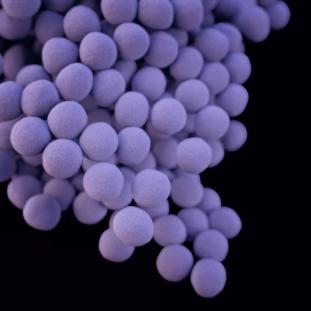
In 1880, the Scottish surgeon Sir Alexander Ogston first described staphylococci in pus from a surgical abscess in a knee joint: “The masses looked like bunches of grapes” [1]. In 1884, the German physician Friedrich Julius Rosenbach differentiated the staphylococci by the color of their colonies: S. aureus (from the Latin aurum, gold) [2]. For another 20 years, very little was known on the pathophysiology of this bug. Based on a PubMed search record, the first Staphylococcal paper was published in 1900 on a case report [3]. More and more scientists gradually engaged to study diseases caused by this bacterium.
There were some 10 publications recorded during the period 1900–1910, which translate in average to one publication/year. Research on this bug exploded in the 20th century, which is reflected in a recent PubMed search. It yields 47,974 publications records when searched using the keyword “Staphylococcus” in the title. During the period 2010–2020, the average publication was 2000 articles/year. This record makes Staphylococcus the single most researched bacterium based on this publication track record.
Over time, numerous Staphylococcus species were discovered, consisting of more than 45 staphylococcal species and 24 subspecies classified using molecular methods [4]. These various species of Staphylococcus are clinically important as 30% of the healthy human population is colonized with various Staphylococcus spp. Some strains are opportunistic pathogens and can cause a minor infection to life-threatening diseases. Pathogenicity of these different strains depends on several virulence factors: Level of protein expression as well as the robustness of the regulatory networks expressing these virulence factors.
These factors consist of numerous toxins, enterotoxins (some of which act as superantigens), enzymes, and proteins with other functions (cytoplasmic, extracellular, and surface) that are tightly regulated by two-components (TC), transcriptional and translational regulators, as well as quorum-sensing (QS) regulatory networks [5]. This Special Issue is dedicated to the studies and recent advancements in our understanding of staphylococcal virulence mechanisms that enable Staphylococcus spp. either to successfully establish themselves as a colonizer or to overcome the host’s defense system to cause infection.

Europe – Salmonella sickens up to 200 across EU and UK

Food Safety News

Salm2

More than 200 people in 11 countries could be part of a Salmonella outbreak across Europe. Investigations to find the source of the Salmonella Braenderup infections are ongoing.

The European Centre for Disease Prevention and Control (ECDC) confirmed to Food Safety News that it was supporting countries in their investigations and following the incident closely with the European Food Safety Authority (EFSA).

The hardest hit country is the United Kingdom with 52 confirmed infections while France only has one confirmed patient. Denmark has 27 and Sweden 25 confirmed infections with the Netherlands recording 13 people sick.

USA – Randall Foods Inc. Initiates Voluntary Recall of all Randall Beans – Possible Micro Contamination

FDA

Summary

Company Announcement Date:
FDA Publish Date:
Product Type:
Food & Beverages
Foodborne Illness
Reason for Announcement:
Potential for underprocessing which could result in Clostridium botulinum contamination
Company Name:
Randall Foods Inc.
Brand Name:
Randall
Product Description:
Randall Beans

Company Announcement

Randall Foods, Inc. of Cincinnati, Ohio is recalling all its Randall-brand beans because of manufacturing deviations that may pose a potential health risk.  The recall includes the following products:

Brand

Description

UPC

Batch/Lot Numbers

“Best By” Date

Randall RANDALL GREAT NORTHERN BEANS 48OZ 070095000100 ALL Prior to January 1 2025
Randall RANDALL GREAT NORTHERN BEANS 24OZ 070095000117 ALL Prior to January 1 2025
Randall
Randall
RANDALL GREAT NORTHERN BEANS 15.4OZ
RANDALL PINTO BEANS 48OZ
070095000131
070095000209
ALL
ALL
Prior to January 1 2025
Randall RANDALL PINTO BEANS 24OZ 070095000216 ALL Prior to January 1 2025
Randall RANDALL PINTO BEANS 15.4OZ 070095000230 ALL Prior to January 1 2025
Randall RANDALL MIXED BEANS 48OZ 070095000407 ALL Prior to January 1 2025
Randall RANDALL MIXED BEANS 24OZ 070095000414 ALL Prior to January 1 2025
Randall RANDALL MIXED BEANS 15.4OZ 070095000430 ALL Prior to January 1 2025
Randall RANDALL KIDNEY BEANS 48OZ 070095000308 ALL Prior to January 1 2025
Randall RANDALL KIDNEY BEANS 24OZ 070095000315 ALL Prior to January 1 2025
Randall RANDALL KIDNEY BEANS 15.4OZ 070095000339 ALL Prior to January 1 2025
Randall RANDALL NAVY BEANS 48OZ 070095000506 ALL Prior to January 1 2025
Randall RANDALL NAVY BEANS 15.4OZ 070095000537 ALL Prior to January 1 2025
Randall RANDALL BLACK BEANS 48OZ 070095000605 ALL Prior to January 1 2025
Randall RANDALL BLACK BEANS 24OZ 070095000612 ALL Prior to January 1 2025
Randall RANDALL BLACK BEANS 15.4OZ 070095000636 ALL Prior to January 1 2025
Randall RANDALL GARBANZO BEANS 24OZ 070095000711 ALL Prior to January 1 2025
Randall RANDALL GARBANZO BEANS 15.4OZ 070095000735 ALL Prior to January 1 2025
Randall RANDALL ULITMATE 4-BEAN MIX 48OZ 070095000902 ALL Prior to January 1 2025
Randall RANDALL ORGANIC GREAT NORTHERN BEANS 48OZ 070095005105 ALL Prior to January 1 2025

The product is sold in 48oz, 24oz, and 15.4oz glass jars with tan labels with “Randall” at the label top.    Approximately 1.6 million cases of affected products were distributed between March 1, 2019 and May 15, 2021 at retail locations in the following states: Alabama, Arkansas, Florida, Iowa, Illinois, Kansas, Kentucky, Michigan, Minnesota, Missouri, Nebraska, North Carolina, New York, Ohio, Oklahoma, Pennsylvania, South Dakota, Tennessee, Texas, Virginia, Wisconsin, and West Virginia.

The manufacturing deviations included a nonfunctioning temperature indicating device raising the possibility that the product was not effectively processed. Processing at temperatures below a required temperature could create a condition that could lead to premature spoilage or food borne illness; however, there have been no illnesses reported. The company is issuing this voluntary recall as a precaution.

Consumers who have purchased jars of Randall-brand beans, regardless of the “Best By” date, should return them to the place of purchase for a full refund.  Consumers with questions may contact the company between 9 am and 5 pm at 1-513-793-6525.


Company Contact Information

Consumers:
Scott Keating
 1-513-793-6525

RASFF Alerts – Animal Feed – Salmonella – Feed Corn – Feed Material – Organic Rapeseed Expeller – Frozen Chicken MSM

RASFF

Salmonella Typhimurium in feed corn from Poland in Finland

RASFF

Salmonella Typhimurium in feed material from Belgium, used in compound feeds in the Czech Republic, Finland, Germany, UK and Spain

RASFF

Salmonella enterica ser. anatum in organic rapeseed expeller from FR in Finland

RASFF

Salmonella infantis in frozen chicken MSM from Germany in Italy

Kenya – Government to destroy 1, 200 bags of poisonous maize at Isebania border – Aflatoxin

Standard Media

The Government is set to destroy over 1,200 bags of maize which is believed to have been imported from neighbouring Tanzania.

Authorities say the maize is contaminated with aflatoxin, a naturally occurring carcinogenic chemical.

According to Migori County Commissioner Boaz Cherutich, the maize is currently at Kehancha National Cereals and Produce Board depot under tight police security.

He said they will seek a court order to allow them to destroy the contaminated maize which was sampled at the Government laboratory.

“We will seek court orders to destroy the maize which was confirmed to be contaminated with high levels of aflatoxin,” Cherutich said.

Spain – Alert for the presence of Listeria monocytogenes in marinated smoked salmon from Spain

ACSA

The Spanish Agency for Food Safety and Nutrition has become aware through the Coordinated System of Rapid Exchange of Information (SCIRI), of an alert notification transferred by the health authorities of the Autonomous Community of Andalusia regarding the presence of Listeria monocytogenes, in smoked salmon marinated with dill made in Spain.

The presence of Listeria monocytogenes above the established limits has been detected as a result of an official control carried out by the health authorities of the Autonomous Community of Andalusia.

The manufacturing company has contacted its customers and is managing the withdrawal of product from market.

The data of the product involved are:

  • Product name on the label: Smoked salmon marinated with dill
  • Brand: Royal
  • Lot: 1098B1-098
  • Expiry date: 23/05/2021
  • Barcode: EAN841248-051128-0
  • Unit weight: 80 g
  • Temperature: Cooling

The product has been distributed to all the autonomous communities.

This information has been transferred to the competent authorities of the Autonomous Communities through the SCIRI, in order to verify the withdrawal of the affected products from the marketing channels.

With the information available, no case associated with this alert has been confirmed in Spain.

As a precautionary measure, it  is recommended that people who have lots of the products listed above at home, refrain from consuming them and return them to points of sale.

In the case of having consumed these products from the affected batches and presenting any symptoms compatible with Listeriosis (vomiting, diarrhoea and fever), it is recommended to go to a health center.

For more information on this disease, you can call CatSalut 24 hours a day (061).

In the event that new information on this withdrawal is available, ASPCAT will update this statement.

Healthy, Safe, Sustainable: Driving Scotland’s Food Future Food Standards Scotland Strategy for 2021–2026

Click to access FSS_Strategy_2021-2026.pdf

Norway – Norwegian surveillance finds low levels of Salmonella

Food Safety News

Norwegian cattle, swine and poultry are only rarely infected with Salmonella, according to the results of surveillance programs in 2020.

Occurrence of Salmonella in Norwegian production animals and animal products is very low compared to most other countries. Salmonellosis has increased in recent decades but the majority of infections are acquired abroad.

Surveillance covers live animals such as pigs, poultry and cattle, eggs and fresh meat from pigs and cattle. Any Salmonella isolated in the programs is notifiable to the Norwegian Food Safety Authority (Mattilsynet). The Norwegian Veterinary Institute coordinates the surveillance programs, examines fecal samples and reports the results. Private laboratories analyze samples collected at slaughterhouses and cutting plants.

Programs are approved by the EU Commission which allows Norway to require additional guarantees on Salmonella when importing live animals and food products of animal origin from the European Union.

Korea – Food poisoning bacteria found in 15 kimchi products from China

Korean Times

Yersinia p

Food poisoning bacteria were detected in 15 out of 289 kimchi products imported from China, according to the Ministry of Food and Drug Safety, Tuesday.

Two out of four Chinese salt-cured cabbage products were also found to have used preservatives that are not permitted in Korea.


It examined the 289 products from 55 Chinese companies imported here, and detected Yersinia enterocolitica, a type of food poisoning bacteria, in 15 of them.