Category Archives: microbial contamination

Research- Antimicrobial effects of plant extracts against Clostridium perfringens with respect to food-relevant influencing factors

Journal of Food Protection

The application of plant extracts (PEs) could be a promising option to satisfy consumers’ demand for natural additives to inhibit growth of variable pathogenic bacteria. Thus, the aim of this study was to develop a standardized microdilution method to examine the antimicrobial effects of ten hydrophilic plant extracts against two strains of C. perfringens facing various food-relevant influencing factors. Due to the high opacity of PEs, resazurin was used as an indicator for bacterial growth instead of pellet formation. The highest value of the minimum inhibitory concentration (MIC) of the replications of each PE was defined as effective plant extract concentration (EPC), whereas the next concentration beneath the lowest MIC value was defined as the ineffective plant extract concentration (IEPC). The EPC of seven PEs: allspice, cardamom, cinnamon, clove, coriander, ginger and mace were between 0.625 – 10 g/kg, whereas extracts of caravey, nutmeg and thyme showed no antimicrobial activity up to the maximum concentration tested (10 g/kg) against C. perfringens in vitro. Two intrinsic factors, sodium chloride and sodium nitrite, displayed either synergistic/additive effects or no interaction with most PEs. By combination with PEs at its ineffective plant concentration (IEPC, 0.08 – 1.25 g/kg), MIC of NaCl and NaNO2 decreased from 25 – 50 g/kg to 6 – 25 g/kg and > 200 mg/kg to 0.2 – 100 mg/kg respectively. On the contrary, lipid (sun flower oil) at a low concentration inhibited the antimicrobial effects of all tested PEs. For extrinsic factors, only allspice, ginger and coriander could maintain their antimicrobial effects after being heated to 78 °C for 30 min. The synergistic effect between PEs and pH values (5.0 and 5.5) was also found for all PEs. The established screening method with resazurin and defining EPC and IEPC values allows the verification of antimicrobial effects of PEs under various food-relevant influencing factors in a fast and reproducible way.


Research – Novel Sequence Types of Listeria monocytogenes of Different Origin Obtained in the Republic of Serbia

MDPI

Listeria monocytogenes, the causative agent of listeriosis, is amongst the major food-borne pathogens in the world that affect mammal species, including humans. This microorganism has been associated with both sporadic episodes and large outbreaks of human listeriosis worldwide, with high mortality rates. In this study, the main sequence types (STs) and clonal complexes (CCs) were investigated in all of the 13 L. monocytogenes strains originating from different sources in the Republic of Serbia in 2004–2019 and that were available in the BIGSdb-Lm database. We found at least 13 STs belonging to the phylogenetic lineages I and II. These strains were represented by ST1/ST3/ST9 of CC1/CC3/CC9, which were common in the majority of the European countries and worldwide, as well as by eight novel STs (ST1232/ST1233/ST1234/ST1235/ST1238/ST1236/ST1237/ST1242) of CC19/CC155/CC5/CC21/CC3/CC315/CC37, and the rare ST32 (clonal complex ST32) and ST734 (CC1), reported in the Republic of Serbia, the EU, for the first time. Our study confirmed the association of CC1 with cases of neuroinfection and abortions among small ruminants, and of CC3 and CC9 with food products of animal origin. The strains isolated in 2019 carried alleles of the internalin genes (inlA/inlB/inlC/inlE) characteristic of the most virulent strains from the hypervirulent CC1. These findings demonstrated the genetic relatedness between L. monocytogenes strains isolated in the Republic of Serbia and worldwide. Our study adds further information about the diversity of the L. monocytogenes genotypes of small ruminants and food products, as the strain distribution in these sources in Serbia had not previously been evaluated.

Research – “Aquaponics offers solutions to foodborne illness outbreaks”

Horti Daily

Soilless growing offers a viable alternative to growing crops in a low-risk environment for many microbial sources. Aquaponics, which is often greenhouse-grown, is an innovative way of growing fish and plants in rural or urban settings. For years, commercial aquaponic farms have obtained food safety certifications from Global GAP, USDA Harmonized GAP, Primus GFS, and the SWF Food Safety Program, in addition to being certified USDA organic (Aquaponic Association, 2019) and sold commercially across North America.

In an aquaponic system, the healthy microbes actually serve as biological control agents against pathogenic bacteria making their survival minimal (Fox, 2012). While aquaponics produce is not immune to all pathogenic contamination, it is one of the safest agriculture methods against pathogenic risk.

RASFF Alerts – Animal Feed – Salmonella – Meat Meal – Poultry Meal – Feed Material

RASFF

Salmonella in meat meal for pet food from Austria in Italy

RASFF

Salmonella enterica ser. anatum and Salmonella enterica ser. Infantis in poultry meal from the United Kingdom in Belgium and the Netherlands

RASFF

Salmonella Typhimurium in feed material from Belgium in the UK

Italy – Genoese pesto without garlic – Microbial Risk

Salute

Brand : Pastificio Novella Sas

Name : Genoese pesto without garlic

Reason for reporting : Recall due to microbiological risk

Publication date : June 16, 2021

Documentation

Documentation

Hong Kong – Food Safety Information

Click to access borne_diseases.pdf

Research – Poultry study points to genes linked to food bug – Campylobacter.

Roslin

Campylobacter kswfoodworld

Variation in the response of chickens to Campylobacter helps identify key genes that may provide resistance to infection.

Research has identified genes in chickens that could offer resistance to harmful bacteria commonly found in poultry and could inform ways to limit the risk of associated food poisoning in people.

The study, led by a team from the Roslin institute, has identified a large number of genes in chicken guts that may determine whether the birds are resistant to Campylobacter.

The insights could inform research towards breeding chickens that are less likely to carry Campylobacter bacteria, and so limit the risk to poultry consumers.

Research – Escherichia coli Survival on Strawberries and Unpacked Romaine Lettuce Washed Using Contaminated Water

MDPI

A number of foodborne outbreaks have occurred in the past decade, with higher incidences associated with romaine lettuce and strawberries. Contaminated agricultural water has been reported as the source of microbial contamination in most of these outbreaks. Maintaining the adequate and sanitary quality (0 E. coli/100 mL) of agricultural water can be challenging during post-harvest operations such as washing. The study focused on the attachment of generic E. coli (Rifampicin resistant) onto romaine lettuce and strawberries, mimicking the produce wash step. The produce was washed with contaminated water, air-dried, and stored in display units for 7 days. The produce was sampled randomly each day and analyzed for the surviving E. coli count. The results indicated that E. coli can survive in both lettuce and strawberries over extended periods. A survival population of 2.3 log CFU/cm2 (day 8) was observed on lettuce with an initial population of 2.8 log CFU/cm2 (day 0). On strawberries, the population reduced from 3.0 (day 0) to 1.7 log CFU/cm2 (day 7), with an initial E. coli concentration of approx. 6 log CFU/mL in the wash water. Strawberry leaves had a higher attachment of E. coli than the fruit (p < 0.05). In conclusion, romaine lettuce and strawberries washed with contaminated water can cause an outbreak affecting consumers and public health. View Full-Text

Research – Prevalence, Antibiogram and Genetic Characterization of Listeria monocytogenes from Food Products in Egypt

MDPI

World Health Organization classified Listeria monocytogenes as a major notable foodborne pathogen associated with high mortality and hospitalization. The study reports the prevalence, antibiogram, virulence determination and genetic characterization of L. monocytogenes from different food products. A total of 250 food samples, fifty samples each from raw milk, ice cream, minced meat, fish fillet and sausage were collected from the Menoufiya governorate in Egypt. L. monocytogenes was detected in 17 (6.8%) of the tested food samples including minced meat (14%), fish fillet (8%), sausage (6%) and raw milk (6%). The antimicrobial susceptibility assay of 17 L. monocytogenes isolates against seventeen antibiotics belonging to eight antibiotics classes revealed a high susceptibility to norfloxacin (82.3%), amoxicillin-clavulanic acid (76.4%), cefotaxime (70.5%), erythromycin (64.6%), amoxicillin (64.6%), gentamicin (58.7%) and vancomycin (58.7%). While, high resistance was observed against oxytetracycline (76.4%), trimethoprim-sulfamethoxazole (76.4%), chloramphenicol (70.5%), doxycycline (64.6%), levofloxacin (41.2%) and azithromycin (41.2%). Of note, all L. monocytogenes isolates were multidrug-resistant. The multiplex PCR successfully amplified L. monocytogenes in all tested isolates. Screening of the five virulence-related genes revealed the hlyA and iap as the most prevalent genes followed by actA gene, however, the inlA and prfA genes were not detected in any of the studied isolates. The partial 16S rRNA gene sequencing of three L. monocytogenes isolates showed a high nucleotide similarity (99.1–99.8%) between the study isolates and various global clones, and phylogenetic analysis clustered these L. monocytogenes strains with other Listeria species including L. welshimeriL. seeligeri and L. innocua. This study demonstrates the impact of L. monocytogenes as a major contaminant of various food products and suggests more attention to the awareness and hygienic measures in the food industry. View Full-Text

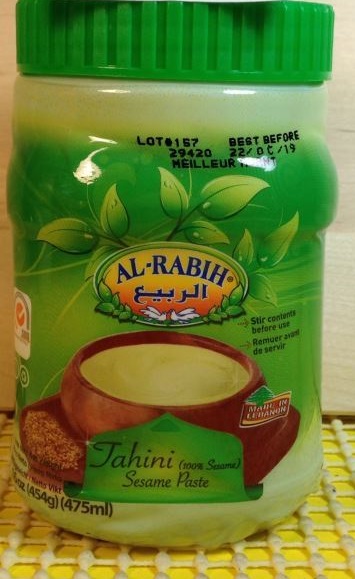
Canada – Expanded Food Recall Warning – Al-Rabih brand Tahini recalled due to Salmonella

CFIA

Recall date: June 14, 2021

Reason for recall: Microbiological – Salmonella

Hazard classification: Class 2Company / Firm: Phoenicia Group Inc.

Distribution: Ontario, Possibly National, Quebec

Extent of the distribution: Consumer

Ottawa, June 14, 2021 – Phoenicia Group Inc. is recalling Al-Rabih brand Tahini from the marketplace due to possible Salmonella contamination. Consumers should not consume the recalled product described below.

Recalled products

Brand Product Size UPC Codes
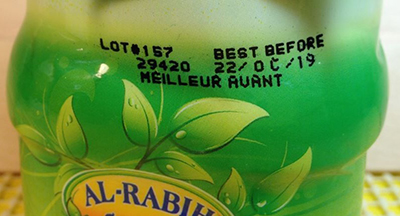
Al-Rabih Tahini (100% Sesame) – Sesame Paste 454 g 7 70338 10053 5 Lot #157 29420
Best before 22/OC/19

What you should do

If you think you became sick from consuming a recalled product, call your doctor.

Check to see if you have the recalled products in your home. Recalled products should be thrown out or returned to the store where they were purchased.

This recall was triggered by Canadian Food Inspection Agency (CFIA) test results. The CFIA is conducting a food safety investigation, which may lead to the recall of other products. If other high-risk products are recalled, the CFIA will notify the public through updated Food Recall Warnings.

The CFIA is verifying that industry is removing the recalled product from the marketplace.

Illnesses

There have been no reported illnesses associated with the consumption of these products.

Product photos

Printer ready version of photos

  • Al-Rabih Tahini, 454 grams - front
  • Al-Rabih Tahini, 454 grams - lot code

Public enquiries and media

Public enquiries
Toll-free: 1-800-442-2342 (Canada and U.S.)
Telephone: 1-613-773-2342 (local or international)
Email: information@inspection.gc.ca
Media relations
Telephone: 613-773-6600
Email: cfia.media.acia@inspection.gc.ca