Category Archives: microbial contamination

Research – Outbreak of Salmonella Newport linked to imported frozen cooked crayfish in dill brine, Sweden, July to November 2019

Eurosurveillance

Salmonellosis is the second most commonly reported bacterial gastro-intestinal infection after campylobacteriosis in the European Union (EU) and European Economic Area (EEA). In the EU/EEA, the yearly notification rate of salmonellosis has been around 20 cases per 100,000 individuals in the period from 2015 to 2019 [1]. In 2020, the notification rate decreased to 14 cases per 100,000 individuals; the decline is considered to be an effect of the COVID-19 pandemic [2].  serotype Newport was the fifth most common serotype in the EU/EEA in 2019, accounting for 1.1% of reported serotypes from human salmonellosis cases [1]. In Sweden, human salmonellosis is notifiable by law. The average yearly notification rate of salmonellosis in Sweden between 2015 and 2019 was 21.5 cases per 100,000 individuals, with the majority of cases being infected abroad [3]. In 2019,  Newport was the fifth most common serotype also in Sweden and accounted for 5% of the reported serotypes [3].

Salmonellosis is a bacterial zoonosis. Humans get infected by contaminated foods, through contact with infected animals or humans or via the environment [4]. In recent years, egg and egg products, bakery products and pork and pork products have been the most common food vehicles in food-borne salmonellosis outbreaks reported in EU countries [1].  Newport has previously been linked to outbreaks caused by vehicles of both animal and vegetable origin, for example beef, watermelon and mung bean sprouts [58].  Newport have also been detected in fish and different shellfish and in fresh herbs [911].

In late September 2019, the Public Health Agency of Sweden (PHAS) identified a cluster of nine cases with  Newport sequence type (ST) 46. The cluster was detected as part of the routine microbial surveillance programme where isolates of  from domestic infections are sent to PHAS for typing using whole genome sequencing (WGS). The cluster was put under observation; it evolved slowly and on 23 October, the cluster consisted of 25 cases. The cases were geographically spread across the country and all but one case were adults. The onset of disease ranged from 16 August to 12 October 2019. The spread of cases, geographically and in time, indicated that the infection source was a contaminated food that was distributed nation-wide and could still be on the market. A national outbreak was declared and an outbreak investigation was initiated with the objectives to describe the outbreak and identify the source in order to prevent further cases.

The outbreak team included investigators from PHAS, the Swedish Food Agency (SFA) and the affected regional Departments of Communicable Disease Control and Prevention (CDC department).

Here we report an investigation of a national outbreak of  Newport in Sweden, with the aim of describing the actions that led to the identification and recall of the source of the infection.
Research – International outbreak of salmonellosis in young children linked to the consumption of Kinder brand products. Update in France as of June 2, 2022.

Sante Publique

Following the investigations carried out by the Belgian health authorities, together with their English, European and in particular French counterparts, the company Ferrero proceeded on April 5, 2022 to the recall of several Kinder range products manufactured in a factory in Belgium due to suspected contamination by Salmonella Typhimurium . On April 8, 2022, the recall finally affected all Kinder products from this factory, regardless of their expiry date. On April 14, 2022, an update of the recalled products, including the 2021 Christmas Advent Calendars, was released.

Case of salmonellosis in France: update on June 2, 2022

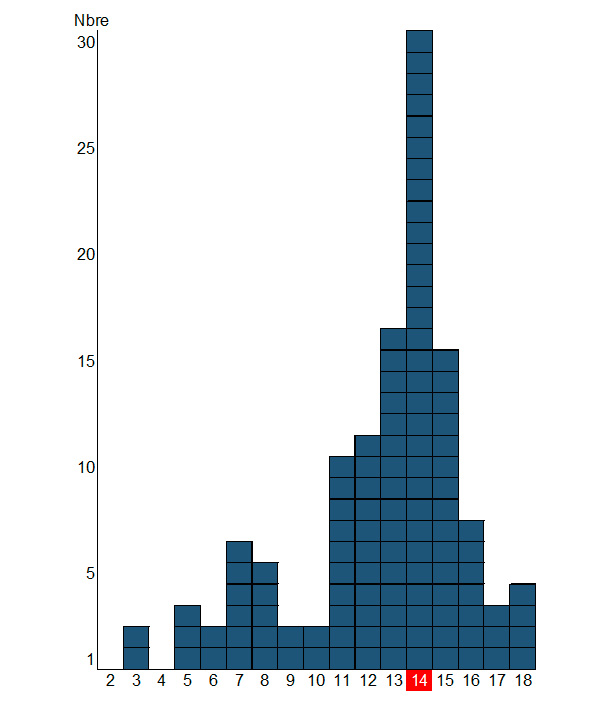
In total, as of 02/06/2022: 118 cases of salmonellosis with a strain belonging to the epidemic have been identified by the National Reference Center (CNR) for salmonella at the Institut Pasteur in France (figure 1) .

Figure 1 – Epidemic curve: number of confirmed cases of salmonellosis caused by Salmonella Typhimurium, monophasic variant (cluster 1 HC5_296366 and cluster 2 HC5_298160), by week of isolation (with in red the week corresponding to the recall of products from the production plant) ‘Arlon in Belgium) – Metropolitan France, weeks 2 to 18, 2022 (N=118)
Figure 1 - Epidemic curve: number of confirmed cases of salmonellosis caused by Salmonella Typhimurium, monophasic variant (cluster 1 HC5_296366 and cluster 2 HC5_298160), by week of isolation (with in red the week corresponding to the recall of products from the production plant) 'Arlon in Belgium) - Metropolitan France, weeks 2 to 18, 2022 (N=118)

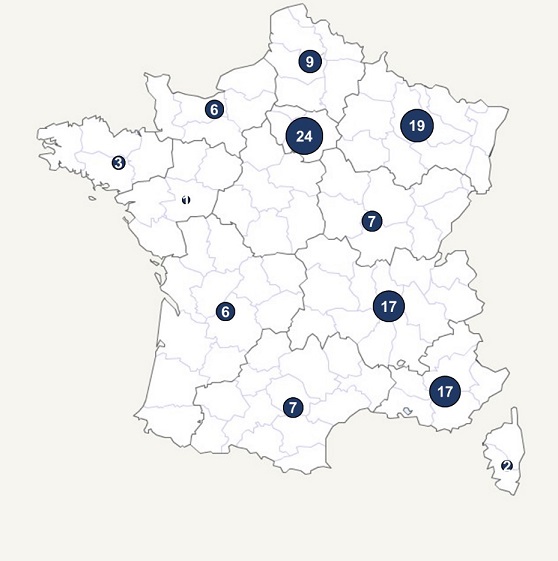
The 118 cases are spread over 12 metropolitan regions (Ile-de-France (24 cases), Grand-Est (19 cases), Auvergne-Rhône-Alpes (17 cases), Provence-Alpes-Côte d’Azur (17 cases) , Hauts-de-France (9 cases), Bourgogne-Franche-Comté (7 cases), Occitanie (7 cases), Normandy (6 cases), New Aquitaine (6 cases), Brittany (3 cases), Corsica (2 cases) and Pays de la Loire (1 case)) with a median age of 4 years, and concern 57 girls and 61 boys.

Figure 2 – Geographical distribution of confirmed cases of salmonellosis due to Salmonella Typhimurium, monophasic variant (cluster 1 HC5_296366 and cluster 2 HC5_298160), by region of residence – metropolitan France, weeks 2 to 18, 2022
Figure 2 - Geographical distribution of confirmed cases of salmonellosis due to Salmonella Typhimurium, monophasic variant (cluster 1 HC5_296366 and cluster 2 HC5_298160), by region of residence - metropolitan France, weeks 2 to 18, 2022

Fifty-one cases were questioned by Public Health France. All the cases, except 1, report, before the onset of their symptoms (which occurred between 20/01 and 04/04/2022), the consumption of chocolates of the brand cited here.

Twenty-two people were hospitalized for their salmonellosis, all since discharged. No deaths were reported.

The foods in question having been identified and the management measures taken, the weekly situation updates are drawn up. Public Health France continues to monitor the reporting of cases by the NR, which are expected due to the different delays inherent in monitoring ( see the infographic dedicated to food alerts ).

The successive withdrawals and recalls of the Kinder brand products concerned, produced by the Belgian factory with its closure by the Belgian authorities, should limit the occurrence in France of new cases of salmonellosis in connection with these chocolates.

The possible identification of new cases with dates of isolation at a distance from the recall withdrawal measures will be the subject of investigations if necessary.

To find out the list of products concerned by the withdrawal-recall: https://rappel.conso.gouv.fr/

People who have consumed the products mentioned above and who present symptoms (gastrointestinal disorders, fever within 72 hours of consumption), are invited to consult their doctor without delay, notifying him of this consumption.

In order to limit person-to-person transmission (especially in households with young children), it is recommended to wash your hands well with soap and water after using the toilet, after changing your child, and before to cook.

USA – CDC investigates two cruise ship outbreaks – Cause Unknown

Outbreak News Today

The Centers for Disease Control and Prevention’s (CDC) Vessel Sanitation Program (VSP) reports investigating two outbreaks on recent cruise ship voyages- Seabourn Cruise Lines, Seabourn Odyssey and Carnival Cruise Line’s Carnival Splendor.

Seabourn Odyssey: 20 passengers and crew on a recent voyage (April 28–May 19, 2022) were sickened with symptoms of diarrhea and vomiting.

The etiology of the outbreak is unknown.

In response to the outbreak, Seabourn Cruise Lines and the crew aboard the ship reported the following actions:

  • Increased cleaning and disinfection procedures according to the ship’s outbreak prevention and response plan.
  • Sent daily reports of gastrointestinal illness cases to VSP.
  • Consulted with VSP about sanitation cleaning procedures and reporting ill cases.

Carnival Splendor: 93 passengers and crew have reported being ill during the May 24–31, 2022 voyage.

Like the Seabourn outbreak, individuals affected on this cruise suffered from vomiting and diarrhea. The cause of the outbreak is unknown.

RASFF Alert – Animal Feed – Enterobacteriaceae – Dog Chews

RASFF

Enterobacteriaceae in dog chews from the Netherlands in Belgium

RASFF Alerts – Animal Feed – Salmonella – Dog Chews – Organic Soya Cake – Soybean Meal – Chicken Necks – Complementary Feed for Dogs – Fish Meal – Sunflower Seed Cake

RASFF

Salmonella enterica ser. Agona in organic soybean meal from the Netherlands in Belgium

RASFF

Salmonella in organic soya cake from the Netherlands in Sweden and Denmark

RASFF

Salmonella in soybean meal from USA in Finland and Canada

RASFF

Salmonella spp. in chicken necks as feed material from Poland in Germany

RASFF

Salmonella spp. in chews for dogs from Poland in Lithuania

RASFF

Salmonella spp. in complementary feed for dogs from China in Austria, France and Germany

RASFF

Salmonella Senftenberg in sunflower seed cake from the Netherlands in Belgium

RASFF

Salmonella in fishmeal from Denmark in Belgium

USA – CDC – Food Safety Materials

CDC

CDC offers many free educational resources about preventing food poisoning. Read feature stories to learn more, share infographics and videos on social media, and syndicate our web pages on your site to help educate others.

Research – Emergent marine toxins risk assessment using molecular and chemical approaches

EFSA

Cyanobacteria harmful blooms represent a deviation to the normal equilibrium in planktonic communities involving a rapid and uncontrolled growth. Owing to the capacity to produce toxins as secondary metabolites, cyanobacteria may cause huge economic losses in the fishing and aquaculture industries and poisoning incidents to humans due to their accumulation in the food chain. The conditions which promote toxic blooms have not yet been fully understood, but climate change and anthropogenic intervention are pointed as significant factors. For the detection of toxins in edible marine organisms, the establishment of international regulations and compulsory surveillance has been probed as exceptionally effective. However, not regulation nor monitoring have been settled concerning emergent marine toxins. In the light of this scenario, it becomes essential to apply fast and reliable surveillance methodologies for the early detection of cyanobacterial blooms as well as the occurrence of emergent marine toxins. Shotgun metagenomic sequencing has potential to become a powerful diagnostic tool in the fields of food safety and One Health surveillance. This culture‐independent approach overcomes limitations of traditional microbiological techniques; it allows a quick and accurate assessment of a complex microbial community, including quantitative identification and functional characterisation, in a single experiment. In the framework of the EU‐FORA fellowship, with the final goal of evaluate metagenomics as a promising risk assessment tool, the fellow worked on the development of an innovative workflow through state‐of‐the‐art molecular and chemical analytical procedures. This work programme aims to evaluate the occurrence of emergent marine toxins and the producing organisms in Cabo Verde coastal cyanobacteria blooms. Our results show the outstanding potential of a holistic metagenomic approach for the risk assessment of emergent marine toxins and the producing organisms. Additionally, we have also highlighted its value for the identification and evaluation of secondary metabolites as natural bioactive compounds with biotechnological and industrial interest.

Research – Clinical Escherichia coli: From Biofilm Formation to New Antibiofilm Strategies

MDPI

Escherichia coli is one of the species most frequently involved in biofilm-related diseases, being especially important in urinary tract infections, causing relapses or chronic infections. Compared to their planktonic analogues, biofilms confer to the bacteria the capacity to be up to 1000-fold more resistant to antibiotics and to evade the action of the host’s immune system. For this reason, biofilm-related infections are very difficult to treat. To develop new strategies against biofilms, it is important to know the mechanisms involved in their formation. In this review, the different steps of biofilm formation in E. coli, the mechanisms of tolerance to antimicrobials and new compounds and strategies to combat biofilms are discussed. View Full-Text

Research – Integration of genomics in surveillance and risk assessment for outbreak investigation

EFSA

Keeping food safe is a challenge that needs continuous surveillance for the sake of consumers’ health. The main issue when a food‐borne pathogen outbreak occurs is represented by the identification of the source(s) of contamination. Delivering this information in a timely manner helps to control the problem, with positive outcomes for everyone, especially for the consumers, whose health is in this way preserved, and for the stakeholders involved in food production and distribution, who could face enormous economic losses if recalls or legal issues occur. Whole genome sequencing (WGS) is a tool recently implemented for the characterisation of isolates and the study of outbreaks because of its higher efficiency and faster results, when compared to traditional typing methods. Lower sequencing costs and the development of many bioinformatic tools helped its spread, and much more attention has been given to its use for outbreak investigation. It is important to reach a certain level of standardisation, though, for ensuring result reproducibility and interoperability. Moreover, nowadays it is possible, if not mandatory for Open Science Practices, to share WGS data in publicly available databases, where raw reads, assembled genomes and their corresponding metadata can be easily found and downloaded. The scope of this Fellowship was to provide the Fellow all the training necessary for successfully integrating genomics to surveillance and risk assessment of food‐borne pathogens from farm to fork.

Research – What to know about Scombroid Poisoning

Medical News Today

Read the full article at the link above.

Scombroid poisoning is a form of food poisoning. It happens when a person eats fish species containing high amounts of a chemical called histidine.

Histidine is an amino acid that naturally occurs in fish. When people do not keep the fish in a refrigerator, bacteria break down the histidine and turn it into histamine.

Histamine is responsible for the toxicity that causes scombroid poisoning, according to the American Academy of Allergy, Asthma & Immunology (AAAAI).

When a person consumes large quantities of fish with histamine, they experience symptoms that resemble an allergic reaction, such as hives. However, it is not a true allergy to a particular fish, according to the National Capital Poison Center.

The condition usually is not long-term or severe, according to the Food and Drug Administration (FDA)Trusted Source. Mild cases often disappear on their own without treatment, but antihistamine medications may help some people.

A person experiencing severe symptoms, such as chest pain or breathing trouble, should go to an emergency room or call local emergency services.