Category Archives: foodborne outbreak

UK – Shiga toxin-producing Escherichia coli (STEC) data: 2021

Gov UK

Updated 18 April 2024

The main points of the 2021 annual report are:

Overall, 1,181 confirmed cases of STEC were reported in England during 2021, a decrease of 2% compared to 2020.

A total of 365 confirmed cases of Shiga toxin-producing Escherichia coli (STEC) O157 were reported in England in 2021, no change compared to 2020. A total of 1,234 confirmed cases of Shiga toxin-producing Escherichia coli (STEC) non-O157 were reported in England in 2021, an increase of 46% compared to 2020.

The lowest annual incidence of STEC O157 was in the East Midlands region (0.41 per 100,000 population) and the highest in the North East region (1.02 per 100,000 population). The lowest incidence of STEC non-O157 was in the Yorkshire and Humber region (0.62 per 100,000 population) and the highest in the London region (4.21 per 100,000 population).

Children aged 1 to 4 years had the highest annual incidence of infection due to STEC O157 (2.3 per 100,000 population, 95% confidence interval (CI) 1.78 to 3.02). Children aged under 1 years had the highest incidence of infection due to STEC non O157 (7.08 per 100,000 population, 95% confidence interval (CI) 7.01 to 7.21).

Around a third (36%, 127 out of 365) of confirmed STEC O157 cases in England were hospitalised and 2% (6 out of 365) were reported to have developed haemolytic uraemic syndrome (HUS). Where information is available, two-thirds (65%, n=274 out of 431) of confirmed STEC non-O157 cases in England were hospitalised; and 1% (14 out of 1,234) of all STEC non-O157 were reported to have developed HUS).

A further 443 specimens in England were positive for stx genes on PCR at the Gastrointestinal Bacteria Reference Unit (GBRU), indicating STEC, but an organism was not cultured therefore a STEC serogroup could not be ascertained.

The most commonly isolated non-O157 STEC serogroup was STEC O26 (n=145 out of 786, 18%).

Four outbreaks of STEC in England involving 52 cases, ranging from 10 to 19 cases, were investigated in 2021: 2 involved STEC O157 and suspected vehicles were identified and 2 involved STEC O26 outbreaks and no vehicles were identified.

Since 2018, the number of STEC O157 notifications has declined and the number of STEC non-O157 has increased two-fold (218%). Overall, there is an increase in STEC notifications, and the burden placed on public health and clinical services is also increasing, especially given the two-fold increase in hospitalisation reported in 2021 for non-O157 cases.
Taiwan – Three test positive for norovirus after dining at sushi restaurant chain

Focus Taiwan

Taipei, April 17 (CNA) Three of the 23 people who reported suspected food poisoning after dining at branches of the sushi restaurant chain Kura Sushi have tested positive for norovirus, the Taiwan Food and Drug Administration (TFDA) said Wednesday.

At a press conference on Wednesday morning, TFDA Director-General Wu Shou-mei (吳秀梅) said the TFDA and local health bureaus have received reports of 10 suspected food poisoning cases involving 23 individuals who had meals at different branches of the sushi restaurant chain.

Of the 23, three have tested positive for norovirus, while testing of samples taken from the remaining 20 individuals is still underway, Wu said, adding that a chef tested negative for norovirus, without specifying the branch where the three dined or where the chef worked.

Denmark reports fatal multi-year Listeria outbreak

Food Safety News

Danish officials are trying to find the source of a Listeria outbreak that has affected 17 people since 2019.

Two illnesses have provisionally been registered in 2024, said the Statens Serum Institut (SSI).

Patients have been infected with the same type of Listeria monocytogenes since the summer of 2019.

Researchers Estimate Leafy Greens Foodborne Illness Outbreaks Cost U.S. $5 Billion Annually

Food Safety.com

A recent review authored by researchers from Ohio State University has established pathogen-specific foodborne illness burden estimates for leafy greens in the U.S. by combining three outbreak-based attribution models with illness incidence and economic cost models.

USA -FDA – Investigations of Foodborne Illness Outbreaks

FDA

What’s New

  • A new outbreak of E. coli O157:H7 illnesses linked to a not yet identified product (ref #1221) has been added to the table. FDA has initiated traceback.
  • For the outbreak of Salmonella Typhimurium (ref #1218) in a not yet identified food, the case count has increased from 11 cases to 12 cases.
  • For the outbreak of Listeria monocytogenes (ref #1214) linked to queso fresco and cotija cheese, the advisory was updated on April 10, 2024. The outbreak has ended, and FDA’s investigation is closed.
  • For the investigation of elevated lead levels in Cinnamon Applesauce Pouches (ref # 1198), these products are off the market and no longer available for sale; however, they have a long shelf life. Consumers should check their pantries and discard any recalled products. FDA’s response has transitioned from this investigation to post-incident actions and activities. Future updates on lead-related actions and activities can be found on the FDA Post- Incident Response Activities: Elevated Lead & Chromium Levels: Cinnamon Applesauce Pouches page.

USA – 11 Norovirus Cases Reported In San Diego County – Oysters

Patch

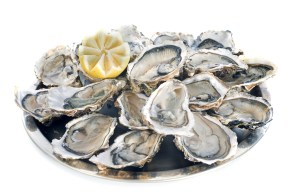
Eleven confirmed and probable cases of norovirus illness in San Diego County have been linked to frozen oysters imported from South Korea, public health officials announced Tuesday.

Customers who ate the oysters between March 31 and April 1 at 100s Seafood Grill Buffet in Mission Valley became sick, with one person going to the emergency room, according to the county.

USA – Outbreak Investigation of Salmonella: Organic Basil (April 2024)

FDA

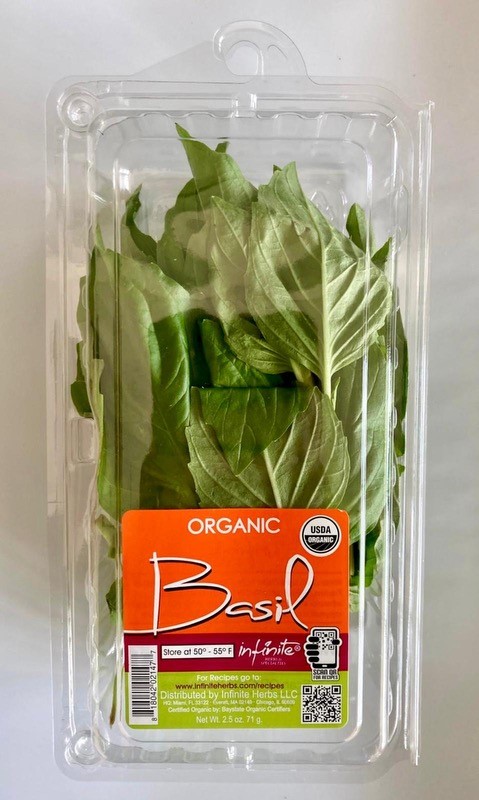
Do not eat Infinite Herbs-brand organic basil sold at Trader Joe’s stores in 29 states and D.C. FDA’s investigation is ongoing.

Infinite Herbs Organic Basil Product

The FDA and CDC, in collaboration with state and local partners, are investigating illnesses in a multistate outbreak of Salmonella Typhimurium infections linked to Infinite Herbs-brand organic basil packed in 2.5-oz clamshell packaging and sold at Trader Joe’s stores in AL, CT, D.C., DE, FL, GA, IA, IL, IN, KS, KY, MA, MD, ME, MI, MN, MO, NC, NE, NH, NJ, NY, OH, PA, RI, SC, TN, VA, VT, and WI.

Based on epidemiological information collected by CDC, a total of 12 people infected with the outbreak strain of Salmonella have been reported from seven states. Seven of eight cases with information available reported exposure to fresh organic basil purchased from Trader Joe’s before becoming ill. Additionally, traceback data collected by FDA determined that Infinite Herbs, LLC, in Miami, FL, was the supplier of the 2.5-oz packages of organic basil sold at Trader Joe’s stores.

In response to this investigation, Trader Joe’s has voluntarily removed all Infinite Herbs-brand organic basil packed in 2.5-oz clamshell packaging from their stores and this product should no longer be available for sale.

The investigation is ongoing to determine the source of contamination and whether additional products are linked to illnesses. FDA will update this advisory should additional consumer safety information become available.

USA – FDA Advises Restaurants and Retailers Not to Serve or Sell and Consumers Not to Eat Certain Frozen, Raw, Half-shell Oysters from Republic of Korea Potentially Contaminated with Norovirus

FDA

Oysters Farm Raised Lable from South Korea

Audience

  • Restaurants and food retailers in California that have recently purchased Lots B231126B240103, and B240214 of frozen, raw, half-shell oysters processed by JBR (KR 15 SP) in Tongyeongsi, Republic of Korea on 11/27/2023, 1/4/2024, and 2/15/2024.
  • Consumers and retailers in California who have recently purchased lots B231126B240103, and B240214 of frozen, raw, half-shell oysters processed by JBR (KR 15 SP) in Tongyeongsi, Republic of Korea on 11/27/2023, 1/4/2024, and 2/15/2024.

Products

Frozen, raw, half-shell oysters Lots B231126 and B240103, harvested from Designated Area No. 1 on 11/26/2023 and 1/3/2024, and Lot B240214 harvested from Designated Area No. 2 on 2/14/2024, and processed by JBR (KR 15 SP) in Tongyeongsi, Republic of Korea on 11/27/2023, 1/4/2024, and 2/15/2024. Lots B240103 and B240214 may be labeled with Amazing Sea Brand. The oysters were distributed to restaurants and retailers in California and may have been distributed to other states as well.

The photos below are included as an example of product tag and case labeling from one (1) of the three (3) lots identified above and include information specific to Lot B231126, harvested from Designated Area No. 1 on 11/26/2023 with production date 11/27/2023. The tag and label information for Lot(s) B240103 and B240214 would include similar corresponding details appropriate to each Lot.

Summary of Problem and Scope

On 4/9/2024, the California Department of Public Health (CDPH) notified the FDA of an outbreak of norovirus illnesses associated with consumption of oysters from the Republic of Korea. On 4/15/2024, authorities at the Ministry of Oceans and Fisheries in the Republic of Korea advised the firm to voluntarily initiate a recall of the distributed lots of frozen, raw, half-shell oysters due to possible norovirus contamination. The distributed lots include frozen, raw, half-shell oysters Lots B231126 and B240103, harvested from Designated Area No. 1, and Lot B240214, harvested from Designated Area No. 2, and processed by JBR (KR 15 SP) in Tongyeongsi, Republic of Korea on 11/27/2023, 1/4/2024, and 2/15/2024, and shipped to distributors in California. The product may have been distributed to other states as well.

Denmark – Outbreak of invasive Listeria infection Sequence Type 1607

SSI

The Statens Serum Institut is currently investigating a protracted disease outbreak with Listeria monocytogenes in collaboration with the Danish Veterinary and Food Administration and the Norwegian Food Institute DTU.

Listeria infection is a foodborne illness that can cause blood poisoning or meningitis in people who have a weakened immune system. The disease can also be dangerous for pregnant women and their unborn child.

Listeria outbreaks are often long-lasting, the infection can occur for a period of up to several years. The current outbreak includes 17 people who have become ill over a six-year period. Two cases of illness have provisionally been registered in 2024.

A total of 17 people have been infected with the same type of listeria since the summer of 2019. The patients are 13 women and 4 men with a median age of 73 years, with one patient in their 20s and four in their 80s. The patients live throughout the country. All have been hospitalized. Two people have died within 30 days of detection of the infection.

The bacteria is of the type Listeria monocytogenes . By whole-genome sequencing of the Listeria monocytogenes bacteria isolated from the patients, it can be seen that they are very closely related and belong to sequence type 1607.

No source has been identified yet.

Macedonia – Ukrainian chicken meat causes Salmonella, are the import shipments on the Macedonian market controlled?

Slobodenpecat

According to reports, in November 2022, when the first assessment was published, ready-to-eat chicken products and fresh chicken meat were identified as likely carriers of infection based on data from Finland and the UK. Subsequent investigations by food safety authorities in Estonia, Finland and the Netherlands, and the sharing of that information with EFSA, in 2024 revealed that frozen steamed chicken breasts produced in Ukraine carried the infection. It is emphasized that the contaminated batches of chicken were imported by companies that are not from the European Union, and distributed in these countries – it is stated in the report transmitted by Politika.

Meanwhile, EFSA officials explained that the contaminated frozen chicken meat products expired in November and December last year. The most recent cases of salmonella infection were detected in Finland in October 2023 and in Great Britain in February 2024.