Category Archives: foodborne outbreak

Europe – Prolonged multi-country outbreak of Listeria monocytogenes ST1607 linked to smoked salmon products

EFSA

Abstract
A prolonged genomic cluster of 20 human Listeria monocytogenes ST1607 infections has been reported to the European Centre for Disease Prevention and Control, with cases identified in Denmark (17), Germany (1), and Italy (2) since 2019. The number of cases has sharply increased after 2021. The most recent case was reported in March 2024 in Denmark, indicating an ongoing risk of further infections. Of 20 listeriosis cases, five have died (one due to another cause than L. monocytogenes infection), indicating high severity of infection
particularly among elderly people with underlying chronic conditions.
The national investigations the traceability and genomic data analyses revealed the detection of five matching L. monocytogenes ST1607 isolates from four sliced smoked salmon products (four batches) produced by the Danish Processing Plant A between 2021 and 2024. These contaminated products were distributed to the three countries (Denmark, Germany, and Italy) reporting human cases to ECDC. The identification of the outbreak
strain from the environment of the Danish Processing Plant A in 2023 and in the products since 2021 indicates the persistence of the L. monocytogenes ST1607 within the plant and suggests that the point(s) of the contamination in the plant have not been identified and controlled. Although control measures had been implemented at the plant and withdrawals and recalls of contaminated batches were performed, new batches of contaminated products could still be placed on the market until the site(s) at the plant and the root(s) of the contamination in the fish production chain are identified and properly controlled.
Based on the available information from case interviews, microbiological and traceability analysis, the conclusion is that sliced smoked salmon products are the likely sources of infection. New cases could occur in EU/EEA countries, particularly among vulnerable people, until the root(s) of contaminations are identified and corrective measures are implemented.

USA – FDA – Investigations of Foodborne Illness Outbreaks

FDA

  • For the outbreak of Salmonella Typhimurium (ref #1218), Infinite Herbs, LLC, voluntarily recalled 2.5-oz packages of Infinite Herbs-brand fresh organic basil and on April 19, 2024, Infinite Herbs, LLC, expanded the recall to include 2.0- and 4.0-oz packages of Melissa’s-brand organic basil. The outbreak advisory has been updated to include additional information about recalled products. FDA’s investigation is ongoing.
  • For the outbreak of E. coli in a not yet identified product (ref #1221) the case count increased from nine to 12. FDA’s investigation is ongoing.

Denmark Update – Outbreak of invasive Listeria infection sequence type 1607

SSI

The Statens Serum Institut is currently investigating a protracted disease outbreak with Listeria monocytogenes in collaboration with the Danish Veterinary and Food Administration and the Norwegian Food Institute DTU

A total of 17 people have been infected with the same type of listeria since the summer of 2019 (figure 1). The patients are 13 women and 4 men with a median age of 73 years, with one patient in their 20s and four in their 80s. The patients live throughout the country (table 1). All have been hospitalized. Two people have died within 30 days of detection of the infection.

The outbreaks are handled by the Central Outbreak Group, which consists of SSI, the Danish Veterinary and Food Administration and the DTU Food Institute. SSI stands for whole-genome sequencing of patients’ listeria isolates and interviews with patients or relatives with a view to identifying a possible source of infection. Since there are also people abroad who have become ill with listeria sequence type 1607, the international authorities are working on an international overview.

Denmark – Outbreak with Salmonella Typhimurium sequence type 19 in Denmark

SSI

During March and April 2024, the Statens Serum Institut registered 26 cases of Salmonella Typhimurium. The Statens Serum Institut, the Danish Veterinary and Food Administration and the Norwegian Food Institute DTU are investigating the disease outbreak.

In March and April 2024, 26 people were registered at the Statens Serum Institut who were infected with the same type of Salmonella (figure 1). Among the sick are 15 men and 11 women. The patients are between 0-80 years old (median age is 31 years). The patients live all over the country.

The outbreak is handled by the Central Outbreak Group, which consists of SSI, the Danish Veterinary and Food Administration and the DTU Food Institute. SSI stands for whole-genome sequencing of isolates from the patients and patient interviews with a view to identifying a possible source of infection.

Iceland – Listeria monocytogenes in food

MAST

Recently, an epidemiologist published a column about Listeria in Farsóttarfrettir, where it was stated that 5 people have been diagnosed with an infection caused by Listeria monocytogenes (listeriosis) so far this year . Now there are 6 cases. The source of the infection in food has not yet been found. The gestation period of listeria is usually long or as long as three weeks, and therefore it is often difficult to trace the source of infection as people do not remember what they ate 3-4 weeks before. Listeria monocytogenes (hereinafter referred to as Listeria) mainly causes disease among high-risk groups. Risk groups are persons with a weakened immune system, persons on immunosuppressive drugs or undergoing cancer treatment, pregnant women and the elderly. In healthy individuals, consumption of food contaminated with Listeria rarely causes symptoms or only mild flu-like symptoms. The Swedish Food Agency wants to increase the awareness of risk groups and food companies about preventive measures against Listeria.

What foods?

Listeria can multiply in refrigerated food at 4 °C, regardless of whether the packaging is vacuum-sealed, ventilated or not. Sensitive ready-to-eat foods, with a shelf life of several weeks, can be a risk if they have been contaminated with Listeria during the production process. However, Listeria cannot multiply in foods that are acidified so that the pH is below 4.5 or salted / dried so that the water activity is below 0.92. Dry ham such as parma ham, sausages, pepperoni, and sour milk products can be mentioned here.

Examples of foods in which Listeria can multiply if it is present.

  • Smoked and buried fish.
  • Meat toppings, which are cut and packed after cooking (eg ham, pâté, stew, and campfire jam).
  • Prepared dishes, which are not heated enough before consumption (eg fish balls, meatballs, cooked chicken such as nuggets, strips, buns).
  • Unpasteurized milk / raw milk and dairy products made from raw milk (eg soft cheeses).
  • Frozen vegetables that are not heated before consumption.
  • Cut fruits and vegetables with a shelf life of several days.
  • Other ready-to-eat food products such as sandwiches that are not heated before consumption.

It is difficult to completely prevent Listeria in raw foods such as raw meat, raw milk, raw fish and raw vegetables, as listeria is widespread in the environment.

What can food companies do to reduce the risk of Listeria?

If Listeria is detected in cooked food, which is ready for consumption, it indicates that the food has been contaminated during the production process after heat treatment, for example from a cutting machine, packaging machine or conveyor belt, or the food has not received sufficient heat treatment.

If Listeria enters a food company through raw materials or through the interaction of employees, the bacteria can live in the production environment and hide in cracks, cavities, under tables and worn conveyor belts, becoming a kind of “house bacteria”. It can also form a biofilm on stainless steel and plastic surfaces if not properly cleaned. Biofilm is formed because the bacteria sticks to surfaces in places where it has not been possible to clean food residues. There, the bacteria can multiply and spread in the production environment. If a biofilm has formed, it can be difficult to remove and there is a risk of Listeria contamination of food. It is therefore extremely important that food contact surfaces and nooks and crannies are well cleaned in food establishments, and that maintenance is carried out well so that the bacteria cannot live in the premises.

Food companies that produce ready-to-eat foods must regularly monitor Listeria in the production environment and in products. The frequency of analysis depends on the assessment of the likelihood of listeria entering the food and the growth conditions in the food. See more information on listeria analysis for ready-to-eat foods.

What can consumers do to prevent illness caused by Listeria?

Consumers are encouraged to keep the following in mind when handling and storing perishable ready-to-eat foods.

  • Ensure that the temperature in the refrigerator is not higher than 4 °C.
  • Refrigerate food quickly after shopping.
  • Keep in mind that if the temperature exceeds 4 °C for some time, the shelf life is not according to what it says on the packaging.
  • Do not consume foods marked with a use-by date after that date.
  • Heat the prepared dishes to 75 °C.
  • Rinse vegetables and fruits well.

People in risk groups (see above) should not eat smoked and smoked fish, drink raw milk or dairy products made from raw milk, or eat cold cuts that are nearing their use-by date. When heating frozen vegetables and prepared dishes such as fish balls, meat balls, and chicken nuggets, it must be ensured that the temperature reaches at least 75 °C.

Advanced material:

England – Salmonella infections return to pre-pandemic levels in England

Food Safety News

The number of Salmonella cases in England has returned to pre-COVID-19 pandemic levels and 11 outbreaks were reported in 2022.

Salmonella Enteritidis went back to being the most frequently reported serovar and Salmonella Typhimurium infections also increased, said the UK Health Security Agency (UKHSA).

In 2022, there were 8,125 Salmonella cases in England, compared to 5,033 in 2021, 4,712 in 2020 and 8,398 in 2019.

Denmark – Outbreak with Salmonella Typhimurium sequence type 19 in Denmark

SSI

During March and April 2024, the Statens Serum Institut registered 12 cases of Salmonella Typhimurium. The Statens Serum Institut, the Danish Veterinary and Food Administration and the Norwegian Food Institute DTU are investigating the disease outbreak.

The investigation of the outbreak

The outbreak is handled by the Central Outbreak Group, which consists of SSI, the Danish Veterinary and Food Administration and the DTU Food Institute. SSI stands for whole-genome sequencing of isolates from the patients and patient interviews with a view to identifying a possible source of infection.

The outbreak strain

The bacterium is of the type Salmonella Typhimurium. By whole-genome sequencing of the bacteria that were isolated from the patients, it was seen that they were very closely related and all belonged to sequence type 19.

General about salmonella infection

Salmonella is found in animals and can infect humans through food contaminated with the bacteria. Salmonella is a frequent and well-known cause of bacterial intestinal infections in Denmark. There are more than 2,500 different types of salmonella.

Incubation period

The time that passes from being infected to getting symptoms varies from 6-72 hours. Usually 12-36 hours before symptoms appear.

Symptoms

Infection with salmonella typically causes general malaise, diarrhoea, stomach ache, possibly nausea, vomiting and/or fever. The infection is often accompanied by joint pain, muscle pain and headache. Plenty of fluids are important to prevent and treat dehydration from diarrhea and vomiting. In the event of severe diarrheal disease, a doctor should be consulted.

Read more

Read more about salmonella infection .

Canada- Raw B.C. oysters associated with jump in Norovirus cases, health officials warn

BC CTV News

Health officials are warning the public about an increase in norovirus cases that’s been associated with eating raw B.C. oysters.

More than 50 people suffered “acute gastrointestinal illness” this week after ingesting raw oysters, Vancouver Coastal Health said in a news release Friday.

Testing has already confirmed the presence of norovirus in some of the cases, and it’s suspected in others, according to the health authority.

A number of oyster-harvesting areas have been temporarily shut down following an investigation by government authorities and the shellfish industry. They will be reopened “when contamination is cleared,” officials said.

In the meantime, the public has been warned against eating raw oysters.

USA – Outbreak Investigation of Salmonella: Organic Basil (April 2024)

FDA

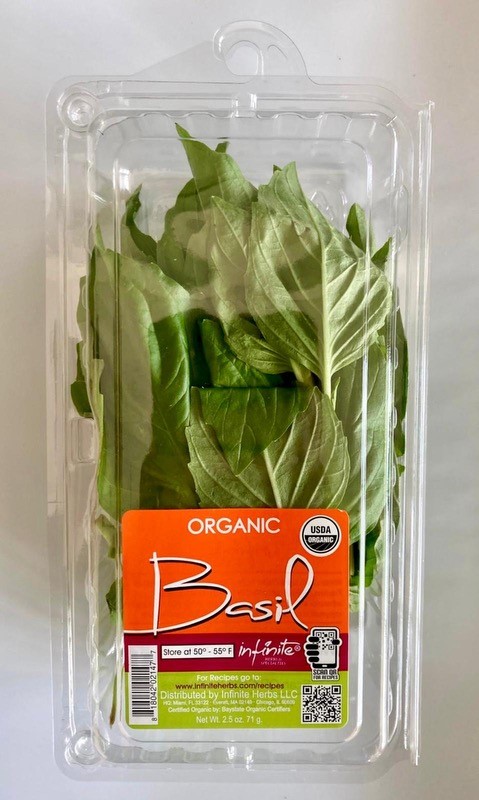
Infinite Herbs Organic Basil Product

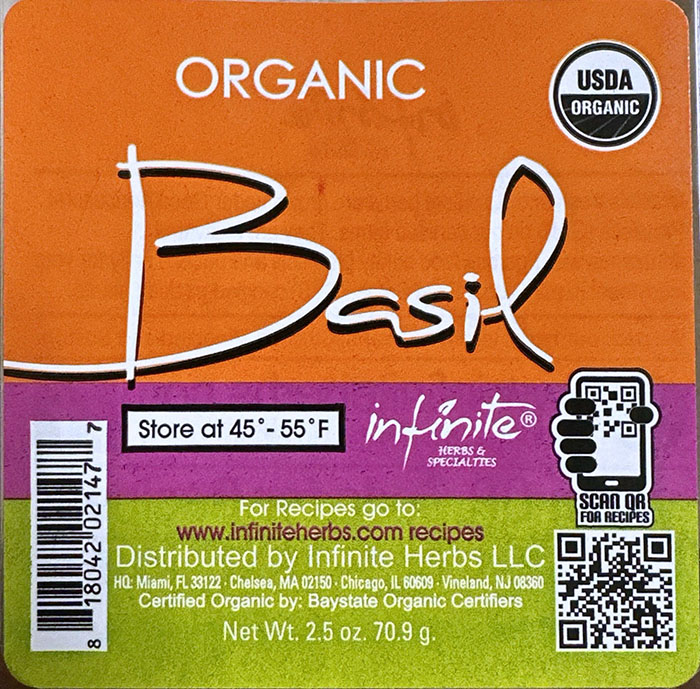
Organic Basil Infinite Herbs Brand Label

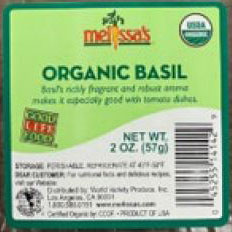
Melissa's Organic Basil

Product

Two brands of organic basil have been recalled:

  • Infinite Herbs-brand organic basil packed in 2.5-oz clamshell packaging (UPC 8 18042 02147 7) and sold at Trader Joe’s and Fruit Center Marketplace stores from February 1 through April 6, 2024.
  • Melissa’s brand fresh organic basil in 2.0-oz (UPC 0 45255 14142 9) and 4.0-oz clamshell packages (UPC 0 45255 14439 0) available for sale at Dierberg’s stores in Illinois and Missouri from February 10 through February 20, 2024.

Both recalled brands of basil are labeled as a product of Colombia on the back of the package. Recalled basil is past expiration and should no longer be available for sale.

Symptoms of Salmonella Infection:

Illness usually occurs within 12 to 72 hours after eating contaminated food and usually lasts four to seven days. Symptoms include diarrhea, fever, and abdominal cramps. Children younger than five, the elderly, and people with weakened immune systems are more likely to have severe infections.

Stores Affected

Infinite Herbs-brand was sold at:

  • Trader Joe’s stores in D.C. and AL, CT, DE, FL, GA, IA, IL, IN, KS, KY, MA, MD, ME, MI, MN, MO, NC, NE, NH, NJ, NY, OH, PA, RI, SC, TN, VA, VT, and WI
  • Fruit Center Marketplace stores in MA

Melissa’s-brand was sold at:

  • Dierberg’s stores in IL and MO

Status

Ongoing

Recommendation

  • Consumers who purchased recalled organic basil from the stores listed above should check their refrigerators and freezers and should not eat it.
  • This product should no longer be for sale at retail stores and is likely past shelf-life. If you bought recalled organic basil and removed it from the packaging or froze it and cannot tell if it is part of the recall, do not eat or use it and throw it away.
  • Follow FDA’s safe handling and cleaning advice and use extra care in cleaning and sanitizing any surfaces and containers that may have come in contact with this product to reduce the risk of cross-contamination.
  • Contact your healthcare provider if you think you may have symptoms of a Salmonella infection after eating basil.

USA – Infinite Herbs, LLC Expands Recall of Fresh Organic Basil to Include Melissa’s Brand Organic Basil Received by Illinois and Missouri Retailer

FDA

April 19, 2024—Infinite Herbs LLC of Miami, Florida, is expanding its April 18th recall to include Melissa’s brand fresh organic basil in 2.0 oz ( 96 packages, UPC 0 45255 14142 9) and 4.0 oz packages (24 packages, UPC 0 45255 14439 0) available for sale at Dierberg’s stores in Illinois and Missouri between February 10th and 20th (see photos below). This product is part of the lot that was previously recalled and, therefore, has the potential to be contaminated with Salmonella, an organism that can cause serious and sometimes fatal infections in young children, frail or elderly people, and others with weakened immune systems.

Please note that this recalled product is outdated and no longer available for sale. Still, consumers are urged to check their refrigerators and freezers and not consume the recalled organic basil if they have it. Consumers with questions may contact the company at 305-599-9255 x 148 or email customer_service@infiniteherbs.com, Monday – Friday, 8:30 a.m. to 4:30 p.m. EDT.

The company is conducting this recall with the U.S. Food & Drug Administration’s (FDA’s) knowledge.

Link to Original Press Release