Category Archives: foodborne outbreak

USA – Possible Campylobacter Outbreak at Rediviva in Aberdeen, WA

Food Poisoning Bulletin Campylobacter_jejuni_01

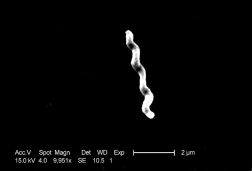
News reports are saying that a Campylobacter outbreak may have occurred at Rediviva restaurant at 118 Wishkah Street in Aberdeen, Washington. The Grays Harbor County Environmental Health Division learned about a person who tested positive for Campylobacter jejuni on February 25, 2020. That person told investigators he or she ate at Rediviva on Valentine’s Day.

France – French Salmonella outbreak linked to horse meat from Romania

Food Safety News

A Salmonella outbreak linked to horse meat from Romania sickened 25 people in France this past year, according to a new report.

Eleven cases were men and 14 were women. They ranged from 2 to 90 years of age and the median was 68 years old.

In September 2019, the regional unit of Santé Publique France in the Hauts-de-France region was alerted to a spike in Salmonella Bovismorbificans notifications in Nord and Pas-de-Calais during the first two weeks of August, found by the National Reference Center for E. coli, Salmonella and Shigella at Institut Pasteur.

The 25 salmonellosis cases, belonging to the same genomic cluster, were identified between Aug. 4 and 26, 2019. Nine people needed hospital treatment and two had severe complications but none died.

USA – Possible Poisoning Outbreak at Jimmy John’s on Laclede in St. Louis

Food Poisoning Bulletin

A possible food poisoning outbreak at a Jimmy John’s restaurant at 3822 Laclede Avenue in St. Louis, Missouri may have sickened “multiple” students who attend St. Louis University. The University News, the newspaper for that campus, published this information on February 20, 2020.

The article states that multiple students got sick “shortly after eating at the sandwich shop, some even being hospitalized.” It seems that these illnesses happened in mid to late January 2020. The students attended a campus retreat for an SLU organization and that retreat was catered by Jimmy John’s.

More than a dozen students were sickened after attending that retreat and eating the food provided by Jimmy John’s. They suffered from weakness and vomiting. The paper claims that the restaurant was shut down about a week after the illnesses occurred. There is no information about this closure on the City of St. Louis Health Department web site.

RASFF Alert – Foodborne Outbreak suspected (Norovirus) – Live Oysters

RASFF-Logo

RASFF – foodborne outbreak suspected (norovirus) to be caused by live oysters from France in the Netherlands

USA – Caribbean Princess update: More than 400 cases reported – Norovirus ?

Outbreak News Today

According to the CDC today, 371 of 3,035 passengers and 32 of 1,161 crew have been sickened, 12,2 percent and 2.8 percent, respectively.

Officials say the causative agent remains unknown to date.

Norovirus is a highly contagious viral illness that often goes by other names, such as viral gastroenteritis, stomach flu, and food poisoning.

USA – USDA Can Determine Contamination-Free Romaine Regions

Quality Assurance Magazine Eurofins Food Testing UK

USDA data on daily shipments of romaine lettuce can be used to determine which production regions are free from contamination during a foodborne illness outbreak. These data, reported by USDA’s Agricultural Marketing Service with a one- or two-day lag, provide essentially real-time information on produce shipped out to retailers. An analysis conducted by the USDA’s Economic Research Service (ERS) demonstrates how this information may allow FDA to rule out an entire production region as the source of contamination.

Leafy greens, including romaine lettuce, are the sixth most commonly consumed type of vegetable in the United States. From May to November, most romaine lettuce in the U.S. comes from California’s Central Coast region; from December to April, most comes from the Yuma, Ariz. region. Among the 29 outbreaks of Shiga-toxin producing Escherichia coli O157:H7 (E. coli) associated with romaine lettuce between 1998 and 2018, illnesses peaked in April and October, which corresponds with the tail end of harvest season in the two main romaine growing regions. In 2017 and 2018, there were three multistate, multinational foodborne illness E. coli outbreaks associated with the consumption of romaine lettuce that occurred at the tail end of either Yuma, Ariz., or California’s Central Coast production seasons. These outbreaks led to a total of 376 illnesses, 158 hospitalizations, and 7 deaths.

USA – Outbreak Investigation of Salmonella Javiana: Fruit Mix (December 2019)

FDA

Case Counts

Total Illnesses: 165
Hospitalizations: 73
Deaths: 0
Last illness onset: January 11, 2020
States with Cases: CA, CO, CT, DE (49), FL, GA, IL, MA, MN, NJ (50), NY (7), PA (49), VA, WA

February 18, 2020

Update

FDA, CDC and state and local partners investigated an outbreak of illnesses caused by Salmonella Javiana. Epidemiologic and traceback evidence indicated that fruit mix with cantaloupe, honeydew, pineapple, and grapes from Tailor Cut Produce of North Brunswick, New Jersey, was the source of this outbreak. CDC has announced this outbreak is over. The FDA’s investigational activities, including an inspection, are complete.

The firm recalled the fruit mix, called Fruit Luau, as well as cut honeydew, cut cantaloupe and cut pineapple products on December 7. The FDA recommended that food service and institutional food operators not sell or serve the recalled products.

In interviews, ill people reported eating cut fruit that was served in the week before illness started. Ill people reported eating cut fruit that was served in long-term care facilities, hospitals, hotels, schools, or universities. Several ill people also reported purchasing cut fruit from multiple locations of a grocery store chain. A review of records determined that these locations served or sold cut fruit from Tailor Cut Produce.

The FDA worked with CDC and state partners to trace back the cut fruit and learn more about the potential routes of contamination. Tailor Cut Produce was identified as the common processor, but the source of the contamination was not identified. When FDA did an inspection at Tailor Cut Produce, the inspectors observed these general deficiencies: the firm’s hazard analysis did not identify a known or reasonably foreseeable hazard that required a preventive control; the firm did not identify a preventive control for a hazard when one was needed; and the firm did not maintain the plant in a clean and sanitary condition and keep the plant in repair. The firm is working with the FDA to address the deficiencies.

As of February 14, 2020, CDC is reporting 165 illnesses were confirmed by Whole Genome Sequencing (WGS) in CA, CO, CT, DE, FL, GA, IL, MA, MN, NJ, NY, PA, VA, and WA. Illnesses were reported from states where Tailor Cut Produce distributes, including Pennsylvania, New York City, New Jersey, and Delaware. Ill people from other states reported traveling to these states in the week before their illness started.

USA -Norovirus Outbreak in Lake Charles, Louisiana is Spreading

Food Poisoning Bulletin norovirus-1080x655

norovirus outbreak in the Lake Charles, Louisiana are is spreading into two more parishes: Calcasieu and Vernon Parishes, according to a news release by the Louisiana Office of Public Health.  Norovirus is a very contagious virus that spreads easily from person to person.

RASFF Alert – Foodborne Outbreak Salmonella – Chilled Raw Milk Cheese

RASFF-Logo

RASFF – foodborne outbreak caused by and Salmonella enterica ser. Dublin in chilled raw milk cheese from France in France

USA – Caribbean Princess outbreak: Case count tops 350, Causative agent still not known

Outbreak News Today

In an update on the outbreak on Princess Cruises’ Caribbean Princessthe Centers for Disease Control and Prevention (CDC) has reported an increase in cases since yesterday’s update.

As of Feb. 11, 345 of the 3035 passengers on the voyage, or 11.4 percent of the total and 26 of the 1161 crew members have been sickened in the outbreak.

To date, officials have not determined the causative agent.