Category Archives: foodborne outbreak

UK – Poland promises action to reassure UK on poultry meat safety

Food Safety News

Officials from Poland and the United Kingdom have met virtually to discuss the safety of Polish poultry meat after it was linked to several outbreaks.

Grzegorz Puda, Polish minister of Agriculture and Forestry, spoke remotely this past week with George Eustice, secretary of state for Environment, Food and Rural Affairs.

Puda said he had taken direct charge of the issue of Salmonella in Polish poultry meat.

“Despite the difficult pandemic situation, Poland will take all measures to minimize and eliminate the UK’s concerns about the quality and safety of Polish poultry,” he said.

“Poland is ready to cooperate with the UK on sequencing of the Salmonella genome in poultry products.”

USA – Jule’s Foods Issues Voluntary Recall of Jule’s Foods Products Because of Possible Health Risk – Salmonella

FDA

Jule’s Foods of Carlsbad, CA is voluntarily recalling all Jule’s Foods products, because the product was potentially contaminated with Salmonella.

Products include:

Jule’s Cashew Brie (Classic)

UPC: 860388001507 – all expiration dates

Jule’s Truffle Cashew Brie

UPC: 860388001514 – all expiration dates

Jule’s Black Garlic Cashew Brie

UPC: 860388001552 – all expiration dates

Jule’s Artichoke Spinach Dip

UPC: 860388001569 – all expiration dates

Jule’s Vegan Ranch Dressing

UPC: 860388001521 – all expiration dates

To date, FDA has preliminary confirmation of Salmonella in brie products containing cashews.We are working with the FDA to isolate the source of the pathogen in samples which were collected by the California Department of Public Health. Jule’s Foods is issuing this recall in connection with a Salmonella outbreak under investigation by the FDA and CDC.

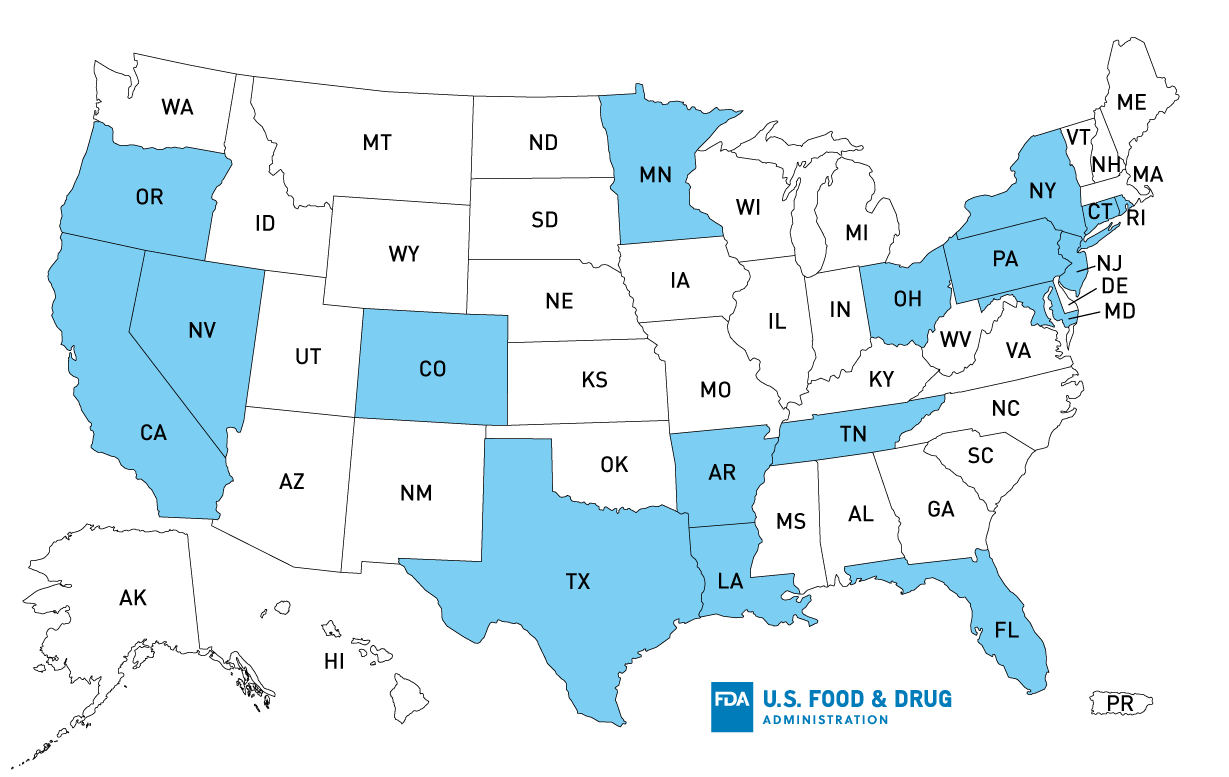
Products were distributed to primarily independently owned grocery stores in Arkansas, California, Colorado, Connecticut, Florida, Louisiana, Maryland, Minnesota, Nevada New York, New Jersey, Ohio, Oregon, Pennsylvania, Rhode Island, Tennessee, Texas as well as direct to consumer. Jule’s Foods Brie products are 6 ounces and wrapped in white cheese paper. A full list of stores is available at www.JulesFoods.netExternal Link Disclaimer.

Consumption of food contaminated with Salmonella can cause salmonellosis. The most common symptoms of salmonellosis are diarrhea, abdominal cramps, and fever within 12 to 72 hours after eating a contaminated product. Most people recover without treatment. In rare circumstances, infection can produce more severe illness and require hospitalization. Older adults, infants, and persons with weakened immune systems are more likely to develop a severe illness. Individuals concerned about an illness should contact their health care provider.

Production of these products has been suspended while the FDA and the company continue their investigation as to the source of the problem.

Please do not consume the product and immediately dispose of the product or return to the place of purchase for a full refund.

Consumers with questions may contact the company via email at jules@julesveganfoods.com or telephone at (310) 980-4697 between 9 a.m. – 5 p.m. PDT.

FDA Outbreak Press link


Company Contact Information

Consumers:
 (310) 980-4697
 jules@julesveganfoods.com

USA – Outbreak Investigation of Salmonella Duisburg: Jule’s Cashew Brie (April 2021)

FDA

The FDA, along with CDC and state and local partners are investigating a multistate outbreak of Salmonella Duisburg infections linked to the consumption of Jule’s Cashew Brie, a vegan, or plant-based cheese alternative. The firm, Jule’s Foods of Carlsbad, California, is conducting a voluntary recall of all varieties of Jule’s Foods products.

CDC identified an outbreak of five Salmonella Duisburg illnesses, which is considered a rare Salmonella serotype. All samples taken from ill patients are highly related according to Whole Genome Sequencing (WGS) analysis, or DNA fingerprinting of the pathogen. Of the five people interviewed, three (60%) reported eating Jule’s Truffle Cashew Brie– the only common product identified.

California Department of Public Health and Tennessee Department of Health state investigators collected samples of Jule’s Cashew Brie (including Cashew Brie (Classic), Truffle Cashew Brie, and Black Garlic Cashew Brie) from various retail locations. Preliminary results indicated that the Jule’s Cashew Brie products collected and analyzed in California may have been contaminated with Salmonella. Additional analysis subsequently confirmed the presence of Salmonella and additional analysis is ongoing to determine if the type of Salmonella found in these products matches the outbreak strain.

Based on these preliminary sample results, on April 21, 2021, the firm agreed to voluntarily recall all Jule’s Cashew Brie products. These tested products were sold on the firm’s website and in select retail locations. Additional distribution information is included in the firm’s recall announcement and below. Additionally, as a precaution the firm is also recalling its plant-based dairy alternative Jule’s Spinach Artichoke Dip and Jule’s Vegan Ranch Dressing. These products were sold directly to customers via the internet.

On April 21, 2021, FDA investigators and California Department of Public Health state inspectors arrived at the firm to conduct an inspection and collect additional product and environmental samples. The FDA investigation is ongoing to determine the source of contamination. Additional information will be provided as it becomes available.

Recommendation

Consumers, restaurants, and retailers should not eat, sell, or serve recalled Jule’s Foods products. Consumers should throw away recalled Jule’s Foods products or return to the place of purchase for a refund.

FDA recommends that anyone who received or suspects having received recalled Jule’s brand products use extra vigilance in cleaning and sanitizing any surfaces and containers that may have come in contact with the products to reduce the risk of cross-contamination. This includes cutting boards, slicers, countertops, refrigerators, and storage bins.


Product Images

Outbreak Investigation of Salmonella Duisburg Jule's Brie

Map of U.S. Distribution of Recalled Jule’s Foods Products

Outbreak Investigation of Salmonella Duisburg - Cashew Brie Products - Map of U.S. Distribution (04-23-2021)

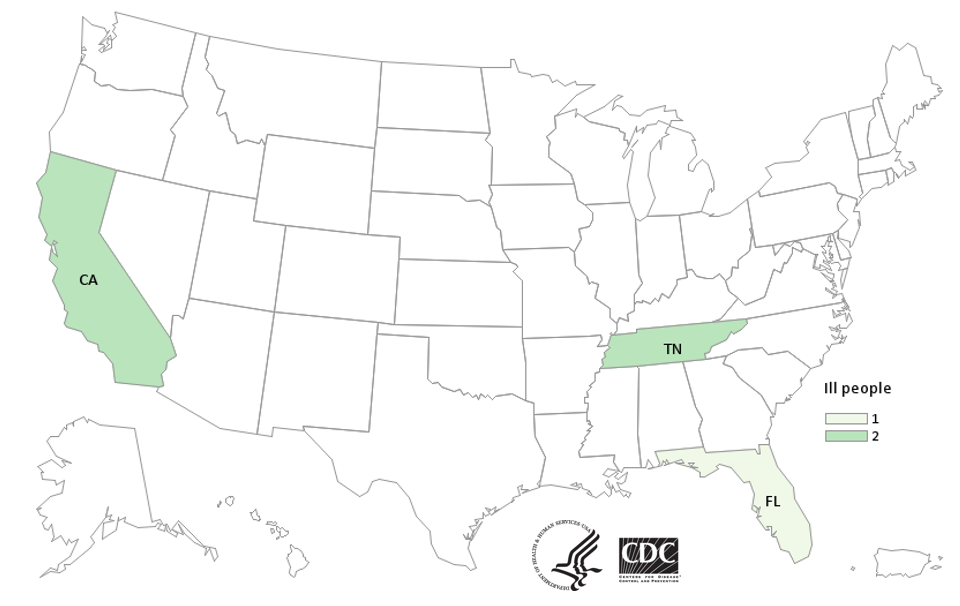
Case Count Map Provided by CDC

Case Count Map Provided by CDC - Salmonella Duisburg  - Cashew Brie Products

Case Counts

Total Illnesses: 5
Hospitalizations: 2
Deaths: 0
Last Illness Onset: February 27, 2021
States with Cases: CA (2), FL (1), TN (2)
Product Distribution*: Arkansas, California, Colorado, Connecticut, Florida, Louisiana, Maryland, Minnesota, Nevada, New York, New Jersey, Ohio, Oregon, Pennsylvania, Rhode Island, Tennessee, Texas
*Distribution has been confirmed for states listed, but product could have been distributed further, reaching additional states

Canada – Public Health Notice: Outbreak of Salmonella infections linked to eggs

Government of Canada

This notice has been updated to reflect that the outbreak appears to be over and the investigation is winding down. Although the outbreak appears to be over, Canadians are advised to always follow safe food-handling tips if you are buying, cleaning, chilling, cooking and storing any type of eggs or egg-based foods.

In total, 70 laboratory-confirmed cases of Salmonella Enteritidis illness were reported in: Newfoundland and Labrador (27), and Nova Scotia (43). Individuals became sick between late October 2020 and mid-March 2021. Nineteen individuals were hospitalized. No deaths were reported. Individuals who became ill were between 2 and 98 years of age. The majority of cases (71%) were female.

Between October and December 2020, CFIA issued food recall warnings for a variety of eggs distributed in Nova Scotia, and Newfoundland and Labrador. Some individuals who became sick in this outbreak reported exposure to recalled eggs; however, there were a number of ill individuals that did not.

USA – A likely Salmonella Outbreak tied to Jule’s Foods Brie products

Food Poison Journal

Jule’s Foods of Carlsbad, CA is voluntarily recalling all Jule’s Foods products, because the product was potentially contaminated with Salmonella.

Products include:

Jule’s Cashew Brie (Classic)

UPC: 860388001507 – all expiration dates

Jule’s Truffle Cashew Brie

UPC: 860388001514 – all expiration dates

Jule’s Black Garlic Cashew Brie

UPC: 860388001552 – all expiration dates

Jule’s Artichoke Spinach Dip

UPC: 860388001569 – all expiration dates

Jule’s Vegan Ranch Dressing

UPC: 860388001521 – all expiration dates

To date, FDA has preliminary confirmation of Salmonella in brie products containing cashews. We are working with the FDA to isolate the source of the pathogen in samples which were collected by the California Department of Public Health. Jule’s Foods is issuing this recall in connection with a Salmonella outbreak under investigation by the FDA and CDC.

Products were distributed to primarily independently owned grocery stores in Arkansas, California, Colorado, Connecticut, Florida, Louisiana, Maryland, Minnesota, Nevada New York, New Jersey, Ohio, Oregon, Pennsylvania, Rhode Island, Tennessee, Texas as well as direct to consumer. Jule’s Foods Brie products are 6 ounces and wrapped in white cheese paper. A full list of stores is available at www.JulesFoods.net

Singapore – Holland Close stall Kin Hoi suspended following gastroenteritis outbreak

Channel News Asia

SINGAPORE: Kin Hoi has been directed to suspend its food business operations with effect from Tuesday (Apr 20) until further notice after 15 cases of gastroenteritis were linked with the stall, the Ministry of Health (MOH) and the Singapore Food Agency (SFA) said on Wednesday.

Fifteen people reported gastroenteritis symptoms between Mar 28 and Apr 15 after consuming food prepared by Kin Hoi, and MOH and SFA were notified of the most recent case on Apr 19.

One person was hospitalised, but has since been discharged. MOH and SFA are investigating the incident.

Kin Hoi’s stall is located at 6 Holland Close and it also offers food delivery. The eatery, which is registered under the name Meetup @ 352, specialises in Thai-style seafood items such as cockles and grilled prawns.

USA – Possible Illinois Outbreak May Be Associated With Jimmy John’s

Food Poisoning Bulletin

A possible Illinois outbreak may be associated with a Jimmy John’s restaurant, according to a piece in The Pantagraph, Many of those sickened were student athletes who go to school at Illinois State University (ISU). The first reports of illnesses were received by the McLean County Health Department (MCHD) on April 7, 2021

One Jimmy John’s restaurant, located at  203 West Market Street in Bloomington, Illinois, was temporarily closed, but no official is stating that there is any connection between that facility and any illnesses. There are five Jimmy John’s locations in the area.

According to iwaspoisoned.com, public officials are investigating “multiple reports” of illness in that county. The MCHD Communicable Disease Division is trying to discover the exact cause of the illnesses. They did not reveal any information about any particular food they are looking for, or whether any patients have been hospitalized.

Research – An Overview of Traceback Investigations and Three Case Studies of Recent Outbreaks of Escherichia coli O157:H7 Infections Linked to Romaine Lettuce

Journal of Food Protection

Eurofins Food Testing UK

Leafy greens contaminated with Shiga toxin-producing Escherichia coli (STEC) have continued to cause foodborne illness outbreaks in recent years and present a threat to public health. An important component of foodborne illness outbreak investigations is determining the source of the outbreak vehicle through traceback investigations. The Food and Drug Administration is home to traceback investigation experts that employ a standardized process to initiate, execute, and interpret the results of traceback investigations in collaboration with the Centers for Disease Control and Prevention and state and local partners. Traceback investigations of three outbreaks of STEC infections linked to romaine lettuce in 2018 and 2019 were examined to demonstrate challenges, limitations, and opportunities for improvement. The three outbreaks resulted in a total of 474 illnesses, 215 hospitalizations, and five deaths. These illnesses were linked to the consumption of romaine lettuce from three distinct growing regions in Arizona and California. Some of the challenges encountered included the time it took to initiate a traceback, limited product-identifying information throughout the supply chain, lack of interoperability in record keeping systems, and co-mingling of product from multiple suppliers. These challenges led to time delays in the identification of the farm source of the leafy greens and the inability to identify the root cause of contamination. Implementation of technology enabled traceability systems, testing of these systems, and future regulations to incentivize adoption of traceability systems are some of the initiatives that will help address these challenges by improving traceback investigations and ultimately preventing foodborne illnesses and future outbreaks from occurring.

Research – Factors affecting persistence of Listeria monocytogenes need to be identified for evaluation and prioritization of interventions.

Centre For Produce Safety

Listeria kswfoodworld food safety food poisoning

Image CDC

The foodborne pathogen Listeria monocytogenes can survive over time in food processing environments such as produce facilities. These “resident” Listeria strains increase the likelihood for finished product contamination, recalls, and outbreaks. Advances in sequencing allow for enhanced discrimination between Listeria strains, such as those that may be unique to a specific facility. This results in improved traceback from listeriosis patients to the facility where the implicated food was prepared. However, sequencing advances have also enabled us to better understand how a unique Listeria strain may survive and spread in a facility over time. Thus far, there is little peer-reviewed research on how to prevent, eliminate, or manage a “resident” Listeria strain in a facility, particularly for the produce industry. This project was designed to review published and unpublished data to identify factors that may contribute to a Listeria persisting in a facility and to validate potential interventions suitable for produce facilities using experiments in commercial facilities as well as computer modeling. This project will provide industry with tools to (i) help identify what characteristics of their facilities may allow a Listeria to persist, and (ii) select and justify interventions that are used to prevent, eliminate, or manage Listeria persistence.

Technical Abstract

Persistence of Listeria in produce packing and fresh-cut facilities continues to be a concern that the industry tries to address through development and implementation of “seek and destroy” programs. While industry has considerably improved their ability to detect Listeria persistence (“seek”), identification and implementation of strategies to eliminate or manage persistence (“destroy”) remains a major challenge. There thus is a need for the produce industry to have improved resources to (i) rapidly identify factors (root causes) that may be responsible for or contribute to Listeria persistence, as well as factors that contribute to dispersal of resident strains; and (ii) identify appropriate science-based
interventions that can be used to prevent, eliminate, or manage relevant root causes. In particular, the produce industry has a need for data and procedures to validate Listeria persistence interventions, which will allow produce facilities to justify a given control strategy to regulatory agencies, customers, and third-party auditors. This project was thus designed to (i) assemble a comprehensive list of factors that contribute to the establishment and dispersal of “resident” Listeria in produce packing and fresh-cut facilities and to (ii) use different approaches to validate interventions that target these factors. Validation approaches will include (i) identifying relevant previous scientific literature; (ii) experimental
validation in commercial facilities, and (iii) in silico validation utilizing agent-based models for produce packinghouses and fresh-cut facilities. To achieve these project goals, we propose the following objectives:

Obj. 1: Conduct a systematic review of published and unpublished data and literature to identify modifiable factors that may contribute to resident Listeria in produce packing and fresh-cut facilities and relevant interventions, assess the validity of these findings based on the strength of evidence and prioritize interventions for assessment in Objs. 2 and 3 using expert elicitation.

Obj. 2: Use controlled experiments and observational studies to validate selected interventions identified in Obj. 1 in produce packing and fresh-cut facilities with resident Listeria.

Obj. 3: Validate selected interventions that are challenging to validate experimentally (e.g., extensive facility modifications) using our previously developed agent-based model.

Results from all three objectives will be used to assemble a resource document that includes (i) a comprehensive list of factors that are well supported to contribute to Listeria persistence and dispersal of resident strains, and (ii) interventions for each factor, along with justification and data supporting each intervention. In addition, we will also develop a step-by-step approach for conducting a root cause analysis to identify the most likely factors contributing to a given persistence event and selecting appropriate interventions. These resource documents will be assembled into a toolkit and made available through different mechanisms, including collaborations with produce trade organizations, to facilitate their widespread use. Ultimately, the project outcomes will allow industry to more effectively control Listeria persistence, leading to a lower risk of cross-contamination and recalls.

USA – Outbreak sickens dozens; no cause found; investigation closed

Food Safety News

The FDA has concluded its investigation of an outbreak of Salmonella Miami with a one-word public statement: closed.

A source for the pathogen, which has sickened at least 64 people, remains unknown, according to the Food and Drug Administration. In its weekly outbreak update, the agency ended the investigation with as little fanfare as it began it. The FDA’s initial announcement was a one-line entry on its weekly outbreak update table.

As of yesterday, the Centers for Disease Control and Prevention had not posted any information about the outbreak. The CDC did not respond to a request for comment on April 14, the day of the FDA announcement.