Category Archives: Food Toxin

RASFF Alerts – Histamine – Longfin Tuna – Yellow Fin Tuna – Sardine Fillets – Mackerel in Sunflower Oil

RASFF-Logo

RASFF-histamine (up to 1020 mg/kg – ppm) in chilled longfin tuna (Thunnus Alalunga) from France in France

RASFF-histamine (721 mg/kg – ppm) in chilled yellowfin tuna loins (Thunnus albacares) from Sri Lanka, via France in Belgium

RASFF-histamine (510 mg/kg – ppm) in chilled sardine fillets from France in France

RASFF-histamine (579 mg/kg – ppm) in canned mackerel in sunflower oil from Morocco in the Czech Republic

RASFF-histamine (231 mg/kg – ppm) in dried salted anchovies from Vietnam in Germany


RASFF Alerts – Ochratoxin A – Dried Sultanas – Raisins

RASFFochratoxin A (15.7 µg/kg – ppb) in dried sultanas from Turkey in Germany

RASFF –ochratoxin A (14.8 µg/kg – ppb) in raisins from Turkey in Germany

RASFF Alerts – Aflatoxin -Brazil Nuts – Groundnuts – Dried Figs

RASFF-Logo

RASFF -aflatoxins (B1 = 100.5; Tot. = 303.8 µg/kg – ppb) in brazil nuts in shell from Brazil in Germany

RASFF-aflatoxins (B1 = 24.2; Tot. = 43.8 µg/kg – ppb) in brazil nuts in shell from Brazil in Germany

RASFF -aflatoxins (B1 = 19.2; Tot. = 25.2 µg/kg – ppb) in groundnuts from China in Spain

RASFF-aflatoxins (B1 = 32.3; Tot. = 78.7 µg/kg – ppb) in dried figs from Turkey in Italy

RASFF-aflatoxins (B1 = 6.48; Tot. = 12.99 µg/kg – ppb) in unshelled Brazil nuts from Bolivia in Italy

RASFF Alerts – Bacillus cereus – Five Grains Mix

RASFF-Logo

RASFF-Bacillus cereus (1900 CFU/g) in five grains mix from Italy in Italy

RASFF Alert- STEC E.coli – E.coli – Staphylococcus aureus – Raw Milk Soft Cheese

RASFF-Logo

RASFF -shigatoxin-producing Escherichia coli (stx1+; stx2+; aea+) and Staphylococcus aureus (47000 CFU/g) and high count of Escherichia coli (60000 CFU/g) in soft cheese made from raw milk from France

Hong Kong -Bacillus cereus in Pasteurised Milk

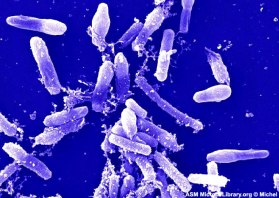
CFS bacillus

In June 2018, the Food Surveillance Programme of the Centre for Food Safety (CFS) detected excessive Bacillus cereus at a level of 4.6 million per gram in a packed pasteurised milk collected at a local supermarket. In September, in response to a food complaint, another packed pasteurised milk was found to contain Bacillus cereus at an excessive level of 3.8 million per gram. According to the Microbiological Guidelines for Food of CFS, if a ready-to-eat food contains Bacillus cereus at a level of more than 100 000 per gram, it is considered unsatisfactory. This article discusses Bacillus cereus in milk from the perspective of Hazard Analysis and Critical Control Point (HACCP) and the measures to control its growth during production and storage.


RASFF Alerts – Aflatoxin – Pistachios – Groundnuts – Peanuts – Hazlenuts

RASFF-Logo

RASFF -aflatoxins (B1 = 14.64; Tot. = 16.36 µg/kg – ppb) in pistachios from Turkey in Austria

RASFF-aflatoxins (B1 = 5.2; Tot. = 16 µg/kg – ppb) in peanuts in shell from China in Portugal

RASFF-aflatoxins (B1 = 77.8; Tot. = 84.9 µg/kg – ppb) in pistachios in shell from the United States in Germany

RASFF-aflatoxins (B1 = 8.6; Tot. = 10 µg/kg – ppb) in groundnuts from China in Portugal

RASFF-aflatoxins (B1 = 233.9; Tot. = 249.7 µg/kg – ppb) in pistachios in shell from the United States in the UK

RASFF-aflatoxins (B1 = 14.9; Tot. = 17.6 µg/kg – ppb) in chinese peanuts in shell from China in Malta

RASFF-aflatoxins (Tot. = 14.26 µg/kg – ppb) in hazelnuts from Turkey in Germany

RASFF-aflatoxins (B1 = 19.4; Tot. = 20 µg/kg – ppb) in roasted salted pistachios from Turkey in the UK

RASFF Alert – STEC E.coli -Chilled Beef – Sprouts – Sunflower Seeds -Boneless Beef

RASFF-Logo

RASFF-shigatoxin-producing Escherichia coli (stx1+ /25g) in chilled beef from Argentina in the Netherlands

RASFF-shigatoxin-producing Escherichia coli (stx2+ /25g) in chilled beef from Argentina in the Netherlands

RASFF-shigatoxin-producing Escherichia coli (stx2+ /25g) in chilled beef from Argentina in the Netherlands

RASFF-shigatoxin-producing Escherichia coli (presence /25g) in sprouts from Germany, with raw material from Italy in Germany

RASFF-shigatoxin-producing Escherichia coli (presence /25g) in sunflower seeds from Bulgaria, packaged in Italy in Italy

RASFF-shigatoxin-producing Escherichia coli (stx2+) in chilled boneless beef striploin from Argentina in the Netherlands

RASFF Alert – Ochratoxin A – Brown Rice

RASFF-Logo

RASFF-ochratoxin A (5.43 µg/kg – ppb) in brown rice from Pakistan in Poland

Research – Pathogenic Staphylococcus aureus in hospital food samples; prevalence and antimicrobial resistance properties

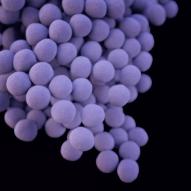
Wiley Online Staph

Abstract

The present investigation was done to study the prevalence and antibiotic resistance properties of S. aureus strains isolated from hospitals foods. Four‐hundred and fifty‐seven raw and cooked hospital food samples were collected and transferred to laboratory. Samples were cultured and S. aureus isolates were subjected to disk diffusion method. Forty‐seven out of 457 (10.28%) hospital food samples harbored S. aureus. Chicken meat (27.02%), meat barbecue (16.12%) and salad (7.14%) were the most commonly contaminated samples. S. aureus strains exhibited the highest levels of resistance against penicillin (70.21%), tetracycline (59.57%) and trimethoprim‐sulfamethoxazole (51.06%). Prevalence of resistance against ceftaroline (25.53%) and chloramphenicol (27.65%) were low. High prevalence of S. aureus in raw and cooked hospital food samples showed insufficiency of cooking time and temperature in the kitchens of hospitals as well as lack of personal hygiene. Further studies are essential to assess other microbiological and epidemiological aspects of the S. aureus.

Practical applications

Due to the general weakness of hospitalized patients, hospital food samples should have a high microbial quality. Staphylococcus aureus is common foodborne bacteria with an emergence of antibiotic resistance. This study emphasizes the importance of multidrug resistant S. aureus in hospital food sample. Results represented that hospital food samples may act as a reservoir of S. aureus with ability to transfer antibiotic resistance.