Category Archives: food safety training

USA – TechTalk Podcast Episode 3: Artificial Intelligence in the New Era of Smarter Food Safety

FDA

On March 21, 2022, the third installment of FDA’s new podcast series on technology and food safety will focus on artificial intelligence (AI) and its potential to advance food safety.

This quarterly podcast explores the potential for novel technological approaches and solutions in each of the core elements in the New Era of Smarter Food Safety Blueprint. The second Core Element, called Smarter Tools and Approaches for Prevention and Outbreak Response, includes goals to expand predictive analytics capabilities using AI and machine learning tools.

In this third podcast, Frank Yiannas, Deputy FDA Commissioner for Food Policy and Response, and Donald Prater, Associate Commissioner for Imported Food Safety, will lead a discussion with food industry experts on subjects that include the opportunities that AI offers to help protect consumers from food safety issues, potential uses of AI that food producers could consider, and what’s on the horizon for AI in FDA’s New Era of Smarter Food Safety.

The experts:

  • Maria Velissariou, Global Corporate Research & Development Vice President and Chief Science Officer for Mars Incorporated, a global, family-owned business with a portfolio of confectionary, food and pet-care products and services;
  • Nikos Manouselis, founder and CEO of Agroknow, a food safety intelligence company that predicts food safety risks to inform prevention; and
  • Cronan McNamara – founder and CEO of Creme Global, a company providing food safety data analytics and predictive modeling software and services.

To Listen

The link to listen will be posted on Monday, March 21, 2022 on this page and on the TechTalk Podcast main page on fda.gov.

Registration is not required but questions can be emailed in advance at SmarterFoodSafety@fda.hhs.gov. Questions submitted by March 14, 2022 may be considered by the panelists.

Related Podcasts

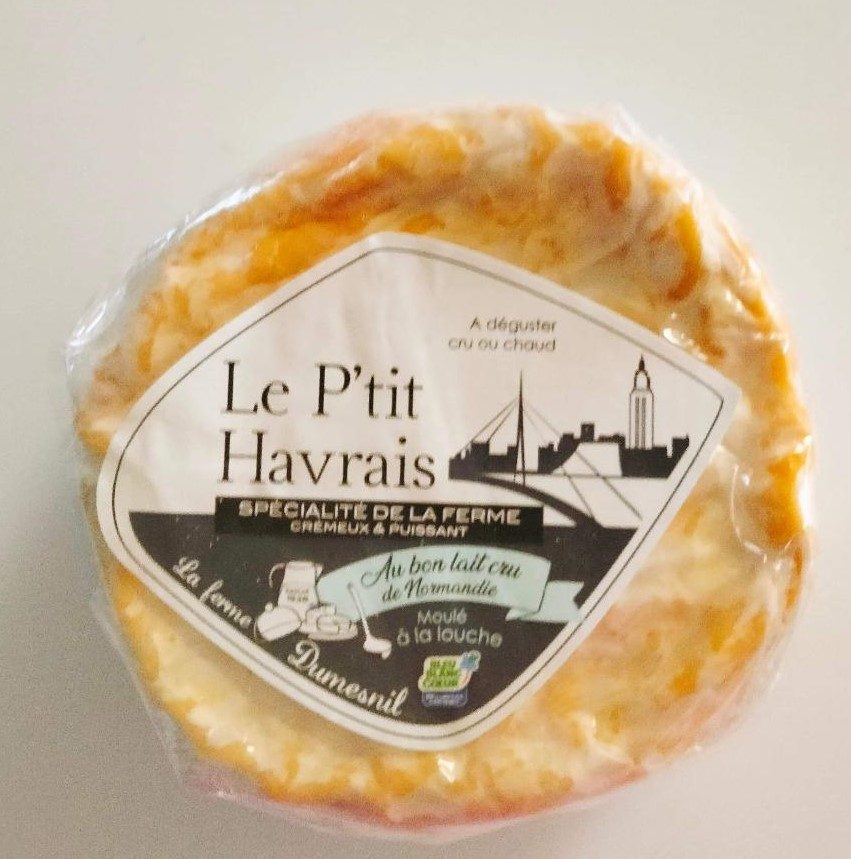
France- Le P’tit Havrais – Raw Milk Cheese – Salmonella

Gov france

Identification information of the recalled product

  • Product category Food
  • Product subcategory Milk and dairy products
  • Product brand name THE FARM DUMESNIL
  • Model names or references Le P’tit Havrais, specialty of the farm, powerful & creamy heart, with raw milk from Normandy
  • Identification of products
    GTIN Lot Date
    0656272139568 pth250122 ou gh250122 Use-by date 03/26/2022
  • Packaging Whole cheese wrapped in food wrap
  • Marketing start/end date From 08/02/2022 to 10/02/2022
  • Storage temperature Product to be stored in the refrigerator
  • Health mark FR 76,658,003 CE
  • Geographic area of ​​sale Regions: Normandy
  • Distributors See table List of points of sale below
  • List of points of saleTRACABILITE_P_TIT_HAVRAIS_du_25.01.22.pdf

Practical information regarding the recall

  • Reason for recall presence of Salmonella
  • Risks incurred by the consumer Salmonella spp (causative agent of salmonellosis)

Research – High-pressure processing: food safety without compromising quality

EFSA

High-pressure processing (HPP) of food is effective at destroying harmful microorganisms and poses no more food safety concerns than other treatments. These are two of the conclusions of a scientific opinion published by EFSA today.

EFSA experts assessed the safety and efficacy of HPP of food and, more specifically, whether it can be used to control Listeria monocytogenes in ready-to-eat (RTE) foods and as an alternative to thermal pasteurisation of raw milk.

HPP is a non-thermal food preservation technique that kills microorganisms that can cause diseases or spoil food. It uses intense pressure for a certain time and has minimal effects on taste, texture, appearance, or nutritional values.

HPP can be used at different steps of the food chain, usually on pre-packed products. It can be applied to raw materials such as milk, fruit juices, and smoothies but also to products that have already been processed, such as sliced cooked meat products and RTE meals. In the latter case, it reduces the contamination originating from the manufacturing environment, for example during slicing and manipulation of the products.

This processing method reduces levels of Listeria monocytogenes in RTE meat products, at specific time-pressure combinations defined in the scientific opinion. In general, the longer the duration and intensity of the pressure, the more reduction is achieved. This is an important finding because L. monocytogenes contamination of RTE foods is a public health concern in the EU. HPP also proved to be effective at decreasing the levels of other pathogens, such as Salmonella and E. coli.

For raw milk, experts identified the time-pressure combinations that can be considered to have the same effect as thermal pasteurisation. These vary depending on the pathogen considered.

HPP is not specifically regulated at EU level and EFSA’s advice will inform the possible decisions of risk managers in this field.

Austria – ZZU BIO Mini Poultry Sausages – Listeria monocytogenes

AGES

Pack of fried sausages

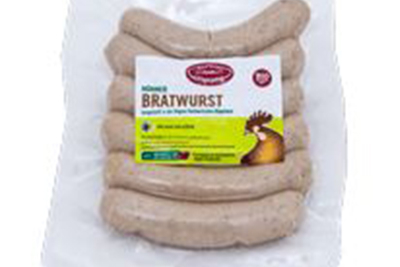
AGES informs about a recall of the company HOFER KG. On March 5th, 2022, the company recalled the product ZZU BIO Mini Poultry Bratwurst:

Product recall
ZZU BIO Mini Poultry Bratwurst Type of
chicken bratwurst

Dear customers,

The article ZZU BIO Mini Poultry Bratwurst – Chicken Bratwurst variety from the supplier LUGITSCH U.SOEHNE GMBH is being recalled by the supplier and HOFER KG for reasons of precautionary consumer protection.

Listeria was detected in a sample of the article mentioned. The product must not be consumed. Listeria can cause gastrointestinal diseases and flu-like symptoms. Serious illnesses can occur as a result of consumption, especially in pregnant women, small children and people with a weakened immune system.

We would like to point out that other varieties and other products from the supplier are not affected.

The product was on sale in HOFER branches in parts of Vienna, Lower Austria, Burgenland, Styria, Salzburg and Upper Austria. The sale stopped immediately.

The affected product can be returned to all HOFER branches. Of course, customers will also be reimbursed the purchase price without proof of purchase. This warning does not imply that the hazard was caused by the producer, manufacturer or distributor.

If you have any questions, the HOFER customer service center can be reached by telephone on (+43) 5 70 30 355 00 (Mon-Fri 7:15 a.m. to 8:00 p.m. and Sat 7:15 a.m. to 6:00 p.m.).

original recall

Switzerland – Public warning: Listeria monocytogenes in smoked herring and haddock fillets sold at Aligro

FSVO

Bern, 02.03.2022 – Aligro has informed the Department of Consumer Affairs and Veterinary Affairs of the Canton of Vaud as well as the Federal Office for Food Safety and Veterinary Affairs (OSAV) that listeria have been detected in herring fillets and smoked haddock fillets. A health risk cannot be excluded. Aligro immediately removed the implicated items from its shelves and ordered a recall.

What risk do these products represent?

In people without immune deficiency, an infection with the bacterium Listeria monocytogenes most often causes mild symptoms, or no symptoms at all. Immunocompromised people, on the other hand, can manifest a whole series of serious symptoms, the outcome of which can be fatal in certain circumstances. During pregnancy, a listeria infection can lead to miscarriage or cause sepsis or meningitis in the baby when it is born.

What products are affected?

Smoked haddock/haddock fillets 200 g

– Item number: 84627

– Producer: Fournier et Fils, France

– Use-by date: 5.3.2022

– Batch: 2204306

– Health stamp: FR 62 193 100 CE

Herring fillets/Heringfilet geräuchert 200 g

– Item number: 84628                

– Producer: Fournier et Fils

– Use-by date: 20.3.2022

– Batch: 2204507

– Health stamp: FR 62 193 100 CE

What should affected consumers do?

The OSAV recommends that the population not consume these products and eliminate them.


Address for sending questions

Consumers:
Federal Office for Food Safety and Veterinary Affairs (FSVO)
Infodesk Tel. 058 463 30 33
info@blv.admin.ch

Journalists:
Federal Food Safety and Veterinary Office (OSAV)
Media Service Tel. 058 463 78 98
media@blv.admin.ch


USA – FDA Investigation of Cronobacter and Salmonella Complaints: Powdered Infant Formula (February 2022)

FDA

If you want to check if your powdered formula is part of the recall, you can enter the product lot code on the bottom of your package on the company’s websiteExternal Link Disclaimer.

If you have questions or need information about the recall, you can Submit Questions/Get Assistance.

If your infant is experiencing symptoms related to Cronobacter or Salmonella infection, such as poor feeding, irritability, temperature changes, jaundice, grunting breaths, abnormal movements, lethargy, rash, or blood in the urine or stool; contact your health care provider to report their symptoms and receive immediate care.

To report an illness or adverse event, you can

The FDA, along with CDC and state and local partners are investigating consumer complaints and/or reports of infant illness related to products from Abbott Nutrition’s Sturgis, MI facility. All of the ill patients are reported to have consumed powdered infant formula produced from Abbott Nutrition’s Sturgis, MI facility.

As of February 28, CDC has announced one additional illness of Cronobacter sakazakii with exposure to powdered infant formula produced at Abbott Nutrition’s Sturgis, MI facility. Cronobacter infection may have been a contributing cause of death for this patient. In total, this investigation includes four reports of Cronobacter sakazakii infections in infants (three from FDA complaints and one from a CDC case finding) and one complaint of a Salmonella Newport infection in an infant. All five (four Cronobacter infections and one Salmonella Newport infection) illnesses resulted in hospitalization and Cronobacter may have contributed to death in two patients.

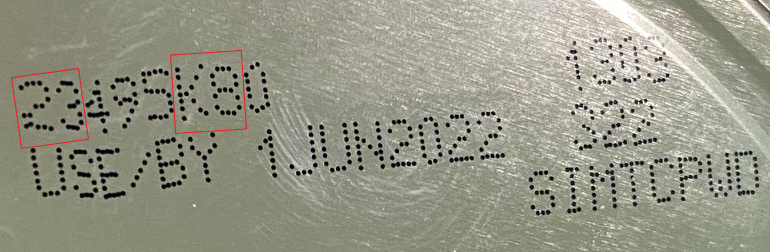
The most recent patient was reported to have consumed Abbott Nutrition’s Similac PM 60/40 product with the lot code 27032K800 prior to Cronobacter sakazakii infection. FDA and CDC informed the firm of these findings and on February 28, 2022, Abbott Nutrition voluntarily recalled Similac PM 60/40 powdered infant formula with the lot code 27032K800. This is a specialty formula for certain infants who would benefit from lowered mineral intake and was not included in the previous recall. At this time, Similac PM 60/40 with lot code 27032K80 (can) / 27032K800 (case) are the only type and lots of this specialty formula being recalled.

This particular lot of Similac PM 60/40 was distributed to the U.S. and Israel. If your regular formula is not available, contact your child’s healthcare provider for recommendations on changing feeding practices.

We understand that infant formula is the sole source of nutrition for many infants and is an essential product. FDA is working with Abbott Nutrition to better assess the impacts of the recall and understand production capacity at other Abbott facilities that produce some of the impacted brands. We are also working with Abbott Nutrition on safe resumption of production at the Sturgis, MI facility. FDA is continuing to investigate and will update this advisory should additional consumer safety information become available.

Recommendation

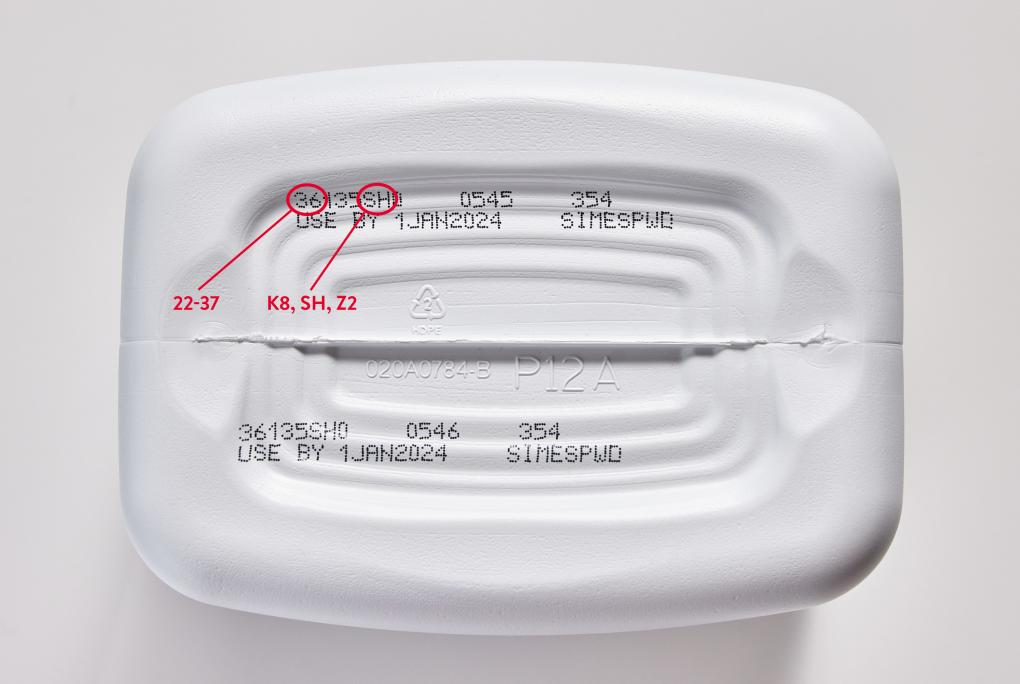
The FDA is advising consumers not to use recalled Similac, Alimentum, or EleCare powdered infant formulas. Recalled products can be identified by the 7 to 9 digit code and expiration date on the bottom of the package (see image below). Products are included in the recall if they have all three items below:

  • the first two digits of the code are 22 through 37 and
  • the code on the container contains K8, SH, or Z2, and
  • the expiration date is 4-1-2022 (APR 2022) or later.

In addition to products described above, Abbott Nutrition has recalled Similac PM 60/40 with a lot code 27032K80 (can) / 27032K800 (case). At this time, Similac PM 60/40 with lot code 27032K80 (can) / 27032K800 (case) are the only type and lots of this specialty formula being recalled.

Additional recall information for the initial recall is available on the FDA website. Parents can also enter their product lot code on the company’s websiteExternal Link Disclaimer to check if it is part of the recall.

Additional Information for Parents and Caregivers:

The recalls do not include liquid formula products. Consumers should continue to use all product not included in the recalls.

Parents and caregivers should never dilute infant formula and should not make or feed homemade infant formula to infants. Consumers should also avoid purchasing imported formula through online sales, as it has the potential to be counterfeit.

If your regular formula is not available, contact your child’s healthcare provider for recommendations on changing feeding practices.

If you get infant formula through WIC, do not throw the formula out. Instead, you should take it to the store for a refund and exchange or call the company at 1-800-986-8540 to help you. WIC recipients should be able to obtain a different brand of similar formula. Call your local WIC clinic for more guidance. Also see:

More information on Cronobacter and infant formula is available on CDC’s website.

Recalled powdered infant formulas have the potential to be contaminated with Cronobacter, a bacterium that can cause severe foodborne illness primarily in infants. Cronobacter infections are rare but are especially high risk for newborn infants (see symptoms below).

Cronobacter bacteria can cause severe, life-threatening infections (sepsis) or meningitis (an inflammation of the membranes that protect the brain and spine). Symptoms of sepsis and meningitis may include poor feeding, irritability, temperature changes, jaundice (yellow skin and whites of the eyes), grunting breaths, and abnormal movements. Cronobacter infection may also cause bowel damage and may spread through the blood to other parts of the body.

If your child is experiencing any of these symptoms, you should notify your child’s healthcare provider and seek medical care for your child immediately. Healthcare providers and health departments are encouraged to report any confirmed cases of Cronobacter sakazakii to CDC.


Product Images

Sample Product Image from the FDA Investigation of Cronobacter and Salmonella Complaints about Powdered Infant Formula (February 2022)
Powdered Infant Formation Container with Product Coding

Case Counts

Total Adverse Events: 5 (4 Cronobacter, 1 Salmonella)
Hospitalizations: 5
Reported Deaths: 2*
Adverse Event Dates: 9/16/2021 – 1/4/2022
States with Adverse Events: MN (1), OH (2), TX (2)
Product Distribution: Nationwide and International
* Two deaths have been reported. Cronobacter infection may have contributed to the cause of death for both ill patients.


International Product Distribution

The recall impacts Alimentum, EleCare, and Human Milk Fortifier for markets outside the U.S. No other Abbott Nutrition products distributed outside of the U.S. are affected by this recall. According to the firm, recalled products were distributed to the following countries/locations: Australia, Bahrain, Barbados, Bermuda, Canada, Chile, China, Colombia, Costa Rica, Dominican Republic, Ecuador, Egypt, Guam, Guatemala, Hong Kong, India, Indonesia, Israel, Jordan, Kuwait, Lebanon, Malaysia, Mexico, New Zealand, Oman, Peru, Puerto Rico, Qatar, Saudi Arabia, Singapore, South Africa, Sudan, Taiwan, Thailand, United Arab Emirates, United Kingdom, and Vietnam ANI South.

For additional information, international officials and customers can visit the company’s recall page for contact informationExternal Link Disclaimer.

Cronobacter Surveillance

Cronobacter infection surveillance is not handled the same way as infection with more common foodborne pathogens, such as Salmonella or E. coli O157:H7. Cronobacter is not nationally notifiable and not reportable except in one state, which means doctors and labs are not required to report cases to their health department. Because Cronobacter is not a nationally notifiable pathogen, FDA relies on consumer complaints of illness sent to the Agency and on health care providers informing FDA directly about infants with Cronobacter infections. In addition, because Cronobacter is not nationally notifiable, whole genome sequencing (WGS) is rarely performed on these isolates. To date, no outbreaks of Cronobacter have been detected using WGS.

When single cases of Cronobacter are reported, the FDA conducts a thorough review of each complaint, conducts sampling of products, and initiates inspections as appropriate. FDA collaborates with CDC, which has developed a detailed questionnaire specifically for Cronobacter infections that is often used by state health departments in instances of Cronobacter sakazakii infection.

Italy – free-range chicken chicken wings fqc – Salmonella

Salute

Brand : CARREFOUR

Name : free-range chicken chicken wings fqc

Reason for reporting : Recall due to microbiological risk

Publication date : 25 February 2022.

Click to access C_17_PubblicazioneRichiami_1661_azione_itemAzione0_files_itemFiles0_fileAzione.pdf

Sweden – Salmonella in meat sick 15 in Sweden

Europe Cities

Disease In Food

More than a dozen people recently fell ill in Sweden with Salmonella infections after eating poorly cooked burgers.

An outbreak with 15 cases of salmonellosis after a lunch at a hotel restaurant was investigated by the local food authority and the regional public health authority in Jämtland Härjedalen.

The Salmonella Enteritidis outbreak occurred among students and teachers from Fjällgymnasiet high school during a ski competition in northern Sweden.

Based on information from 11 patients, the first date for disease onset was January 28 and the last was February 4. The age range was 17 to 57 years with a median age of 19. Ten of the patients were men and one was female, all were from northern Sweden.

All the sick had a common meal where they ate ground (minced) burgers. Some of those who ate lunch reported that the burgers were clearly poorly cooked.

After finding Salmonella in samples of minced meat, further tracing of the batch of frozen beef and pork involved was carried out by local authorities, revealing that it came from Poland.

Salmonella was found in three of six meat samples but there is no ongoing risk of people getting sick as the batch involved was only distributed to restaurants and has now been withdrawn.

Belgium – “Le Sapin Blanc” goat cheese – Listeria monocytogenes

AFSCA

Recall by Colruyt
Product: “Le Sapin Blanc” goat cheese.
Problem: Presence of the bacterium Listeria monocytogenes.
During microbiological checks, the presence of Listeria monocytogenes was observed in the product Le Sapin Blanc goat cheese 80 g bearing the expiry dates (BBD) 20/2/2022 and 3/3/2022.

Colruyt has therefore decided to withdraw the product concerned from sale.

Customers who have purchased this product are invited not to consume it and to bring it back to the store, where they will be reimbursed. In the meantime, all stores have removed the affected products from the shelves.

Product Description :

Le Sapin Blanc goat cheese Use-by
dates (BBD): 2022/2/20 and 2022/3/3
Sales period: from 2022/1/25 to 2022/2/18 included Article number
: 22567
batch: 15012224
Weight: 80g
Producer: Prolaidis Export

This product has been offered for sale in Colruyt stores in Belgium.

For more information , customers can contact Colruyt Group Customer Service on 0800 99 124.

USA – FDA Investigation of Cronobacter and Salmonella Complaints: Powdered Infant Formula (February 2022)

FDA

Case Counts

Total Adverse Events: 4 (3 Cronobacter, 1 Salmonella)
Hospitalizations: 4
Reported Deaths: 1*
Adverse Event Dates: 9/6/2021 – 12/18/2021
States with Adverse Events: MN (1), OH (1), TX (2)
Product Distribution: Nationwide and International
*One death has been reported but has not been confirmed to be solely attributable to Cronobacter infection.

If you want to check if your powdered formula is part of the recall, you can enter the product lot code on the bottom of your package on the company’s websiteExternal Link Disclaimer.

If you have questions or need information about the recall, you can Submit Questions/Get Assistance.

If your infant is experiencing symptoms related to Cronobacter or Salmonella infection, such as poor feeding, irritability, temperature changes, jaundice, grunting breaths, abnormal movements, lethargy, rash, or blood in the urine or stool; contact your health care provider to report their symptoms and receive immediate care.

To report an illness or adverse event, you can

The FDA, along with CDC and state and local partners are investigating four consumer complaints of infant illness related to products from Abbott Nutrition’s Sturgis, MI facility received from 9/20/2021 to 1/11/2022. All of the cases are reported to have consumed powdered infant formula (IF) produced from Abbott Nutrition’s Sturgis, MI facility. These complaints include three reports of Cronobacter sakazakii infections and one report of Salmonella Newport infection in infants. All four cases related to these complaints were hospitalized and Cronobacter may have contributed to a death in one case.

FDA has initiated an onsite inspection at the facility. Findings to date include several positive Cronobacter results from environmental samples taken by FDA, and adverse inspectional observations by FDA investigators. A review of the firm’s internal records also indicate environmental contamination with Cronobacter sakazakii and the firm’s destruction of product due to the presence of Cronobacter.

FDA is issuing this advisory to alert consumers to avoid purchasing or using recalled powdered infant formula produced in the Sturgis, MI facility.

On 2/17/2022, Abbott Nutrition initiated a voluntary recall of certain powdered infant formulas. Products made at the Sturgis facility can be found across the United States and were likely exported to other countries as well. Canadian health officials have also issued a recall warningExternal Link Disclaimer. FDA is continuing to investigate and will update this advisory should additional consumer safety information become available.

Recommendation

The FDA is advising consumers not to use recalled Similac, Alimentum, or EleCare powdered infant formulas. Recalled products can be identified by the 7 to 9 digit code and expiration date on the bottom of the package (see image below). Products are included in the recall if they have all three items below:

  • the first two digits of the code are 22 through 37 and
  • the code on the container contains K8, SH, or Z2, and
  • the expiration date is 4-1-2022 (APR 2022) or later.

Additional recall information is available on the FDA website. Parents can also enter their product lot code on the company’s websiteExternal Link Disclaimer to check if it is part of the recall.

Additional Information for Parents and Caregivers:

The recall does not include liquid formula products or any metabolic deficiency nutrition formulas. Consumers should continue to use all product not included in the recall.

Parents and caregivers should never dilute infant formula and should not make or feed homemade infant formula to infants. Consumers should also avoid purchasing imported formula through online sales, as it has the potential to be counterfeit.

If your regular formula is not available, contact your child’s healthcare provider for recommendations on changing feeding practices.

More information on Cronobacter and infant formula is available on CDC’s website.

Recalled powdered infant formulas have the potential to be contaminated with Cronobacter, a bacterium that can cause severe foodborne illness primarily in infants. Cronobacter infections are rare but are especially high risk for newborn infants (see symptoms below).

Cronobacter bacteria can cause severe, life-threatening infections (sepsis) or meningitis (an inflammation of the membranes that protect the brain and spine). Symptoms of sepsis and meningitis may include poor feeding, irritability, temperature changes, jaundice (yellow skin and whites of the eyes), grunting breaths, and abnormal movements. Cronobacter infection may also cause bowel damage and may spread through the blood to other parts of the body.

If your child is experiencing any of these symptoms, you should notify your child’s healthcare provider and seek medical care for your child immediately. Healthcare providers and health departments are encouraged to report any confirmed cases of Cronobacter sakazakii to CDC.