Category Archives: food safety training

Research IMPERATIVES FOR IMPROVEMENT OF FOOD SAFETY IN FRUIT AND VEGETABLE VALUE CHAINSIN VIET NAM

ADB

Key Findings
 
Production of fruits and vegetables in Viet Nam has been changing, which is driven by consumer preferences, urbanization, demographics, and rising incomes. Yet, they are produced with high usage of chemical fertilizers and pesticides. Consumers, in general, particularly in Ha Noi, buy most of their fruits and vegetables from traditional wet markets. Produce sold in these markets are not certified and not traceable to farms. Many wet markets in Ha Noi suffer from insu ̄cient infrastructure.
 
Waste management is unhygienic, and there is no clear separation between the areas selling fruits and vegetables and those selling animals and animal products.
 
Researchers from Vietnam National University of Agriculture (VNUA) collected biological samples of mustard greens, cucumber, and dragon fruit from farms, wholesale markets, and retail markets and analyzed them for Salmonella and Escherichia coli (E. coli) at the Department of Food Processing Technology at VNUA. Their analysis shows that foodborne pathogens are a particular concern for leafy vegetables. About 31% of the mustard greens samples collected from farms had E. coli loads above maximum permissible levels, 67% for samples collected from wholesale markets, and 82% from retail markets.
 
The increase of pathogenic loads across the value chains—from farm to retail—can be traced from lack of hygienic practices in handling of fruits and vegetables by all players.
 
Samples of dragon fruit, mustard greens, and cucumber were also analyzed for five commonly used chemical pesticides, two heavy metals, and nitrate. Pesticide residue analysis was performed at the National Institute for Food Control, while the other contaminants were analyzed at the Department of Food Processing Technology at VNUA.
 
Out the three types of produce sampled, pesticide residue above permissible levels was found only in cucumber. No samples had heavy metals and nitrate concentrations above maximum permissible levels. A banned active ingredient was detected in only one type of produce, mustard greens (in one of 20 samples), and was not found in dragon fruit or cucumber.
 
Chemical pesticide contamination in fruits and vegetables is a key concern of consumers and other stakeholders.
 
Foodborne pathogens are generally perceived as a smaller concern because consumers believe they can manage this risk through food preparation methods, which is a misconception as foodborne pathogens are the most important health risks for Vietnamese consumers (World Bank 2016 ).
 
The Government of Viet Nam has designated particular areas for “safe vegetable production.” These areas currently account for about 40% of Ha Noi’s vegetable area of 12,000 hectares. Vegetable farmers in these areas have been encouraged to form producer cooperatives. The government regularly tests soil and water quality and also tests vegetable produce for pesticide residues once a year. Livestock farming is not allowed in these areas to reduce the risk of cross-contamination.
 
These actions contribute to improving the food safety of vegetables to some extent. But they do help government agencies to better support smallholder vegetable farmers and monitor the quality of the produce.
 
Over the past decade, Viet Nam has revised its food safety laws and regulations, and the existing frameworks are mainly in line with international standards (Vu and Anh 2016 ). The country has a National Food Safety Committee, but there is no central food safety agency. Responsibilities are divided over three ministries (agriculture, commerce, and health), which results in some contradictions and confusion in enacting food safety-related regulations and acts among these ministries.
 
The implementing capacity of government organizations is rather limited. Authorities in charge of food safety seem to remain focused on inspection and control of end products, but not much on preventing contamination in production and marketing processes.


USA – Canned Shrimp recalled due to Botulism risk

Food Poison Journal

Kawasho Foods USA Inc. of New York, NY, is voluntarily recalling one lot of canned GEISHA Medium Shrimp 4oz. because of reported swelling, leaking, or bursting cans. There is a possibility that the product has been under processed, which could lead to the potential for spoilage organisms or pathogens.

The Product was distributed to retail stores (Walmart, Associated Food Stores, Stater Bros Markets, Safeway, Albertsons) in California, Utah, Arizona, and Colorado.

The GEISHA Medium Shrimp is packaged in a 4oz. metal can, with UPC 071140003909. The one lot being recalled is LGC12W12E22; BEST BY: MAY/12/2026 and this code appears on the bottom of the product can.

New Zealand – Greater!, Lisa’s, and Prep Kitchen brands of Hummus and Tahini – Salmonella

MPI

1 March 2023: Life Health Foods NZ Ltd is recalling specific batches of its Greater!, Lisa’s, and Prep Kitchen brand products due to the possible presence of Salmonella.

Product type Hummus and tahini
Name of product (size) and date marking The full list of affected products is listed above in the link with photos.
Package size and description The products are sold in a 200g, 380g, 450g, 500g, 750g, and 1kg plastic container or pouch.
Distribution The products are sold in supermarkets and retail outlets throughout New Zealand.

The products have been exported.

Notes This recall does not affect any other Greater!, Lisa’s, and Prep Kitchen brand products.

Point of sale notices for retailers

If you are a retailer of the products in this recall, download a copy of the point of sale notice. You need to display it in your store for one month.

Point of sale notice – Greater! Hummus [PDF, 51KB]

Point of sale notice – Lisa’s 2in1 variety and Toppings variety [PDF, 133KB]

Point of sale notice – Lisa’s Hummus variety [PDF, 101KB]

Point of sale notice – Prep Kitchen [PDF, 52KB]

Consumer advice

Customers are asked to check the date mark on the side of the lid.

Affected products should not be consumed. There have been no reports of associated illness, however if you have consumed any of these products and have any concerns about your health, seek medical advice.

Customers should return the products to their retailer for a full refund.

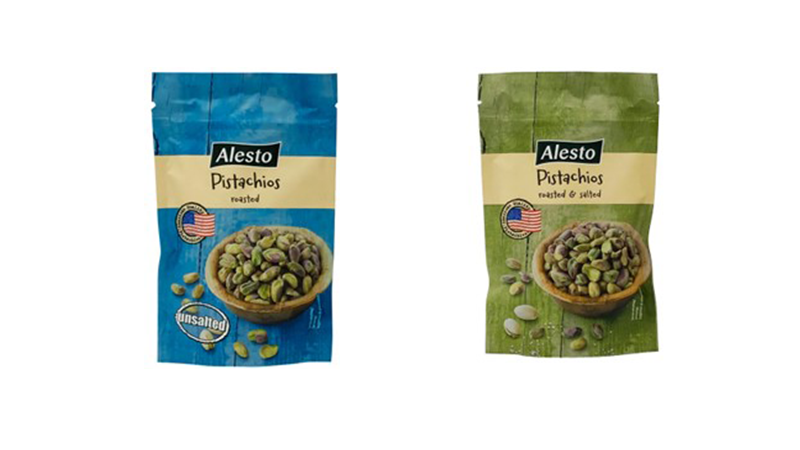
Austria – Alesto Pistachios, roasted, 70 g – Ochratoxin A

AGES

The AGES informs about a recall of the company Lidl-Österreich GmbH. The company recalled the product Alesto Pistachios, roasted, 70 g on March 1st, 2023:
 © Lidl Austria
recall reason
Ochratoxin A
Marketed by
Lidl Austria GmbH
Manufacturer
Carl Wilhelm Clasen GmbH
Expiry Date
10/28/2023
Batch number
30031/230131001

EXPANSION OF THE PRODUCT RECALL: “ALESTO PISTACHIOS, ROASTED, 70 G” FROM THE MANUFACTURER CARL WILHELM CLASEN GMBH

Salzburg (OTS) – The manufacturer Carl Wilhelm Clasen GmbH is expanding the product recall of February 24, 2023 with the following batch:
“Alesto Pistachios, roasted, 70 g” with the best before date October 28, 2023 and lot number 30031/230131001

An increased ochratoxin A content was detected in the product.

The manufacturer Carl Wilhelm Clasen GmbH apologizes to all those affected for the inconvenience caused. This warning does not state that the hazard was caused by Lidl Austria.

Customer service
If you have any questions, the Lidl Austria customer service is available on the toll-free number 0800/500 810 from Monday to Friday from 8 a.m. to 6 p.m. and on Saturday from 8 a.m. to 5 p.m.

original recall

Research – A Systematic Quantitative Determination of the Antimicrobial Efficacy of Grape Seed Extract against Foodborne Bacterial Pathogens

MDPI

Abstract

Concerns regarding the role of antimicrobial resistance (AMR) in disease outbreaks are growing due to the excessive use of antibiotics. Moreover, consumers are demanding food products that are minimally processed and produced in a sustainable way, without the use of chemical preservatives or antibiotics. Grape seed extract (GSE) is isolated from wine industry waste and is an interesting source of natural antimicrobials, especially when aiming to increase sustainable processing. The aim of this study was to obtain a systematic understanding of the microbial inactivation efficacy/potential of GSE against Listeria monocytogenes (Gram-positive), Escherichia coli and Salmonella Typhimurium (Gram-negative) in an in vitro model system. More specifically, for L. monocytogenes, the effects of the initial inoculum concentration, bacterial growth phase and absence of the environmental stress response regulon (SigB) on the GSE microbial inactivation potential were investigated. In general, GSE was found to be highly effective at inactivating L. monocytogenes, with higher inactivation achieved for higher GSE concentrations and lower initial inoculum levels. Generally, stationary phase cells were more resistant/tolerant to GSE as compared to exponential phase cells (for the same inoculum level). Additionally, SigB appears to play an important role in the resistance of L. monocytogenes to GSE. The Gram-negative bacteria under study (E. coli and S. Typhimurium) were less susceptible to GSE as compared to L. monocytogenes. Our findings provide a quantitative and mechanistic understanding of the impact of GSE on the microbial dynamics of foodborne pathogens, assisting in the more systematic design of natural antimicrobial-based strategies for sustainable food safety.

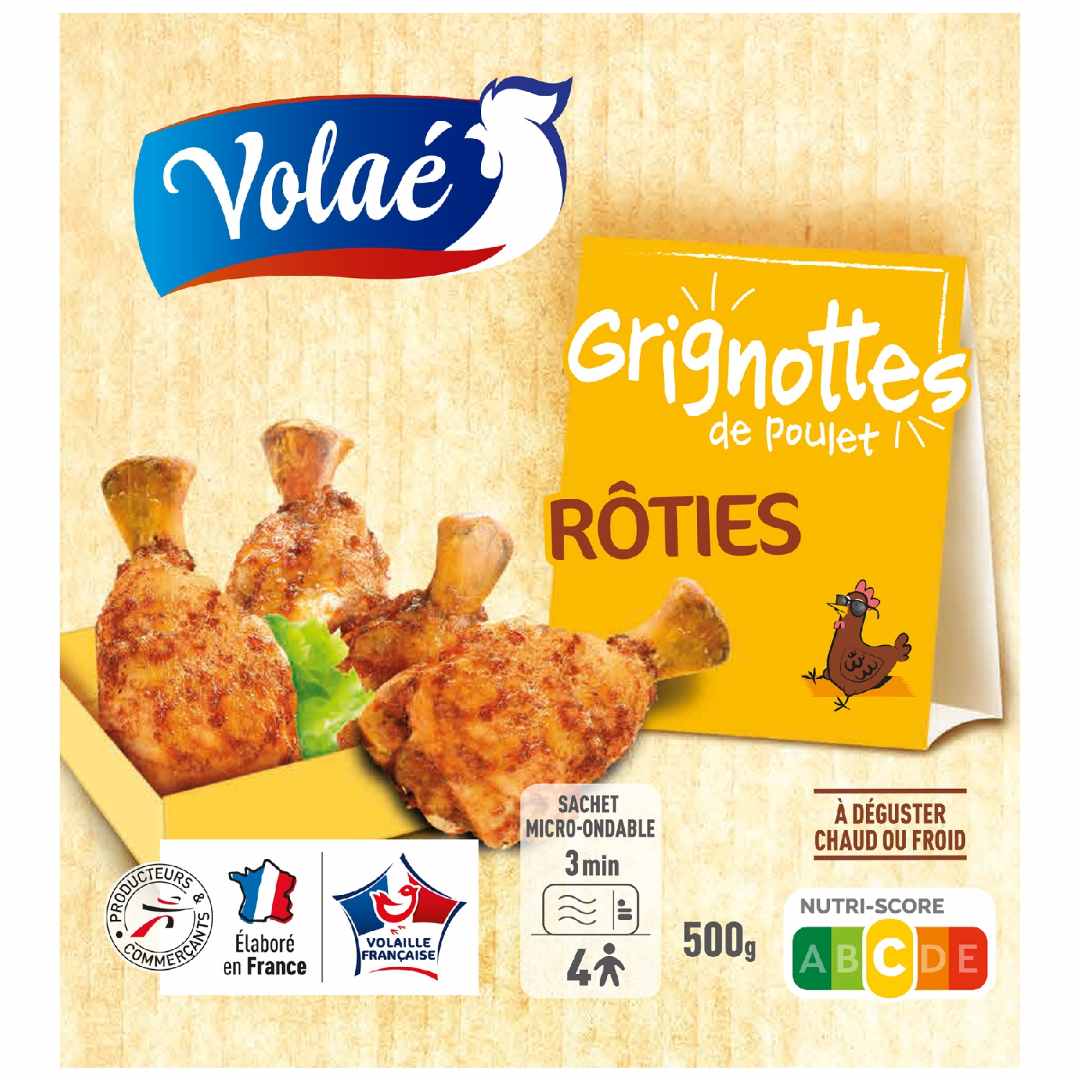
France – Roasted chicken nuggets – Listeria monocytogenes

Gov france

Identification information of the recalled product

  • Product category Feed
  • Product subcategory Meats
  • Product brand name VOLAE
  • Model names or references Roasted chicken nuggets
  • Identification of products
    GTIN Batch Date
    3250391341924 045 Use-by date 08/03/2023
  • Packaging 500g bag
  • Marketing start/end date From 02/16/2023 to 02/20/2023
  • Storage temperature Product to be stored in the refrigerator
  • Health mark FR72264002CE
  • Geographic area of ​​sale Departments: ALLIER (03), HAUTES-ALPES (05), ARDECHE (07), CHER (18), CORREZE (19), CREUSE (23), DROME (26), GARD (30), INDRE (36), INDRE -ET-LOIRE (37), ISERE (38), LOIR-ET-CHER (41), LOIRE (42), LOIRET (45), NIEVRE (58), PUY-DE-DOME (63), SAONE-ET- LOIRE (71), VAUCLUSE (84), YONNE (89)
  • Distributors Intermarché
  • List of points of sale Listing_clients.pdf

Practical information regarding the recall

  • Reason for recall Suspicion of the presence of Listeria monocytogenes
  • Risks incurred by the consumer Listeria monocytogenes (causative agent of listeriosis)

England – National standards for healthcare food and drink

England NHS

There are eight standards that all NHS organisations are required to meet

Organisations must have a designated board director responsible for food (nutrition and safety) and report on compliance with the healthcare food and drink standards at board level as a standing agenda item.

  1. Organisations must have a food and drink strategy.
  2. Organisations must consider the level of input from a named food service dietitian to ensure choices are appropriate.
  3. Organisations must nominate a food safety specialist.
  4. Organisations must invest in a high calibre workforce, improved staffing and recognise the complex knowledge and skills required by chefs and food service teams in the provision of safe food and drink services.
  5. Organisations must be able to demonstrate that they have an established training matrix and a learning and development programme for all staff involved in healthcare food and drink services.
  6. Organisations must monitor, manage and actively reduce their food waste from production waste, plate waste and unserved meals.
  7. NHS organisations must be able to demonstrate that they have suitable 24/7 food service provision, which is appropriate for their demographic.

Hong Kong – Beware of the Inherent Risks of Raw Oysters

CFS

Oysters for raw consumption are a high-risk food as there is no heat treatment to kill pathogens before eating. Besides those sold alive, raw oysters available in the local market are often pre-shucked in either frozen or chilled forms. If not handled properly, it can lead to bacterial contamination and deterioration of the shellfish.

Frozen raw oysters have to be defrosted in the refrigerator to avoid exposure to dangerous temperatures. Defrosting in the fridge can take a long time, usually overnight. During defrosting, raw oysters should be stored in containers to avoid cross-contamination. Avoid eating chilled raw oysters pre-shucked at the exporting countries without cooking, as they were killed and susceptibie to temperature abuse and cross-contamination during production and transportation.

Pregnant women, infants and young children, the elderly and people with weakened immunity should avoid consuming raw or undercooked oysters.

 Italy – I&D Srl – Shelled Almonds – Aflatoxin

Salute

Brand : I&D Srl

Name : shelled almonds

Reason for reporting : Recall due to chemical risk

Publication date : 14 February 2023

Documentation

Documentation

USA – Don’t Let the End Zone Become the Danger Zone: Your Guide to Hosting a Penalty-Free Super Bowl Party

USDA

Football field, end goal. Word overlay: Penalty-free Super Bowl Party – Food Safety: How-to

It’s time for the big game, which also means it’s time to host your friends for your annual Super Bowl party! And where there’s a Super Bowl viewing party, there’s also plenty of food. By following these food safety rules from our game-winning playbook, you’ll provide the best defense to avoid letting your teammates get sacked by foodborne illness this Super Bowl. You may also get voted as MVP for best Super Bowl party host!

Clean: Lead a Good Warm-Up

  • Begin your party food prep by washing hands with warm, soapy water for at least 20 seconds.
  • Wash and sanitize dishware and utensils before using them to prepare, warm, cook or serve any foods.

Separate: Keep Up the Defense

  • Don’t allow a pass interference to contaminate your ready-to-eat foods.
    • Keep all raw meat and poultry away from ready to eat foods while preparing and mixing items.
    • Use clean and different utensils for each dish, and avoid using your own personal utensil to serve yourself foods from the buffet.

Cook: Avoid a False Start

Use a food thermometer to ensure that all meats, poultry and other cooked food items have been cooked to a safe internal temperature before serving. Any previously cooked foods being reheated must be reheated to a safe internal temperature of 165°F, or steaming hot before serving. Making sure food items are properly heated and cooked will kill bacteria that may try to tackle your guests. Here are the recommended internal temperatures for some Super Bowl party favorites:

  • Chicken wings = 165°F
  • Burgers and sliders = 160°F
  • Chili and other reheated foods = 165°F

Chill: Watch the Clock

Once kickoff happens, partygoers and hosts are focused on the game (or patiently waiting until the halftime show); however, don’t let the play clock expire on those party foods, and consider putting foods out in batches to ensure they aren’t staying out longer than the two-hour time limit.

Before halftime, take a TIMEOUT. Check your food with a food thermometer to make sure hot foods are still hot and cold foods are still cold. Ensure that you’re keeping crockpots with your buffalo chicken dip or spinach and artichoke dip on the “warm” or “low” setting, always use a cold source (such as a bowl of ice), below cold foods and check throughout the party to make sure dips and cheeses are still cold.

Stop the Clock

After foods have been sitting at room temperature for 2 hours, either place foods in the refrigerator, change the cold sources or throw out foods you know have been sitting since pre-game coverage.

  • Bacteria love temperatures between 40°F and 140°F, and will grow rapidly if they are in this temperature environment for more than 2 hours. Read more about the Danger Zone.

Scoring the Game-Winning Touchdown

The game is over, but that doesn’t mean you have to lose your food or your health! By following these tips at your Super Bowl party or gathering, you may be celebrating more than just a team victory. Overall, remember to keep an eye on party foods and their temperatures, even when you’re celebrating touchdowns.

Need more food safety information? Call the USDA Meat and Poultry Hotline at (1-888-674-6854) Monday through Friday, from 10 a.m. to 6 p.m. ET, or email or chat at askkaren.gov.