Category Archives: Food Safety Alert

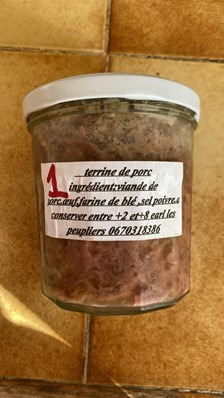
France – Pork terrine – Clostridium botulinum

Gov France

Product Category
Food
Product subcategory
Meats
Product brand name
Earl the Poplars
Model names or references
Pork terrine
Product identification
Batch
All lots
Packaging
Glass jars
Storage temperature
Product to be kept in the refrigerator
Geographic area of ​​sale
MOTTIER (38260)
Distributors
For sale at the farm “Chez Barbier” in MOTTIER (38260)

France -Headcheese – Listeria monocytogenes

Gov France

Product Category
Food
Product subcategory
Meats
Product brand name
nicole lucas breeding
Model names or references
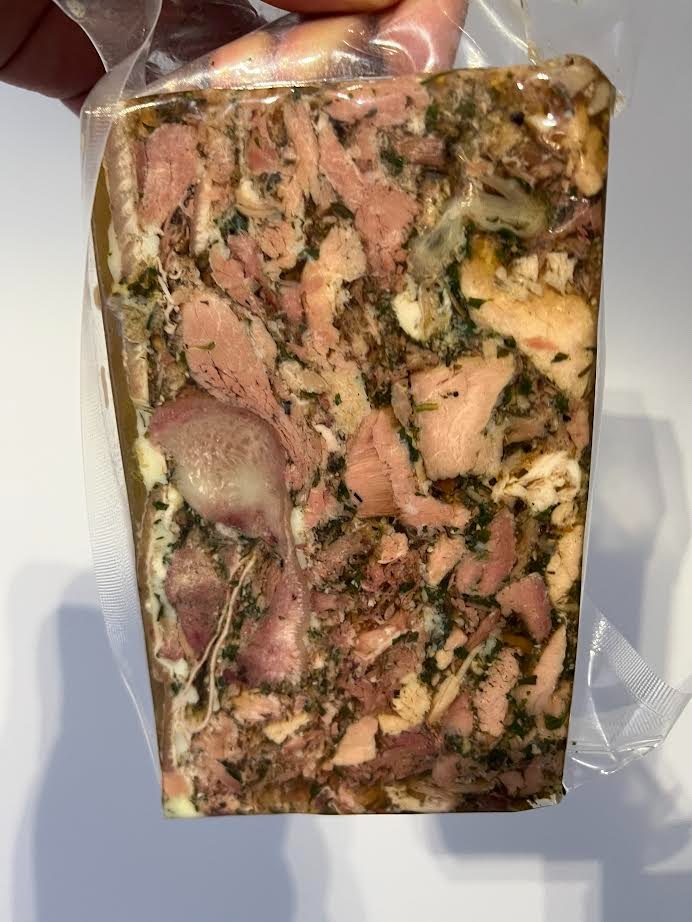
Headcheese
Product identification
Batch Date
240907000 Expiry date 09/28/2024
Packaging
Under a vacuum
Start/End of marketing date
From 09/28/2024 to 10/19/2024
Storage temperature
Product to be kept in the refrigerator
Geographic area of ​​sale
Alpes de Hautes Provence
Distributors
Mées food market, Digne-les-Bains food market, Greoux-les-Bains producer market

USA – HH Fresh Trading Corp Recalls Taiwan Enoki 200gx25pk Because of Possible Health Risk – Listeria monocytogenes

FDA

HH Fresh Trading Corp of California is recalling its 200g of Taiwan Enoki because they have the potential to be contaminated with Listeria monocytogenes, an organism which can cause serious and sometimes fatal infections in young children, frail or elderly people, and others with weakened immune systems. Although healthy individuals may suffer only short-term symptoms such as high fever, severe headache, stiffness, nausea, abdominal pain and diarrhea, Listeria infection can cause miscarriages and stillbirths among pregnant women.

The recalled “Enoki mushrooms 200 gram” were distributed in West Virginia in multiple retail store locations and were sold on 8/20/2024 and 8/23/2024 with 240 cases for each date. HH Fresh Trading received notice on 10/11/2024 and that the Enoki 200 gram test revealed the presence of Listeria monocytogenes on 9/9/2024. As a result we would like to recall this products immediately.

The product comes in a 200 gram, clear plastic package marked with barcode # 4711498860019 on the back side. No illnesses have been reported to date in connection with this problem. The potential for contamination was noted after routine testing by the FDA revealed the presence of Listeria monocytogenes in 200 gram of Enoki. The production of the product has been suspended while FDA and the HH Fresh Trading Corp continue to investigate the source of the problem.

Consumers who have purchased 200 gram of HH Fresh Trading Taiwan Enoki are urged to return them to the place of purchase for a full refund. Consumers with questions may contact the company at 1-262-365-9116 at 8AM to 4PM from Monday to Friday Pacific Time.


Company Contact Information

Consumers:
HH Fresh Trading Corp of California
 1-262-365-9116

Product Photos

Iceland – E. coli O145 confirmed in children and mixed mince

MAST

Foodborne infection has been confirmed at the Mánagardı nursery school in Reykjavík. The causative agent is E. coli bacteria of a type known as STEC and of serotype O145. Analysis of samples at Matís confirmed that the same serotype, i.e. E. coli O145 was found both in faecal samples from children from the kindergarten and in a sample of minced meat used in cooking at the kindergarten. Their sequencing of the bacteria’s genetic material showed that the origin is the same.

After detailed interviews with the parents of the children, who fell ill, attention soon turned to Thursday, October 17 last. The Reykjavík Health Authority went to the site and took numerous samples for analysis of the food used in the cooking that day, such as minced meat, vegetables, lentils, melons, oatmeal and more. All food samples were negative for E. coli except for the mince. A few children who normally do not eat meat also fell ill, but it is not possible to confirm the route of infection for them. They may have been infected by other children who attended the kindergarten after they got sick but before the kindergarten was closed.

The mince turned out to be mixed beef and sheep mince from Kjarnaföð. It did not go on general sale, but only sold to larger kitchens, such as restaurants, canteens and kindergartens. Matvælastofnun contacted the representatives of the company when suspicion was directed at the mince, and the same day the company contacted all parties who received mince from the same production batch that was used in the Mánagard nursery school. During the recall, it was found that buyers had already used it in their operations. There have been no reports of infection or sickness among consumers at other kitchens.

E. coli bacteria are part of the natural intestinal flora of humans and animals and can be introduced into water, meat, vegetables and other foods during their production. Different types of E. coli exist. Most types of E. coli are harmless, but Shigatoxin-producing E. coli (STEC) carry genes that encode toxins that can cause illness (virulence genes). However, their strains can be highly pathogenic.

According to legislation on meat production, producers are not required to ensure that all meat is free of E. coli before it goes to market. However, meat producers should do everything in their power to reduce the chance of contamination of carcasses and meat products in the process. It is primarily done with clean grips, proper hand techniques and clean equipment. Sampling in the process is therefore aimed at checking whether working methods are adequate. The Food Agency reported on a screening of the presence of pathogenic bacteria in Icelandic meat on the Icelandic market in 2018. It stated that STEC virulence genes were found in almost 30% of lamb samples and 11.5% of beef samples.

Cleanliness and proper handling of meat and adequate cooking by users/consumers is therefore key to preventing infection caused by E. coli , including STEC from meat. The steering group’s research has revealed that the handling of the minced meat in this respect during cooking in the kindergarten was insufficient.

It is common practice that beef, lamb and horse steaks are served without being deep-fried. Raw cuts of meat have bacteria on the surface of the meat but not inside the muscle. They are therefore killed when the meat is fried or grilled at high temperatures. Hamburgers and other dishes made from minced meat are different, because during the mincing process, microorganisms spread throughout the mince. Insufficient heating/frying does not kill bacteria present deep inside the mince. In order to kill E. coli and other disease-causing microorganisms, hamburgers and other mincemeat dishes must be fried through or so that the core temperature is at least 75°C.

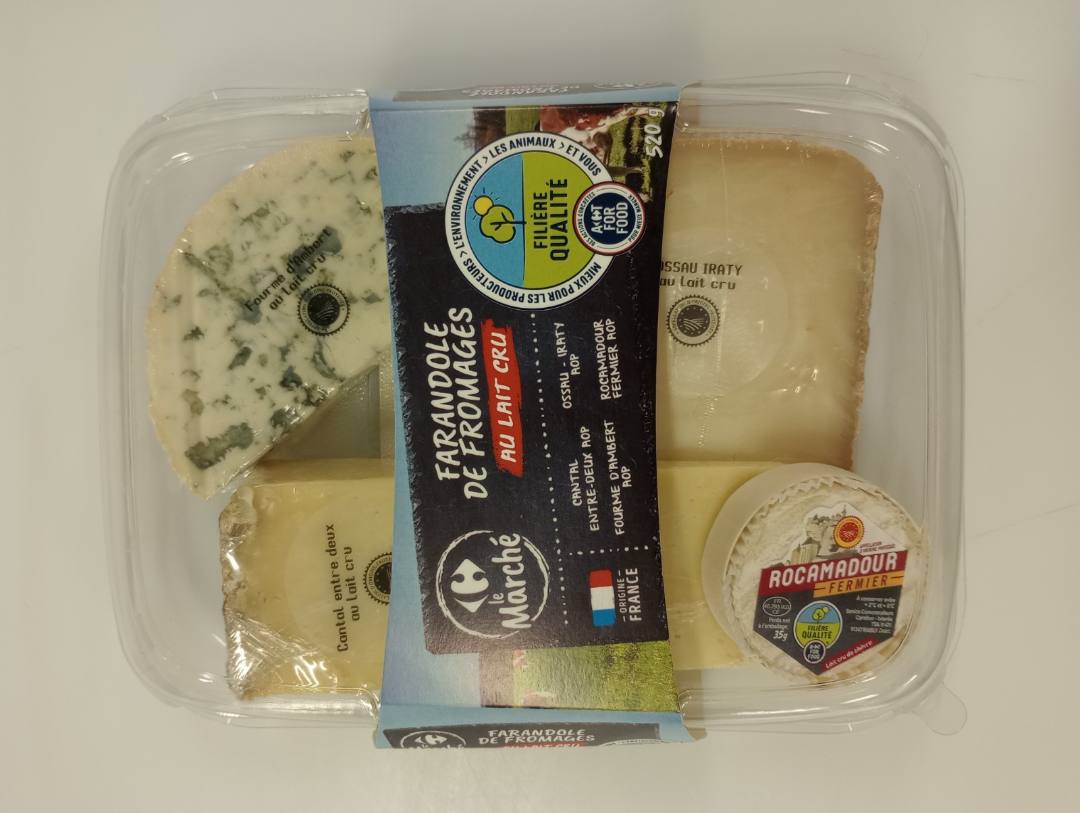
France – FQC Raw Milk Cheese Platter 520G AND FQC Raw Milk Ossau Iraty – Listeria monocytogenes

RASFF

Product Category
Food
Product subcategory
Milk and dairy products
Product brand name
FQC (Carrefour Quality Line)
Model names or references
– Farandole of raw milk cheeses (cheese platter) – Ossau Iraty made with raw milk
Product identification
GTIN Batch Date
3560071070137 415 Expiry date 03/11/2024
3560071070137 423 Expiry date 08/11/2024
3560071070137 425 Expiry date 10/11/2024
3560071070137 441 Expiry date 11/19/2024
3560071070137 441 Expiry date 11/17/2024
3245415890250 138421 Expiry date 06/11/2024
3245415890250 138424 Expiry date 09/11/2024
3245415875752 132413 Expiry date 01/11/2024
3245415875752 138423 Expiry date 08/11/2024
Packaging
– Farandole of raw milk cheeses (cheese platter): 520 g – Ossau Iraty made from raw milk: Free weight
Start/End of marketing date
From 10/12/2024 to 10/31/2024
Storage temperature
Product to be kept in the refrigerator
Health mark
FR 63 113 081 CE
Geographic area of ​​sale
Whole France
Distributors
Crossroads

RASFF Alerts – Salmonella – Polish Poultry Products – Chicken Neck Skins – Minced Beef – Rucola – Red Cabbage – Chicken Wings – Salami – Pasteurised Egg Products – Rocket Salad – Sesame Paste – Broiler Chickens

RASFF

Salmonella Typhimurium detected in minced beef from Sweden in Poland

RASFF

Salmonella Enteritidis in egg white crystals from the Netherlands in Belgium

RASFF

Salmonella spp. from group “C” in poultry meat from Poland in Lithuania and France

RASFF

Salmonella agona in turkey meat from Poland in Italy

RASFF

Salmonella on neck skins from France in Luxembourg

RASFF

The presence of Salmonella spp. bacteria was found in 3 out of 5 samples tested in 25 g of the product called Chicken kebab. Whole chicken (raw deep-frozen meat product) originating from Poland in the Czech Republic

RASFF

Salmonella spp. in turkey medallions from Poland in the Czech Republic

RASFF

Salmonella enterica subsp. Livingstone in rucola from Italy in Slovenia

RASFF

Salmonella Enteritidis in fresh fillets of broiler chickens from Poland in Lithuania

RASFF

Salmonella Infantis in fresh wings of broiler chickens from Poland in Lithuania

RASFF

Presence of Salmonella spp. in sprouts of Brassica oleracea (red cabbage) from Spain, with raw material from Italy

RASFF

Detected Salmonella in rucola from Italy in Sweden

RASFF

Salmonella Typhimurium in chilled turkey meat from Poland in the Czech Republic

RASFF

Salmonella Infantis in chicken wings from Austria in Germany

RASFF

Salmonella Typhimurium in neck skins from France in Belgium, Latvia and Luxembourg

RASFF

Salmonella Coeln in frozen fillets of broiler chickens from Ukraine in Lithuania and Denmark

RASFF

Recall of Duck Products in Iceland Due to Salmonella from Poland in Iceland and Denmark

RASFF

Salmonella spp in Salami/meat product from Italy in Netherlands and Austria

RASFF

Salmonella spp in pasteurized egg products from Spain in Portugal

RASFF

Salmonella enteritides in poultry meat from Poland in Netherlands and Germany

RASFF

Salmonella spp. in rocket salad from Italy from Italy in Germany

RASFF

Salmonella Colindale in sesame paste from Türkiye in Germany, Netherlands and UK

RASFF Alert – Histamine – Yellowfin Tuna

RASFF

Presence of histamine above the limits in fresh yellowfin tuna from Sri Lanka in Italy

RASFF Alerts – Campylobacter and ESBL – Chilled Chicken Breast

RASFF

Campylobacter and suspected ESBL in chilled chicken breasts from Poland in Germany

RASFF Alerts – STEC E.coli – French Cheese – Lamb Meat

RASFF

STEC in cheese “crottin de chavignol” in France in Netherlands

RASFF

E. Coli STEC in lamb meat from Ireland in Italy


RASFF Alerts – E.coli – Mussels

RASFF

Presence of E.coli in chilled mussels from Spain in Italy