Category Archives: Food Poisoning

Australia -Food safety advice for bush fires and power outages

Food Safety Council

The Food Safety Information Council today issued food safety advice for consumers about bush fires and power outages.

‘Here are some key food safety points after a fire:

  • throw out any food that has been near a fire, including food in cans and jars even if it appears ok
  • any raw food, or food in packaging such as cardboard, plastic wrap, screw-topped jars and bottles should also be thrown out
  • throw out food from a refrigerator as the refrigerator seal isn’t airtight, fumes can get inside
  • wash cooking utensils exposed to fire-fighting chemicals in soapy hot water, then sanitise in 1 tablespoon of chlorine bleach per 2 litres of water and rinse.
  • When you dispose of food, wrap it in newspaper and place in the rubbish bin. A small volume of food may be safely buried.
  • Where larger quantities have to be disposed of your local government’s environmental health officer should be contacted. Without correct disposal, fly breeding, animal and pest scavenging may result and increase the risk of the spread of infectious diseases.

‘If your power has gone out your food will remain safe in your refrigerator for 2 hours. If it has been more than 4 hours, throw the food out. Don’t open the fridge door during the power cut, unless necessary. The best option is to keep the refrigerated foods as cold as possible by not opening the door unless necessary to remove food to eat or check the temperature after 2 hours. or place items in the freezer. If this is not possible:

  • Remove ice bricks from the freezer and place in an esky.
  • Remove all meats, poultry, dairy and potentially hazardous food (for example dips, pâté, ham, prepared and cooked food) from the refrigerator and place in an cooler with frozen bricks or gel packs.
  • Salted butter, margarine and hard cheeses will remain safe at room temperature.
  • Place the ice or ice bricks throughout the stored food to ensure an even temperature. Make sure the lid of the cooler has a good seal.
  • If the temperature of the food stored in an cooler or refrigerator reaches more than 5 °C for less than 2 hours you should find alternative refrigeration at less than 5 °C or, if possible, freeze or use immediately.
  • Food stored in a refrigerator or esky at more than 5 °C for 4 hours or more should be thrown out.
  • Freezers that are in good condition and operate at minus 15 °C or below can keep foods at safe temperatures for between 1 and 2 days. If the freezer door is kept shut, a full freezer can keep food chilled for up to 48 hours, while a half full freezer can be kept food chilled for 24 hours.
  • It is important that the doors of freezers are not opened unless necessary. Opening and closing the doors will reduce the time the contents will remain at safe temperatures.
  • Foods that have partly defrosted or defrosted but remain very cold (5 °C or less) can be refrozen.  Remember that some food types, for example ice cream which will thaw other foods defrost. Although there is no safety issue, some foods become icy or their texture will be damaged when refrozen and may not be usable after defrosting and refreezing.
  • If your food has been in a freezer where the temperature has reached more than 5 °C for more than 2 hours, but less than 4 hours, it should be consumed immediately.
  • Food stored in a freezer for more than 4 hours at more than 5 °C should be thrown out.

‘Also remember to throw out food that was being cooked when the power failed if cooking cannot be completed properly within 2 hours. If food is already properly cooked, eat it within 2 hours or throw it out,’ Ms Buchtmann concluded

Media contact Lydia Buchtmann 0407626688
USA – Colorado county reports first foodborne botulism death in more than decade

Food Safety News

Foodborne botulism is rare but potentially deadly.

The death of an El Paso County, CO, woman who died this past Sept.20 has since been officially blamed on foodborne botulism, the first death of its kind in a decade.

Cardiovascular disease and diabetes contributed to death, according to the autopsy report. Were it not for botulism, however, the 80-year-old woman could still be alive.

The source of the botulism was previously frozen potatoes stored at room temperature for two weeks. After eating the pre-prepared potatoes, the woman developed trouble breathing; her eyes bulged, her speech slowed, and her muscles became weakened.

The woman’s botulism death was the first in El Paso County since 2008.

Indonesia – Food poisoning scare as eight fall ill after dining at Vietnamese restaurant in West Jakarta

The Jakarta Post

Vietnamese restaurant chain Saigon Delight has found itself at the center of a food poisoning scare after eight customers claimed to have fallen ill after eating at the restaurant’s outlet at Lippo Mall Puri in West Jakarta.

The case came light on Saturday after Instagram user @zenifuera, who identified herself as Jennifer, posted Instagram stories telling of how she, her husband and their 2.5 year-old daughter had suffered nausea, vomiting, shivers, headaches and stomachaches after dining at the restaurant on Dec. 28, 2019. Jennifer’s husband and daughter suffered severe food poisoning and were treated at a hospital for at least a week.

Denmark – Several ill in Danish Salmonella outbreak ate undercooked sausage

Food Safety News

kswfoodworld salmonella

Image CDC


Several people part of a Salmonella outbreak in Denmark tasted or ate raw or undercooked sausage, according to a recently published study.

In November 2018, an outbreak of monophasic Salmonella Typhimurium was detected. It sickened at least 49 people across the country.

A traditional form of raw Danish pork sausage called medister sausage was believed to be the source of illnesses. Product samples were negative for Salmonella and investigations at the production site did not reveal the source of contamination. Medister sausage is often served in the late autumn months and Christmas season. It is a long, thick sausage made from ground pork, seasoned and stuffed into casings.

Due to a control program, Salmonella Enteritidis is all but eliminated in Danish broiler poultry and egg production but Salmonella Typhimurium still exists in pigs and pork.

UK -Eighteen Brit holidaymakers in hospital after food poisoning outbreak at a top Italian Alps hotel

The Scottish Sun

EIGHTEEN Brit holidaymakers were in hospital last night after a suspected food poisoning attack at a top hotel in the Italian Alps.

The group were tucking into a New Year’s Day dinner on the slopes when several suddenly reported feeling ill and throwing up.

A spokesperson for TUI UK said””We can confirm that a number of customers staying at the Hotel Miravalle have reported that they had been unwell, with some seeking further medical advice. We are currently investigating what may have caused this.

“We would like to reassure customers that we take health and hygiene very seriously, and the safety and wellbeing of our customers is our highest priority.

“Our Crystal Ski Holidays reps in resort are on hand to support any customers who reported that they are unwell. We are working closely with our resort team and the hotel’s management to help prevent further illness spreading.”

Viet Nam – Kindergarten fined for feeding Staph bacteria contaminated food to students

Vn Express

A Thanh Hoa Province kindergarten where 143 kids had to be hospitalized with food poisoning a fortnight ago has been fined VND43 million ($1,860).

Results of tests done on the steamed rice rolls (banh cuon) served to the children of the Vuon Mat Troi Kindergarten last December 23 was announced Friday by the Central Food Quality Control Institute under the Ministry of Health,

The school in Thanh Hoa Town, capital of central province Thanh Hoa, had bought the rice rolls from a local shop.

Thanh Hoa’s Department of Food Safety and Hygiene fined the school for serving unhygienic food of unclear origin. The department also proposed authorities to punish the food provider.

USA – Outbreak of Salmonella Infections Linked to Ground Beef Final Update

CDC

Final Outbreak Information
Illustration of a clipboard with check marks on it.
  • As of December 30, 2019, this outbreak appears to be over.
  • Thirteen people infected with the outbreak strain of Salmonella Dublin were reported from eight states.
    • Illnesses started on dates ranging from August 8, 2019, to October 22, 2019.
    • Nine hospitalizations were reported, including one death reported from California.
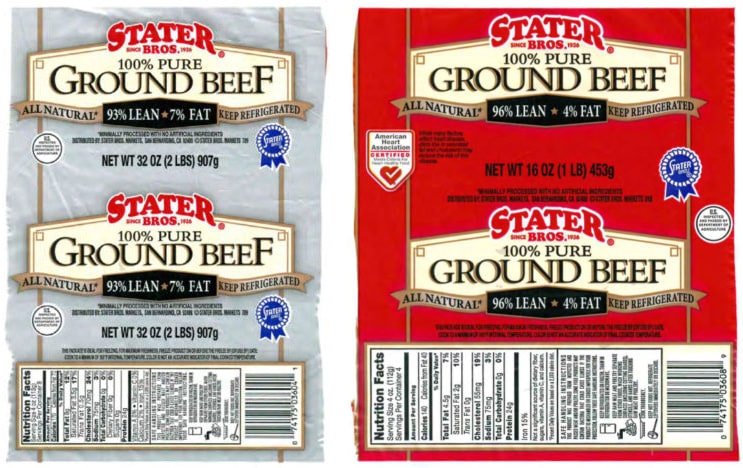
  • Epidemiologic, traceback, and laboratory evidence indicated that contaminated ground beef was the likely source of this outbreak.
  • On November 15, 2019, Central Valley Meat Co. in Hanford, Calif., recalledexternal icon 34,222 pounds of ground beef products that may have been contaminated with Salmonella Dublin.
    • A single, common supplier of ground beef that accounts for all of the illnesses was not identified.

Photo of packaging.

Malaysia -Food Poisoning outbreak in Kuala Lumpur

Outbreak News Today

The Malaysia Ministry of Health received a report about a food poisoning incident involving PAST kindergarten teachers throughout the Federal Territory of Kuala Lumpur attending a training course at a center in Cheras, Kuala Lumpur on Jan. 5.

Course participants presented with symptoms of vomiting, stomach ache and diarrhea and are being treated at the hospital.

Further investigations by health officials at the training center found that 137 people of the 280 exposed course participants had the same symptoms

All cases are stable and the vast majority are being treated as outpatients. Food suspected to be the cause of this food poisoning situation include chicken cooked at dinner at the training center on the day of the incident. Clinical samples from cases as well as food samples were taken and sent to the laboratory for analysis.


Research – Evaluation of Bactericidal Effects of Phenyllactic Acid on Escherichia coli O157:H7 and Salmonella Typhimurium on Beef Meat

Journal of Food Protection 

ABSTRACT

Bactericidal effects of various concentrations of phenyllactic acid on Shiga toxin–producing Escherichia coli (STEC), including E. coli O157:H7, O26:H11, O103:H2, and O121:H19, and on Salmonella Typhimurium DT104 in pure culture and microplates assays were studied. Beef cuts were surface sprayed with phenyllactic acid or lactic acid for inactivation of E. coli O157:H7 and Salmonella Typhimurium. The 1.5% phenyllactic acid inactivated all inoculated E. coli O157:H7, O26:H11, O103:H2, and O121:H19 and Salmonella Typhimurium DT104 (>6-log reduction) within 1 min of contact at 21°C, whereas 1.5% lactic acid did not result in microbial reduction. Microplate assays (for STEC and Salmonella Typhimurium DT104 at 10 to 100 CFU per well) indicated that concentrations of 0.25% phenyllactic acid or 0.25% lactic acid inhibited the growth of STEC and Salmonella Typhimurium DT104 incubated at 37°C for 24 h. Treatment of beef with 1.5% lactic acid or 1.5% phenyllactic acid reduced E. coli O157:H7 by 0.22 and 0.38 log CFU/cm2, respectively, within 5 min and reduced Salmonella Typhimurium DT104 by 0.12 and 0.86 log CFU/cm2, respectively. When meat treated with 1.5% phenyllactic acid was frozen at −20°C, inactivation of E. coli O157 and Salmonella Typhimurium DT104 was enhanced by 1.06 and 1.46 log CFU/cm2, respectively. Thus, treatment of beef with 1.5% phenyllactic acid significantly reduced the population of E. coli O157:H7 and Salmonella.

HIGHLIGHTS
  • Phenyllactic acid at 1.5% killed STEC and Salmonella (>6-log reduction) within 1 min.

  • The MIC of lactic and phenyllactic acids was 0.25%.

  • The bactericidal effect of phenyllactic acid on beef was enhanced by freezing.

USA – Outbreak Investigation of Salmonella Javiana Potentially Linked to Tailor Cut Produce Fruit Mix, Winter 2019

FDA

January 2, 2020

Total Illnesses: 96
Hospitalizations: 27
Deaths: 0
Last illness onset: December 10, 2019

Recommendation

FDA, CDC and state and local partners are investigating an outbreak of illnesses caused by Salmonella Javiana. Epidemiologic and traceback evidence indicate that fruit mix with cantaloupe, honeydew, pineapple, and grapes from Tailor Cut Produce of North Brunswick, New Jersey, is a potential source of this outbreak.

The firm recalled the fruit mix, called Fruit Luau, as well as cut honeydew, cut cantaloupe and cut pineapple products on December 7. Food service and institutional food operators should not sell or serve the recalled products.

Tailor Cut Produce reports that their products may be found in restaurants, banquet facilities, hotels, schools, long-term care facilities and institutional food service establishments in Delaware, New Jersey, New York, and Pennsylvania.

Because the recalled products may have been distributed to nursing homes, schools, hospitals and other facilities that cater to vulnerable populations, it is important that these facilities do not sell or serve them. Please consult with your distributor to confirm the source of the fruit mix and cut fruit used in your operation.

Background

As of December 30, 2019, CDC is reporting 96 illnesses confirmed by Whole Genome Sequencing (WGS) in CA, CO, CT, DE, IL, MN, NJ, NY, PA, VA, and WA. Illnesses were reported from states where Tailor Cut Produce distributes, including Pennsylvania, New York City, New Jersey, and Delaware. Ill people from other states reported traveling to these states in the week before their illness started. CDC reports only cases confirmed by WGS, and these numbers may differ from the numbers that states are investigating.

FDA’s inspection at Tailor Cut Produce is ongoing. FDA is currently collecting records to support a traceback investigation and will provide updates as more information becomes available.