Category Archives: Food Poisoning

USA – Statement on the Salinas-linked romaine lettuce E. coli O157:H7 outbreak and status update on investigation

FDA

The U.S. Food and Drug Administration, along with the U.S. Centers for Disease Control and Prevention and state and local partners, previously reported on Dec. 12 that public health experts were tracking three separate outbreaks linked to romaine lettuce caused by three different strains of E. coli O157:H7. We also reported that, through the FDA’s traceback investigation, we were able to identify a common grower between each of these outbreaks in Salinas, California based on available supply chain information.

Today, the FDA is providing an update on the status of the E. coli O157:H7 illnesses linked to romaine lettuce, along with recent findings based on our investigation of fields linked to a common grower, which was identified in our traceback. It should be noted that romaine from this grower does not explain all of the illnesses seen in these outbreaks.

Outbreaks declared over, consumer advisory lifted

The FDA is lifting the consumer advisory to avoid romaine lettuce from Salinas as the growing season for this region is over, and there is no longer a need for consumers to avoid it. There is also no need to avoid other produce products from Salinas.

The FDA and CDC have been tracking two multi-state romaine lettuce outbreaks. Today, federal health officials are declaring both multi-state romaine lettuce outbreaks over. One of the outbreaks sickened 167 people in 27 states. The other outbreak, linked to Fresh Express salad kits, sickened 10 people in five states.

There was also a third outbreak in Washington State that sickened 11 people. This outbreak has also been declared over.

The last reported illness onset date for all the outbreaks was Dec. 21. Based on this information, it appears that our Nov. 22 advisory to not eat romaine from Salinas played an important role in preventing illnesses and containing this outbreak because it prompted the removal of romaine lettuce from Salinas from the marketplace and warned consumers to throw away romaine from that growing region.

Common grower, multiple fields investigated

The FDA traceback investigation for these outbreaks required investigators to go through hundreds of supply chain records to find a commonality to a single grower with multiple fields. We were able to narrow this down further to at least 10 fields in the lower Salinas Valley.

Investigators from the FDA, CDC, the California Department of Food and Agriculture and the California Department of Public Health, visited several of these fields and took a variety of samples from water, soil and compost. So far, sample results have come back negative for all of the three outbreak strains of E. coli O157:H7. However, we did find a strain of E. coli that is unrelated to any illnesses in a soil sample taken near a run-off point in a buffer zone between a field where product was harvested and where cattle are known to occasionally graze. This could be an important clue that will be further examined as our investigation continues. However, this clue does not explain the illnesses seen in these outbreaks.

Our investigation is ongoing, and we are doing everything possible to find the source or sources of contamination. The investigation into how this contamination occurred is important, so romaine growers can implement measures that will prevent future contamination and illnesses.

The FDA is planning to conduct an additional, in-depth, root-cause investigation. The investigation will further characterize how contamination might have occurred and will inform what preventive controls are needed to prevent future outbreaks. Once complete, we plan to issue a prompt report and share lessons learned, so that growers can implement best practices to protect consumers from contaminated produce.

Investigation will inform future prevention

As we mentioned in our last update, it is important to remember that millions of servings of fresh leafy greens are safely eaten every day by consumers, although the repeat nature of these outbreaks linked to leafy greens – and more specifically to romaine lettuce – remains a concern.

We are doing our part by continuing our sampling assignment to monitor for pathogens in romaine lettuce across the nation. Industry can and must do their part too. Everyone across the romaine supply chain must do everything possible to fully understand why and how these outbreaks keep happening and continue to aggressively implement preventive measures to further protect consumers.

Outbreaks illustrate need to stay focused on prevention

It’s critical that all stakeholders, including growers, processors, distributors and retailers, stay laser-focused on prevention to help bend the curve of foodborne illness. We understand the importance of food safety, and we know there’s a human face to every foodborne illness.

The FDA remains committed to doing everything we can to prevent outbreaks, working with fellow regulators and the food industry to identify and address causes and keep consumers aware of potential risks.

Rest assured that we are working hard every day to try to prevent foodborne illness. We also know that food safety is a shared responsibility. It involves food producers, distributors, manufacturers, retailers and certainly regulatory officials at the federal, state, local, territorial and tribal levels. That’s why we work directly with our partners on things such as training and inspections. We also work closely with industry, so they understand our requirements and are educated on the latest scientific standards and good agricultural practices. Working together, we have and will continue to advance food safety.

A New Era of Smarter Food Safety

While we will always place emphasis on prevention, being able to promptly respond to an outbreak when it occurs is a critical part of our food safety mission.

As public health agencies have gotten better at detecting foodborne illnesses, our ability to trace back to the source of contaminated foods that may have caused the illnesses has lagged, due in part to the lack of modernized food traceability capabilities.

As part of the FDA’s New Era of Smarter Food Safety initiative, we plan to use advances in technology to improve our ability to track and trace products through the supply chain. We’ll be launching a New Era of Smarter Food Safety Blueprint in early 2020 that will outline how we will advance our work in this area. This blueprint will help consumers get information more quickly, enabling people to better protect themselves and their families.

We look forward to continuing our work with growers, processors, distributors and retailers in our shared efforts to protect consumers, and we will continue to provide updated information as it becomes available.

The FDA, an agency within the U.S. Department of Health and Human Services, protects the public health by assuring the safety, effectiveness, and security of human and veterinary drugs, vaccines and other biological products for human use, and medical devices. The agency also is responsible for the safety and security of our nation’s food supply, cosmetics, dietary supplements, products that give off electronic radiation, and for regulating tobacco products.

USA – Outbreak Investigation of E. coli: Romaine from Salinas, California (November 2019)

FDA


Outbreak appears over; FDA investigation efforts continue.

Case Counts

Total Illnesses: 167
Hospitalizations: 85
Deaths: 0
Last illness onset: December 21, 2019

Recommendation

As of January 15, 2020, the CDC reports that the outbreak appears to be over. Contaminated romaine from the Salinas, CA growing region that made people sick in this outbreak is likely no longer available. Consumers need not avoid romaine lettuce, or any other produce, from the Salinas, CA growing area.

Update

FDA will continue its investigation into potential sources and contributing factors that led to the outbreak in order to inform future prevention efforts.

FDA, CDC, and California health and agriculture authorities concluded their investigation of the common grower noted as having supplied romaine lettuce linked to three concurrent outbreaks; this outbreak which includes cases in the U.S. and CanadaExternal Link Disclaimer; one outbreak in Washington state potentially linked to leafy greens; and the third outbreak, with cases in the U.S. and Canada, linked to Fresh Express Sunflower Crisp Chopped Salad Kits.

When investigators arrived on the ranches there was no romaine lettuce in the ground and the fields had been plowed, as the growing season had already ended. Investigators collected water, soil, and compost samples to be analyzed. So far, sample results have come back negative for the three outbreak strains of E. coli. FDA did find a strain of E. coli that is unrelated to any illnesses in a soil sample. This strain of E. coli was determined to be of low risk to people. Although this grower was determined to be a common supplier for all three outbreaks based on available supply chain information, the romaine lettuce from this grower does not explain all the illnesses seen in the three outbreaks.

The outbreak linked to Fresh Express Sunflower Crisp Chopped Salad Kits, with cases in the U. S. and Canada, was declared over by CDC on January 15, 2020. There are no products that caused these illnesses left on the market. The outbreak in Washington state sickened 11 people. This outbreak has also been declared over.

As part of FDA’s ongoing efforts to understand and prevent foodborne illnesses linked to leafy greens, the FDA will conduct a root cause investigation. The investigation will be conducted throughout this year’s romaine lettuce planting, growing, and harvesting season. Results will be shared publicly when the investigation and analysis are concluded.

Information – Food Safety – People At Risk

Food Safety.gov

Food poisoning or foodborne illness can affect anyone who eats food contaminated by bacteria, viruses, parasites, toxins, or other substances, but certain people are more likely to get sick or to have a serious illness.

Know whether you’re in a group of people who are more likely to get food poisoning, and make safer choices to reduce your risk for foodborne illness.

People at risk include:

If you or someone you care for are included in one of these groups, follow our four basic steps to food safety and the additional tips included below.

Clean: Wash hands and surfaces often.

Separate: Separate raw meat and poultry from ready-to-eat food.

Cook: Cook food to the right temperature.

Chill: Chill raw meat and poultry, as well as cooked leftovers, promptly (within 2 hours).

Click on the link above for more information.

Malaysia – Fried noodles at Johor school suspected to be the cause of food poisoning of 120 students

Channel News Asia

JOHOR BAHRU: Fried noodles served at a Johor school are suspected to have caused 120 students to go down with food poisoning on Monday (Jan 13) with symptoms of stomach ache, diarrhoea, nausea, vomiting, headache and fever.

The Johor Government Religious Secondary School (SMAKJ) near Kluang, where 474 students are enrolled, had served the fried noodles for breakfast at the dining hall.

The food suspected to have caused the incident was fried noodles served at breakfast, but further investigation was still being conducted by the health office to determine the actual cause.

Clinical samples had been sent to the laboratory for analysis and the dormitory kitchen has been examined by the food safety and quality unit, Dr Aman added.

“The hostel kitchen has been ordered to temporary close under the Prevention and Control of Infectious Diseases Act 1988 for the purpose of disinfection of premises and further investigation.”

USA -Unlicensed Yolo restaurant fined over $100K after allegedly poisoning UC Davis students

sacbee

An unlicensed restaurant that served college students through a Chinese app has been ordered to pay more than $100,000 after its food reportedly caused several people to fall ill.

The Yolo County District Attorney’s Office settled with Xin Jiang, owner of Anna’s Kitchen, for $106,997 in total costs and penalties on Dec. 18, according to a news release distributed Monday afternoon. Jiang will owe an additional $90,000 if he’s found operating a retail food operation without a valid county permit again.

Anna’s Kitchen targeted University of California, Davis students from China through the immensely popular Chinese app WeChat. It became the subject of a Yolo County Environmental Health Division investigation after multiple complaints from students who became sick after eating food from Anna’s Kitchen, according to the release.

The investigation found Jiang delivered hundreds of meals that weren’t kept at county-mandated hot or cold temperatures, putting customers at risk for food-borne illnesses.

Canada- Food Recall Warning – Alkanater brand Tahina recalled due to Salmonella

CFIA

Recall details

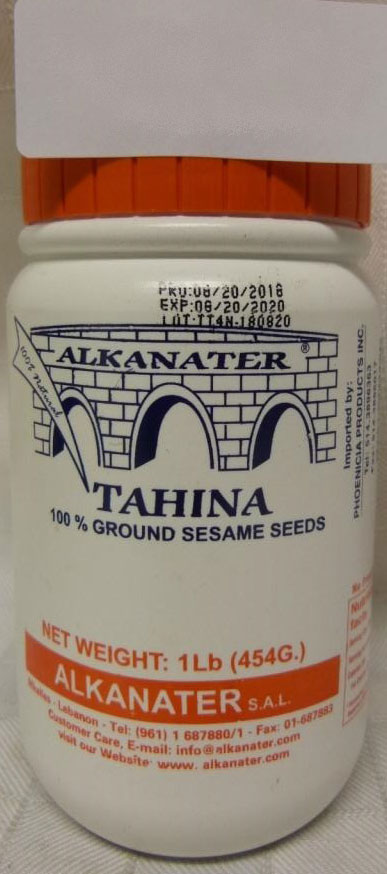
Ottawa, January 14, 2020 – Phoenicia Group Inc. is recalling Alkanater brand Tahina from the marketplace due to possible Salmonella contamination. Consumers should not consume the recalled product described below.

The following product has been sold in Quebec and Ontario and may have been distributed in other provinces and territories.

Recalled product

Brand Product Size UPC Codes
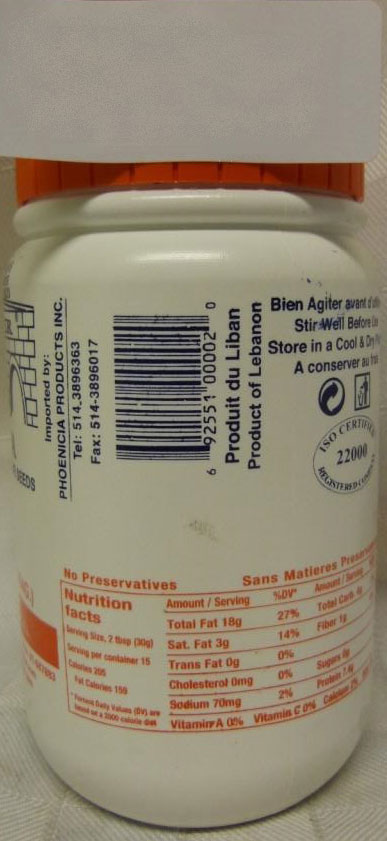
Alkanater Tahina 454 g 6 92551 00002 0 PRO: 08/20/2018
EXP: 08/20/2020
LOT: TT4N-180820

What you should do

If you think you became sick from consuming a recalled product, call your doctor.

Check to see if you have the recalled product in your home. Recalled products should be thrown out or returned to the store where they were purchased.

Food contaminated with Salmonella may not look or smell spoiled but can still make you sick. Young children, pregnant women, the elderly and people with weakened immune systems may contract serious and sometimes deadly infections. Healthy people may experience short-term symptoms such as fever, headache, vomiting, nausea, abdominal cramps and diarrhea. Long-term complications may include severe arthritis.

Background

p>This recall was triggered by Canadian Food Inspection Agency (CFIA) test results. The CFIA is conducting a food safety investigation, which may lead to the recall of other products. If other high-risk products are recalled, the CFIA will notify the public through updated Food Recall Warnings.The CFIA is verifying that industry is removing the recalled product from the marketplace.

Illnesses

There have been no reported illnesses associated with the consumption of this product.

Product photos

Printer ready version of photos

  • Alkanater - Tahina - 454 g - front
  • Alkanater - Tahina - 454 g - back

Viet Nam -101 hospitalized during school trip with food poisoning

VN Express

101 secondary school students and teachers from Tay Ninh Province traveling to neighboring HCMC were hospitalized with food poisoning on Sunday.

After picked up at 5:30 a.m., students of Chu Van An Secondary School, upon traveling to Dam Sen amusement park in HCMC, received a box of chicken sticky rice provided by the hosting travel agency.

At around 9:30 a.m., 71 students started to experience nausea, and were immediately sent to the emergency room at HCMC’s Children’s Hospital 1.

At noon, another 30 cases, including both students and teachers, were sent to HCMC’s District 11 Hospital, with similar symptoms.

In the late afternoon, 22 cases at District 11’s Hospital were released home, while the rest, including one teacher, remained.

HCMC’s health department has collected the food sample to determine the cause of the accident.

Food poisoning occurs

USA -Yosemite National Park Stomach Illness Outbreak Sickens Visitors

Food Poisoning Bulletin

Federal health officials say a Yosemite National Park stomach illness outbreak has sickened at least a dozen people, according to the San Francisco Chronicle. An investigation has been launched after the reports of illness began, and inspections are being conducted at the service facilities.

The illness or origin of the outbreak have not been identified. Those sickened are recovering or have already recovered. There is no information about this outbreak on Yosemite’s web site.

Canada -Scarpone’s Italian Store brand frozen Ground Veal recalled due to E. coli O157:H7

CFIA

Recall details

Ottawa, January 13, 2020 – The Italian Store is recalling Scarpone’s Italian Store brand frozen Ground Veal from the marketplace due to possible E. coli O157:H7 contamination. Consumers should not consume the recalled product described below.

Recalled products

Brand Product Size UPC Codes Additional Information
Scarpone’s Italian Store Ground Veal (frozen) Variable Starting with:
0 200904
All units sold between December 23, 2019 and January 13, 2020, inclusive. Sold at The Italian Store, 5140 Skyline Way NE, Calgary, AB.

What you should do

If you think you became sick from consuming a recalled product, call your doctor.

Check to see if you have the recalled product in your home. Recalled products should be thrown out or returned to the store where they were purchased.

Food contaminated with E. coli O157:H7 may not look or smell spoiled but can still make you sick. Symptoms can include nausea, vomiting, mild to severe abdominal cramps and watery to bloody diarrhea. In severe cases of illness, some people may have seizures or strokes, need blood transfusions and kidney dialysis or live with permanent kidney damage. In severe cases of illness, people may die.

Background

This recall was triggered by Canadian Food Inspection Agency (CFIA) test results. The CFIA is conducting a food safety investigation, which may lead to the recall of other products. If other high-risk products are recalled, the CFIA will notify the public through updated Food Recall Warnings.

The CFIA is verifying that industry is removing the recalled product from the marketplace.

Illnesses

There have been no reported illnesses associated with the consumption of this product.

Product photos

Printer ready version of photos

  • Scarpone's Italian Store - Ground Veal (frozen)
  • Universal Product Code - Scarpone's Italian Store - Ground Veal (frozen)

Hong Kong – Import and sale of shellfishes harvested in production areas 35.11 and 35.06 in France suspended

CFS

Issue Date 10.1.2020
Source of Information Centre for Food Safety
Food Product Shellfishes
Product Name and Description Shellfishes harvested in production areas 35.11 and 35.06 in France
Reason For Issuing Alert
  • The CFS received a notification from the Rapid Alert System for Food and Feed (RASFF) of the European Commission that shellfishes harvested in the abovementioned areas which were suspected to be contaminated with norovirus were under recall.
  • The CFS immediately followed up with major local importers and retailers. Preliminary investigation found that a local importer had imported not ready-to-eat mussels from the abovementioned areas into Hong Kong which were on sale in its supermarkets.
Action Taken by the Centre for Food Safety
  • For the sake of prudence, the CFS has immediately suspended the import into and sale within Hong Kong of all shellfishes harvested in the two areas concerned.
  • The importer concerned had already voluntarily stopped sale and removed from shelves of the affected product for the sake of prudence.
  • The CFS is tracing the distribution of the affected product.
  • The CFS has informed the French authorities of the import suspension and will also notify the local trade.
  • The CFS will continue to follow up on the incident and take appropriate action to safeguard food safety and public health.
Advice to the Trade Stop using or selling the affected product harvested in the abovementioned areas concerned immediately.
Advice to Consumers
  • One may be infected by norovirus or other pathogenic microorganism if consuming undercooked shellfish which is contaminated. So, shellfish should be thoroughly cooked before consumption.
  • Young children, elderly people, pregnant women and others with weakened immune systems should pay special attention when consuming shellfish.
Further Information The CFS press release