Category Archives: Food Pathogen

Australia – Kenilworth Dairies Full Cream Milk 3L, 2L and 1L – E.coli

FSANZ

Product information

Kenilworth Dairies is conducting a recall of Kenilworth Dairies Full Cream Milk 3L, 2L and 1L. The product has been available for sale at independent grocers and Kenilworth Dairies Cafe in QLD.

Date markings

Best Before
BB 15/03/21

Full cream milk

Problem

The recall is due to microbial (E.coli) contamination.

Food safety hazard

Food products contaminated with E.coli may cause illness if consumed.

Country of origin

Australia

What to do​

Any consumers concerned about their health should seek medical advice and should return the product to the place of purchase for a full refund.

For further information please contact:

Kenilworth Dairies
07 5446 0144
info@kenilworthdairies.com.au

​​

Related links:

Korea – Food Poisoning Cases Plummet amid Attention to Personal Hygiene

Korea BizWire

South Korea’s drug safety agency said Thursday that the number of food poisoning cases in South Korea declined sharply last year, falling to about a half of the annual average for the previous five years, with the number of food poisoning patients more than halving.

The number of food poisoning cases occurring last year in the country stood at 178, which is equivalent to 52 percent of the annual average of 343 cases for the previous five years from 2015 to 2015, according to the Ministry of Food and Drug Safety.

Accordingly, the number of food poisoning patients also dropped to 2,747 last year, a level that is equivalent to 40 percent of the annual average of 6,874 for the previous five years.

The number of food poisoning patients per 1 million people stood at 139 in 2016, 109 in 2017, 222 in 2018, 79 in 2019 and 53 in 2020.

The numbers of both cases and patients marked the lowest the ministry has ever seen during the entire period that it has been collecting relevant data, since 2002.

The ministry attributed the decline in both food poisoning cases and patients to the sharp decrease in the number of group meal programs, including school meals, due to the outbreak of the coronavirus.

USA – Kareem Chef Tahina Recalled For Possible Salmonella Contamination

Food Poisoning Bulletin

Kareem Mart of Garden City, Michigan is recalling Kareem Chef Tahina because it may be contaminated with Salmonella bacteria. No illnesses have been reported to date to the company in connection with this problem.

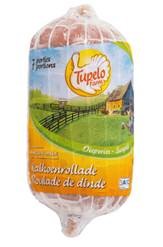
Belgium – Turkey roulade (700g) from the Tupelo farm brand – Salmonella

AFSCA

Recall of Aldi
Product: Turkey roulade (700g) from the Tupelo farm brand.
Problem: possible presence of Salmonella.PRODUCT DESCRIPTION

Name: TURKEY ROULADE 700 G (frozen product)
EAN code: 270 5360 7
Brand: Tupelo farm
Expiration date (DDM): 11/12/2021
Lot: RPS 27615
Sale period: 03/02/2021 – 03/05/2021
Points of sale: ALDI stores

NATURE OF THE PROBLEM

An internal analysis has shown the presence of Salmonella in the product “Turkey roll 700G (frozen)”.
ALDI has therefore decided, in consultation with the AFSCA, to withdraw this product from the market and to recall it to consumers.
Other ALDI products are not affected by this product recall.

DESCRIPTION OF THE RISK

Possible symptoms of salmonella poisoning are fever, abdominal cramps and diarrhea within 12 to 48 hours of consuming the contaminated food. The risk of infection is higher in the elderly, children, pregnant women and people with weakened immune systems.

ADVICE FOR CONSUMERS

Please do not consume these products and bring them back to the store.
The returned products will be reimbursed (also without receipt).
For any further information, you can contact ALDI via serviceclients@aldi.be .

Luxembourg – BARRIQUET GOAT CHEESE FROM THE MONS FROMAGER AFFINEUR BRAND- Listeria monocytogenes

SAP

The Luxembourg food safety authorities are informing about the following reminder:

Last name Barriquet
Mark Mons Fromager Affineur
Unit 400 g
Date of Minimum Durability (DDM) 03/23/21
Lot 130121; 140121; 260122

Danger  : Detection of Listeria monocytogenes

Listeria monocytogenes can cause fever, headache, and gastroenteritis. Vulnerable people such as the immunocompromised and the elderly and young children may experience neurological symptoms due to meningitis. Pregnant women should also pay special attention to these symptoms. Gastroenteritis can appear between a few hours and 3 days after consumption, while neurological symptoms can only appear after 3 months. People who have consumed these products and who have these symptoms are advised to consult a doctor, notifying him of this consumption.

Sale in Luxembourg by: Cactus

A sale by other operators cannot be excluded.

Luxembourg – TUPELO FARM BRAND TURKEY ROULADE -Salmonella

SAP

The ALDI company recalls the following product:

Last name Turkey roulade
Mark Tupelo farm
Unit 700 g
Use by date (DLC) 12/11/2021
Lot RPS 27615 09:46

Danger  : Presence of Salmonella

Salmonella can cause symptoms such as nausea, vomiting, abdominal cramps, diarrhea, fever and headache within 6 to 72 hours after consumption. These symptoms may be aggravated in young children, immunocompromised individuals and the elderly. People who have consumed these products and who have these symptoms are advised to consult a doctor, notifying him of this consumption.

Sale in Luxembourg by: ALDI

A sale by other operators cannot be excluded.

Information source: ALDI recall notification

Research – Persistence of Foodborne Pathogens on Farmers Market Fomites

Journal of Food Protection

The number of farmers markets registered by the U. S. Department of Agriculture (USDA) has seen a significant increase, jumping from 1,755 in 1994 to 8,771 in 2019. Microbial studies have found evidence that produce sold at farmers can yield higher microbial counts than their retail counterparts; however, no previous literature explored the efficacy of microbial (bacteria and virus) persistence on a variety of different farmers market fomites over a 2-month period. The objectives of the current study were to conduct observations to determine the most commonly used food contact surface fomites at farmers markets and to investigate the persistence of key foodborne pathogens ( Escherichia coli O157:H7, Listeria monocytogenes, Salmonella spp., Staphylococcus aureus, and MS2 bacteriophage) on these fomites. A repeated-measures analysis of variance was used to compare the persistence rates of foodborne pathogens on cardboard, plastic, tablecloth, molded pulp fiber, and wicker baskets used to store, transport, and display produce at farmers markets. In general, molded pulp fiber, plastic and wicker surface materials supported the persistence of foodborne pathogens the most, with S. aureus demonstrating the highest log concentrations over the longest period of time. Additionally, Salmonella and E. coli strains also persisted for a significant period of time (approximately 32-days) on all fomites with the exception of tablecloth. The results suggest that foodborne pathogens on these fomites pose a high-risk of cross-contamination particularly if the fomites cannot be washed, rinsed, and sanitized effectively (e.g. cardboard). The results highlight the need avoid using porous, single-use storage containers such as cardboard, molded pulp fiber and wicker containers for extended periods of time and suggest the use of easily cleanable materials such as plastic containers.

Research – Prevalence of Listeria species on food contact surfaces in Washington State apple packinghouses

PubMed

The 2014 caramel apple listeriosis outbreak was traced back to cross-contamination between food contact surfaces (FCS) of equipment used for packing and fresh apples. For Washington State, the leading apple producer in the U.S with 79% of its total production directed to the fresh market, managing the risk of apple contamination with Listeria monocytogenes within the packing environment is crucial. The objectives of this study were to determine the prevalence of Listeria spp. on FCS in Washington State apple packinghouses over two packing seasons, and to identify those FCS types with the greatest likelihood to harbor Listeria spp. Five commercial apple packinghouses were visited quarterly over two consecutive year-long packing seasons. A range of 27 to 50 FCS were swabbed at each facility to detect Listeria spp. at two timings of sampling, (i) post-sanitation and (ii) in-process (three hours of packinghouse operation), following a modified protocol of the FDA’s Bacteriological Analytical Manual method. Among 2,988 samples tested, 4.6% (n=136) were positive for Listeria spp. Wax coating was the unit operation from which Listeria spp. were most frequently isolated. The FCS that showed the greatest prevalence of Listeria spp. were polishing brushes, stainless steel dividers and brushes under fans/blowers, and dryer rollers. The prevalence of Listeria spp. on FCS increased throughout apple storage time. The results of this study will aid apple packers in controlling for contamination and harborage of L. monocytogenes and improving cleaning and sanitation practices of the most Listeria-prevalent FCS.IMPORTANCE Since 2014, fresh apples have been linked to outbreaks and recalls associated with post-harvest cross-contamination with the foodborne pathogen L. monocytogenes These situations drive both public health burden and economic loss and underscore the need for continued scrutiny of packinghouse management to eliminate potential Listeria spp. niches. This research assesses the prevalence of Listeria spp. on FCS in apple packinghouses and identifies those FCS most likely to harbor Listeria spp. Such findings are essential for the apple packing industry striving to further understand and exhaustively mitigate the risk of contamination with L. monocytogenes to prevent future listeriosis outbreaks and recalls.

Germany – Safe Food: Protecting against foodborne infections in communal facilities

BFR

In its updated leaflet, the German Federal Institute for Risk Assessment (BfR) provides recommendations for the preparation of meals in communal facilities that regularly cater for particularly vulnerable groups of people.

Foodborne infections particularly endanger young children, pregnant women and very old or sick people. “Errors in the selection and preparation of food can have serious consequences for particularly vulnerable people and even lead to death,” says Professor Dr. Dr. Andreas Hensel, President of the German Federal Institute for Risk Assessment (BfR). “With the BfR leaflet “Safe Food”, we would like to support community facilities in serving safe food to these particularly sensitive groups of people as well.”

Link to the leaflet:

Foodborne illness can occur when pathogens enter commercial kitchens via raw ingredients or infected staff, are spread by hygiene failures in kitchens, and enter prepared foods. Temperature errors contribute to the survival and multiplication of pathogens in food.

Avoiding pathogens such as salmonella or listeria is particularly important when catering for sensitive individuals. Good hygiene and the right choice of ingredients and recipes reduce foodborne infections. Adequate food quality, proper storage and preparation of food, and staff training are also essential.

Fruit and vegetables should be washed thoroughly and peeled if possible. Low-acid fruit, vegetables and leafy salads must be eaten immediately after cutting or should be kept in the refrigerator until consumption. To protect against listeriosis, it may be advisable to reheat raw, but also already heated, ready-to-eat food before serving.

Most pathogens are killed when the food is heated to 72 degrees for at least two minutes in all parts during cooking. This requirement should be followed to prepare safe food.

While bacteria are killed when heated, bacterial spores can survive high temperatures. Such spores are able to germinate and the vegetative bacteria can multiply and form toxins. Keeping food hot until it is served at a minimum of 60 degrees on all parts of the heated food can prevent spores from germinating and bacteria from multiplying.

Establishments that regularly cater for particularly vulnerable persons have a special responsibility when selecting their staff. They should be competent, experienced and regularly trained.

USA – El Abuelito Listeria Pregnancy Related Illnesses Added to Outbreak Total

Food Poisoning Bulletin

Two El Abuelito Listeria pregnancy related illnesses were added to the listeriosis soft cheese outbreak total last week by the Centers for Disease Control and Prevention (CDC). That company’s queso fresco cheese was recalled earlier this month because lab tests conducted by the Connecticut Department of Health found the outbreak strain of Listeria monocytogenes in one sample of the product. Also last week, two more types of El Abuelito cheese were recalled: Quesillo (Oaxaca and string cheese) and Requeson (ricotta).