Brand : Colosio
Name : Starchi’ Nustra’ Monte Bronzone (raw milk cheese)
Reason for reporting : Recall due to microbiological risk
Publication date : 11 November 2024


Brand : Colosio
Name : Starchi’ Nustra’ Monte Bronzone (raw milk cheese)
Reason for reporting : Recall due to microbiological risk
Publication date : 11 November 2024
Posted in food contamination, food handler, Food Hazard, Food Hygiene, Food Inspections, Food Micro Blog, Food Microbiology, Food Microbiology Blog, Food Microbiology Testing, Food Pathogen, Food Quality, food recall, Food Safety, Food Safety Alert, Food Safety Management, Food Safety Regulations, Food Testing, Raw Milk, raw milk cheese, STEC, STEC E.coli
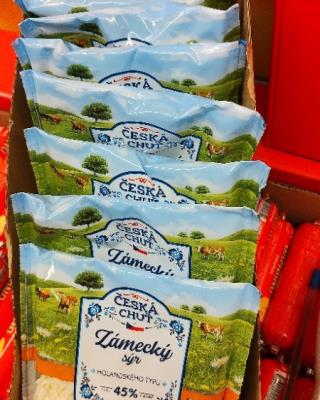
The sample was laboratory evaluated at the end of shelf life. Gray-green mold colonies were visible on the cheese.
Food is not considered safe if it shows signs of spoilage.
| Batch: | 27 09 2024 |
| Expiration date: | 27/09/2024 |
| Packaging: | plastic bag |
| Quantity of the product in the package: | 200 g |
| Manufacturer: | Jaroměřická dairy as,, Kaunicova 198, 675 51, Jaroměřice nad Rokytnou |
| Date of sample collection: | 23/07/2024 |
| Reference number: | 24-000525-SZPI-CZ |

The food smelled of spoilage and had a slimy surface. Food is not considered safe if it shows signs of spoilage.
The sample was taken from the loaded package. The food had an unknown expiration date.
| Packaging: | Food in original packaging. Cutlet covered with food foil. |
| Date of sample collection: | 10/09/2024 |
| Reference number: | 24-000585-SZPI-CZ |
Safety warning Nats Rawline Raw cakes chocolate & hazelnut
Udea warns about Nats Rawline Raw cakes chocolate & hazelnut. The product may contain salmonella. Do not eat the raw cakes.
See the Udea website
Which product are you referring to?
Product: Nats Rawline Raw cakes chocolate & hazelnut
Item number: 5015742
Barcode: 5407005641392
Best before (BBD): 19-05-2025
Lot code: 21224
Kind regards,
The Netherlands Food and Consumer Product Safety Authority (NVWA)
Posted in food contamination, food handler, Food Hazard, Food Hygiene, Food Inspections, Food Micro Blog, Food Microbiology, Food Microbiology Blog, Food Microbiology Testing, Food Pathogen, Food Quality, food recall, Food Safety, Food Safety Alert, Food Safety Management, Food Safety Regulations, Food Testing, Salmonella, Salmonella in Nuts
QUEBEC CITY , Nov. 8 , 2024 /CNW/ – The Ministry of Agriculture, Fisheries and Food (MAPAQ) is warning the public not to consume the product listed in the table below because it has not been stored in a way that ensures its safety. This product could promote the proliferation of the bacteria Clostridium botulinum .
|
Product name |
Format |
Target lot |
|
CARROT CREAM |
Unitary |
Units sold on November 2nd and 3rd 2024 |
The lot that is the subject of this warning was offered for sale by the company La Petite Ferme Locale, only, on November 2 and 3, 2024, at the Maison Trestler Christmas market , located at 85, chemin de la Commune, in Vaudreuil-Dorion . The product was packaged in a glass jar with a metal lid and sold at room temperature.
MAPAQ is issuing this warning as a precautionary measure. In addition, people who have this product in their possession are advised not to consume it and to throw it away.
Even if the affected product does not show signs of spoilage or have a suspicious odor, it could be a breeding ground for Clostridium botulinum bacteria . Food contaminated with the toxin from this bacteria can cause the following symptoms when ingested: facial paralysis, unreactive or fixed pupils, difficulty swallowing, drooping eyelids, and impaired vision and speech. In severe cases, the illness can be fatal.
It should be noted that no cases of illness associated with the consumption of this food have been reported to MAPAQ to date.
Posted in Clostridium, Clostridium botulinum, food contamination, food handler, Food Hazard, Food Hygiene, Food Inspections, Food Micro Blog, Food Microbiology, Food Microbiology Blog, Food Microbiology Testing, Food Pathogen, Food Poisoning, Food Quality, food recall, Food Safety, Food Safety Alert, Food Safety Management, Food Safety Regulations, Food Testing, Food Toxin
CIBUS Fresh, Noblesville, Indiana, is recalling CIBUS Fresh products containing Glenview Farms Spreadable Brie, 2/3lb due to supplier notification of a possible Listeria monocytogenes (products are listed below). Product was distributed under the following labels: CIBUS Fresh, Jack & Olive, and Sprig and Sprout.
CIBUS Fresh has ceased producing and distributing products containing Glenview Farms Spreadable Brie, 2/3lb.
Use or consumption of products contaminated with Listeria monocytogenes can cause serious and sometimes fatal infections in young children, frail or elderly people, and others with weakened immune systems. Although healthy individuals may suffer only short-term symptoms such as high fever, severe headache, stiffness, nausea, abdominal pain and diarrhea, Listeria infection can cause miscarriages and stillbirths among pregnant women.
The product was distributed to six states: Kentucky, Illinois, Indiana, Missouri, Ohio, and Tennessee.
| Product Name | Item Number / Code |
Item UPC | Expiration Date |
|---|---|---|---|
| CF/ Autumn Turkey Sandwich 9.65oz |
79616 | 00810028251915 | 11/02/24 to 11/09/24 |
| J&O Autumn Turkey Sandwich 9.65oz |
79615 | 00810028251915 | 11/02/24 to 11/09/24 |
| S&S Autumn Turkey Sandwich 9.65oz |
84408 | 00810028251915 | 11/03/24 to 11/09/24 |
No other CIBUS Fresh products are affected or are involved in this recall.
Food safety remains a top priority for CIBUS Fresh and we have full confidence that all appropriate steps are being taken to protect our consumers. CIBUS Fresh has informed the FDA of this recall and is working with customers to ensure the impacted product is removed from store shelves and is no longer distributed.
If consumers believe they have purchased a recalled item, they should dispose of the product and not consume it or return it to the place of purchase for a full refund. For further information regarding the Brie Recall Consumers can learn more at: https://www.fda.gov/safety/recalls-market-withdrawals-safety-alerts/savencia-cheese-usa-announces-expanded-voluntary-recall-select-soft-ripened-cheeses?utm_medium=email&utm_source=govdelivery
Please contact Chelsea Mascari by email at chelseam@freshedgefoods.com or by phone at 317-981-3460 for any questions related to this matter.
Posted in FDA, food contamination, food handler, Food Hazard, Food Hygiene, Food Inspections, Food Micro Blog, Food Microbiology, Food Microbiology Blog, Food Microbiology Testing, Food Pathogen, Food Quality, food recall, Food Safety, Food Safety Alert, Food Safety Management, Food Safety Regulations, Food Testing, Listeria, Listeria monocytogenes
The field of food safety is critical in ensuring that the food supply remains safe and nutritious from production to consumption. One of the most pressing challenges in this area is controlling microbial growth, which can significantly reduce the shelf life of food products and pose health risks. The composition and physicochemical characteristics of food can either inhibit or promote the growth of foodborne pathogens. Traditional microbial growth models, often used in laboratory settings, do not always translate well to real-world food environments due to the unique conditions present in food systems. Predictive microbiology has emerged as a valuable tool in this context, allowing researchers to predict the behavior of pathogenic and spoilage microorganisms under various controlled conditions. Despite advancements, there remain significant gaps in our understanding of how to effectively apply these models across different stages of the food processing chain. The need for more comprehensive and adaptable models is evident, particularly as the food industry continues to evolve its processing techniques to enhance food safety and shelf life.
This research topic aims to explore the development and application of predictive models in food safety throughout the processing chain. The primary objectives include understanding how new processing conditions impact microbial safety, examining the interactions between food ingredients and antimicrobials, and developing robust models that can predict microbial behavior in diverse food environments. Specific questions to be addressed include: How do changes in food composition affect microbial growth? What are the best practices for integrating machine learning into predictive microbiology? How can we construct and validate models that are applicable across various stages of food production?
To gather further insights into the boundaries of predictive models in food safety, we welcome articles addressing, but not limited to, the following themes:
– Impact of new food processing conditions on the microbial safety of the final product
– Interaction of added antimicrobials and food ingredients on food safety
– Use of growth/no growth models for the growth of pathogens
– Impact of food composition modifications on the growth of pathogens or concentration of toxins
– Development of empirical or theoretical models for assessing microbial growth under food system conditions
– Machine learning applications in predictive microbiology
– Construction and validation of tertiary predictive models
Posted in Food Micro Blog, Food Microbiology, Food Microbiology Blog, Food Microbiology Research, Food Microbiology Testing, microbial contamination, Microbial growth, Microbial Spoilage, Microbiological Risk Assessment, Microbiology, Microbiology Investigations, Microbiology Risk, Predictive Modelling, Research
The first-ever registration of an antimicrobial treatment for foodborne pathogens in preharvest agricultural water has been approved by the U.S. Environmental Protection Agency (EPA), setting a new precedent for preharvest agricultural water treatments specifically intended to reduce the presence of pathogens that affect food safety.
The successful registration of SANIDATE 12.0 is the result of a collaborative effort between EPA and the U.S. Food and Drug Administration (FDA) to develop and refine an efficacy protocol to support such registrations. Using the revised efficacy protocol, the University of Arizona and industry members worked together to register SANIDATE 12.0 for use against foodborne pathogens like Escherichia coli and Salmonella in preharvest agricultural water, and to provide feedback on the protocol that informed updates regarding testing parameters and to clarify the protocol for future users.
Product Category
Food
Product subcategory
Meats
Product brand name
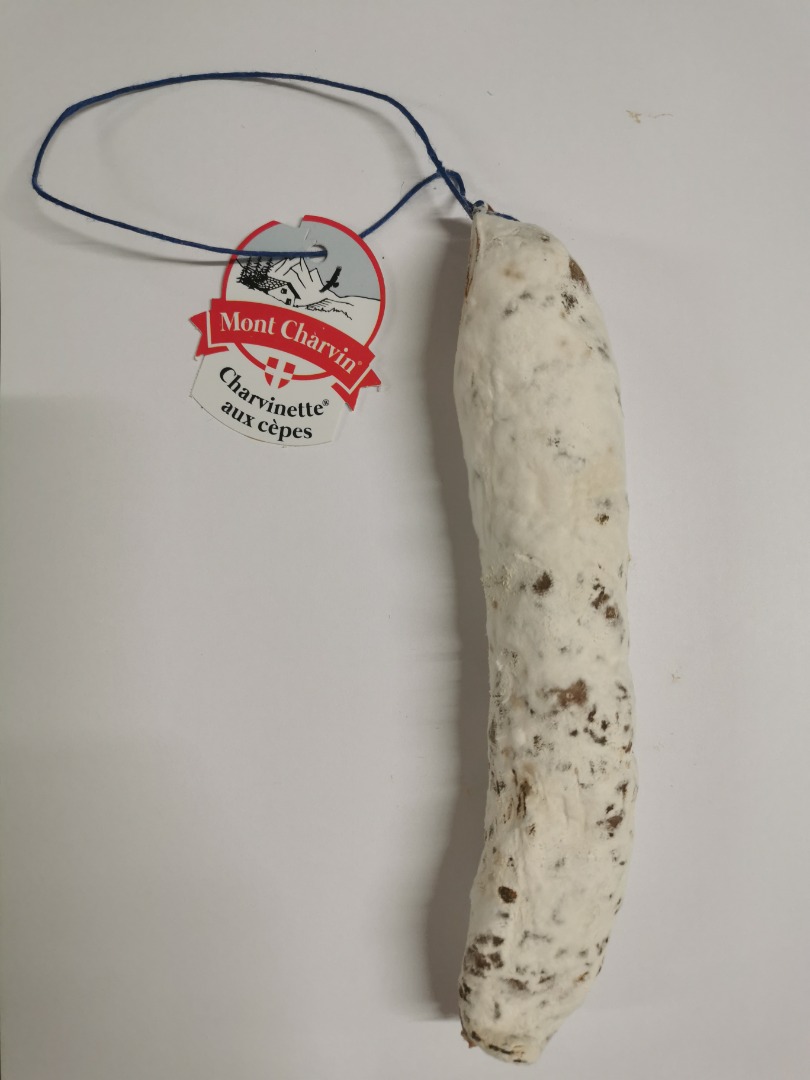
Mont Charvin Salting
Model names or references
Lot 261/24
Product identification
Batch
Lot 261/24
List of products
List_of_products_affected_by_the_recall.pdfAttachment
Storage temperature
Product to be kept in the refrigerator
Health mark
FR.74-104-001 CE
Geographic area of sale
Whole France
Distributors
FROMAGERIE BOUCHET, LA CHAINEE CUTING, KD’O, SAS Our farmers of Savoy, SICA MOUTIERS MAG VALLEE ET MONTAGNE, SAS Our farmers of Savoy, RUGA NICOLE, LA MAISON DU SAUCISSON, MAGMONT CHARVIN DOUSSARD/GILLY, SICA MOUTIERS
Posted in Bacillus, Bacillus cereus, food contamination, food handler, Food Hazard, Food Hygiene, Food Inspections, Food Micro Blog, Food Microbiology, Food Microbiology Blog, Food Microbiology Testing, Food Pathogen, Food Poisoning, Food Quality, food recall, Food Safety, Food Safety Alert, Food Safety Management, Food Safety Regulations, Food Testing

 FoodWorld