Category Archives: Food Microbiology Research

Research – New insights on bacteria that causes food poisoning

Science Daily

A joint research group has clarified how pathogenic genes in some Providencia spp., which have gained attention as causative agents of food poisoning as well as enterohemorrhagic Escherichia coli. O157 and Salmonella, are transferred within bacterial cells. Their findings are expected to provide new insights into the identification of infection routes of Providencia spp. and the establishment of preventive methods for food poisoning.

Jordan – Six suspected food poisoning cases in Mafraq

Roya News

There are six suspected food poisoning cases in Mafraq, allegedly in relation to a takeaway restaurant, according to a medical source Thursday.

The source told Roya that the people arrived at the Talal Military Hospital, saying that they had eaten food from a restaurant and developed symptoms of food poisoning.

Another source confirmed that a restaurant in the governorate was suspended from operating due to violations.

The source added that if it was found that the food poisoning was caused by the restaurant’s food, legal measures will be taken against the concerned management.

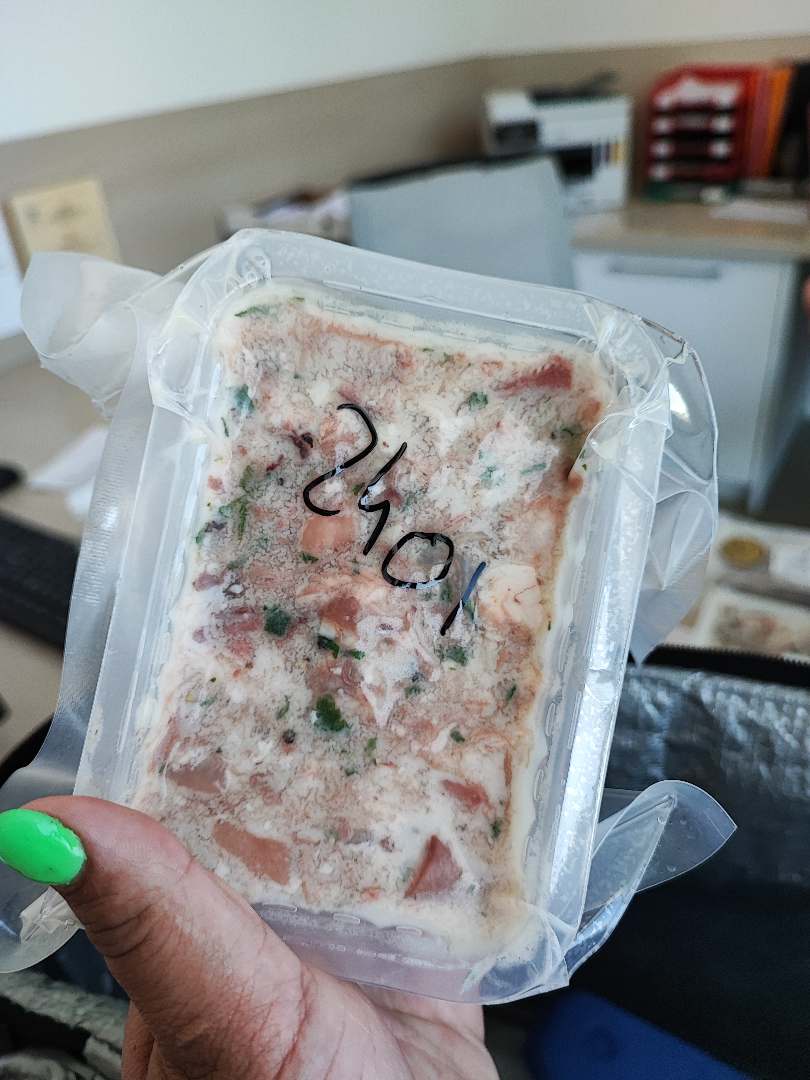
France – headcheese – Listeria monocytogenes

Gov france

Identification information of the recalled product

  • Product category Feed
  • Product subcategory Meats
  • Product brand name a pignatta nustrale
  • Model names or references self-service and cutting
  • Identification of products
    Batch
    All lots
  • Storage temperatureProduct to be stored in the refrigerator
  • Geographic area of ​​sale Regions: Corsica
  • Distributors All food sellers and food wholesalers in Corsica

Research- When Does Milk Spoil? The Use of Rejection Threshold Methodology to Investigate the Influence of Total Microbial Numbers on the Acceptability of Fresh Chilled Pasteurised Milk

MDPI

Abstract

The consumer rejection threshold (RjT) method was applied to determine the total microbial numbers (TMNs) where consumers find that the quality of whole fresh chilled pasteurised milk (WFCPM) and skim milk (Trim) stored at 4.5 ± 0.5 °C is no longer acceptable. Food spoilage progression was supported by measurements of VOCs and the terms consumers used to describe the ageing fresh chilled pasteurised milk (FCPM). RjTs for TMN of 7.43 and 7.34 log10 CFU.mL−1 for WFCPM and Trim, respectively were derived using Hill’s equation from a series of paired preference tests comparing fresh and aged milks (3–26 days) assessed by consumers (WFCPM, n = 55; Trim, n = 52). A poor relationship between storage time and TMN was found, owing mainly to batch-to-batch and within-batch variation in the milk’s post-pasteurization contamination (PPC) levels. At the RjT, there was a significant change in the signal intensities for a number of spoilage-related VOCs that occurred in the FCPM headspace (p ≤ 0.05), which were measured using proton transfer reaction–mass spectrometry (PTR-MS), including m/z 33, 45, 47, 61, 63, 69, 71, 87, and 89, tentatively identified as methanol; acetaldehyde; ethanol; acetate (acetic acid and acetate esters); dimethyl sulphide (DMS); isoprene, furan, and aldehydes; 2-butanone; and pentanal and butyrates (butyric acid and butyrate esters), respectively. Consumers described the milks at TMN greater than the RjTs using terms like off, expired, sour, spoilt or rancid. This multidisciplinary study has provided data on the importance of PPC and subsequent increases in TMN on VOCs associated with FCPM and consumer’s preferences and highlighted the value of measuring a range of variables when investigating consumer’s perception of food quality and shelf-life.

Research – The Application of Ultraviolet Treatment to Prolong the Shelf Life of Chilled Beef

MDPI

Abstract

This study simulated the storage conditions of chilled beef at retail or at home, and the sterilization and preservation effects of short-time ultraviolet irradiation were studied. The conditions of different irradiation distances (6 cm, 9 cm, and 12 cm) and irradiation times (6 s, 10 s, and 14 s) of ultraviolet (UV) sterilization in chilled beef were optimized, so as to maximally reduce the initial bacterial count, but not affect the quality of the chilled beef. Then, the preservation effect on the chilled beef after the optimized UV sterilization treatment during 0 ± 0.2 °C storage was investigated. The results showed that UV irradiation with parameters of 6 cm and 14 s formed the optimal UV sterilization conditions for the chilled beef, maximally reducing the number of microorganisms by 0.8 log CFU/g without affecting lipid oxidation or color change. The 6 cm and 14 s UV sterilization treatment of the chilled beef was able to reduce the initial microbial count, control the bacterial growth, and delay the increase in the TVB-N values during storage. Compared with the control group, the total bacterial count decreased by 0.56–1.51 log CFU/g and the TVB-N value decreased by 0.20–5.02 mg N/100 g in the UV-treated group. It was found that the TBARS value of the UV treatment group increased during late storage; on days 9–15 of storage, the TBARS values of the treatment group were 0.063–0.12 mg MDA/kg higher than those of the control group. However, UV treatment had no adverse impact on the pH, color, or sensory quality of chilled beef. These results prove that UV treatment can effectively reduce the microbial count on the surface of beef and improve its microbial safety, thus maintaining the quality of beef and prolonging its shelf life. This study could provide a theoretical basis for the preservation technology of chilled beef in small-space storage equipment.

Research- Impact of nanoscale coating of stainless steel on Salmonella Enteritidis and Escherichia coli

Wiley Online

Cross-contamination in the poultry slaughtering process can lead to thespread of zoonotic bacteria like Salmonellaenterica. Surfaces of equiptment may facilitate contamination of carcasses due to bacterial adherence and transfer. In this study, attachment, proliferation, and detachment of Salmonella Enteritidis and Escherichia coli were comparatively investigated on uncoated and silica-coated stainless-steel surfaces. The conditions occurring in the slaughtering workflow were imitated on laboratory scale, for example, spilling of contaminated liquid onto equipment surfaces, pressing or sliding of carcasses against surfaces during the slaughtering procedure, and cleaning of contaminated stainless-steel surfaces with water or detergent. Growth on stainless-steel surfaces was measured for 8 h. The applied silica coating led to a partly higher repelling effect without impact on proliferation for the target organisms on stainless steel. Further development of the coating and daption to the exact circumstances as well as more extending testing under real conditions would be the next steps.

India – 10 MP students hospitalised due to food poisoning while travelling

InShorts

At least 10 students from Madhya Pradesh, who were travelling by train, were rushed to the Civil Hospital after they complained of severe food poisoning-like symptoms at Ludhiana railway station. Government Railway Police officials said the students who were travelling in a group of around 125, had brought packed food from a hotel, after which some of them started vomiting.

USA – Nationwide outbreak from Cyclospora tops 200; officials continue to seek source

Food Safety News

The number of patients in a nationwide outbreak of infections from the foodborne Cyclospora parasite continue to increase, having reached 210 laboratory-confirmed cases.

Federal, state and local public health officials are investigating the outbreak, which is spread across 22 states and New York City, according to a June 22 update from the Centers for Disease Control and Prevention.

The CDC and the Food and Drug Administration have been tracking the outbreak since April 1. Additional infections could have started before that date.

Also, there are likely more than 210 people in the ongoing outbreak because of the lag time between when patients become ill and when confirmation testing can be completed and results filed with the CDC. Some sick people don’t seek medical attention, also impacting the outbreak count. The parasite is killed by using antibiotics. Specific tests are required to diagnose Cyclospora infections.

“No specific food items have been identified as the source of most of these illnesses. State and local public health officials are interviewing people with cyclosporiasis to find out what foods they ate before getting sick,” the CDC reported.

USA – Rare Salmonella type behind multi-country outbreak

Food Safety News

Almost 70 people became ill this past year as part of a Salmonella outbreak involving 11 countries, including the United States.

France has the most patients in the Salmonella Ball outbreak but two people from the U.S., aged 44 and 62, were ill in August 2022. They both reported travel to France.

Salmonella Ball is very rare in Europe. Between 2007 and 2021, only 52 cases were reported from 14 countries, with an average of three per year.

Information was shared in a Joint Notification Summary (JNS). These are not made public but Food Safety News has seen a copy. It is prepared by the European Food Safety Authority (EFSA), European Centre for Disease Prevention and Control (ECDC) and affected countries.

An ECDC spokesman said this week that the agency had not received any updates on the number of people or countries affected since the JNS was produced.

Denmark – More sick from Salmonella and Campylobacter in 2022

SSI

Campylobacter was the cause of 5,142 registered cases of illness in Denmark in 2022, and salmonella was the cause of 899 cases. This is an increase for the second year in a row and thus at the same level as before the covid-19 pandemic. This appears from the annual report on the occurrence of zoonoses in Denmark for 2022.