Category Archives: Food Microbiology Research

Finland reports Yersinia rise and 2023 recall data

Food Safety News

Public health officials in Finland are monitoring an increase in Yersinia infections seen so far in 2024.

168 Yersinia enterocolitica cases have been reported to the Infectious Disease Register compared to 64 cases from January to April 2023.

The National Institute of Health and Welfare (THL) said it had received two suspected outbreak alerts in April and reports about increased Yersinia enterocolitica infections from Pirkanmaa, Uusimaa, and Ostrobothnia.

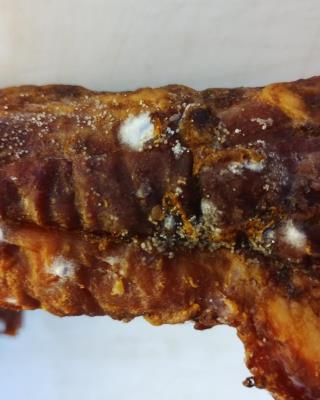
Czech Republic – Smoked ribs – Visible Mold/Mouldi

Potravinynapranyri

Illustrative photo #2

Place of inspection:
Pardubice ( Railway Regiment 2005, 530 02 Pardubice )
ID: 05457891
Invalid parameter:

fungi visible to the eye

There was white and green mold visible to the naked eye on the surface of the food. Food is not considered safe if it shows signs of spoilage.

Packaging: not packed
Quantity of the product in the package: 0.822 kg
Date of sample collection: 3/4/2024
Reference number: 24-000176-SZPI-CZ
The sample was detected by the official control of the State Agricultural and Food Inspection.

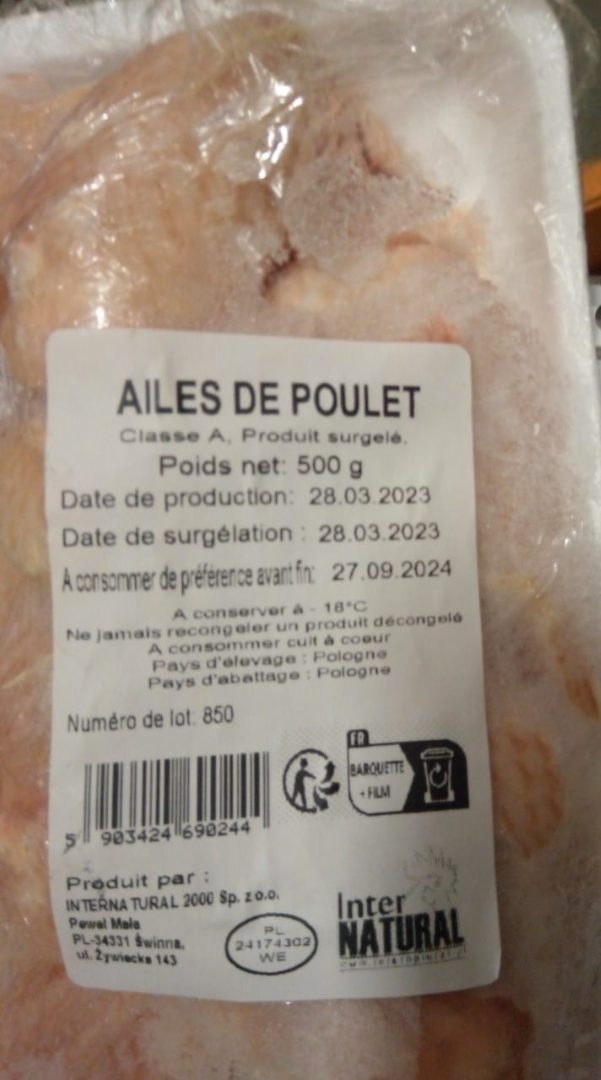
France – FROZEN CHICKEN WINGS – Salmonella

Gov France

Product category
Food
Product subcategory
Others
Product brand name
Inter NATURAL
Model names or references
CHICKEN WINGS – Class A Frozen product
Product identification
GTIN Batch Date
5903424690244 850 Minimum durability date 09/27/2024
Packaging
Filmed tray
Start/end date of marketing
From 05/17/2023 to 10/16/2023
Storage temperature
Product to keep in the freezer
Health mark
PL 24174302 WE
Geographical sales area
Departments: GUADELOUPE (971)
Distributors
Departmental supermarkets and commercial catering

Research – New Research Reveals Why You Should Always Refrigerate Lettuce

Scitech Daily

Leafy greens are valuable for their dietary fibre and nutrients, yet they may also carry dangerous pathogens. Lettuce, in particular, has frequently been linked to foodborne illness outbreaks in the U.S. A recent study from the University of Illinois Urbana-Champaign investigates the factors influencing E. coli contamination in five different types of leafy greens: romaine lettuce, green-leaf lettuce, spinach, kale, and collard greens.

“We are seeing a lot of outbreaks on lettuce, but not so much on kale and other brassica vegetables. We wanted to learn more about the susceptibility of different leafy greens,” said lead author Mengyi Dong, now a postdoctoral research associate at Duke University. Dong conducted the research as a doctoral student in the Department of Food Science and Human Nutrition (FSHN), part of the College of Agricultural, Consumer, and Environmental Sciences (ACES) at the U. of I.

Findings on Temperature and Leaf Surface Impact

The researchers infected whole leaves from each of the five vegetables with E. coli O157:H7 and observed what happened after storage at 4° C (39° F), 20° C (68° F), and 37° C (98.6° F). Overall, they found that susceptibility was determined by a combination of temperature and leaf surface properties such as roughness and the natural wax coating.

“At room temperature or higher, E. coli grows very fast on lettuce, but if lettuce is refrigerated at 4° C (39° F), we see a sharp decline in the E. coli population. However, for waxy greens like kale and collard, we get the opposite results. On these vegetables, E. coli grows slower under warmer temperatures, but if it is already present, it can survive longer under refrigeration.”

Research – Impact of food residue on recovery of Listeria monocytogenes and Salmonella Typhimurium from stainless steel surface

I

Wiley Online

Abstract

This study evaluated the impact of different food residues on the recovery of Listeria monocytogenes and Salmonella Typhimurium from stainless steel surfaces. Food residues tested include lettuce rinsate, blended lettuce, low-fat milk, and whole milk for Listeria monocytogenes, and powdered infant formula, all-purpose flour, and whole milk dairy powder for Salmonella Typhimurium. Bacterial suspensions were inoculated on stainless steel surfaces with or without food residues and held for different time periods. Significant differences (P < 0.0001) in Salmonella Typhimurium recovery were observed between the no food residue control and all food residues over 24 hours. For Listeria monocytogenes, minimal variability in recovery was observed among food residue types, with significant differences from the no food residue control (P < 0.05) observed after 24 hours. The study also found that surface sampling can spread Listeria monocytogenes and Salmonella Typhimurium on stainless steel surfaces, suggesting that food residue type may affect microbial recovery during environmental monitoring.

Research – Exploring Extended-Spectrum Beta-Lactamase (ESBL)-Producing Escherichia coli in Food-Producing Animals and Animal-Derived Foods

MDPI

Abstract

Antimicrobials serve as crucial treatments in both veterinary and human medicine, aiding in the control and prevention of infectious diseases. However, their misuse or overuse has led to the emergence of antimicrobial resistance, posing a significant threat to public health. This review focuses on extended-spectrum beta-lactamase (ESBL)-producing Escherichia coli in animals and their associated food products, which contribute to the proliferation of antimicrobial-resistant strains. Recent research has highlighted the presence of ESBL-producing E. coli in animals and animal-derived foods, with some studies indicating genetic similarities between these isolates and those found in human infections. This underscores the urgent need to address antimicrobial resistance as a pressing public health issue. More comprehensive studies are required to understand the evolving landscape of ESBLs and to develop strategic public health policies grounded in the One Health approach, aiming to control and mitigate their prevalence effectively.

Research – Changes in the Quality and Microbial Communities of Precooked Seasoned Crayfish Tail Treated with Microwave and Biological Preservatives during Room Temperature Storage

MDPI

Abstract

The qualities of precooked foods can be significantly changed by the microorganisms produced during room temperature storage. This work assessed the effects of different antibacterial treatments (CK, without any treatment; microwave treatment, MS; microwave treatment and biological preservatives, MSBP) on the physicochemical properties and microbial communities of precooked crayfish tails during room temperature storage. Only the combination of microwave sterilization and biological preservatives significantly inhibited spoilage, as evidenced by the total viable count (4.15 log CFU/g) after 3 days of room temperature storage, which satisfied the transit time of most logistics companies in China. Changes in pH and TVB-N were also significantly inhibited in the MSBP group compared with those in the CK and MS groups. More than 30 new volatile compounds were produced in the CK groups during room temperature storage. However, in the MSBP groups, the volatile compounds were almost unchanged. The correlations between the microbial composition and volatile compounds suggested that specific bacterial species with metabolic activities related to amino acid, energy, cofactor, and vitamin metabolism, as well as xenobiotics biodegradation and metabolism, were responsible for the changes in volatile compounds. These bacteria included Psychrobacter, Arthrobacter, Facklamia, Leucobacter, Corynebacterium, Erysipelothrix, Devosia, Dietzia, and Acidovorax. Overall, our findings provide a foundation for the development of strategies to inhibit spoilage in precooked crayfish tails stored at room temperature.

RASFF Alert – Mycotoxin – Chilli Peppers

RASFF

Peperoncino da India mycotoxins in chili peppers from India in Italy

Research – Temperature status of domestic refrigerators and its effect on the risk of listeriosis from ready-to-eat (RTE) cooked meat products.

Science Direct

Abstract

Inadequate domestic refrigeration is frequently cited as a factor that contributes to foodborne poisoning and infection, and consumer behaviour in this regard can vary largely. This study provides insight into the temperature profiles of domestic refrigerators in the Netherlands and the impact on the number of listeriosis cases related to ready-to-eat (RTE) cooked meat products. A survey was conducted among Dutch consumers (n = 1020) to assess their knowledge and behaviour related to refrigerators. Out of these participants, 534 measured their refrigerator’s temperature, revealing an average temperature of 5.7 °C (standard deviation (SD) of 2.2 °C) with a maximum of 17 °C. Elderly people (65 years and older) had refrigerators with temperatures that were on average 0.6 °C higher than those of younger people (35 years or younger). The 24-hour temperature profiles of an additional set of actively surveyed refrigerators (n = 50) showed that the temperature measured on the upper shelf was significantly higher (mean 7.7 °C, SD 2.7 °C) than the temperature measured on the bottom shelf (5.7 °C, SD 2.1 °C). Quantitative Microbiological Risk Assessment (QMRA) predicted that the primary factors contributing to the risk of listeriosis were the initial concentration and the time and temperature during household storage. Scenario analysis revealed that storing opened RTE cooked meat products at home for either <7 days or at temperatures <7 °C resulted in a significant reduction of over 80 % in predicted illness cases. Among all illness cases, the elderly represented nearly 90 %. When assessing the impact of the disease in terms of Years of Life Lost (YLL), the contribution of the elderly was 59 %. Targeted communication, particularly directed towards the elderly, on the importance of storing RTE cooked meat products at the recommended temperature on the bottom or middle shelf as well as consuming within two to three days after opening, holds the potential to significantly reduce the number of cases.

Denmark Update – Outbreak of invasive Listeria infection sequence type 1607

SSI

The Statens Serum Institut is currently investigating a protracted disease outbreak with Listeria monocytogenes in collaboration with the Danish Veterinary and Food Administration and the Norwegian Food Institute DTU

A total of 17 people have been infected with the same type of listeria since the summer of 2019 (figure 1). The patients are 13 women and 4 men with a median age of 73 years, with one patient in their 20s and four in their 80s. The patients live throughout the country (table 1). All have been hospitalized. Two people have died within 30 days of detection of the infection.

The outbreaks are handled by the Central Outbreak Group, which consists of SSI, the Danish Veterinary and Food Administration and the DTU Food Institute. SSI stands for whole-genome sequencing of patients’ listeria isolates and interviews with patients or relatives with a view to identifying a possible source of infection. Since there are also people abroad who have become ill with listeria sequence type 1607, the international authorities are working on an international overview.