Category Archives: Food Microbiology Research

Research – Researchers discover way to disarm potentially deadly Listeria bacteria

UQ EDU

University of Queensland researchers have unlocked a way of fighting Listeria infections, which can cause severe illness in pregnant women and people with compromised immune systems.

During the study, researchers discovered a way to block Listeria from making the proteins that allow bacteria to survive and multiply in immune cells.

UQ Diamantina Institute’s Professor Antje Blumenthal said using a small, drug-like inhibitor has improved their understanding of the Achilles heel of Listeria.

“Listeria is found in the soil and sometimes in raw foods. Once ingested it can hide from the immune system and multiply inside immune cells,” Professor Blumenthal said.

“Instead of killing the bacteria, the immune cells are used by the bacteria to multiply and are often killed by Listeria growing inside them.

“Our study showed the bacteria could be cleared with a small drug-like inhibitor that targets the ‘master regulator’ of the proteins that help Listeria grow in immune cells. The inhibitor helped the immune cells survive infection and kill the bacteria.”

Until now, studies into the ‘master regulator’ – which controls critical proteins that make Listeria virulent ­­– have mostly been based on engineered bacteria, or mutated versions of these proteins.

“By using a drug-like inhibitor, we were able to use molecular imaging and infections studies to better understand what happens to Listeria when the bacteria cannot effectively grow inside immune cells and hide from immune defence mechanisms,” Professor Blumenthal said.

“We hope that our discovery, together with recent research into the master proteins’ molecular structure and functions, could guide the development of inhibitors and new drugs to treat Listeria infection.”

Listeria infection does not cause disease in most people, but can be deadly for the immunocompromised and is also a major health concern during pregnancy and can lead to miscarriage, stillbirth and premature birth.

“Our findings could also inform design of inhibitors against related proteins that are found in different bacteria,” Professor Blumenthal said.

The study has been published in the journal PLOS Pathogens (DOI: 10.1371/journal.ppat.1010166).

This study, led by researchers at The UQ Diamantina Institute, included collaborations with Umeå University, Sweden; UQ School of Chemistry and Molecular Biosciences; Australian Infectious Diseases Research Centre; Institute for Molecular Bioscience; Mater Research Institute; Telethon Kids Institute, University of Western Australia; Monash University; University of Melbourne at the Peter Doherty Institute for Infection and Immunity and Hudson Institute of Medical Research.

Media: PRofessor Antji Blumenthal, a.blumenthal@uq.edu.au; UQ Communications, Angie Trivisonno, med.media@uq.edu.au, +61 (0)7 3365 5118, +61 (0)436 368 746.
Malaysia -60+ Primary School Students Get Food Poisoning From School Food Programme

TRP

More than 60 students from a primary school in Taman Medan, Petaling Jaya got food poisoning and had to be admitted to Hospital Shah Alam last Thursday, according to Majoriti.

It is believed that the food provided by the school under the supplementary meal plan (RMT) is the cause of the food poisoning. Allegedly, all the students had eaten the food provided, and many later showed signs of food poisoning such as vomiting.

Students from Year 1 to Year 6, including those in the Special Education Integration Program (PPKI), who are part of the supplementary meal plan programme were affected.

Research – What Is Cyclospora?

Food Poisoning News

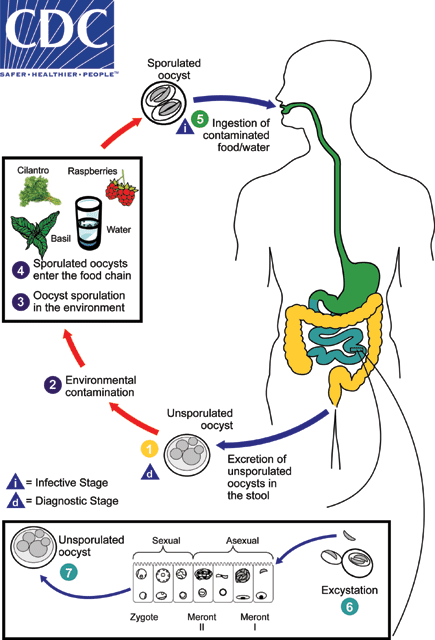
Cyclospora cayetanensis is a protozoan parasite that causes the diarrheal illness known as cyclosporiasis. People acquire this infection by consuming food or water contaminated with feces containing Cyclospora. Cyclosporiasis was not previously a reportable disease in the U.S., so its rise in prevalence is due in large part to the increased availability of tests that can detect Cyclospora. It is now a nationally notifiable disease, so physicians are required to report cases of this infection.

The first three cases of cyclosporiasis were reported in 1977 and 1978, but the parasite that was causing the illnesses could not at that time be identified as Cyclospora cayetanensis; it was not until 1979 that the correct identification was made.

Research -Surveillance of berries sold on the Norwegian market for parasite contamination using molecular methods

Science Direct

water contamination

The risk of foodborne parasite infection linked to the consumption of contaminated fresh produce has long been known. However, despite epidemiological links between the outbreaks and contaminated berries, few studies have assessed the magnitude of parasite contamination on fresh produce sold in Europe. The present study was aimed to address the knowledge gap on parasite contamination of berries sold in Norway. Samples of blueberries, strawberries, and raspberries were analysed by multiplex qPCR for detection of Echinococcus multilocularisToxoplasma gondii, and Cyclospora cayetanensis. In addition, a simplex qPCR method was employed for detecting contamination of the berries with Cryptosporidium spp. A total of 820 samples of berries, each of around 30 g (274 samples of blueberries, 276 samples of raspberries, and 270 samples of strawberries), were analysed. We found an overall occurrence of 2.9%, 6.6%, and 8.3% for T. gondii, C. cayetanensis, and Cryptosporidium spp., respectively, whereas E. multilocularis was not detected from any of the samples investigated. Strawberries and raspberries were most often contaminated with Cryptosporidium spp., whereas blueberries were contaminated mostly with C. cayetanensis. Detection of parasite contaminants on fresh berries indicates the need for a system to ensure the parasitological safety of fresh berries.

Research – Modelling the Potential Risk of Infection Associated with Listeria monocytogenes in Irrigation Water and Agricultural Soil in Two District Municipalities in South Africa

MDPI

Listeria monocytogenes (L. monocytogenes) is the etiologic agent of listeriosis which significantly affects immunocompromised individuals. The potential risk of infection attributed to L. monocytogenes in irrigation water and agricultural soil, which are key transmission pathways of microbial hazards to the human population, was evaluated using the quantitative microbial risk assessment modelling. A Monte Carlo simulation with 10,000 iterations was used to characterize the risks. High counts of L. monocytogenes in irrigation water (mean: 11.96 × 10² CFU/100 mL; range: 0.00 to 56.67 × 10² CFU/100 mL) and agricultural soil samples (mean: 19.64 × 10² CFU/g; range: 1.33 × 10² to 62.33 × 10² CFU/g) were documented. Consequently, a high annual infection risk of 5.50 × 10⁻² (0.00 to 48.30 × 10⁻²), 54.50 × 10⁻² (9.10 × 10⁻³ to 1.00) and 70.50 × 10⁻² (3.60 × 10⁻² to 1.00) was observed for adults exposed to contaminated irrigation water, adults exposed to contaminated agricultural soil and children exposed to agricultural soil, respectively. This study, therefore, documents a huge public health threat attributed to the high probability of infection in humans exposed to L. monocytogenes in irrigation water and agricultural soil in Amathole and Chris Hani District Municipalities in the Eastern Cape province of South Africa. View Full-Text

Research – Wildlife Waterfowl as a Source of Pathogenic Campylobacter Strains

MDPI

Background: The aim of the study was to determine whether free-living birds belonging to game species whose meat is used for human consumption can constitute a reservoir of pathogenic Campylobacter strains, spreading these bacteria to other hosts or directly contributing to human infection. Methods: A total of 91 cloacal swabs were taken from different species of wildlife waterfowl to estimate the Campylobacter prevalence, the genetic diversity of the isolates, and the presence of virulence genes and to evaluate the antimicrobial resistance. Results: The presence of Campylobacter spp. was confirmed in 32.9% of samples. Based on flaA-SVR sequencing, a total of 19 different alleles among the tested Campylobacter isolates were revealed. The virulence genes involved in adhesion were detected at high frequencies among Campylobacter isolates regardless of the host species. The highest resistance was observed for ciprofloxacin. The resistance rates to erythromycin and tetracycline were observed at the same level. Conclusions: These results suggest that wildlife waterfowl belonging to game species may constitute a reservoir of Campylobacter, spreading these bacteria to other hosts or directly contributing to human disease. The high distribution of virulence-associated genes among wildlife waterfowl Campylobacter isolates make them potentially able to induce infection in humans.

Research – Probiotic Lactobacilli Do Not Protect Chickens against Salmonella Enteritidis Infection by Competitive Exclusion in the Intestinal Tract but in Feed, Outside the Chicken Host

MDPI

Lactobacilli are commonly used as probiotics in poultry to improve production parameters and to increase chicken resistance to enteric infections. However, lactobacilli do not efficiently colonise the chicken intestinal tract, and also, their anti-infection effect in vivo is sometimes questionable. In this study, we therefore evaluated the potential of a mixture of four Lactobacillus species (L. salivariusL. reuteriL. ingluviei and L. alvi) for the protection of chickens against Salmonella Enteritidis infection. Whenever the chickens were inoculated by lactobacilli and S. Enteritidis separately, there was no protective effect of lactobacilli. This means that when lactobacilli and S. Enteritidis are exposed to each other as late as in the crop of chickens, lactobacilli did not influence chicken resistance to S. Enteritidis at all. The only positive effect was recorded when the mixture of lactobacilli and S. Enteritidis was used for the inoculation of feed and the feed was anaerobically fermented for 1 to 5 days. In this case, chickens fed such a diet remained S. Enteritidis negative. In vitro experiments showed that the protective effect was caused by acidification of feed down to pH 4.6 due to lactobacilli fermentation and was associated with S. Enteritidis inactivation. The probiotic effect of lactobacilli was thus expressed in the feed, outside the chicken host. View Full-Text

Research – Surveillance and characteristics of food-borne outbreaks in the Netherlands, 2006 to 2019

Eurosurveillance

A wide variety of pathogens can cause disease in humans through the consumption of contaminated food [13]. Contamination of food can occur at any point from farm to table, as a result of improper hygiene, handling, storage or preparation, and the broad range of food products that can be contaminated adds to the complexity. An estimated 652,000 cases of infectious diseases because of contaminated food occurred in 2018 in the Netherlands, leading to around EUR 171 million in costs [4]. This figure and corresponding costs have remained at the same level since 2009 [4,5]. The exact number of cases remains unknown; only a minority of food-borne cases is captured by surveillance systems since most infections are relatively mild and no diagnostic testing is performed. Furthermore, not all food-borne infections are systematically monitored.

Although recognised food-borne outbreaks only account for a small part of the food-borne disease burden, they can provide insight into the pathogens causing outbreaks, food products implied as vehicles, points of contamination, and settings in which transmission occurs [6,7]. Determination of the contaminated food product is difficult, especially in sporadic cases, because of varying incubation periods in which many exposures occurred, as well as recall bias. Outbreaks offer the opportunity to gather consumption data from more than one case and to perform a comparison with controls, which increases the chance of finding the contaminated food item. Analysis of data over a longer period also offers the opportunity to describe trends in food-borne outbreaks, to identify new and emerging food-borne pathogens and specific pathogen-food combinations, and to examine the public health importance of pathogens, which can be used to improve food safety [6,8].

The aim of this study is to describe the characteristics of food-borne outbreaks registered between 2006 and 2019 in the Netherlands in order to provide a better understanding of food-borne outbreaks and to guide efforts to control, reduce and prevent future food-borne illness.

Research – A Severe Gastroenteritis Outbreak of Salmonella enterica Serovar Enteritidis Linked to Contaminated Egg Fried Rice, China, 2021

Frontiers in Microbiology

Salmonella contamination of eggs and egg shells has been identified as a public health problem worldwide. Here, we reported an outbreak of severe gastrointestinal symptoms caused by Salmonella enterica serovar Enteritidis (S. enteritidis) in China. We evaluated the outbreak by using epidemiological surveys, routine laboratory testing methods, and whole genome sequencing (WGS). This outbreak occurred in a canteen in Beijing, during March 9–11, 2021, 225 of the 324 diners who have eaten at the canteen showed gastrointestinal symptoms. The outbreak had characteristical epidemiological and clinical features. It caused a very high attack rate (69.4%) in a short incubation time. All patients developed diarrhea and high fever, accompanied by abdominal pain (62.3%), nausea (50.4%), and vomiting (62.7%). The average frequency of diarrhea was 12.4 times/day, and the highest frequency of diarrhea was as high as 50 times/day. The average fever temperature was 39.4°C, and the highest fever temperature was 42°C. Twenty strains of S. enteritidis were recovered, including 19 from the patients samples, and one from remained egg fried rice. Antibiotic susceptibility test showed that the 20 outbreak strains all had the same resistance pattern. PFGE results demonstrated that all 20 strains bore completely identical bands. Phylogenetic analysis based on WGS revealed that all 20 outbreak strains were tightly clustered together. So the pathogenic source of this food poisoning incident may was contaminated egg fried rice. Resistance gene analysis showed that the outbreak strains are all multi-drug resistant strains. Virulence gene analysis indicated that these outbreak strains carried a large number of virulence genes, including 2 types of Salmonella pathogenicity islands (SPI-1 and SPI-2). Other important virulence genes were also carried by the outbreak strains, such as pefABCD, rck and shdA. And the shdA gene was not in other strains located in the same evolutionary branch as the outbreak strain. We speculated that this is a significant reason for the serious symptoms of gastroenteritis in this outbreak. This outbreak caused by S. enteritidis suggested government should strengthen monitoring of the prevalence of outbreak clone strains, and take measures to mitigate the public health threat posed by contaminated eggs.

USA – Alaska says raw milk consumption a possible fatal risk but may make it legal

Food Safety News

Until now, when it came to raw milk, the state of Alaska was looking out for the public health of its residents. An easy to find fact sheet on the state’s website by the state veterinarian says:

“Raw milk may contain food-borne pathogens. These pathogens may be shed into the milk directly from the animal or enter the milk from the environment. These pathogens present a health threat to consumers of raw milk.”

The Alaska Division of Public Health and the Alaska Department of Environmental Conservation publish “Raw Milk Facts” on the state portal. “Raw milk has been recognized as a source of disease for over 100 years,” it says.

It explains the risks this way: “Unpasteurized milk can contain bacteria such as E. coli, Campylobacter, Listeria, and Salmonella. 

“While some people exposed to these bacteria do not develop any symptoms, others may develop short-term nausea, vomiting, diarrhea, fever, and cramps.

“Illnesses can last a week or longer, and some people even develop severe, long-term consequences resulting in kidney failure or paralysis. These infections are particularly serious in very young, very old, or those who have impaired immune systems. 

“They can even be fatal.”