Category Archives: Food Microbiology Research

USA – FDA Core Outbreak Table Update – New Listeria monocytogenes Outbreak

FDA

Date
Posted

Ref

Pathogen
 

Product(s)
Linked to
Illnesses

(if any)

Investigation
Status

2/9/

2022

1040

Listeria
monocytogenes

Not Yet Identified

Active

2/2/

2022

1054

Enteroinvasive E. coli
O143:H26

Not Yet Identified

Active

1/10/

2022

1050

E. coli
O121:H19

Romaine

Closed

12/29/

2021

1052

E. coli
O157:H7

Packaged Salad

Active

12/20/

2021

1039

Listeria
monocytogenes

Packaged Salad

Active

12/15/

2021

1048

Listeria
monocytogenes

Packaged Salad

Active

Research – Salmonellosis in Australia in 2020: possible impacts of COVID-19 related public health measures

1 Health

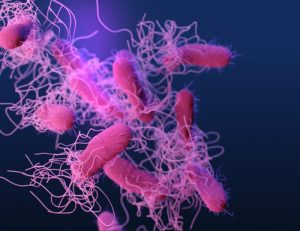
kswfoodworld salmonella

Abstract

Background

More than seventy per cent of salmonellosis in Australia is thought to be due to contaminated food. Rates of salmonellosis vary across the Australian states and territories, with the highest rates in the Northern Territory. In 2020, to control coronavirus disease 2019 (COVID-19), Australia implemented public health measures including border closures, physical distancing and hygiene advice. This study analyses salmonellosis notification rates in 2020 and considers possible impacts of COVID-19 measures.

Methods

Monthly and annual salmonellosis notifications per 100,000 population, for each of Australia’s eight states and territories for the years 2015 to 2020, were extracted from Australia’s publicly accessible National Notifiable Diseases Surveillance System. For each jurisdiction, the salmonellosis rate each month in 2020 was compared with the previous 5-year median rate for that calendar month. The possible impacts of COVID-19 public health measures on salmonellosis notifications in the respec-tive states and territories were examined.

Results

The annual Australian salmonellosis notification rate was 27% lower in 2020 than the previous 5-year median. The reduction in salmonellosis rate varied throughout Australia. States and territories with more stringent, more frequent or longer COVID-19 public health measures had generally greater salmonellosis rate reductions. However, Tasmania had a 50% deeper reduction in salmonellosis rate than did the Northern Territory, despite similar restriction levels.

Conclusions

Salmonellosis notifications decreased in Australia during the global COVID-19 pandemic. The reduction in notifications corresponded with the implementation of public health measures. Persistence of high rates in the Northern Territory could indicate the overarching importance of demographic and environmental factors.

Research – Illuminating Human Norovirus: A Perspective on Disinfection of Water and Surfaces Using UVC, Norovirus Model Organisms, and Radiation Safety Considerations

MDPI

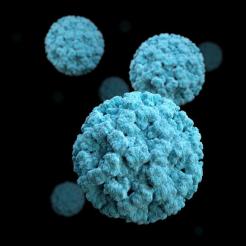
Food Borne Illness - Norovirus -CDC Photo

Human noroviruses (HuNoVs) are a major cause of gastroenteritis and are associated with high morbidity because of their ability to survive in the environment and small inoculum size required for infection. Norovirus is transmitted through water, food, high touch-surfaces, and human-to-human contact. Ultraviolet Subtype C (UVC) light-emitting diodes (LEDs) can disrupt the norovirus transmission chain for water, food, and surfaces. Here, we illuminate considerations to be adhered to when picking norovirus surrogates for disinfection studies and shine light on effective use of UVC for norovirus infection control in water and air and validation for such systems and explore the blind spot of radiation safety considerations when using UVC disinfection strategies. This perspective also discusses the promise of UVC for norovirus mitigation to save and ease life.

South Africa – Court overturns decision in Tiger Brands Listeria case

Food Safety News

How the deadly strain of listeriosis was traced to Tiger Brands' Enterprise  polony factory

A court in South Africa has overturned a previous decision to make companies divulge information in relation to a deadly Listeria outbreak in 2017 and 2018.

The Supreme Court of Appeal ruling reverses a Gauteng High Court verdict on whether subpoenas issued against third parties were relevant to the class-action. Tiger Brands is facing a class-action following an outbreak of listeriosis between January 2017 and September 2018 that sickened more than 1,050 people, killing 218.

EU – Multi-country outbreak of Salmonella Enteritidis sequence type (ST)11 infections linked to eggs and egg products

EFSA

Abstract

On 2 September 2021, France reported an increase in Salmonella Enteritidis ST11 infections. By 11 January 2022, 272 confirmed cases had been reported in five European Union/European Economic Area (EU/EEA) countries and the United Kingdom (UK): Denmark (n=3), France (n=216), the Netherlands (n=12), Norway (n=7), Spain (n=22), and the UK (n=12) in 2021. Two deaths were recorded in adult men. Twenty-five cases were hospitalised. Sixty cases reported consumption of eggs/egg products.

Some cases reported in France in 2021 had visited restaurants serving eggs distributed by a common supplier, Spanish Packing Centre A. The eggs originated from three Spanish farms, one testing positive for the outbreak strain. Fresh table eggs from the farms linked to the outbreak were withdrawn and redirected for use in heat-treated egg products. No other countries received eggs from the same farms via Packing Centre A during summer 2021. Therefore, the source of infection for cases in late 2021 and in countries other than Spain and France could not be established.

This 2021 outbreak is linked microbiologically to a historical cross-border outbreak reported by the Netherlands in 2019. Eggs consumed by cases in the Dutch outbreak were traced back to a Spanish farm, but it was not possible to identify an epidemiological link with the 2021 outbreak. This suggests a wide distribution of the outbreak strain that could affect the food supply chain and/or earlier steps in the production chain. There may be multiple heterogeneous sources of S. Enteritidis ST11, and the outbreak strain could also be circulating at other farms, inside or outside Spain.

The risk of new infections caused by the outbreak strain and contaminated eggs remains high in the EU/EEA. It is therefore important to foster cross-sectoral investigations of contaminations in the egg supply chain in countries where S. Enteritidis ST11 has been detected.

PDF

Canada – How you can help solve a national foodborne illness outbreak investigation

PHAC

PDF

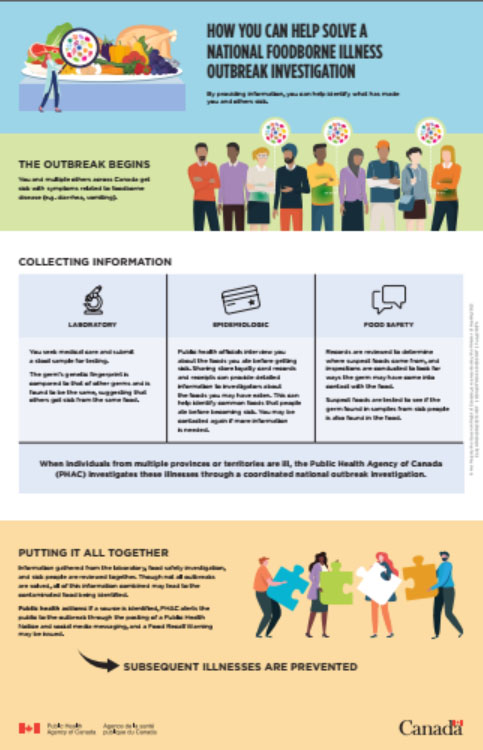
By providing information, you can help identify what has made you and others sick

The outbreak begins

You and multiple others across Canada get sick with symptoms related to foodborne disease (e.g. diarrhea, vomiting).

Collecting information

Laboratory:

You seek medical care and submit a stool sample for testing.

The germ’s genetic fingerprint is compared to that of other germs and is found to be the same, suggesting that others got sick from the same food.

Epidemiologic:

Public health officials interview you about the foods you ate before getting sick. Sharing store loyalty card records and receipts can provide detailed information to investigators about the foods you may have eaten. This can help identify common foods that people ate before becoming sick. You may be contacted again if more information is needed.

Food safety:

Records are reviewed to determine where suspect foods came from, and inspections are conducted to look for ways the germ may have come into contact with the food. Suspect foods are tested to see if the germ found in samples from sick people is also found in the food.

When individuals from multiple provinces or territories are ill, the Public Health Agency of Canada (PHAC) investigates these illnesses through a coordinated national outbreak investigation.

Putting it all together

Information gathered from the laboratory, food safety investigation, and sick people are reviewed together. Though not all outbreaks are solved, all of this information combined may lead to the contaminated food being identified.

Public health actions: If a source is identified, PHAC alerts the public to the outbreak through the posting of a Public Health Notice and social media messaging, and a Food Recall Warning may be issued.

Subsequent illnesses are prevented.

Argentina – So far in January, Salta registers about 500 cases of Salmonellosis

Salta

The highest percentage was located in the Capital department. 52% of affected individuals are children up to 9 years of age. Prevention lies in the safe handling of food.

In the first 25 days of January, 571 suspected cases of salmonella infection were reported in the province, of which 482 were confirmed, which represents 84% ​​positivity.

Of this amount, the largest proportion of affected individuals corresponds to the age range of 5 to 9 years, with a total of 130. In second place, with 122 cases, are children aged 0 to 4 years. These data show that 52% of the cases correspond to children between 0 and 9 years of age.

Regarding the location of cases, the department with the highest number is Capital, with 366, which means 76% of the total.

Of 23 departments in which the province of Salta is divided, in the period from January 1 to 25, cases of salmonellosis were registered in 19 of them. There were no cases in La Candelaria, Rosario de la Frontera, San Carlos and Los Andes.

According to records of the Epidemiological Surveillance program of the Ministry of Public Health, in 2021 there were 1,930 suspected cases, with 1,748 confirmed (91% positivity).

Prevention Guidelines

The Ministry of Public Health recommends taking precautions when handling food, since salmonellosis occurs through the ingestion of food contaminated with bacteria of the salmonella genus.

Research – Boy, 4, Paralyzed Over a Matter of Hours Diagnosed With Rare Disorder – Campylobacter

Newsweek

4-year-old boy from Sydney who went to bed happy and healthy woke up unable to move his legs, telling his mom: “Mummy I can’t feel my legs.”

Oliver Davis’ mother, Bel, took her son to a local doctor who called him an ambulance, beginning the search for the cause of the boy’s sudden and mysterious paralysis, Australia’s 7News reported.

As the next 48 hours progressed, Oliver Davis’ condition worsened, leaving him unable to move from the shoulders down. Five days later he lost his ability to speak and swallow, lost control of his bladder, and had to begin being fed via a feeding tube.

Following a barrage of tests, including an MRI and a lumbar puncture, the 4-year-old was diagnosed with Guillain-Barré syndrome (GBS), a rare autoimmune disorder that occurs when a person’s own immune system damages their nerves, causing muscle weakness and sometimes paralysis.

The CDC says that several things are known to trigger GBS, two-thirds of people who suffer from the condition have had diarrhea caused by a bacteria called Campylobacter jejuni several weeks before developing symptoms. Infection with this bacteria seems to be one of the most common risk factors of GBS.

ALS Microbiology Training Course

Hi All

I am delivering a Microbiology Course (3 Parts) later in February.

Basic Microbiology Awareness
Series of Webinars delivering technical and practical
information on the main microbiological issues affecting the
food industry.

Course Objectives:
» Develop a greater understanding of Food Microbiology
» Being confident with Environmental Monitoring processes and requirements
and how to assess the microbial risks in food products.
» How the laboratory undertakes testing and interpreting the results.
Who Should Attend:
This course can be used as a refresher for those with some previous training in
Microbiology and / or as an introduction for those working within Technical and
Quality roles in food manufacturing / handling environment.

Part 1 – Introduction to Micro-organisms – 17th February 2022
This part will first of all introduce micro-organisms, their growth and
development requirements before establishing the main micro-organisms that
can affect food production and the difference between foodborne illness and
food poisoning, which could affect the decision-making process within the
production environment.

Part 2 – Factory Testing for Micro-organisms – 24th February 2022
This second part will focus on the best practice in food production environment
to identify and control micro-organisms and how a product microbial risk
assessment approach should be considered.

Part 3 – The Microbiology Laboratory – 3rd March 2022
The third part will cover microbiology laboratory testing, how to interpret the
testing results and the new technologies that will enhance current traditional
microbiology testing.

Flyer and Booking Form

Research – Death by duck paste: Centenary of the Loch Maree botulism tragedy

Press and Journal

kswfoodworld

There were 13 fishermen, two wives, 17 ghillies and three mountain climbers in the party, and they set out that morning with packed lunches prepared by the hotel staff.

The picnic included duck paste sandwiches, the paste coming from the firm of Lazenby & Sons of London.

Little did the diners know that they were carrying a ticking time bomb between slices of bread in their hampers, and that eight of their number would be dead within days.

Read the story at the Link Above