Category Archives: Food Microbiology Blog

France- Whole milk yogurt with natural vanilla flavor – lemon – coconut – strawberry – Enterobacteriaceae

Gov france

Identification information of the recalled product

  • Product category Feed
  • Product subcategory Milk and dairy products
  • Product brand name Carrefour Original
  • Model names or references Whole milk yogurt with natural vanilla flavor – lemon – coconut – strawberry
  • Identification of products
    GTIN Lot Date
    3560071019976 13/07/2022 Use-by date 07/13/2022
  • Packaging8 pots and far the 125g
  • Marketing start/end date From 06/09/2022 to 06/10/2022
  • Storage temperature Product to be stored in the refrigerator
  • Geographic area of ​​sale Whole France
  • Distributors Carrefour

Practical information regarding the recall

  • Reason for recall Suspicion of bacteriological contamination with enterobacteriaceae
  • Risks incurred by the consumer Other biological contaminants

France – Kosher Florette iceberg crudités 300g – Listeria monocytogenes

Gov france

Identification information of the recalled product

  • Product category Feed
  • Product subcategory Fruits and vegetables
  • Product brand name Florette
  • Model names or references Kosher Florette iceberg crudités 300g
  • Identification of products
    GTIN Lot Date
    3303910005804 3.1e12120757 Use-by date 05/31/2022
  • Packaging300g
  • Marketing start/end date From 05/23/2022 to 05/31/2022
  • Storage temperature Product to be stored in the refrigerator
  • Further information Kosher Product
  • Geographic area of ​​sale Whole France
  • Distributors Hyper kosher, Leader Cash and independent kosher stores

Practical information regarding the recall

  • Reason for recall Listeria presence
  • Risks incurred by the consumer Listeria monocytogenes (agent responsible for listeriosis)

France – Smoked Norwegian salmon – Listeria monocytogenes

Gov france

Identification information of the recalled product

  • Product category Feed
  • Product subcategory Fishery and aquaculture products
  • Product brand name BOURGAIN AND SON
  • Model names or references Catering dishes
  • Identification of products
    Lot Date
    205215 Use-by date 20/06/2022
    205212 Use-by date 06/17/2022
    205213 Use-by date 06/18/2022
  • Packaging150g 300g Pre-sliced ​​strips Barons Chunks 250g
  • Marketing start/end date From 05/25/2022 to 06/13/2022
  • Storage temperature Product to be stored in the refrigerator
  • Health markFR62160108 CE
  • Geographic area of ​​sale Whole France
  • Distributors Norocean Scapartois Auchan Saint martin Boulogne Private customers Ange Opal fish Flavors and Terroirs
  • List of points of saleSalmon_from_Norway_smoked_lot_205215_DLC_20.pdf

Practical information regarding the recall

  • Reason for recall Presence of listeria
  • Risks incurred by the consumer Listeria monocytogenes (agent responsible for listeriosis)

France – Strawberry Finger x2 and Raspberry Finger x2 – Salmonella

Gov france

Identification information of the recalled product

  • Product category Feed
  • Product subcategory Cereals and baked goods
  • Product brand name Manufactured by the store
  • Model names or references Finger tart shells, HAFNER brand
  • Identification of products
    GTIN Lot
    024812000000 see attached product list
    0204813000000 see attached product list
  • Products ListMX-3061_20220609_104509.pdfAttachment
  • PackagingX2
  • Marketing start/end date From 04/06/2022 to 08/06/2022
  • Storage temperature Product to be stored in the refrigerator
  • Further information These pastries are sold in Blister boxes packaged by 2.
  • Geographic area of ​​sale Whole France
  • Distributors E. LECLERC VILLERS-COTTERETS

Practical information regarding the recall

  • Reason for recall Presence of salmonella
  • Risks incurred by the consumer Salmonella spp (causative agent of salmonellosis)

France – Sweetened Yogurt – Enterobacteriaceae – E.coli

Gov france

Identification information of the recalled product

  • Product category Feed
  • Product subcategory Milk and dairy products
  • Product brand name LOCATION
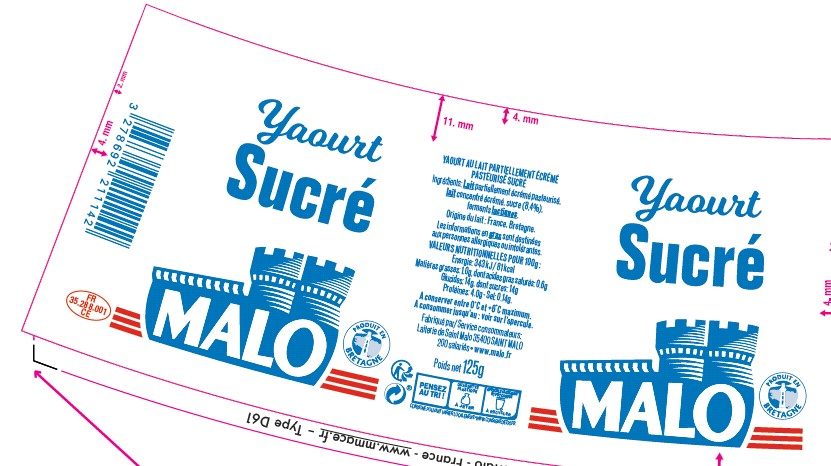
  • Model names or references sweetened yogurt brand MALO packaging cardboard pot
  • Identification of products
    GTIN Lot Date
    3278692211142 DLC 11/07/2022 Use-by date 07/11/2022
  • Packaging Packaging UVC cardboard jar 4x125g
  • Marketing start/end date From 08/06/2022 to 11/07/2022
  • Storage temperature Product to be stored in the refrigerator
  • Health mark FR 35.288.001 CE
  • Geographic area of ​​sale Whole France
  • Distributors INTERMARCHE-LOGIDIS-MONOPRIX-LECLERC-SYSTEM U-CARREFOUR-TEAM OUEST-AUCHAN-CASINO-MY GOURMET GARDEN-METRO-PRO A PRO
  • List of points of saleTraceability_Yoghurt_pot_carton_sucré_Malo_DLC_11_07_2022.pdf

Practical information regarding the recall

  • Reason for recall Suspicion of Enterobacteriaceae germ contamination
  • Risks incurred by the consumer Escherichia coli

France – Smoked Norwegian Salmon – Listeria monocytogenes

Gov france

Identification information of the recalled product

  • Product category Feed
  • Product subcategory Fishery and aquaculture products
  • Product brand name BOURGAIN AND SON
  • Model names or references Catering dish 150g and 300g
  • Identification of products
    Lot Date
    205215 Use-by date 20/06/2022
  • Packaging150g 300g Pre-sliced ​​strips Barons Chunks 250g
  • Marketing start/end date From 05/25/2022 to 06/13/2022
  • Storage temperature Product to be stored in the refrigerator
  • Health markFR62160108 CE
  • Geographic area of ​​sale Whole France
  • Distributors Norocean Scapartois Auchan Saint martin Boulogne Private customers Ange Opal fish Flavors and Terroirs
  • List of points of saleSalmon_from_Norway_smoked_lot_205215_DLC_20.pdf

Practical information regarding the recall

  • Reason for recall Presence of listeria
  • Risks incurred by the consumer Listeria monocytogenes (agent responsible for listeriosis)

Research – Impact of chlorinated water on pathogen inactivation during wheat tempering and resulting flour quality

Journal of Food Protection

Outbreaks of enteric pathogens linked to wheat flour have led the wheat milling industry to seek solutions addressing this food safety concern. Chlorinated water at 400-700ppm has been used in the flour milling industry as a tempering aid to control growth of yeast and mold in tempering bins. However, the effectiveness of chlorinated water for inactivating enteric pathogens on wheat kernels remained unknown. Five strains of Shiga-toxin producing Escherichia coli (STEC) and two strains of Salmonella were inoculated onto hard red spring wheat at 7 log CFU/g and stored at room temperature for 1-month. Inoculated wheat was tempered with four concentrations (0, 400, 800, 1200ppm) of chlorinated water (pH 6.5). The reduction due to chlorine was determined by calculating change in cell density at each chlorine level using the response at 0ppm as a reference. Uninoculated wheat tempered with chlorinated water was used to measure flour quality parameters. Changes in pathogen density over 18 hours ranged from -2.35 to -0.30 log CFU/g with 800ppm chlorinated water and were not significantly different from changes at 400ppm and 1200ppm. Significant (p< 0.05) differences in the extent of reduction were observed among strains. However, the effect of chlorinated water at reducing native microbes on wheat kernels was minimal, with an average reduction of 0.39 log CFU/g for all concentrations. No significant (p>0.05) changes occurred in flour quality and gluten functionality, or during breadmaking for grains tempered at 400 and 800ppm chlorinated water. There were small but significant (p<0.05) changes in flour protein content, final viscosity, and water absorption when tempered with 1200ppm chlorinated water. The data showed that the level of chlorinated water currently used in industry for tempering could reduce enteric pathogen numbers by 1.22 log CFU/g for STEC and 2.29 log CFU/g for Salmonella, with no significant effects on flour quality and gluten functionality.

Research – Growth Kinetics of Listeria monocytogenes on Cut Red Cabbage

Journal of Food Protection

Listeria monocytogenes is a foodborne pathogen associated with fresh produce vectors such as leafy greens. Recent outbreaks and recalls associated with red cabbage-containing salads have brought attention to this food commodity. While data on the proliferation of L. monocytogenes is available for different varieties of white cabbage, no information is available on the fate of this pathogen on red cabbage. The aim of this study was therefore to explore the survival of L. monocytogenes on cut red cabbage (var. capitata f. rubra ) during storage at different temperatures. Red cabbage was cut into 5 × 4 cm pieces and spot inoculated with a six-strain cocktail of rifampicin-resistant L. monocytogenes , resulting in an initial inoculation level of at 4 log CFU/g. Samples were stored at 5 or 10°C for 14 d, or at 25°C for 7 d. At intervals during storage, L. monocytogenes was enumerated by homogenization of cabbage with Butterfield’s phosphate buffer (BPB), and serial dilutions were plated onto Brain Heart Infusion (BHI) agar supplemented with rifampicin. No growth of L. monocytogenes was observed on cut red cabbage during storage at 5°C, and only minimal proliferation was observed at the higher temperatures. Significant population increases of 0.83 and 1.07 log CFU/g were determined after 3 d storage at 10 and 25°C, respectively. The modeled growth rates for L. monocytogenes on cut red cabbage storage at 5 and 10°C were 0.11±0.03 and 0.27±0.07 log CFU/g per d, with calculated times to a 1 log CFU/g increase of 9.51 and 3.70 d, respectively; however, L. monocytogenes did not achieve a 1 log increase at either temperature in this study. At 25°C, the modeled growth rate of L. monocytogenes on cut red cabbage was 1.15±0.36 log CFU/g, leading to calculated and observed 1 log increases in 0.87 and 3.00 d, respectively. Results from this study aid in understand the fate of L. monocytogenes on cut red cabbage during storage at different temperatures.

Indonesia – Indonesian Masters: Organisers probe suspected food poisoning involving Malaysian, Thai players

Malay Mail

The 2022 Indonesian Masters organising committee is investigating cases of Malaysian and Thai badminton players who came down with suspected food poisoning after having breakfast at a hotel here yesterday.

A spokesman of the All Indonesia Badminton Association centre manager, Broto Happy, said they sympathised with the victims and took a serious view of the incident, which they found out through social media.

The affected players or team managers have not lodged any official reports with the organising committee so far, he said in a statement today.

After liaising with the organising committee, the Badminton World Federation (BWF) urged team managers to remind their players to be cautious when ordering food from outside the hotel or consuming certain types of food.

Meanwhile, Broto said laboratory tests showed that the players who received treatment had probably eaten unhygienic food but there was no food poisoning.

“In cases of food poisoning, the effects are immediate,” said Dr Grace Corlesa Joselini, the tournament doctor.

She said players staying at the two official tournament hotels are free to order food online or eat at nearby restaurants.

Online media reports last night said five Malaysian and Thai players had sought treatment at hospitals for food poisoning.

Research – Investigators raid Ferrero as part of Salmonella outbreak probe

Food Safety News

Authorities have searched a number of Ferrero sites as investigations continue into a large Salmonella outbreak.

Six facilities in Belgium and Luxembourg were targeted this week including the factory in Arlon which is believed to be where contaminated occurred. The Belgian food safety agency stopped production at the plant in early April but it could reopen this month.

The monophasic Salmonella Typhimurium outbreak linked to Kinder chocolate has sickened almost 450 people including 122 in the United Kingdom, 118 in France as well as four in Canada and one in the United States.

Ferrero said it was cooperating with authorities as part of the investigation.

Documents and computer hardware were seized during the operation but no arrests were made, according to the Luxembourg Public Prosecutor’s Office.

The two outbreak strains of monophasic Salmonella Typhimurium were identified in 10 of 81 samples taken in Ferrero’s Arlon plant in Belgium between December 2021 and January 2022.