Category Archives: Food Microbiology Blog

New Zealand – Dreamview Creamery brand Raw Milk (unpasteurised) – Listeria monocytogenes

MPI

8 July 2023: Dreamview Creamery is recalling specific batches of its Dreamview Creamery brand Raw Milk as the product may contain Listeria.

See-through jar with green lid.

Product identification
Product type Raw (unpasteurised) drinking milk
Name of product (size) Dreamview Creamery brand Raw Milk (unpasteurised) (1 Litre)
Batch marking 290623, 300623, 030723, 040723, and 050723
Date marking Use By 29/06/2023 up to and including 5/07/2023
Package size and description The product is sold in a 1 litre glass bottle
Distribution The product is distributed direct to customer by Dreamview Creamery.

The product has not been exported.

Notes This recall does not affect any other Dreamview Creamery brand products.

Consumer advice

Customers are asked to check the batch or date mark located on the lid of the milk bottle.

If you have purchased any of the affected product listed on this notice, do not consume it. Customers should return the product to their retailer for a full refund. Alternatively, consume after heating to 70°C and holding at this temperature for one minute. If you don’t have a thermometer, heat the milk until it nearly reaches a boil (or scald the milk) before drinking it.

There have been no reports of associated illness in New Zealand. If you have consumed any of this product and have any concerns about your health, seek medical advice.

Customers should return the product to their retailer for a full refund.

Who to contact

If you have questions, contact Dreamview Creamery:

  • Phone: 021 138 0360
  • Address: 430 Te Hutewai Road, Raglan

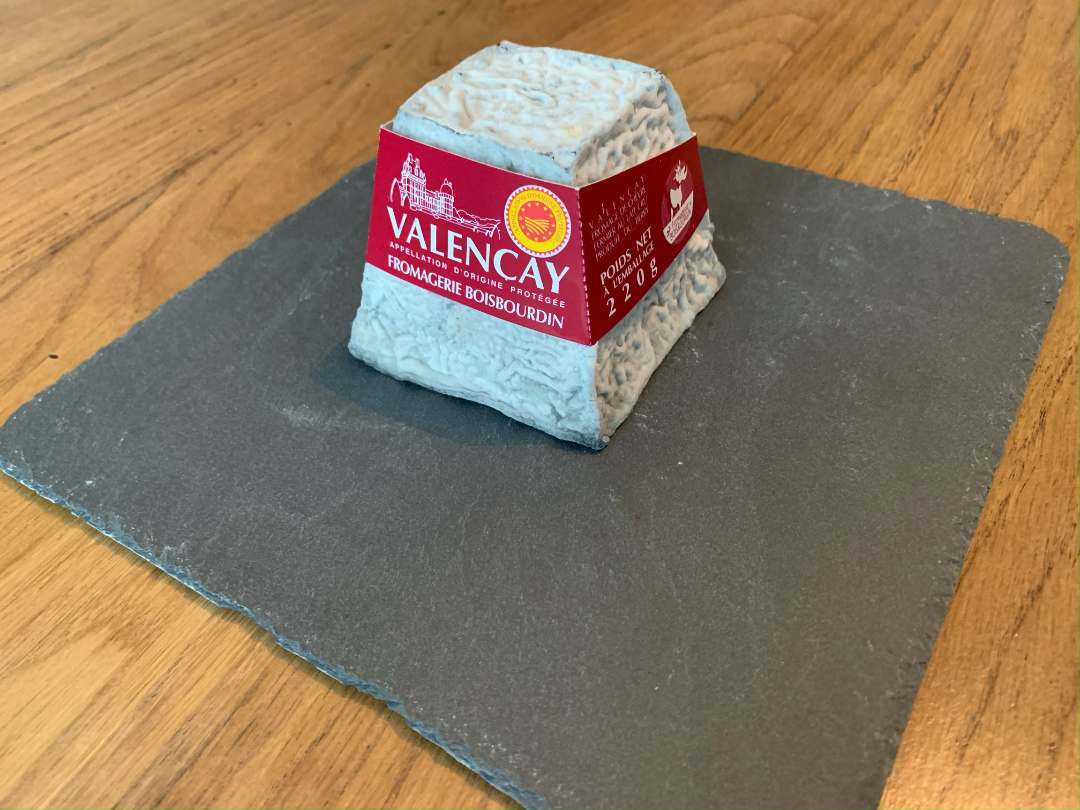
France – Goat cheese – STEC E.coli

Gov france

Identification information of the recalled product

  • Product category Feed
  • Product subcategory Milk and dairy products
  • Product brand name unbranded
  • Model names or references Round Valencay
  • Identification of products
    Batch Date
    175 Best before date 08/24/2023
  • Marketing start/end date From 06/26/2023 to 07/03/2023
  • Storage temperature Product to be stored in the refrigerator
  • Geographic area of ​​sale Heugnes
  • Distributors Earl Fromagerie Boisbourdin

Canada – Kootenay Meadows brand Nostrala Firm Surface-Ripened Organic Cheese recalled due to generic E. coli

CFIA

Summary

Product
Nostrala Firm Surface-Ripened Organic Cheese
Issue
Food – Microbial Contamination – E. Coli – non-pathogenic
What to do

Do not use, sell, serve or distribute the affected product.

Audience
Retail

Kootenay Meadows brand Nostrala Firm Surface-Ripened Organic Cheese recalled due to generic E. coli.

The recalled product has been sold in Alberta.

France – DOUGH POT – Listeria monocytogenes

Gov france

Identification information of the recalled product

  • Product category Feed
  • Product subcategory Meats
  • Product brand name STUFFED POITEVIN
  • Model names or references STUFFED PATEVIN POITEVIN
  • Identification of products
    GTIN Batch Date
    0180823173 0180823173 Use-by date 07/13/2023
  • Products List RECALL_PRODUCT.pdf Attachment
  • Marketing start/end date From 06/25/2023 to 07/05/2023
  • Storage temperature Product to be stored in the refrigerator
  • Geographic area of ​​sale Whole France
  • Distributors SUPER U CHIRE

Research – Inhibition of Salmonella Enteritidis by Essential Oil Components and the Effect of Storage on the Quality of Chicken

MDPI

Abstract

This research investigates the antibacterial potential of plant essential oil components including thymol, carvacrol, citral, cinnamaldehyde, limonene, and β-pinene against Salmonella Enteritidis (S. Enteritidis). Through the determination of minimum inhibitory concentration, three kinds of natural antibacterial agents with the best inhibitory effect on S. Enteritidis were determined, namely thymol (128 μg/mL), carvacrol (256 μg/mL), and cinnamaldehyde (128 μg/mL). Physical, chemical, microbial, and sensory characteristics were regularly monitored on days 0, 2, 4, and 6. The findings of this study reveal that both thymol at MIC of 128 μg/mL and carvacrol at MIC of 256 μg/mL not only maintained the sensory quality of chicken, but also decreased the pH, moisture content, and TVB-N value. Additionally, thymol, carvacrol and cinnamaldehyde successfully inhibited the formation of S. Enteritidis biofilm, thereby minimizing the number of S. Enteritidis and the total aerobic plate count in chicken. Hence, thymol, carvacrol, and cinnamaldehyde have more effective inhibitory activities against S. Enteritidis, which can effectively prevent the spoilage of chicken and reduce the loss of its functional components.

Research – Salmonella (non-typhoidal)

WHO

Key facts

  • Salmonella is 1 of 4 key global causes of diarrhoeal diseases.
  • Most cases of salmonellosis are mild; however, sometimes it can be life-threatening. The severity of the disease depends on host factors and the serotype of Salmonella.
  • Antimicrobial resistance is a global public health concern and Salmonella is one of the microorganisms in which some resistant serotypes have emerged, affecting the food chain.
  • Basic food hygiene practices, such as “cook thoroughly”, are recommended as a preventive measure against salmonellosis.

Research – Current Advances in Cheese Microbiology

MDPI

Cheese is a complex microbial ecosystem containing microorganisms that are either deliberately added or that enter milk, curd or cheese as contaminants. From a technological point of view, the microbiota of cheese could be classified according to the following scheme [1,2]: (i) (primary) starter cultures, composed of lactic acid bacteria (LAB) that “start” fermentation and, consequently, the acidification of milk and curd; (ii) (secondary) adjunct cultures, comprising different species of bacteria, yeasts and molds, which are intentionally added to the milk, the curd, the surface of the cheese or the interior of the previously punctured mass in the manufacture of blue cheeses, with the aim of participating in cheese ripening and the development of sensory characteristics; and (iii) (secondary) adventitious microbiota, made up of microorganisms that spontaneously contaminate milk or cheese at any of the production stages and that contribute, similarly to adjunct cultures, to the development of the characteristic appearance, texture and flavor of the different cheese varieties, yet which are occasionally responsible for defects and off-flavors.
Cheeses made from raw milk (especially from sheep or goats, or from cattle reared using extensive methods) are generally assumed to have a more intense and rich flavor than cheeses made from pasteurized or microfiltered milk. The native microbiota present in raw milk seems to be primarily responsible for the typical sensory properties and flavor development of these products. Nevertheless, it must be taken into account that the microbial diversity of raw milk (particularly raw cow’s milk) has been seriously threatened in industrialized countries as a consequence of the implementation of strict hygienic conditions on farms and during milking, as well as when stored at low temperatures. In certain current productions of traditional raw cow’s milk cheeses, the presence of adventitious bacteria such as enterococci has decreased dramatically compared to those analyzed several decades ago, and some flavor attributes are most likely being lost [3].
In order to control cheese ripening, the first and most focused approach would lie in the isolation and selection of autochthonous microbial cultures, returning them to cheesemakers for the production of the different cheese varieties. This choice would allow for the partial restoration of the flavor in productions where the use of raw milk is restricted, or where raw milk has undergone an improvement in its microbiological quality and a consequent modification of its “traditional” microbiota. The use of selected adjunct microbial cultures may enhance the typicality of the Protected Designation of Origin (PDO) cheeses, resulting in a closer sensory quality to that of traditional products [4].

Research – Growth Kinetics of Listeria monocytogenes and Salmonella enterica on Dehydrated Vegetables during Rehydration and Subsequent Storage

MDPI

Abstract

Dehydrated vegetables have low water activities and do not support the proliferation of pathogenic bacteria. Once rehydrated, vegetables can be incorporated into other foods or held for later use. The aim of this study was to examine the survival and proliferation of Listeria monocytogenes and Salmonella enterica on dehydrated vegetables during rehydration and subsequent storage. Carrots, corn, onion, bell peppers, and potatoes were heat dehydrated, inoculated at 4 log CFU/g, and rehydrated at either 5 or 25 °C for 24 h. Following rehydration, vegetables were stored at 5, 10, or 25 °C for 7 d. Both L. monocytogenes and S. enterica survived on all vegetables under all conditions examined. After 24 h of rehydration at 5 °C, pathogen populations on the vegetables were generally <1.70 log CFU/g, whereas rehydration at 25 °C resulted in populations of 2.28 to 6.25 log CFU/g. The highest growth rates during storage were observed by L. monocytogenes on potatoes and S. enterica on carrots (2.37 ± 0.61 and 1.63 ± 0.18 log CFU/g/d, respectively) at 25 °C when rehydration occurred at 5 °C. Results indicate that pathogen proliferation on the vegetables is both rehydration temperature and matrix dependent and highlight the importance of holding rehydrated vegetables at refrigeration temperatures to hinder pathogen proliferation. Results from this study inform time and temperature controls for the safety of these food products.

Research – Modeling the survival of Campylobacter jejuni in raw milk considering the viable but non-culturable cells (VBNC)

Wiley Online

Abstract

Campylobacter spp. cannot grow in raw milk, but it is able to transform into a viable but non-culturable (VBNC) state enabling the survival in such harsh conditions. In this study, Campylobacter jejuni survival in raw milk was investigated taken into consideration colony-forming units (CFUs) and VBNC cells. CFU from two different strains of C. jejuni (DSM 4688 and BfR-CA-18043) were enumerated at three temperatures (5°C, 8°C, and 12°C). In parallel, a viability real-time PCR was conducted to quantify intact and putatively infectious units (IPIUs) (comprising CFU and VBNC bacteria). The data generated were used to model the viability of C. jejuni during raw milk storage. Here, a one-step fitting approach was performed using parameter estimates from an intermediate two-step fit as starting values to generate tertiary models. Different primary model equations (Trilinear and Weibull) were required to fit the CFU and the IPIU data. Strain-specific linear secondary models were generated to analyze the effect of storage temperature on the maximum specific inactivation rate of the CFU data. The time of the first decimal reduction parameter of the IPIU models could be modeled by a strain-independent linear secondary model. The developed tertiary models for CFU and IPIU differ significantly in their predictions, for example, for the time required for a one log10 reduction. Taken into consideration that VBNC could revert to a culturable state during the raw milk storage, our results underline the importance of considering IPIU and not only CFU to avoid underestimation of the survival of C. jejuni in raw milk.

Research – Microbial Succession in the Cheese Ripening Process—Competition of the Starter Cultures and the Microbiota of the Cheese Plant Environment

MDPI

Abstract

A large variety of cheeses can be produced using different manufacturing processes and various starter or adjunct cultures. In this study, we have described the succession of the microbial population during the commercial production and subsequent ripening of smear-ripened cheese using 16S rRNA gene sequencing. The composition of the microbiota during the first 6 days of production was constant and consisted mainly of LAB (lactic acid bacteria) originating from the starter culture. From day 7, the proportion of LAB decreased as other bacteria from the production environment appeared. From the 14th day of production, the relative proportion of LAB decreased further, and at the end of ripening, bacteria from the environment wholly dominated. These adventitious microbiota included PsychrobacterPseudoalteromonas haloplanktis/hodoensisVibrio toranzoniae, and Vibrio litoralis (Proteobacteria phylum), as well as Vagococcus and Marinilactibacillus (Firmicutes phylum), Psychrilyobacter (Fusobacteria phylum), and Malaciobacter marinus (Campylobacterota phylum), all of which appeared to be characteristic taxa associated with the cheese rind. Subsequent analysis showed that the production and ripening of smear-ripened cheese could be divided into three stages, and that the microbiota compositions of samples from the first week of production, the second week of production, and supermarket shelf life all differed.