Category Archives: Food Micro Blog

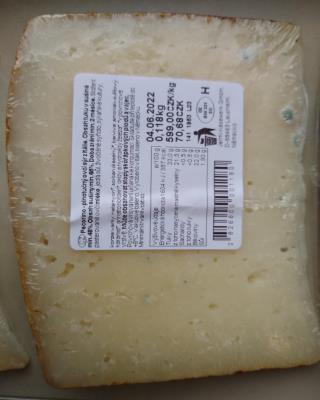
Czech Republic – Milbona SELECTION PECORINO – Mold/Mould

Potravinynapranyri

Illustration photo no. 1

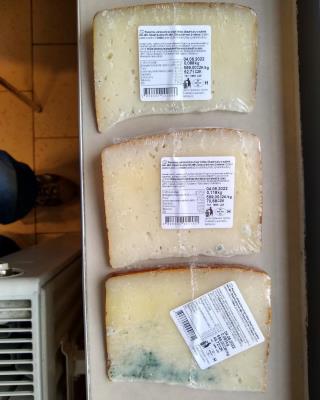
Illustration photo no. 4

Place of inspection:
Roznov pod Radhostem ( Meziricska 2302/0, 756 61 Roznov pod Radhostem )
Company ID: 26178541
Food group: Milk and milk products / Cheese

Milbona SELECTION PECORINO
Category: Dangerous food
Unsatisfactory parameter:

mold visible to the eye

Mold was found under part of the package under the packaging. Food is not considered safe if it shows signs of spoilage. 

The food has not expired. During the inspection, unsatisfactory storage temperatures of this product were not found.

Date of minimum durability: 04.06.2022
Cover: PP + label
Quantity of product in package: 0,083 kg
Country of origin:  Italy
Date of sampling: 17. 5. 2022
Reference number: 22-000192-SZPI-CZ
The sample was found by an official inspection of the State Agricultural and Food Inspection Authority.

UK – Sainsbury’s recalls by Sainsbury’s Cooked and Peeled Frozen Large King Prawns because of possible presence of undercooked prawns

FSA

Sainbury’s is recalling by Sainsbury’s Cooked and Peeled Frozen Large King Prawns because of possible presence of undercooked prawns. The possible presence of undercooked prawns may make this product unsafe to eat.

Product details

by Sainsbury’s Cooked and Peeled Frozen Large King Prawns
Pack size 180g
Best before May 2023, June 2023, July 2023, August 2023, September 2023, and October 2023
by Sainsbury’s Cooked and Peeled Frozen Large King Prawns
Pack size 400g
Best before May 2023, June 2023, July 2023, August 2023, September 2023, and October 2023

Risk statement

The possible presence of undercooked prawns may make this product unsafe to eat.

Action taken by the company

Sainsbury’s is recalling the above products. Point of sale notices will be displayed in all retail stores that are selling these products. These notices explain to customers why the products are being recalled and tell them what to do if they have bought the product. Please see the attached notice.

Our advice to consumers

If you have bought any of the above products do not eat them. Instead, return them to the store from where they were bought for a full refund. If you have any questions or concerns, please visit Sainsbury’s website at Sainsburys.co.uk/help or contact their careline on 0800636262.

Research – Temporal changes in the proportion of Salmonella outbreaks associated with twelve food commodity groups in the United States

Cambridge Org

kswfoodworld Salmonella

Abstract

Using data from twenty years of Salmonella foodborne outbreaks, this study investigates significant trends in the proportion of outbreaks associated with twelve broad commodity groups. Outbreak counts are demonstrated to have a stronger trend signal than outbreak illness counts.

The number of outbreaks with an identified food vehicle increased significantly between 1998 and 2000. This was followed by a 10-year period when the number of outbreaks decreased. The number of outbreaks increased significantly between 2010 and 2014 and then remained unchanged for the remainder of the study period.

During the period of 1998 through 2017, the proportion of outbreaks for three commodities groups, consisting of eggs, pork, and seeded vegetables, changed significantly. No significant changes were observed in the remaining nine commodity groups. Simple approximations are derived to highlight the effect of dependencies between outbreak proportions and a consumption analysis for meat and poultry is used to enhance the limited interpretability of the changes in these proportions.

Given commodity-specific approaches to verifying food safety and promoting pathogen reduction, regulatory agencies benefit from analyses that elucidate illness trends attributable to the products under their jurisdiction. Results from this trend analysis can be used to inform the development and assessment of new pathogen reduction programs in the United States.

Research – Interlaboratory Evaluation of Enterococcus faecium NRRL B-2354 as a Salmonella Surrogate for Validating Thermal Treatment of Multiple Low-Moisture Foods

Journal of Food Protection

This multi-institutional study assessed the efficacy of Enterococcus faecium NRRL B-2354 as a non-pathogenic Salmonella surrogate for thermal processing of nonfat dry milk powder, peanut butter, almond meal, wheat flour, ground black pepper, and date paste. Each product was analyzed by two laboratories (five independent laboratories total), with the lead laboratory inoculating (E. faecium or a five-strain Salmonella enterica cocktail of S. Agona, Reading, Tennessee, Mbandaka, Montevideo) and equilibrating the product to the target water activity before shipping. Both laboratories subjected samples to three isothermal treatments (between 65 and 100°C). A log-linear/Bigelow model was fit to survivor data via one-step regression. Based on D80°C  values estimated from the combined model, E. faecium was more thermally resistant (P < 0.05) than Salmonella in ), nonfat dry milk powder (DEf-80°C: 100.2 ± 5.8 min; DSal-80°C: 28.9 ± 1.0 min), peanut butter (DEf-80°C: 133.5 ± 3.1 min; DSal-80°C: 57.6 ± 1.5 min), almond meal (DEf-80°C: 34.2 ± 0.4 min; DSal-80°C: 26.1 ± 0.2 min), ground black pepper (DEf-80°C: 3.2 ± 0.8 min; DSal-80°C: 1.5 ± 0.1 min), and date paste (DEf-80°C: 1.5 ± 0.0 min; DSal-80°C: 0.5 ± 0.0 min). Although the combined-laboratory D80°C for E. faecium was lower (P < 0.05) than for Salmonella in wheat flour (DEf-80°C: 9.4 ± 0.1 min; DSal-80°C: 10.1 ± 0.2 min), the difference was ~7%. The zT-values for Salmonella in all products and for E. faecium in milk powder, almond meal, and date paste were not different (P > 0.05) between laboratories. Therefore, this study demonstrated the impact of standardized methodologies on repeatability of microbial inactivation results. Overall, E. faecium NRRL B-2354 was  more thermally resistant than Salmonella, which provides support for utilizing E. faecium as a surrogate for validating thermal processing of multiple low-moisture products. However, product composition should always be considered before making that decision.

Research – New NARMS report shows rising resistance in Salmonella, Campylobacter

CIDRAP

The findings come from the National Antimicrobial Resistance Monitoring Systems (NARMS) 2019 Integrated Summary, which combines data from the Centers for Disease Control and Prevention (CDC), the Food and Drug Administration (FDA), and the US Department of Agriculture (USDA). The report provides a snapshot of resistance patterns found in bacteria isolated from humans, animals, raw meats from retail outlets (chicken, ground turkey, ground beef, and pork chops), and meat and poultry product samples collected at slaughtering facilities.

In addition to Salmonella, which causes an estimated 1.35 million illnesses and 26,500 hospitalizations each year, the NARMS report also includes resistance data on Campylobacter (1.5 million illnesses and 19,500 hospitalizations), Escherichia coli, and Enterococcus. NARMS monitors these bacteria to detect emerging resistance patterns to the antibiotics that are most important to human medicine, multidrug resistance, and specific resistance genes.

Research – Risk factors of Shiga toxin-producing Escherichia coli in livestock raised on diversified small-scale farms in California

Cambridge Org

Abstract

The increasing number of diversified small-scale farms (DSSF) that raise outdoor-based livestock in the US reflects growing consumer demand for sustainably-produced food. Diversified farms are small-scale and raise a combination of multiple livestock species and numerous produce varieties.

This 2015-2016 cross-sectional study aimed to describe the unique characteristics of DSSF in California, estimate the prevalence of STEC in livestock and evaluate the association between risk factors and the presence of STEC in livestock, using generalized linear mixed models. STEC prevalence was 13.62% (76/558). Significant variables in the mixed effect logistic regression model included daily maximum temperature (OR = 0.95; CI95%: 0.91-0.98), livestock sample source (cattle (OR = 4.61; CI95%: 1.64-12.96) and sheep (OR = 5.29; CI95%: 1.80-15.51)), multiple species sharing the same barn (OR = 6.23; CI95%: 1.84-21.15) and livestock having contact with wild areas (OR = 3.63; CI95%: 1.37-9.62).

Identification of STEC serogroups of public health concern (e.g., O157:H7, O26, O103) in this study indicated the need for mitigation strategies to ensure food safety by evaluating risk factors and management practices that contribute to the spread and prevalence of foodborne pathogens in a pre-harvest environment on DSSF.

Research – A restatement of the natural science evidence base regarding the source, spread and control of Campylobacter species causing human disease

Royal Society Publishing

CDC Campy

Abstract

Food poisoning caused by Campylobacter (campylobacteriosis) is the most prevalent bacterial disease associated with the consumption of poultry, beef, lamb and pork meat and unpasteurized dairy products. A variety of livestock industry, food chain and public health interventions have been implemented or proposed to reduce disease prevalence, some of which entail costs for producers and retailers. This paper describes a project that set out to summarize the natural science evidence base relevant to campylobacteriosis control in as policy-neutral terms as possible. A series of evidence statements are listed and categorized according to the nature of the underlying information. The evidence summary forms the appendix to this paper and an annotated bibliography is provided in the electronic supplementary material.

Research – Occurrence and Multidrug Resistance of Campylobacter in Chicken Meat from Different Production Systems

MDPI

Campylobacter kswfoodworld

Campylobacter is the leading bacterial cause of diarrheal disease worldwide and poultry remains the primary vehicle of its transmission to humans. Due to the rapid increase in antibiotic resistance among Campylobacter strains, the World Health Organization (WHO) added Campylobacter fluoroquinolone resistance to the WHO list of antibiotic-resistant “priority pathogens”. This study aimed to investigate the occurrence and antibiotic resistance of Campylobacter spp. in meat samples from chickens reared in different production systems: (a) conventional, (b) free-range and (c) backyard farming. Campylobacter spp. was detected in all samples from conventionally reared and free-range broilers and in 72.7% of backyard chicken samples. Levels of contamination were on average 2.7 × 10³ colony forming units (CFU)/g, 4.4 × 10² CFU/g and 4.2 × 10⁴ CFU/g in conventionally reared, free-range and backyard chickens, respectively. Campylobacter jejuni and Campylobacter coli were the only species isolated. Distribution of these species does not seem to be affected by the production system. The overall prevalence of Campylobacter isolates exhibiting resistance to at least one antimicrobial was 98.4%. All the C. coli isolates showed resistance to ciprofloxacin and to nalidixic acid, and 79.5 and 97.4% to ampicillin and tetracycline, respectively. In total, 96.2% of C. jejuni isolates displayed a resistant phenotype to ciprofloxacin and to nalidixic acid, and 92.3% to ampicillin and tetracycline. Of the 130 Campylobacter isolates tested, 97.7% were classified as multidrug resistant (MDR).

France- Rosette with ham – Listeria monocytogenes

Gov france

Identification information of the recalled product

  • Product category Feed
  • Product subcategory Others
  • Product brand name Aosta
  • Model names or references AOSTA
  • Identification of products
    GTIN Batch Date
    2910133023600 8303082 Date of minimum durability 07/24/2022
  • Packaging Bulk
  • Marketing start/end date From 06/10/2022 to 06/20/2022
  • Storage temperature Product to be stored in the refrigerator
  • Geographic area of ​​sale Whole France
  • Distributors E.LECLERC Centers

Practical information regarding the recall

  • Reason for recall Presence of Listeria monocytogenes
  • Risks incurred by the consumer Listeria monocytogenes (causative agent of listeriosis)

France – MACKEREL FILLET – Histamine

Gov france

Identification information of the recalled product

  • Product category Feed
  • Product subcategory Fishery and aquaculture products
  • Product brand name BOULONNAIS TRAWLERS
  • Model names or references MACKEREL FILLETS 15969
  • Identification of products
    Batch
    15969
  • Products List Poster_Reminder_Product_TRAD_HISTAMINE.pdf Attachment
  • Marketing start/end date From 06/14/2022 to 06/17/2022
  • Storage temperature Product to be stored in the refrigerator
  • Geographic area of ​​sale Whole France
  • Distributors SUPER U COURVILLE SUR EURE

Practical information regarding the recall

  • Reason for recall HISTAMINE
  • Risks incurred by the consumer Undeclared allergenic substances
    Endogenous toxins: histamine (fish, cheese, alcoholic beverages, meats)
  • Conduct to be adopted by the consumer Stop consuming