Category Archives: Food Inspections

RASFF Alerts – Campylobacter – Chicken Breast

kswfoodworld food safety poisoning

RASFF -Campylobacter coli (in 10 out of 12 samples /25g) and Campylobacter jejuni (in 1 out of 12 samples /25g) in chilled chicken breasts from France in Denmark

RASFF-Campylobacter coli and Campylobacter jejuni in chilled chicken breast and thighs from France in Denmark

RASFF Alert – STEC E.coli – Chilled Beef

kswfoodworld food safety poisoning

RASFF-shigatoxin-producing Escherichia coli (stx2+ /25g) in chilled beef from Uruguay in the Netherlands

RASFF Alert -Foodborne Outbreak suspected Salmonella – Infant Formula

kswfoodworld food safety poisoning

RASFF-foodborne outbreak suspected (salmonellosis) to be caused by infant formula from Ireland in France

RASFF Alerts – Listeria monocytogenes – Vegan Ice Cream – Raw Milk Cheese

kswfoodworld food safety poisoning

RASFF-Listeria monocytogenes (<100 CFU/g) in vegan ice cream from the United Kingdom in Germany

RASFF-Listeria monocytogenes (<10 CFU/g) in raw milk cheese from France in France

Ireland -Recall of Sausages from Newbridge Meats Due to the Presence of Salmonella

FSAI

Summary
Category 2: For Information
Alert Notification: 2018.29
Product: Newbridge Meats- Fresh Sausage Meat (1LB PKTS), Fresh Sausage Size 16, Fresh Pork & Leek Sausage, Fresh Cocktail Sausage, Fresh Cumberland Sausage, Fresh Sausage Size 12, Fresh Sausage Loose, Fresh Sausage Size 8
Batch Code: S033018
Country Of Origin: Ireland

Message:

As a precautionary measure, Newbridge Meats is initiating a recall of a batch of sausage products with batch code S033018 due to the presence of Salmonella. This may make the implicated batches unsafe to handle and consume. Consumers who have bought the implicated batches should dispose of the product or return to the place of purchase.

USA – Cyclospora Updates

FDA

The FDA confirms the presence of Cyclospora in Fresh Express salad mix through new laboratory method; Fresh Express recalls expired products containing romaine lettuce.

July 31, 2018 Update

The FDA has confirmed the presence of Cyclospora in an expired salad mix, containing romaine lettuce and carrots, that was produced by the processor Fresh Express in Streamwood, Illinois.

On July 26, 2018, the FDA completed final analysis of an unused package of Fresh Express salad mix containing romaine lettuce and carrots, which had been distributed to McDonald’s. The analysis confirmed the presence of Cyclospora in that sample, though the expiration date for that product, July 19, had already passed. On July 27, the FDA informed Fresh Express of the results, and instructed Fresh Express to determine whether potentially contaminated product may still be on the market.

Fresh Express reported to FDA that the romaine from the same lot as the positive sample was not packaged for direct retail sale by Fresh Express and had already expired. Fresh Express committed to using recall procedures to inform companies that received additional products of concern about the sample result. Fresh Express also reported that the carrots in the sampled salad mix only went to McDonald’s.

On July 30, 2018, the U.S. Department of Agriculture’s Food Safety and Inspection Service (FSIS) issued a public health alert on beef, pork and poultry salad and wrap products potentially contaminated with Cyclospora that was distributed by Caito Foods LLC, of Indianapolis, Ind. The products were produced between July 15 and 18, 2018, with either “Best By,” “Enjoy by,” “Best if Sold By” or “Sell By” dates ranging from July 18 through July 23, 2018. Caito Foods had received notification from Fresh Express that the chopped romaine in these products was being recalled.

McDonald’s reports that they stopped using the Fresh Express salad mix at impacted restaurants in IL, IA, IN, WI, MI, OH, MN, NE, SD, MT, ND, KY, WV, and MO on July 13, 2018. The company has since reported that it has replaced the supplier of salads in those states. More information can be found in McDonald’s Statement.

In 2015, FDA set up a multidisciplinary workgroup to prioritize the development, validation and implementation of a method for detecting Cyclospora in fresh produce. In 2018, FDA began using the newly validated Cyclospora method. The availability of this method is a significant advancement in FDA’s ability to investigate outbreaks of cyclosporiasis and identify the parasite in foods.

The investigation is ongoing and the FDA is currently reviewing distribution and supplier information for romaine and carrots.

Food Poisoning Bulletin

A cyclospora outbreak among people who attended an event on July 3, 2018 at the Evanston Golf Club at 4401 Dempster Street in Skokie, Illinois has sickened more than one hundred people, according to the Skokie Health Department. The facility is fully cooperating with the investigation.

About 900 people attended that event. Officials have sent all attendees a food survey to help discover which foods may be linked to the outbreak. The Skokie Health Department would like everyone who attended the event at the golf club to fill out the survey, even if they did not get sick.

This outbreak is not linked to the McDonald’s cyclospora outbreak that is linked to the fast food chain’s salads, according to officials. That outbreak has sickened at least 123 people in Illinois, according to the CDC.

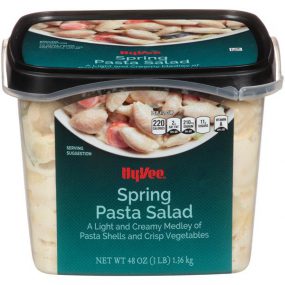
USA – Outbreak of Salmonella Infections Linked to Hy-Vee Spring Pasta Salad – Update

CDC   salad-with-label-small

  • Fifty-eight more ill people from nine states were added to this outbreak since the last update on July 18, 2018. Four more states reported ill people: Illinois, Kansas, North Dakota, and Tennessee.
  • Salmonella enterica subspecies IIIb has been added to this investigation because two people were infected with this strain of Salmonella and with the outbreak strain of Salmonella Sandiego at the same time. A search of the CDC PulseNet database found six additional people infected with the strain of Salmonella enterica subspecies IIIb and these cases have also been added to the outbreak.
  • A total of 79 people infected with the outbreak strains of Salmonella have been reported from nine states.
  • Illnesses started on dates ranging from June 21, 2018, to July 15, 2018.
  • Epidemiologic evidence(https://www.cdc.gov/foodsafety/outbreaks/investigating-outbreaks/index.html) indicates that Spring Pasta Salad purchased at Hy-Vee grocery stores is a likely source of the outbreak.
  • This investigation is ongoing, and CDC will provide updates when more information is available.


Australia – Recall: Woombye Cheeses (various) – E.coli

Food Authority NSW  

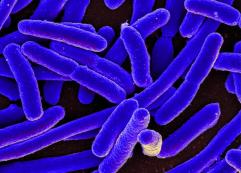
CDC E.coli

Image CDC Enter a caption

The NSW Food Authority advises:

Blackall Country Cheese Pty Ltd trading as Woombye Cheese Company has recalled assorted cheese products from fresh food markets, grocers, independents and selected IGA stores in NSW and QLD due to microbial (high E.coli count) contamination.

Product details:

  • Camembert 200g, Best Before 06.09.18
  • Truffle Triple Cream Brie food service size only, various weights, approx. 1.4kg each, Best Before 17.09.18
  • Triple Cream Brie 200g, Best Before 17.09.18
  • Blackall Gold Washed Rind 200g, (QLD only) wrapped in clear lined cheese wrap, Best Before 10.09.18

Food products contaminated with E.coli may cause illness if consumed. Consumers should not consume this product and should return it to the place of purchase for a full refund.

If you are concerned about your health you should seek medical advice.

For more information on this recall, contact Blackall Country Cheese Pty Ltd on 0413 808 489 or via www.woombyecheese.com.

Rsearch – Food residuals on the food‐contacting surfaces of stainless steel and polypropylene influence the efficacy of ultraviolet light in killing foodborne pathogens

Wiley Online

Abstract

This study was conducted to examine effects of food residues on the survivals of pathogens on stainless steel (SSS) and polypropylene (PPP) after ultraviolet‐radiation (UVR) surface decontamination. Cultures of Escherichia coli O157:H7, Salmonella enterica serovar Typhimurium, Staphylococcus aureus, and Listeria monocytogenes were inoculated on coupons containing deionized water, tryptic soy broth, pork, chicken, cabbage, and milk, respectively. The surface coupons were incubated at 100% relative humidity (RH) and 25°C for 24 hr to produce their own biofilms. UVR (=254 nm) surface decontamination for 120 min resulted in bacterial reductions in the levels of ≥2.5 log10 cfu/coupon. Populations of S. Typhimurium and L. monocytogenes within biofilms declined on SSS harboring chicken juice after UVR for 120 min, showing by <1.5 log10‐reductions. The presence of food residues on the food‐contacting surfaces would facilitate the strong adhesion of these organisms, indicating that bacteria enclosed in biofilms were more resistant to UVR sanitization.

Practical applications

In this study, it seemed to indicate that the incidence of varying food residues such as deionized water, tryptic soy broth, pork, chicken, cabbage, and milk could affect bacterial adhesion–attachment to the food‐contacting surfaces significantly. At least, some food residues such as pork, chicken, and milk would be supposed to provide a favorable environment where major foodborne pathogens are able to grow and produce their biofilms strongly. Especially, it was determined that the gram‐negative bacteria such as Escherichia coli O157:H7 and Salmonella typhimurium showed the higher sensitivity on coupons against ultraviolet‐radiation surface decontamination.

USA -Beef, Pork and Poultry salad and wrap recalled over Cyclospora

Food Poison Journal

The U.S. Department of Agriculture’s Food Safety and Inspection Service (FSIS) is issuing a public health alert out of an abundance of caution due to concerns about contamination with Cyclospora. The beef, pork and poultry salad and wrap products were distributed by Caito Foods LLC, an Indianapolis, Ind. establishment.

The beef, pork and poultry salad and wrap items were produced between July 15 to 18, 2018, with the either “Best By,” “Enjoy by,” Best if Sold By” or “Sell By” dates ranging from July 18 through July 23, 2018. [View Label (PDF only)]

The complete list of products, product labels, the UPC code numbers and other identifying information can be found here.

The products bear establishment number “EST. 39985 or P-39985” inside or next to the USDA mark of inspection. These items were shipped to distribution centers nationwide.

The problem was discovered when Caito Foods LLC received notification from their lettuce supplier, Fresh Express, that the chopped romaine that is used to manufacture some of their salads and wraps was being recalled.