Category Archives: Food Inspections

Europe -4 dead 8 sick in EU outbreak of Listeria linked to salmon products beginning in 2015

EFSA

A multi-country outbreak of 12 Listeriosis cases caused by Listeria monocytogenes sequence type (ST)

8 has been identified through whole genome sequencing (WGS) analysis in three EU/EEA countries: Denmark (6 cases), Germany (5) and France (1). Four of these cases have died due to or with the disease. It is likely that the extent of this outbreak has been underestimated since the outbreak was identified through sequencing and only a subset of the EU/EEA countries routinely use this advanced technique to characterise L. monocytogenes isolates. The first case was sampled in October 2015 in Denmark and the most recent case was reported in May 2018 in Germany. In August 2017, Denmark identified the first cluster of cases, which was investigated and linked to the consumption of ready-to eat cold-smoked salmon produced in Poland. Control measures were implemented and the Member States and competent authorities were informed. In October 2017, France reported the identification of a matching L. monocytogenes strain in food isolates from marinated salmon originating from the same Polish processing company as identified in the Danish outbreak investigation. This supports the hypothesis that contamination may have occurred at the processing company in Poland. However, due to the lack of WGS data on the isolates found in the environmental and food samples taken at the Polish processing plant, it is not possible at present to confirm the contamination with the L. monocytogenes ST8 outbreak strain at the suspected Polish plant. Moreover, until detailed information on the Norwegian primary producers of the salmon used in the contaminated batches is reported and assessed, possible contamination at primary production level cannot be excluded either. Although control measures were implemented following the Danish outbreak investigation in September 2017, the identification of the same strain in a salmon product in France and a new human case in Germany suggest that the source of contamination is still active and contaminated products have been distributed to other EU countries than Denmark. Until the source of infection has been eliminated, new invasive Listeriosis cases may still occur. Pregnant women, the elderly and immunocompromised individuals are at increased risk of invasive Listeriosis, which is associated with severe clinical course and potentially death.

 

UK – CSM Bakery Solutions recalls its 18 Chocolate Cornflake Cluster Mini Bites due to the possible presence of Salmonella

FSA

CSM Bakery Solutions has taken the precautionary step of recalling one batch of its 18 Chocolate Cornflake Cluster Mini Bites because the product might contain salmonella. This product has been distributed to Iceland Stores only.

Product details

18 Chocolate Cornflake Cluster Mini Bites

Pack size 18 pieces
Lot number 18 285
Best before 09 February 2019

Risk statement

The product listed above might be contaminated with salmonella. Symptoms caused by salmonella usually include fever, diarrhoea and abdominal cramps.

Action taken by the company

CSM Bakery Solutions is recalling the above product. Point of sale notices will be displayed in all Iceland stores that are selling this product. These notices explain to customers why the product is being recalled and tells them what to do if they have bought the product. Please see the attached notice.

Our advice to consumers

If you have bought the above product do not eat it. Instead, return it to the store from where it was bought for a full refund.

About product recalls and withdrawals

If there is a problem with a food product that means it should not be sold, then it might be ‘withdrawn’ (taken off the shelves) or ‘recalled’ (when customers are asked to return the product). The FSA issues Product Withdrawal Information Notices and Product Recall Information Notices to let consumers and local authorities know about problems associated with food. In some cases, a ‘Food Alert for Action’ is issued. This provides local authorities with details of specific action to be taken on behalf of consumers.

Ref: FSA-PRIN-55-2018

RASFF Alerts – Aflatoxin – Pistachios – Groundnuts – Peanuts – Hazlenuts

RASFF-Logo

RASFF -aflatoxins (B1 = 14.64; Tot. = 16.36 µg/kg – ppb) in pistachios from Turkey in Austria

RASFF-aflatoxins (B1 = 5.2; Tot. = 16 µg/kg – ppb) in peanuts in shell from China in Portugal

RASFF-aflatoxins (B1 = 77.8; Tot. = 84.9 µg/kg – ppb) in pistachios in shell from the United States in Germany

RASFF-aflatoxins (B1 = 8.6; Tot. = 10 µg/kg – ppb) in groundnuts from China in Portugal

RASFF-aflatoxins (B1 = 233.9; Tot. = 249.7 µg/kg – ppb) in pistachios in shell from the United States in the UK

RASFF-aflatoxins (B1 = 14.9; Tot. = 17.6 µg/kg – ppb) in chinese peanuts in shell from China in Malta

RASFF-aflatoxins (Tot. = 14.26 µg/kg – ppb) in hazelnuts from Turkey in Germany

RASFF-aflatoxins (B1 = 19.4; Tot. = 20 µg/kg – ppb) in roasted salted pistachios from Turkey in the UK

RASFF Alerts – Listeria monocytogenes -Roasted Chicken Breast Slices – Roasted Honey Ham – Chilled Vacuum-packed Black Angus Steak Tartare – Frozen Smoked Salmon

RASFF-Logo

RASFF -Listeria monocytogenes (320 CFU/g) in frozen roasted chicken breast slices from Poland in France

RASFF-Listeria monocytogenes (<10 CFU/g) in roasted honey ham from France in France

RASFF-Listeria monocytogenes (present /25g) in chilled vacuum-packed black angus steak tartare from Ireland in the Netherlands

RASFF-Listeria monocytogenes (present /25g) in chilled vacuum-packed black angus steak tartare from Ireland in the Netherlands

RASFF-Listeria monocytogenes (present /25g) in chilled vacuum-packed black angus steak tartare meat from Ireland

RASFF-Listeria monocytogenes (present /25g) in frozen smoked salmon from Poland in Poland

RASFF Alert – STEC E.coli -Chilled Beef – Sprouts – Sunflower Seeds -Boneless Beef

RASFF-Logo

RASFF-shigatoxin-producing Escherichia coli (stx1+ /25g) in chilled beef from Argentina in the Netherlands

RASFF-shigatoxin-producing Escherichia coli (stx2+ /25g) in chilled beef from Argentina in the Netherlands

RASFF-shigatoxin-producing Escherichia coli (stx2+ /25g) in chilled beef from Argentina in the Netherlands

RASFF-shigatoxin-producing Escherichia coli (presence /25g) in sprouts from Germany, with raw material from Italy in Germany

RASFF-shigatoxin-producing Escherichia coli (presence /25g) in sunflower seeds from Bulgaria, packaged in Italy in Italy

RASFF-shigatoxin-producing Escherichia coli (stx2+) in chilled boneless beef striploin from Argentina in the Netherlands

RASFF Alerts – E.coli -Live Oysters – Chilled Mussels

RASFF-Logo

RASFF-high count of Escherichia coli (1600 MPN/100g) in live oysters (Crassostrea gigas) from France in France

RASFF-high count of Escherichia coli (1400 /100g) in chilled mussels from France in France

RASFF Alert – Ochratoxin A – Brown Rice

RASFF-Logo

RASFF-ochratoxin A (5.43 µg/kg – ppb) in brown rice from Pakistan in Poland

RASFF Alert – Norovirus – Boiled Whole Clam

RASFF-Logo

RASFF-norovirus (GII) in frozen boiled whole clam (Meretrix lyrata) from Thailand in Portugal

RASFF Alerts – Salmonella – Sesame Seeds – Whiteleg Shrimps – Poultry Meat Preparation – Marinated Chicken Wings – Shrimps – Jelly Sheets – Chicken Fillets – Minced Meat – Chicken Breast – Organic Ruccola -Mussels – Chicken Drumsticks

RASFF-Logo

RASFF-Salmonella enterica ser. Mbandaka (presence /25g) in organic hulled sesame seeds from India, packaged in Poland in Poland

RASFF-Salmonella enterica ser. Weltevreden (presence /25g) in frozen cooked whiteleg shrimps (Penaeus vannamei) from Vietnam in the UK

RASFF-Salmonella (presence /25g) in frozen poultry meat preparation from Thailand in the Netherlands

RASFF-Salmonella in frozen marinated chicken wings from the Netherlands in the Netherlands

RASFF-Salmonella (presence /25g) in frozen shrimps from Bangladesh in the Netherlands

RASFF-Salmonella enterica ser. Dublin (presence /25g) in jelly sheets from Germany in Italy

RASFF-Salmonella (presence /25g) in frozen chicken fillets with added water from Brazil in the UK

RASFF-Salmonella (presence /25g) in frozen minced meat preparations from Belgium in Belgium

RASFF-Salmonella (presence /25g) in frozen chicken breasts from Brazil in Belgium

RASFF-Salmonella enterica ser. Napoli (presence /25g) in organic ruccola from Italy, via Sweden in Italy

RASFF-Salmonella (presence /25g) in mussels from the Netherlands in the Netherlands

RASFF-Salmonella (presence /25g) in frozen chicken drumsticks from Lithuania in Italy


Research – Pathogenic Staphylococcus aureus in hospital food samples; prevalence and antimicrobial resistance properties

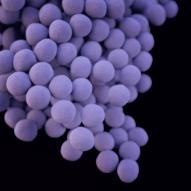
Wiley Online Staph

Abstract

The present investigation was done to study the prevalence and antibiotic resistance properties of S. aureus strains isolated from hospitals foods. Four‐hundred and fifty‐seven raw and cooked hospital food samples were collected and transferred to laboratory. Samples were cultured and S. aureus isolates were subjected to disk diffusion method. Forty‐seven out of 457 (10.28%) hospital food samples harbored S. aureus. Chicken meat (27.02%), meat barbecue (16.12%) and salad (7.14%) were the most commonly contaminated samples. S. aureus strains exhibited the highest levels of resistance against penicillin (70.21%), tetracycline (59.57%) and trimethoprim‐sulfamethoxazole (51.06%). Prevalence of resistance against ceftaroline (25.53%) and chloramphenicol (27.65%) were low. High prevalence of S. aureus in raw and cooked hospital food samples showed insufficiency of cooking time and temperature in the kitchens of hospitals as well as lack of personal hygiene. Further studies are essential to assess other microbiological and epidemiological aspects of the S. aureus.

Practical applications

Due to the general weakness of hospitalized patients, hospital food samples should have a high microbial quality. Staphylococcus aureus is common foodborne bacteria with an emergence of antibiotic resistance. This study emphasizes the importance of multidrug resistant S. aureus in hospital food sample. Results represented that hospital food samples may act as a reservoir of S. aureus with ability to transfer antibiotic resistance.