Category Archives: Food Inspections

USA – Retailers in TX and LA Should Stop Selling Kazy’s Gourmet Seafood For Listeria

Food Poisoning Bulletin

The FDA has advised retailers and restaurants in Texas and Louisiana to stop selling or serving products from Topway Enterprises, doing business as Kazy’s Gourmet Seafood Production, because of possible Listeria monocytogenes contamination. The government is most concerned about salmon and tuna produced by the company for raw consumption. These products may be incorporated into sushi.

Any consumers who recently purchased raw ready-to-eat seafood products, especially raw tuna and salmon in Texas or Louisiana, should contact the retailer to see if these products were produced and sold by Topway/Kazy Gourmet. If they were, or you aren’t sure, discard them in a sealed container and clean your fridge with a mild bleach solution.

Ukraine -Foodborne disease outbreak sickens dozens in Rivne region

Outbreak News Today

A foodborne illness outbreak is being investigated by the Rivne OLC of the Ministry of Health of Ukraine.

Between July 15-18, 84 acute gastrointestinal disease cases were reported, including 52 cases in Zdolbunivskyi District. 61 people required hospitalization, including children.

Preliminary results in the investigation links the illnesses to the consumption of dishes at the celebration of the wedding and birthdays from July 13 and 14 at the cafe “Gourmet” in the Mizoch village.

USA – Public Health Alert: Confirmed Cases of Foodborne Illness From Barbecue Fundraiser on Friday

HCPress

Health officials urge individuals who have eaten or purchased food from the Masonic Snow Lodge fundraiser Barbecue held Friday, July 19th at 240 Temple Dr, Boone, NC 28607, to monitor for any gastrointestinal symptoms that include nausea, vomiting, diarrhea, or abdominal pain. There have been eight laboratory confirmed cases of a foodborne illness and a number of others who have presented with similar symptoms of gastrointestinal complaints who all ate at the Barbecue fundraiser.

“We do not have a confirmed source of the illness but are actively conducting a thorough investigation to determine it with support from the NC Division of Public Health, Appalachian Regional Healthcare System, Watauga County Emergency Management and the Masonic Lodge.  Any purchased food should be thrown away and not eaten since there is a risk it could be contaminated,” said Jennifer Greene, Health Director.

Turkey – 56 hospitalised over food poisoning in east Turkey

Vestnik

At least 56 people were hospitalized late Friday over suspected food poisoning in Turkey’s eastern Erzincan province, Xinhua reported citing Anadolu Agency.

And 21 among the patients were children, the report said.

Those affected had fever, nausea and vomiting after a farewell celebration dinner for conscript soldiers in Erzincan city center.

The patients were taken to the local hospital by ambulances immediately and were treated under medical observation.


USA – Agroson’s Will Not Recall Cavi Papayas Likely Linked to Salmonella Outbreak

Food Poisoning Bulletin

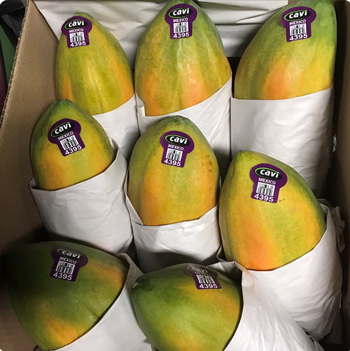
The FDA has updated the Salmonella Uganda outbreak likely linked to fresh papayas imported from Mexico, stating that they have asked Agroson’s LLC, the distributor of the Cavi brand of papayas, to recall that product. Agroson’s has refused to initiate a recall.

USA – Outbreak Investigation of Salmonella Uganda Likely Linked to Whole, Fresh Papayas, June 2019 – Update

FDA

July 19, 2019

The U.S. Food and Drug Administration (FDA), along with the Centers for Disease Control and Prevention (CDC), and state and local partners, are investigating a multistate outbreak of Salmonella Uganda illnesses likely linked to Cavi Brand whole, fresh papayas.

The FDA has asked Agroson’s LLC, the exclusive distributor of this brand, to conduct a voluntary recall of Cavi brand papayas. Agroson’s LLC refused to initiate a recall. FDA contacted wholesale customers of Agroson’s LLC to ensure the fruit was no longer available for sale, has been discarded, or not further processed or frozen.  FDA is doing this to protect consumers as it pursues additional protective and regulatory actions.

Recommendations

Cavi papayas

For Consumers, Restaurants, and Retailers:

Consumers in all states should not eat any Cavi brand whole, fresh papayas and should throw them away. If consumers are unable to determine the brand of papayas, the product should be thrown away. Retailers, restaurants, and other food service providers in all states should not serve or sell whole, fresh papayas under the Cavi brand, which are distributed by Agroson’s LLC.

Consumers no longer need to avoid whole, fresh papayas, with the exception of Cavi brand papayas.

For Restaurants, Retailers, Importers, Suppliers, and Distributors in All States:

The FDA strongly advises importers, suppliers, and distributors, as well as restaurants, retailers, and other food service providers from all states to not sell or distribute whole, fresh papayas from Agroson’s LLC that are labeled under the Cavi brand.

Based on this new information, the hold FDA advised on June 28, 2019 for all imported Mexican papayas is no longer necessary.

Distributors don’t need to withhold Mexican papayas from distribution, with the exception of the Cavi brand.

Canada – Certain Pacific Oysters may be unsafe due to a marine biotoxin which causes Paralytic Shellfish Poisoning

CFIA

Recall details

Ottawa, July 19, 2019 – Industry is recalling certain Pacific oysters from the marketplace due to a marine biotoxin which causes Paralytic Shellfish Poisoning. Consumers should not consume the recalled products described below.

Recalled products

Brand Name Common Name Size Code(s) on Product Additional Info
Union Bay Seafood Ltd. Pacific oysters, Mica’s Petite Effingham Inlet 5 dozen Location: BC 23-6
Landfile: 1403799
Lot: 20190715NW
Harvest Date:14 July 2019
Union Bay Seafood Ltd. Pacific oysters Effingham Inlet Xs 5 dozen Location: BC 23-6
Landfile: 1403799
Lot: 20190715NW
Harvest Date:14 July 2019
Intercity Packers Ltd. Oyster N/Shell Effingham XSM 5 dozen Harvest Location: BC 23-6
LF#: 1403799
P.O. No.: 114994
Harvest Date:7/14/2019

Research – Number of foodborne illnesses associated with outbreaks in tomatoes decreased since 2001

FreshPlaza

About 48 million episodes of foodborne illness and 3,000 deaths occur per year in the United States. The most common foodborne pathogens cause an estimated annual burden of $14 billion to $36 billion. Produce has been implicated in 46 percent of foodborne illness outbreaks. Tomatoes have been the source of a number of foodborne illness outbreaks since 1998, but the annual number of foodborne illnesses associated with outbreaks in tomatoes has generally decreased since their high of nearly 900 in 2001. Ten outbreaks have caused more than 100 illnesses, while 2 were associated with deaths of individuals. In 2005 and 2006, multistate outbreaks of salmonella in tomatoes sickened 487 individuals.

Research – Effects of metal oxide nanoparticles with plant extract on viability of foodborne pathogens

Wiley Online

Abstract

The present study tested the antibacterial activity, expressed as minimum bactericidal concentration (MBC), of zinc oxide nanoparticles (ZnO‐NPs), copper oxide nanoparticles (CuO‐NPs) and their combination with or without rosemary, clove or cinnamon extract against Escherichia coli O157:H7 and Listeria monocytogenes. The NPs were characterized by scanning electron microscopy. The sizes of ZnO‐NPs and CuO‐NPs were in the range of 56–71 and 171–204 nm, respectively. Results showed that ZnO‐NPs had a greater inhibitory effect against both E. coli O157:H7 and L. monocytogenes than CuO‐NPs. The MBC of ZnO‐NPs against E. coli O157:H7 and L. monocytogenes was 300 and 350 μg/mL, respectively, while the MBC of CuO‐NPs was >1,000 and 400 μg/mL, respectively. When combined, ZnO‐NPs and CuO‐NPs had additional inhibitory effects against L. monocytogenes, but not against E. coli O157:H7. In general, the antibacterial activity of the NPs against E. coli O157:H7 and L. monocytogenes was enhanced by rosemary or cinnamon extract. Incorporation of clove extract into the NPs improved the antibacterial effect against E. coli O157:H7, but not against L. monocytogenes. Thus, plant extracts may be useful adjuncts for the synthesis of ZnO‐NPs or CuO‐NPs which can be used to control foodborne pathogens.

Practical Application

Incorporation of plant extracts in the synthesis of metal oxide nanoparticles (NPs) can be applied to improve the antimicrobial activity of NPs against foodborne pathogens.

Research – Norovirus most often responsible for foodborne outbreaks in Finland

Food Safety News norovirus-1080x655

More than 130 foodborne outbreaks were recorded in Finland between 2014 and 2016, according to a recent report.

Data comes from a register of foodborne and waterborne outbreaks maintained by the former Finnish Food Safety Authority (Evira) that became the Finnish Food Authority (Ruokavirasto) at the beginning of this year.

The number of people infected from foodborne pathogens was 2,761 in 132 outbreaks. Forty-eight people needed hospital treatment. No deaths were reported.

Vegetables and meat common food sources
Norovirus remained the most common agent in foodborne outbreaks between 2014 and 2016. It was responsible for 42, or 32 percent, of such outbreaks.