Category Archives: Food Illness

India – 109 students fall ill at school in Thane district; food poisoning suspected

Deccan Herald

As many as 109 students of a private ashram school, including 63 girls, were rushed to a government hospital in Thane district after showing symptoms of food poisoning on Wednesday, an official said.

Over 100 Cruise Passengers Ill on Cunard Operated Ship – Norovirus ?

Cruisehive

An outbreak has struck Queen Victoria, a Cunard Line ship, affecting over 100 passengers and crew members during its current 111-night voyage from Hamburg to Sydney. Health officials are investigating the cause, with symptoms of diarrhea and vomiting.

While the causative agents of the outbreak remain unidentified, norovirus is a common illness on cruise ships, as well as workplaces, schools, and other crowded areas. Characterized by gastrointestinal symptoms, norovirus is highly contagious and can spread quickly in enclosed environments like ships.

USA – Conoco View Dairy Raw Milk Campylobacter Outbreak in PA

Food Poisoning Bulletin

A Conoco View Dairy raw milk Campylobacter outbreak in Pennsylvania has sickened at least 11 people, according to the Pennsylvania Department of Agriculture. Officials are warning consumers to immediately discard all of this milk.

The Department ran tests after 11 reports of illness in December 2023 and January 2024 were received. Campylobacter contamination was confirmed in the dairy’s products.

The press release states that, “While the source of the bacteria is clear, every specific production date could not be pinpointed. All products, including those in consumers’ freezers, should be discarded.”

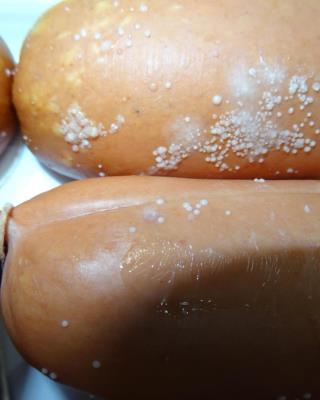
Czech Republic – MÚÚÚ FARMERS SPECÁCKY 600 g, HEAT PROCESSED MEAT PRODUCT – Visible Mould/Mold

Potravinynapranyri

Illustrative photo #4

Place of inspection:
Doksy ( Zámecká 186, 47201 Doksy )
ID: 26178541
Food group: Meat and meat products Heat-treated perishable products

MÚÚÚ FARMERS SPECÁCKY 600 g, HEAT PROCESSED MEAT PRODUCT
Category: Dangerous foods
Invalid parameter:

fungi visible to the eye
surface appearance

Colonies of mold were present on the surface of the food under the intact packaging. Food is not considered safe if it shows signs of spoilage. 

Unsuitable storage temperatures of this product were not detected during the inspection. The food did not have an expiration date.

Batch: L590060126
Expiration date: 14/12/2023
Packaging: PE tub with pap. data label
Quantity of the product in the package: 600 g
Manufacturer: MASO UZENINY PÍSEK, as, Novodvorská 1062/12, 142 00 Prague 4
Country of origin:  Czechia
Date of sample collection: 12/12/2023
Reference number: 24-000054-SZPI-CZ
The sample was detected by the official control of the State Agricultural and Food Inspection.

Denmark – E. coli STEC in Sucuk cured sausage

Foedevarestyrelsen

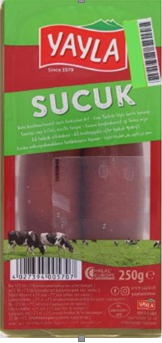
Lidl Denmark is recalling Yayla sucuk whole cured sausage, as E.coli (STEC) has been found in the product. If you have the product, you should discard it or return it to the store where it was purchased.

Picture of sucuk sausage

Which food is recalled

Yayla Sucuk

Net weight: 250 g

Best before date: 04/05/2024

Lot number: 10878934 

Where is the product sold

The product is sold in Lidl stores in Jutland and Funen

Why is the product being recalled?

E.coli (STEC) has been detected in the product. The symptoms of infection with E.coli (STEC) are often acute stomach infection with diarrhoea, severe abdominal pain and vomiting. You usually get no or only a mild fever. The disease mostly goes away within 5-10 days. In some cases, the infection can worsen with acute kidney failure, called hemolytic uremic syndrome (HUS).

Read more about E. coli in food here

Read more about STEC in food

Read more about infection with E. coli

What should you do as a consumer?

The Danish Veterinary and Food Administration advises consumers to return the product to the store where it was purchased or to discard it. 

If you experience symptoms in connection with consuming the product, you should contact your own doctor.

Who recalls the product

Lidl Denmark K/S, Carl Blochs Gade 89, 8000 Aarhus
USA – Outbreak Investigation of Listeria monocytogenes: Peaches, Plums, & Nectarines (November 2023)- Is Over

FDA

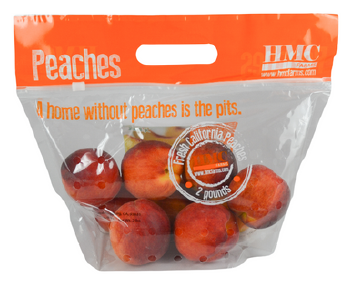
HMC Peaches

January 30, 2024

The FDA and CDC, in collaboration with state and local partners, investigated an outbreak of Listeria monocytogenes infections linked to recalled peaches, plums, and nectarines (stone fruit).

As part of this investigation, FDA initiated an inspection and collected environmental samples from the facility that packed the recalled stone fruit. Two environmental sub-samples collected from the facility were positive for Listeria monocytogenes. Whole Genome Sequencing (WGS) analysis confirmed that the strain of Listeria found in the positive sub-samples matched the same strain of Listeria making people sick in this outbreak.

As of January 30, 2024, CDC announced that the outbreak is over. CDC reports a total of 11 illnesses in seven states. There has been a total of 10 hospitalizations and one death attributed to listeriosis. The last specimen collection date was August 16, 2023. FDA’s investigation is complete.

USA – Nearly 600 with Salmonella, 225 hospitalized and 15 deaths linked to Cantaloupe

Food Poison Journal

In the United States a total of 407 people infected with one of the outbreak strains of Salmonella were reported from 44 states: Of 362 people with information available, 158 (44%) were hospitalized. Six deaths were reported.

In Canada a total, 190 laboratory-confirmed cases of Salmonella Soahanina, Sundsvall, Oranienburg, and Newport illness were linked to this outbreak. Sixty-eight (68) individuals were hospitalized, and nine deaths were reported.

France – Norovirus suspected in large Airbus outbreak

Food Safety News

Norovirus has been determined to be the suspected cause of a large outbreak at Airbus in France in late 2023, according to public health officials.

The Loire-Atlantique regional health agency (ARS) believes norovirus was behind almost 700 people falling sick at the Airbus Atlantic Christmas lunch in mid-December. Findings are based on the clinical symptoms in patients and the time it took for them to appear.

Sick people reported suffering from nausea, vomiting, and diarrhea after the event in Montoir at the company’s restaurant. Testing of food leftovers was negative for norovirus. No detail was given on whether patients or food handlers had been tested.

The varied menu is said to have included a cheese plate, a starter with scallops, a foie gras terrine, beef in sauce, and a lobster dish.

USA – FDA – Core Outbreak Table – Investigations of Foodborne Illness Outbreaks

FDA

What’s New

  • An outbreak of Listeria monocytogenes (ref #1214) in a not yet identified food has been added to the table. FDA’s investigation is ongoing.
  • For the outbreak of Salmonella Newport (ref #1201) in an unidentified food, the outbreak has ended and FDA’s investigation has closed.
  • For the outbreak of Salmonella Sundsvall and Oranienburg (ref #1203) linked to cantaloupe, the advisory was updated on January 19, 2024. The outbreak has ended, and FDA’s investigation is closed.
  • For the investigation of elevated lead levels in Cinnamon Applesauce Pouches (ref # 1198) the complaints/adverse event reports in the advisory were updated. Refer to the advisory for additional information.
Date
Posted
Ref Pathogen
or
Cause of
Illness
Product(s)
Linked to
Illnesses

(if any)
Total
Case
Count

Status
1/24/

2024

1214 Listeria
monocytogenes
Not
Yet
Identified
26 Active
12/6/

2023

1205 Listeria
monocytogenes
Not
Yet
Identified
3 Active
11/15/

2023

989 Listeria
monocytogenes
Peaches,
Plums,
and
Nectarines
See
Advisory
Active
11/8/

2023

1198 Elevated
Lead
Levels
Apple
Cinnamon
Puree
See
Advisory
Active

Research – An outbreak of Salmonella Typhimurium associated with the consumption of raw liver at an Eid al-Adha celebration in Wales (UK), July 2021

Cambridge.org

Abstract

In July 2021, Public Health Wales received two notifications of salmonella gastroenteritis. Both cases has attended the same barbecue to celebrate Eid al–Adha, two days earlier. Additional cases attending the same barbecue were found and an outbreak investigation was initiated. The barbecue was attended by a North African community’s social network. On same day, smaller lunches were held in three homes in the social network. Many people attended both a lunch and the barbecue. Cases were defined as someone with an epidemiological link to the barbecue and/or lunches with diarrhoea and/or vomiting with date of onset following these events. We undertook a cohort study of 36 people attending the barbecue and/or lunch, and a nested case-control study using Firth logistic regression. A communication campaign, sensitive towards different cultural practices, was developed in collaboration with the affected community. Consumption of a traditional raw liver dish, ‘marrara’, at the barbecue was the likely vehicle for infection (Firth logistic regression, aOR: 49.99, 95%CI 1.71–1461.54, p = 0.02). Meat and offal came from two local butchers (same supplier) and samples yielded identical whole genome sequences as cases. Future outbreak investigations should be relevant to the community affected by considering dishes beyond those found in routine questionnaires.