Category Archives: Food Illness

Viet Nam – Bacterium Staphylococcus causes 42 percent of food poisoning

SGGP News

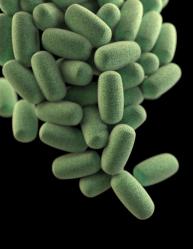
Staph


According to the Department of Food Safety in Ho Chi Minh City’s statistics, the bacterium Staphylococcus aureus (Staph) has caused 14 food poisoning cases accounting for 42 percent from 2010 to November, 2018.

The statistics showed that there has been 54 cases of food poisoning cases in the time.
Of these cases, 33 cases of food poisoning are caused by the organisms making up 61 percent, 14 cases are caused by toxic substances, two cases by chemicals accounting for 4 percent and two cases unverified equal to 4 percent.
People and animals have Staph on their skin and in their nose. Staph food poisoning is characterized by a sudden start of nausea, vomiting, and stomach cramps. Most people also have diarrhea. Symptoms usually develop within 30 minutes to 8 hours after eating or drinking an item containing Staph toxin,
To prevent food poisoning by the bacterium Staphylococcus aureus, the Department of Food Safety warned people with rhinitis or spots touch food materials.
Moreover, people should eat well-done food and drink boiled water; peel fruits before having and wash hand before and after toilets.

USA -FDA Investigating a Multistate Outbreak of Salmonella Concord Linked to Tahini Produced by Achdut Ltd

FDA

Salmonella


November 27, 2018

United States Food and Drug Administration, along with the Centers for Disease Control and Prevention (CDC), and state and local partners, is investigating a multistate outbreak of Salmonella Concord illnesses linked to tahini imported from an Israeli manufacturer, Achdut Ltd., located in Ari’el, Israel.

Achdut Ltd. has voluntarily recalled all brands of tahini products manufactured from April 7, 2018 to May 21, 2018 with expiration dates of April 7, 2020 to May 21, 2020.

Recommendations

The FDA is advising consumers not to eat recalled Achva, Achdut, Soom, S&F, Pepperwood, and Baron’s brand tahini with expiration dates ranging from April 7, 2020 to May 21, 2020. The product lot codes range from 18-097 to 18-141. Consumers should discard the product or return the product to the store for a refund.

Some brands of tahini manufactured by Achdut Ltd. may lack specific dates or may have labels that are written in Hebrew. Consumers who have purchased a tahini product and are uncertain of where the product was manufactured or cannot identify the brand by lot codes or expiration dates should use caution and discard the product or return the food to the store for a refund. More product information and pictures of the recalled product labels can be found in the firm’s recall announcement.

Retailers and restaurants should not use any of the recalled tahini manufactured by Achdut Ltd. at their establishments. Retailers and restaurants should throw the product out.

Firms that may have used the recalled tahini (either repacked or used as an ingredient in a food without a kill step) should consider recalling their products. Recalls should be reported to your local FDA office. A list of recall coordinators can be found here.

Consumers who have symptoms of salmonellosis should contact their health care provider to report their symptoms and receive care.

Background

CDC identified five ill people in the U.S. infected with Salmonella Concord that had the same genetic fingerprint as the Salmonella Concord found in tahini sampled at the point of import into the United States. Of the five U.S. cases interviewed, all five reported consuming hummus made with tahini; three people reported eating tahini or hummus made with tahini in a restaurant in the U.S., while the other two people reported consuming tahini or hummus made with tahini during international travel.

A sample of imported tahini collected by FDA at the point of import tested positive for Salmonella Concord. The tahini was Baron’s brand manufactured by Achdut Ltd. This manufacturer was placed on an FDA Import Alert, detaining additional product from the firm at the U.S. border until evidence is presented demonstrating that Salmonella is not present in the product. Whole genome sequencing analysis has indicated the positive sample of imported Baron’s brand tahini is highly related to clinical isolates from ill people in the U.S.


Vietnam – Food safety still a problem in school canteens

Vietnamnet

VietNamNet Bridge – Several food poisoning cases reported at public canteens, including a number in schools, across the country in recent months have raised concerns among parents and the public about food safety.

In the latest incident, hundreds of students at Xuan Non Kindergarten in Dong Anh District suffered food poisoning after attending a party at their school on November 14.

Days later, nearly 200 students were taken to local medical facilities for emergency treatment after experiencing stomach aches, headaches, vomiting and high fevers.

One of 13 food samples tested positive for Salmonella type 2 – a bacteria that causes intestinal infection, fever, abdominal pain and diarrhoea.

In October, more than 300 students from Dinh Tien Hoang Primary School in Ninh Binh Province also suffered food poisoning.

Health authorities confirmed that bacteria was to blame for the mass poisoning that affected hundreds of children at the schools after they ate chicken floss.

The samples taken from the food and victims’ vomit tested positive for microbes and bacteria, according to Dr Cao Van Trung, deputy director of the Food Poisoning Supervision Office at the Food Safety Department.

Results of the investigation showed the samples contained Staphylococcus aureus, also known as golden staph, or a type of bacteria frequently found in the nose, along the respiratory tract, and on the skin in humans. It is a common cause of skin infections including abscesses, respiratory infections, and food poisoning.

Nigeria -Three Kebbi schoolgirls die after eating food allegedly prepared by parent

Punch NG

Three schoolgirls at Government Girls Comprehensive Secondary School, Mega, Kebbi State, have reportedly died of suspected food poisoning.

The children reportedly died after eating a meal called Rama, allegedly prepared by a parent of one of the victims.

The school’s principal, Hajiya Lami Abubakar, disclosed that the food was not a school meal, but it was prepared from home by a parent of one of the girls.

Pakistan – Food poisoning sends 18 Islamabad madrassa students to hospital

SAMAA TV

As many as 18 madrassa students in Islamabad were hospitalised after eating stale food for breakfast. 

The students have been admitted at the PIMS Hospital.

South Africa – Salmonella outbreak reported in KwaZulu-Natal

Outbreak News Today

South African health officials reported recently an increase in Salmonella cases in KwaZulu-Natal Province over the past two months and say Salmonella was also the most likely cause of two recent foodborne disease outbreaks reported from eThekwini Municipality.

Two weeks ago, local media reported at least 20 people have been hospitalized in Durban.

The National Institute for Communicable Diseases (NICD) is assisting the district and provincial health department outbreak response teams’ ongoing investigations. Teams are gathering additional information about the outbreaks and other reported cases, and also collecting food and environmental samples to investigate the source/s of the outbreaks.

Research – Dodging antibiotic resistance by curbing bacterial evolution

Science Daily

Lowering mutation rates in harmful bacteria might be an as yet untried way to hinder the emergence of antimicrobial pathogens. One target for drug development might be a protein factor, DNA translocase Mfd, that enables bacteria to evolve rapidly by promoting mutations in many different bacterial species. This action speeds antibiotic resistance, including multi-drug resistance. Working on drugs to block Mfd and similar factors could be a revolutionary strategy to address the worldwide crisis of treatment-resistant infectious diseases

Hong Kong – Food Alert Not to consume romaine lettuce from the US, Canada and unknown sources – E.coli

CFS

Issue Date 22.11.2018
Source of Information Centre for Food Safety
Food Product Romaine lettuce
Product Name and Description All romaine lettuce imported from the US and Canada
Reason For Issuing Alert
  • The Centre for Food Safety (CFS) of the Food and Environmental Hygiene Department, through its routine Food Incident Surveillance System, learnt on November 21 that there were reports in the United States (US) and Canada about outbreaks of Escherichia coli (E. coli) infection that might be linked to the consumption of romaine lettuce contaminated with E. coli.
Action Taken by the Centre for Food Safety
  • The CFS immediately contacted the US and Canadian authorities for more information (including about the place of origin of the affected romaine lettuce). The Centre also, starting from November 21, held all romaine lettuce imported from the US and Canada for testing at the import level, which will only be released to the market upon satisfactory test results.
  • The CFS has also enhanced surveillance of romaine lettuce from the two countries at retail level.
  • The CFS will continue to closely monitor the latest developments of the incident in the US and Canada and take appropriate follow-up action.
Advice to the Trade
  • Retailers have voluntarily removed the product concerned from shelves.
Advice to Consumers
  • For the sake of prudence, the CFS urges the public not to consume romaine lettuce from the US, Canada and unknown sources.
Further Information The CFS press release

USA- Clostridium Perfringens Warning As the Holidays Approach

Food Poisoning Bulletin CDC Clost perf

A Clostridium perfringens outbreak sickened hundreds of people who ate at the Poplar Tent Presbyterian Church BBQ on November 1, 2018. The Cabarrus Health Alliance reported that at least 290 people had reported symptoms of vomiting and diarrhea after that event. The bacteria that caused the illness was identified as Clostridium perfringens after food samples were tested. The bacteria was fond in the Brunswick stew.

USA – CDC Alert: Do Not Eat Romaine Lettuce, Throw It Out

CDC

Illustration with a triangle and exclamation mark and text reading Food Safety Alert

CDC, public health and regulatory officials in several states, Canada, and the U.S. Food and Drug Administration (FDA) are investigating a multistate outbreak of Shiga toxin-producing Escherichia coli O157:H7 (E. coli O157:H7) infections linked to romaine lettuce.

CDC is advising that U.S. consumers not eat any romaine lettuce, and retailers and restaurants not serve or sell any, until we learn more about the outbreak. This investigation is ongoing and the advice will be updated as more information is available.

  • Consumers who have any type of romaine lettuce in their home should not eat it and should throw it away, even if some of it was eaten and no one has gotten sick.
    • This advice includes all types or uses of romaine lettuce, such as whole heads of romaine, hearts of romaine, and bags and boxes of precut lettuce and salad mixes that contain romaine, including baby romaine, spring mix, and Caesar salad.
    • If you do not know if the lettuce is romaine or whether a salad mix contains romaine, do not eat it and throw it away.
    • Wash and sanitize drawers or shelves in refrigerators where romaine was stored. Follow these five steps(https://www.cdc.gov/foodsafety/communication/clean-refrigerator-steps.html) to clean your refrigerator.
  • Restaurants and retailers should not serve or sell any romaine lettuce, including salads and salad mixes containing romaine.
  • Take action(https://www.cdc.gov/vitalsigns/foodsafety-2015/index.html) if you have symptoms of an E. coli infection(https://www.cdc.gov/ecoli/ecoli-symptoms.html):
    • Talk to your healthcare provider.
    • Write down what you ate in the week before you started to get sick.
    • Report your illness to the health department.
    • Assist public health investigators by answering questions about your illness.

Advice to Clinicians

  • Antibiotics are not recommended(https://www.cdc.gov/ecoli/clinicians.html) for patients with E. coli O157 infections. Antibiotics are also not recommended for patients in whom E.coli O157 infection is suspected, until diagnostic testing rules out this infection.
  • Some studies have shown that administering antibiotics to patients with E. coli O157 infections might increase their risk of developing hemolytic uremic syndrome (a type of kidney failure), and the benefit of antibiotic treatment has not been clearly demonstrated.