Category Archives: Food Hygiene

Italy – MISTO SCOGLIO – Okadaic Acid -DSP

C_17_PubblicazioneRichiami_826_azione_itemAzione0_files_itemFiles0_fileAzione

USA – Lemon Recall Due to Potential Listeria Contamination

SELF

On August 9, the produce warehouse Freshouse II, LLC announced a voluntary recall of lemons, limes, red potatoes, and oranges the company had shipped to Pennsylvania, North Carolina, South Carolina, Maryland, and Virginia. The produce in question is potentially contaminated with bacteria that can cause listeriosis, a serious foodborne illness, according to the Food and Drug Administration (FDA), and has been sold under the brand names Freshouse, Nature’s Promise, Fresh from the Start, and Wegmans.


USA – FDA advises consumers not to use goldenseal root powder distributed by Maison Terre

FDA

FDA advises consumers and health care professionals not to use goldenseal root powder repackaged and distributed by Maison Terre, Little Rock, Arkansas, due to microbial contamination.

FDA laboratory analysis found the product is contaminated with high counts of various bacteria, including multiple pathogens. Use of these contaminated products can cause serious infections with severe outcomes, including death, especially in vulnerable patients with compromised immune systems and infants. FDA is aware of one infant death associated with use of this product on the umbilical cord stump.

On August 5 and August 14, 2020, FDA recommended that Maison Terre recall their goldenseal root powder product. To date, the company has not taken action to remove these dangerous products from the market.

Consumers who use goldenseal root powder sold by Maison Terre and have concerns should contact their health care professional.

FDA encourages health care professionals and patients to report adverse events or quality problems experienced with the use of any medication to FDA’s MedWatch Adverse Event Reporting program:

  • Complete and submit the report online; or
  • Download and complete the form, then submit it via fax at 1-800-FDA-0178


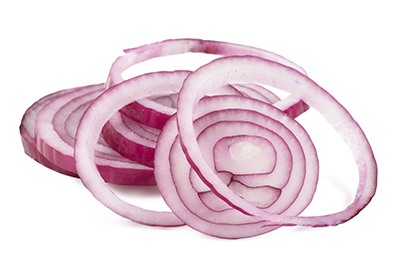
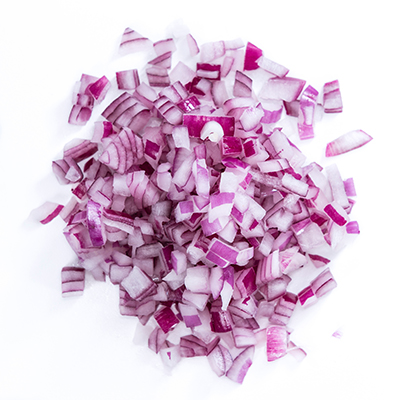
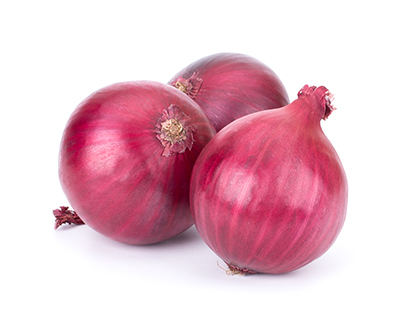
Canada – Public Health Notice: Outbreak of Salmonella infections linked to red onions imported from the United States

PHAC


August 14, 2020 – Update

There is no evidence to suggest that onions grown in Canada are associated with this outbreak. Onions imported from the United States are under investigation.

Do not eat, use, sell or serve any red, white, yellow, and sweet yellow onions from Thomson International Inc. of Bakersfield, California, USA, or any products made with these onions. This advice applies to all individuals across Canada, as well as retailers, distributors, manufacturers and food service establishments such as hotels, restaurants, cafeterias, hospitals and nursing homes.

If you are not sure where a red, yellow, white, or sweet yellow onion was grown, do not eat it. This notice contains more advice on how to avoid getting sick.

The outbreak investigation is ongoing as illnesses continue to be reported to the Public Health Agency of Canada. Since August 7, there have been 100 additional illnesses reported in the ongoing Canadian investigation. There are now 339 confirmed cases in Canada.

The Canadian Food Inspection Agency (CFIA) has issued food recall warnings for related products that came to Canada. Some of these products were possibly distributed nationally. Additional food recall warnings in Canada are possible. More information on recalled products is available on CFIA’s website.

Canada – 100 more Canadians have become sick from eating US onions

Daily Hive

The Public Health Agency of Canada is reporting 100 new illnesses across the country related to salmonella contaminated onions grown in California.

There have been no deaths related to the products, but the new cases bring the total to 339  illnesses linked to the onions in Canada, as of Friday. Currently, 48 individuals have been hospitalized.

Those who became sick are between the age of three and 100, with the majority of cases (54%) being found in females.

According to the agency, the confirmed cases of Salmonella Newport illness have been linked to this outbreak in the following provinces: British Columbia (78), Alberta (208), Saskatchewan (19), Manitoba (19), Ontario (8), Quebec (6), and Prince Edward Island (1).

“Do not eat, use, sell or serve any red, white, yellow, and sweet yellow onions from Thomson International Inc. of Bakersfield, California, USA, or any products made with these onions,” the health agency wrote in an update. “This advice applies to all individuals across Canada, as well as retailers, distributors, manufacturers and food service establishments such as hotels, restaurants, cafeterias, hospitals, and nursing homes.”

Individuals who became ill reported eating red onions at home, items ordered at restaurants, and in residential care settings between mid-June and late July 2020.

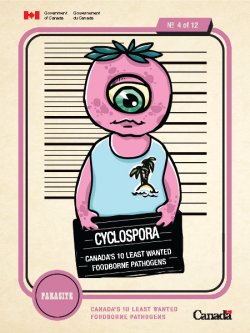
USA -Cyclospora cases from bagged salad mix continue are on the up.

Food Safety News cardcyclosporasme

The outbreak of parasitic infections linked to Fresh Express bagged salad mix has grown by 49 new laboratory-confirmed cases of Cyclospora, upping the total to 690 people, up from 641.

The latest report is current as of Aug. 12, 2020, and it updates the previous report of July 24, 2020.

Laboratory-confirmed Cyclospora infections associated with this outbreak have been reported from 13 states: Georgia (1), Illinois (209), Iowa (206), Kansas (5), Massachusetts (1), Minnesota (86), Missouri (57) Nebraska (55), North Dakota (6), Ohio (4), Pennsylvania (2), South Dakota (13), and Wisconsin (45). The ill person from Georgia purchased and ate a bagged salad product while traveling in Missouri.


Canada – Updated Food Recall Warning – Modern brand Tarragon Remoulade and Modern Meat brand Modern ‘Crab’ Cakes made with onions grown by Thomson International Inc. recalled due to Salmonella

CFIA

Ottawa, August 14, 2020 – The food recall warning issued on August 1, 2020 has been updated to include additional product information. This additional information was identified during the Canadian Food Inspection Agency’s (CFIA) food safety investigation.

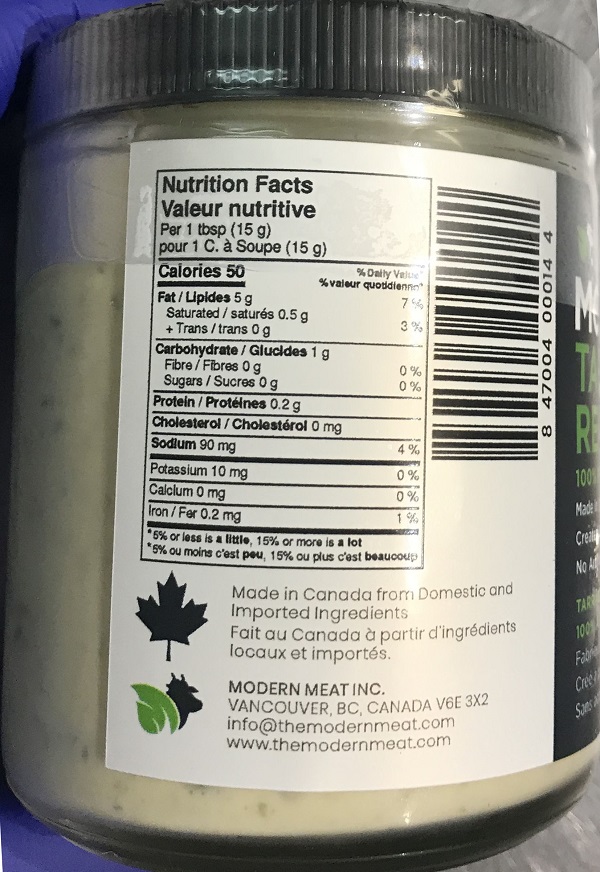
The Modern Meat Inc. is recalling Modern brand Tarragon Remoulade and Modern Meat brand ‘Crab’ Cakes, made with onions grown by Thomson International Inc., Bakersfield, California (USA), from the marketplace due to possible Salmonella contamination. Consumers should not consume the recalled products described below. Retailers, distributors, manufacturers, and food service establishments such as hotels, restaurants, cafeterias, hospitals, and nursing homes should not serve, use, or sell the recalled products described below.

These products may also have been purchased on-line. The CFIA will continue its investigation into other possible importers and additional recalls may follow.

The following products have been sold as indicated in the table below.

Ongoing investigation

See complete list of recalled products associated with this ongoing investigation.

Recalled products

Brand Product Size UPC Codes Additional Information Distribution
Modern Tarragon Remoulade 250 mL 8 47004 00009 0 Best before date:
SEP 23 2020
None British Columbia, Manitoba, and possibly other provinces and territories.
Modern Meat ‘Crab’ Cakes 300 g 8 47004 00014 4 Best before date:
JAN 18 2021
None British Columbia, Manitoba, and possibly other provinces and territories.
Modern Meat ‘Crab’ Cakes 6 × 50 g 8 47004 00014 4 Best before date:
JAN 18 2021
None British Columbia, Manitoba, and possibly other provinces and territories.

What you should do

If you think you became sick from consuming a recalled product, call your doctor.

Check to see if you have the recalled products in your home or establishment. Recalled products should be thrown out or returned to the location where they were purchased. If you are unsure of the source of the onions in your product, check with your place of purchase.

Food contaminated with Salmonella may not look or smell spoiled but can still make you sick. Young children, pregnant women, the elderly and people with weakened immune systems may contract serious and sometimes deadly infections. Healthy people may experience short-term symptoms such as fever, headache, vomiting, nausea, abdominal cramps and diarrhea. Long-term complications may include severe arthritis.

Background

This recall was triggered by the CFIA during its investigation into a foodborne illness outbreak followed by a recall in the United States by Thomson International Inc. located in Bakersfield, California. The CFIA is conducting a food safety investigation, which may lead to the recall of other products. If other high-risk products are recalled, the CFIA will notify the public through updated Food Recall Warnings.

The CFIA is verifying that industry is removing the recalled products from the marketplace.

Illnesses

The Public Health Agency of Canada is investigating an outbreak of human illness. Please refer to the Public Health Notice for further details on this active outbreak investigation.

Product photos

Printer ready version of photos

  • Modern Tarragon Remoulade – 250 ml (front)
  • Modern Tarragon Remoulade – 250 ml (back)
  • Modern Tarragon Remoulade – 250 ml (UPC)
  • Modern 'Crab' Cakes – 6 × 50 grams
  • Modern Meat (lot code example)

Public enquiries and media

Public enquiries
Toll-free: 1-800-442-2342 (Canada and U.S.)
Telephone: 1-613-773-2342 (local or international)
Email: cfia.enquiries-demandederenseignements.acia@canada.ca
Media relations
Telephone: 613-773-6600
Email: cfia.media.acia@canada.ca

Research – Pre-growth conditions and strain diversity affect nisin treatment efficacy against Listeria monocytogenes on cold-smoked salmon

Science Direct

Listeria monocytogenes is a human pathogen that is commonly found in environments associated with cold-smoked salmon. Nisin is a natural antimicrobial that can be used as a food preservative. While nisin is active against a number of Gram-positive bacteria, including L. monocytogenes, environmental stresses encountered in cold-smoked salmon processing facilities might affect L. monocytogenes‘ nisin susceptibility. The objective of this study was to investigate the effect of seafood-relevant pre-growth conditions and L. monocytogenes strain diversity on nisin treatment efficacy on cold-smoked salmon. Six L. monocytogenes strains representing serotypes most commonly associated with cold-smoked salmon (1/2a, 1/2b, and 4b) were initially pre-grown under a number of seafood-relevant conditions and challenged with nisin in growth media modified to represent the characteristics of cold-smoked salmon. The pre-growth conditions with the lowest mean log reduction due to nisin and the highest strain-to-strain variability were selected for experiments on cold-smoked salmon; these included: (i) 4.65% w.p. NaCl (“NaCl”); (ii) pH = 6.1 (“pH”); (iii) 0.5 μg/ml benzalkonium chloride (“Quat”); and a control (“BHI”). Cold-smoked salmon slices with or without nisin were inoculated with L. monocytogenes pre-grown in one of the conditions above, vacuum-packed, and incubated at 7 °C. L. monocytogenes were enumerated on days 1, 15, and 30. A linear mixed effects model was constructed to investigate the effect of pre-growth condition, day in storage, serotype, source of isolation as well as their interactions on nisin efficacy against L. monocytogenes. Compared to pre-growth in “BHI”, significant reduction (P < 0.05) in nisin efficacy was induced by pre-growth in “pH” and “Quat” on both days 15 and 30, and by pre-growth in “NaCl” on day 30, indicating a time-dependent cross-protection effect. Additionally, an effect of L. monocytogenes‘ serotype on the cross-protection to nisin was observed; pre-growth in “pH” significantly reduced nisin efficacy against serotype 1/2a and 4b strains, but not against 1/2b strains. In conclusion, pre-exposure to mildly acidic environment, high salt content, and sublethal concentrations of quaternary ammonium compounds, is likely to provide cross-protection against a subsequent nisin treatment of L. monocytogenes on cold-smoked salmon. Therefore, challenge studies that use pre-growth in “BHI”, as well as more susceptible L. monocytogenes strains, may overestimate the efficacy of nisin as a control strategy for cold-smoked salmon.

USA – Deli take-out in Seattle blamed for unidentified gastrointestinal illnesses

Food Safety News

Public Health is investigating an outbreak of gastrointestinal illness with diarrhea, vomiting, body aches, headaches, and fevers associated with a takeout meal from Saigon Vietnam Deli on July 25, 2020. A specific food or drink item that might have caused the illnesses has not been identified. Saigon Vietnam Deli is located  at1200 S Jackson Street in Seattle.

Pubic Health serves the Seattle-King County area of Washington State.

Since Aug. 3, 2020, Public Health learned about 8 people with a gastrointestinal illness who reported eating takeout food together from Saigon Vietnam Deli on July 25, 2020. Other food was also ordered for takeout from another food establishment, but since only half of the ill people ate the food from the second restaurant, it is unlikely the source of illnesses.

Public Health hasn’t identified any ill employees.

Belgium – Skewers of Marinated Turkey – Salmonella

AFSCA

During microbiological checks, the presence of Salmonella was found in marinated turkey skewers .

In consultation with the AFSCA, Norenca therefore decided to withdraw the product concerned from the sale.

Customers who have purchased this product are advised not to consume it and to bring it back to the store, where they will be reimbursed. In the meantime, all stores have removed the affected product from the shelves.

Product description:

Marinated turkey brochettes sold between 08/08/2020 and 14/08/2020 at Spar Colruyt Group and other general food stores with the following information:
• Marinated turkey kebabs per 3 pieces and 16 pieces
• Use by date (DLC): 08/14/2020
• Lot numbers: 02032220 Does the

information above match that of the product purchased? Bring the products back to your store.

Possible symptoms of Salmonella poisoning.

Possible symptoms of intoxication caused by Salmonella are fever, abdominal cramps, and diarrhea. These symptoms usually appear within 12 to 48 hours after ingestion.

Symptoms usually last 4 to 7 days, and most people recover without specific treatment. Young children, pregnant women, the immunocompromised and the elderly are among the groups at risk. In these people, the symptoms can be severe enough to require hospitalization of the patient.

People who have consumed this product and who present this type of symptoms are invited to consult their doctor, notifying him of this consumption.

For more information , customers can contact Norenca via info@norenca.be or 014 / 58.45.11.