Category Archives: Food Hygiene

Research – Jif Salmonella outbreak much larger than reported by CDC

EFOOD ALERT

In the weeks and months following the May 20, 2022, recall of Jif peanut butter products, the US Food and Drug Administration (FDA) received more than 200 reports from consumers complaining of illness after consuming the recalled products.

This information was supplied to eFoodAlert by the FDA in response to a Freedom of Information Act request.

In comparison, the US Centers for Disease Control and Prevention (CDC) reported just twenty-one confirmed cases of Salmonella Senftenberg linked to consumption of Jif peanut butter.

It is usual for an outbreak of foodborne illness to be significantly larger than indicated by CDC statistics. Indeed, the CDC reminded the public of this in its investigation report, saying, “The true number of sick people in this outbreak was likely much higher than the number reported. This is because many people recover without medical care and are not tested for Salmonella.”

Hong Kong – CFS actively follows up on food poisoning outbreak involving tuna fillet – Histamine

CFS

The Centre for Food Safety (CFS) of the Food and Environmental Hygiene Department said today (October 31) that it is actively following up on a food poisoning outbreak involving tuna fillet, including investigating the restaurant and the importer concerned, and conducting source tracing. A sample of tuna fillet collected from the importer was found to contain a toxic metabolite, histamine. The CFS urged the public not to consume the product. The trade should stop using or selling the affected product immediately if they possess it.

Details of the product are as follows:

Product name: Frozen tuna fillet
Place of origin: Vietnam
Lot No.: VN 166 VI 157
Production date: July 5, 2022
Expiry date: July 5, 2024
Importer: Ichiban Pacific (H.K.) Ltd

A spokesman for the CFS said, “Upon notification by the Centre for Health Protection of the Department of Health of food poisoning cases involving tuna fillet, the CFS immediately sent staff to the restaurant concerned in Tsim Sha Tsui and the importer to conduct an investigation and source tracing, and took samples for testing. The test results showed that a frozen tuna fillet sample from the importer contained histamine at a level of 2800 milligrams per kilogram, which can cause food-borne intoxication.”

The spokesman added, “The importer, suppliers and restaurant concerned are following the CFS’s advice to stop sale and discard the affected product. The importer has also initiated a recall. Members of the public may call its hotline at 2512 2900 during office hours for enquiries about the recall. The CFS has also provided health education on food safety and hygiene to the person-in-charge and staff concerned, and instructed them to carry out thorough cleaning and disinfection, as well as to implement improvement measures to ensure food safety. Should there be sufficient evidence, prosecution will be instituted.”

According to section 54 of the Public Health and Municipal Services Ordinance (Cap. 132), all food for sale in Hong Kong, whether locally produced or imported, should be fit for human consumption. An offender is subject to a maximum fine of $50,000 and imprisonment for six months upon conviction.

“Histamine is a toxic metabolite commonly found in certain kinds of fish such as tuna, sardine, mackerel and anchovy, as a result of bacterial spoilage. Consumption of fish containing high levels of histamine can cause food-borne intoxication. Symptoms of histamine poisoning include a tingling and burning sensation around the mouth, facial flushing and sweating, nausea, vomiting, headache, palpitations, dizziness and rash. The onset of intoxication symptoms is within a few hours after consumption and these symptoms will normally disappear in 12 hours without long-term effects,” the spokesman said.

The CFS will alert the trade to the incident, continue to follow up and take appropriate action. An investigation is ongoing.

Iceland – Salmonella in dried mushrooms

MAST

The Swedish Food Agency warns against the consumption of one batch of foreign dried black fungus due to salmonella, which Dai Phat imports and sells in its store. The company, in consultation with the Reykjavík Health Authority, has stopped sales and recalled the product.

The Swedish Food Agency received information about the recall through the RASFF European rapid alert system for food and feed.

The recall only applies to the following production batches:

  • Brand: Nam Meo
  • Product name: Black fungus
  • Shelf life: Best before date: 10.10.2023
  • Barcode: 8717624001321
  • Net quantity: 100 g
  • Country of manufacture: Vietnam
  • Importer: Dai Phat Trading Inc ehf., Faxafeni 14, 108 Reykjavík.
  • Distribution: Dai Phat Asian Supermarket, Faxafeni 14, 108 Reykjavík.

More information about Salmonella is available on the Food Agency’s website: https://www.mast.is/is/neytendur/matareitrun/salmonella .

Consumers who have purchased the product are advised not to consume it, dispose of it or return it to the Dai Phat store for a refund.

Advanced material

Spain – Alert due to the presence of Salmonella in beef burger meat from Spain

ACSA

Meat burger alert

The Spanish Agency for Food Safety and Nutrition has become aware, through the Coordinated System of Rapid Information Exchange (SCIRI), of an alert notification sent by the health authorities of Andalusia regarding the presence of Salmonella in product BURGUER MEAT of the Hamburdehesa brand.

The manufacturer has withdrawn the product from the market.

The data of the product involved are:

  • Product name: BURGER MEAT HAMBURDEHESA Dehesa heifer
  • Product appearance: Pack of 2 units of 130 g and pack of 2 units of 200 g .
  • Lot number: 300995
  • Expiry date: 02/12/2022
  • Unit weight: 260g (2x130g) and 400g (2x200g)
  • Temperature: Refrigerated

According to the information available, the product has been distributed in the autonomous communities of Andalusia and Madrid and the autonomous city of Ceuta , although other redistributions are not ruled out.

This information has been transferred to the competent authorities of the autonomous communities through the SCIRI in order to verify the withdrawal of the affected products from the marketing channels.

With the information available , there is no evidence in Spain of any notified case associated with this alert.

People who have products affected by this alert at home are advised to refrain from consuming them.

The presence of Salmonella in products can pose certain risks to the health of the people who consume them. In the case of having consumed this product and presenting symptoms compatible with salmonellosis (mainly diarrhea and/or vomiting accompanied by fever and headache) it is recommended to go to a health center.

Italy – Seasoned Sausage – Salmonella

Salute

Brand : Bartolini Carni

Name : seasoned sausage

Reason for reporting : Recall due to microbiological risk

Publication date : 31 October 2022

Documentation

Documentation

Belgium -“Smoked Mackerel 300 g” and “Smoked Mackerel Heart 150 g” from the Carrefour brand – Listeria monocytogenes

AFSCA

Recall of Carrefour
Products: “Smoked Mackerel 300 g” and “Smoked Mackerel Heart 150 g” from the Carrefour brand.
Problem: Possible presence of Listeria monocytogenes.


Following a check and in order to guarantee consumer safety, CARREFOUR is asking to withdraw from the market the products “Smoked Mackerel 300 g” and “Heart of Smoked Mackerel 150 g” of the Carrefour brand, sold in the fishmonger’s department of certain Carrefour stores and Mestdagh in Belgium and recalls them to consumers following the possible presence of listeria.

Product description:

Name: Smoked Mackerel 300 g
Brand: Carrefour
EAN code: 5400101075603 Best before
date: 7/11/2022
Batch numbers: all batch numbers containing “1310”
(Examples: L221310, L 1310 or 131023)

Name: Heart of smoked mackerel 150G
Brand: Carrefour
EAN code: 5400101075610 Use-
by date: 5/11/2022
Batch numbers: all batch numbers containing “1310” (Example: L221310, L 1310 of 131023)

The set products has been withdrawn from sale. Some of these products were, however, marketed on the Belgian market before the withdrawal measure. It is therefore recommended that people who hold the products described above do not consume them and destroy them or bring them back to the point of sale where they will be refunded to you.

People who have consumed the products mentioned above and who have a fever, isolated or accompanied by headaches, are invited to consult their doctor and report this consumption. These symptoms may be aggravated in young children, immunocompromised subjects and the elderly. These symptoms may suggest listeriosis, a disease with an incubation period of up to eight weeks.

For any additional information
 , you can contact Carrefour Belgium customer service by dialing the free number 0800.9.10.11 , from 8:30 a.m. to 8:00 p.m., Monday to Saturday.
We apologize to our customers for the inconvenience.

Ireland – Recall of Specific Batches of Clearspring Organic Wholegrain Rice Cakes due to the Presence of Aflatoxin

FSAI

Friday, 28 October 2022

Summary
Category 2: For Information
Alert Notification: 2022.65
Product: Clearspring Organic Wholegrain Rice Cakes – Lightly Salted; pack size: 12 x 130g
Batch Code: R22176B, best before date: 26/06/2023;

R22181B, best before date: 01/07/2023;

Country Of Origin: Belgium

Message:

The above batches of Clearspring Organic Wholegrain Rice Cakes are being recalled due to an elevated level of aflatoxin B1 in the rice used to produce the batches.

Recall notices will be displayed at point-of-sale.

Clearspring ricecake

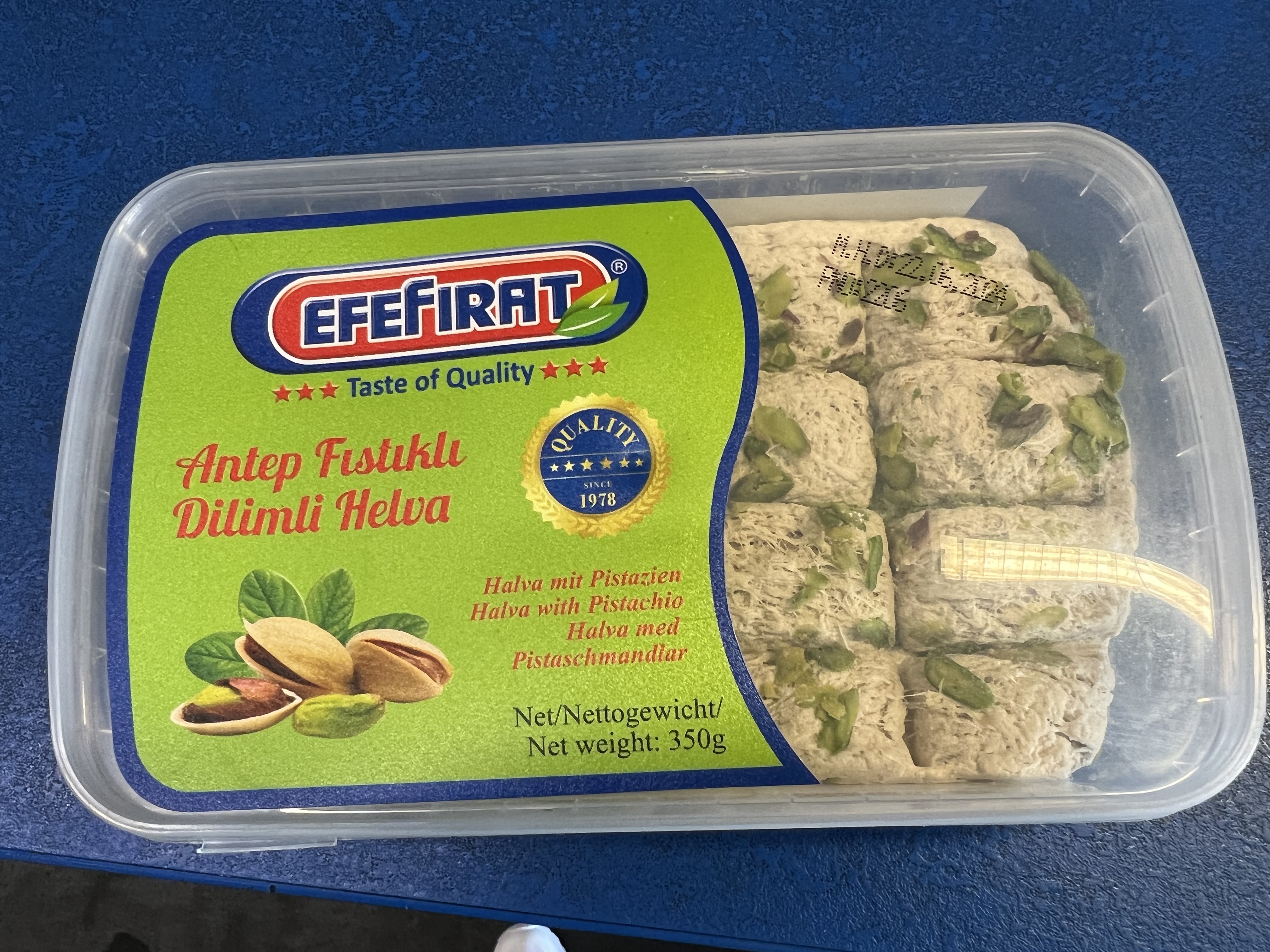
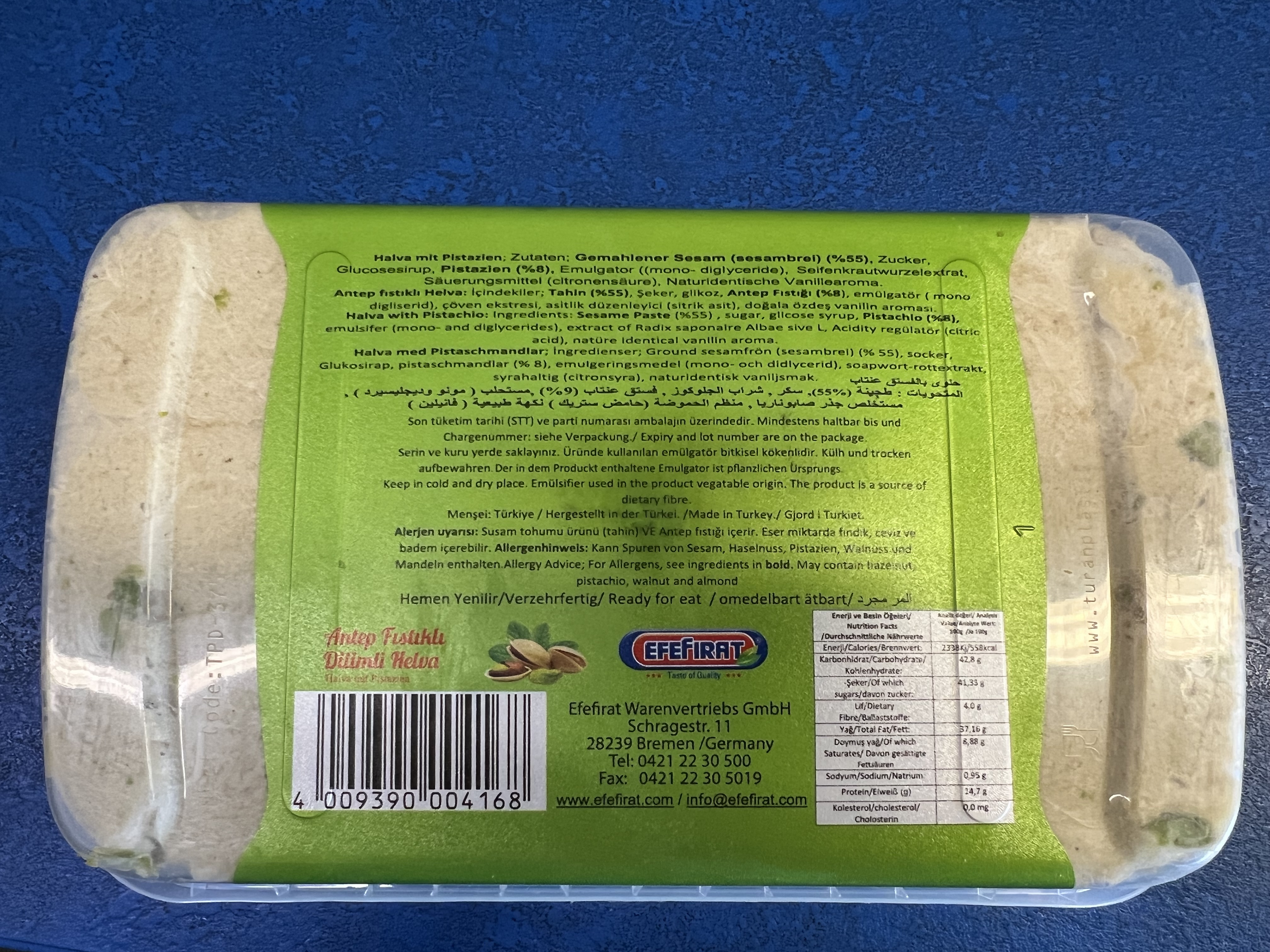
Germany – Halva with pistachios – Salmonella

LMW

Alert type: Food
Date of first publication: 10/28/2022
Product name:

Halva with pistachios

Product images:

IMG_5178.jpg
IMG_5179.jpg
Manufacturer (distributor):

Efefirat Warenvertriebs GmbH Schragestr. 11 28239 Bremen

Reason for warning:

Salmonella was found in the product

Packaging Unit: 350g
Durability: 06/22/2024
Lot identification: PND 2206

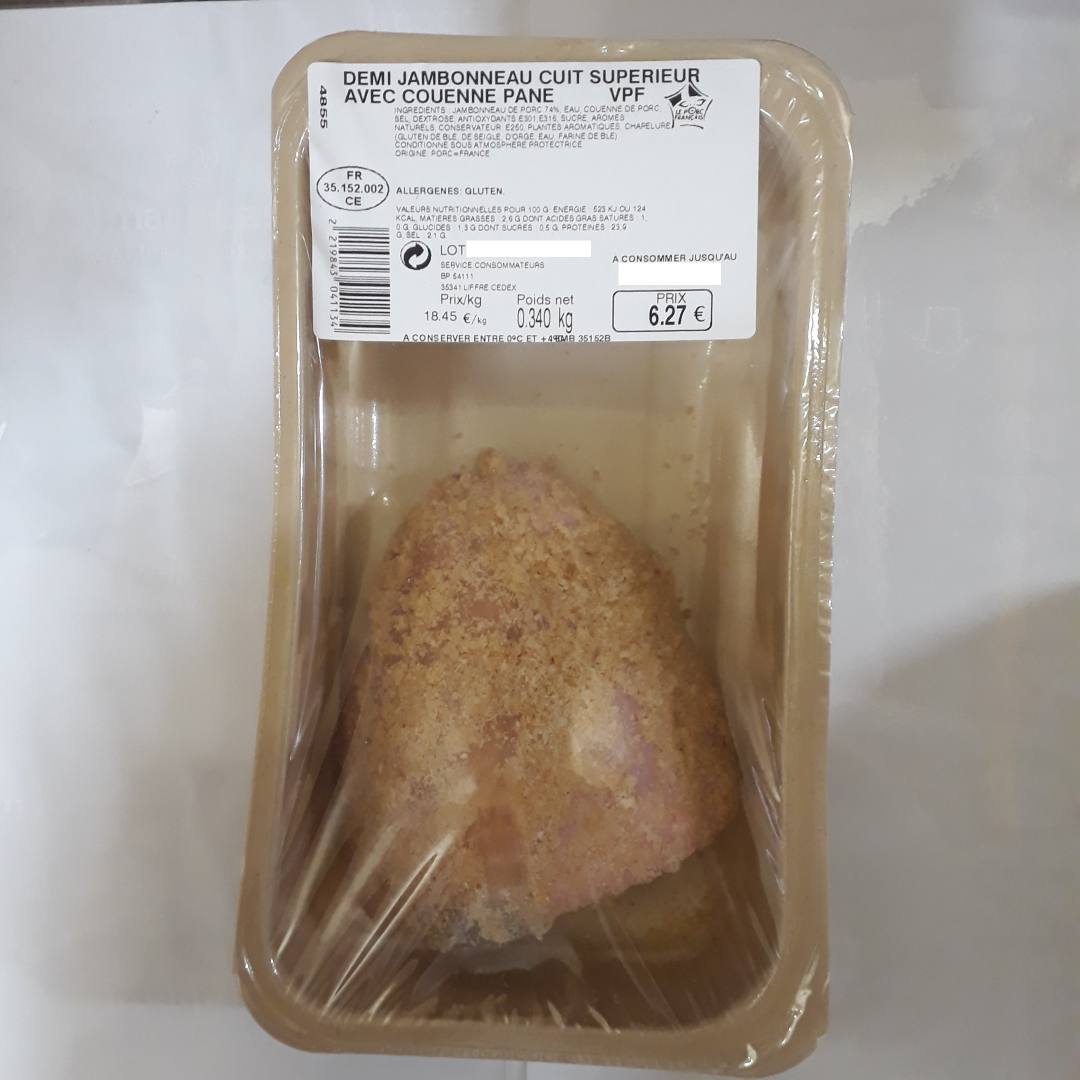
France – Superior cooked half ham with breaded rind – Listeria monocytogenes

Gov france

Identification information of the recalled product

  • Product category Feed
  • Product subcategory Meats
  • Product brand name CLERMONT
  • Model names or references Superior cooked half ham with breaded rind
  • Identification of products
    GTIN Batch Date
    3363710000850 2660124855 Use-by date 10/17/2022
  • Packaging In tray
  • Marketing start/end date From 24/09/2022 to 17/10/2022
  • Storage temperature Product to be stored in the refrigerator
  • Health mark EN 35.152.002 CE
  • Geographic area of ​​sale Whole France
  • Distributors U ensign, scanormande
  • List of points of saleTraceability_swallow.pdf

Practical information regarding the recall

  • Reason for recall Presence of Listeria monocytogenes
  • Risks incurred by the consumer Listeria monocytogenes (causative agent of listeriosis)

Research – Whole-Genome Sequence Comparisons of Listeria monocytogenes Isolated from Meat and Fish Reveal High Inter- and Intra-Sample Diversity

MDPI

Interpretation of whole-genome sequencing (WGS) data for foodborne outbreak investigations is complex, as the genetic diversity within processing plants and transmission events need to be considered. In this study, we analyzed 92 food-associated Listeria monocytogenes isolates by WGS-based methods. We aimed to examine the genetic diversity within meat and fish production chains and to assess the applicability of suggested thresholds for clustering of potentially related isolates. Therefore, meat-associated isolates originating from the same samples or processing plants as well as fish-associated isolates were analyzed as distinct sets. In silico serogrouping, multilocus sequence typing (MLST), core genome MLST (cgMLST), and pangenome analysis were combined with screenings for prophages and genetic traits. Isolates of the same subtypes (cgMLST types (CTs) or MLST sequence types (STs)) were additionally compared by SNP calling. This revealed the occurrence of more than one CT within all three investigated plants and within two samples. Analysis of the fish set resulted in predominant assignment of isolates from pangasius catfish and salmon to ST2 and ST121, respectively, potentially indicating persistence within the respective production chains. The approach not only allowed the detection of distinct subtypes but also the determination of differences between closely related isolates, which need to be considered when interpreting WGS data for surveillance.