Category Archives: Food Hygiene

USA -McDonald’s Cyclospora Outbreak Was Number One in 2018

Food Poisoning Bulletin Cyclospora_LifeCycle201

The McDonald’s cyclospora outbreak was the number one outbreak of 23018, with 511 people in 16 states sickened. Twenty four people were hospitalized because they were so sick

Epidemiologic and traceback evidence found that salads purchased from McDonald’s were “one likely source of this outbreak.” The FDA did not name other sources.

On July 26, 2018, the FDA completed analysis of an unused package of romaine lettuce and carrot mix that was distributed to McDonald’s by the Fresh Express processor in Streamwood, Illinois. They confirmed the presence of the cyclospora parasite in the sample. However, the FDA did not identify a single source of point of contamination for this outbreak.

USA – Notable Outbreaks and Recalls of 2018 – A Busy Year!

Food Safety Tech


As stated by CDC’s John Besser, Ph.D. last month at the Food Safety Consortium, “It’s been quite a year for outbreaks.” Here’s a not-so-fond look back at some of the noteworthy outbreaks and recalls of 2018.

Romaine Lettuce –E.coli O157:H7

Raw Beef Products – Salmonella

Shell Eggs – Salmonella

Pre-cut Melon – Salmonella

Vegetable Trays – Cyclospora

Salad Mix – Cyclospora

Raw Turkey – Salmonella

Honey Smacks Cereal – Salmonella

Duncan Hines Cake Mix – Salmonella

Johnston County Hams – Listeria monocytogenes

USA – Danbury steakhouse shut down amid foodborne illness investigation

Connecticut News

A Danbury steakhouse closed its doors following an investigation into foodborne illnesses reported by customers, city health officials confirmed.

City and state health officials say they are working to investigate Barbarie’s Black Angus Grill on Eagle Road, which closed Thursday.

The Health Department says it’s working with the restaurant to determine the source of the illness.

Lisa Morrissey, the Health and Human Services director of Danbury wrote in a statement,  “At this time I can confirm that we are looking into reports of foodborne illness. We are working in conjunction with the state Department of Public Health to determine to source of the diners recent illness.”

Morrissey would not comment on the number of complaints associated with the restaurant or specifically what type of illnesses were reported.

Switzerland – Be careful eating Chinese fondue, says Swiss food safety agency – Campylobacter

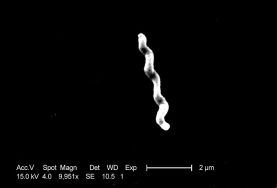
Le News  Campylobacter_jejuni_01


Chinese fondue is a culinary crossover between two nations. A dish that exists in both China and Switzerland. The Swiss version retains the communal pot of hot broth, thinly sliced raw meat and Chinese mushrooms of the original but departs radically in terms of flavour.

According to the Federal Food Safety and Veterinary Office (FSVO), food poisoning rises at the end of the year, something partly attributable to Chinese fondue. Raw chicken, and its high rate of campylobacter contamination, is the main cause. In general meat is the most likely source of food poisoning, according to FSVO, and men between 18 and 30 are the most likely to get poisoned.

Norway – Norway investigates Listeria infections; Sweden, Denmark report on Campylobacter and Salmonella

Food Safety News

Norwegian authorities are investigating a potential outbreak of Listeria monocytogenes that has affected six people.

The Norwegian Institute of Public Health (Folkehelseinstituttet) reported an increase in cases of people infected with Listeria in December. Of the six cases, four are from Oppland and Hedmark. Usually, one to two patients with listeriosis are reported monthly.


UK – Drinking raw milk – has led to a dangerous rise in food poisoning and killed TWO people, experts warn

The Daily Mail

Drinking raw milk has led to a dangerous rise in food poisoning, say experts   

  • A child fed raw milk in Wales died from a type of E. coli poisoning, while a man died of listeriosis after eating cheese made with raw milk 
  • Unlike pasteurised milk, which is heat-treated to kill bacteria, raw milk can harbour dangerous germs


Research – Long-Term Depuration of Crassostrea virginica Oysters at Different Salinities and Temperatures Changes Vibrio vulnificus Counts and Microbiological Profile

Journal of Food Protection

Previous short-duration depuration studies with the eastern oyster (Crassostrea virginica) demonstrated difficulty in achieving significant naturally incurred Vibrio vulnificus population count reductions. The present study used long-duration depuration (14 days) at controlled temperatures (10 or 22°C) and salinities (12, 16, or 20 mg/g). All depuration temperature–salinity combinations significantly reduced V. vulnificus counts, with greatest reductions seen in 12 mg/g, 10°C seawater (2.7-log CFU/g reduction) and in 20 mg/g, 22°C seawater (2.8-log reduction). Mesophilic vibrios dominated the overall microflora of freshly harvested oysters, whereas refrigerated storage selected for psychrotrophic bacteria (Pseudomonas spp., Aeromonas spp., Shewanella spp., Psychrobacter spp.) as well as did depuration at 10°C (Pseudoalteromonas spp., Shewanella spp., Vibrio spp.). Depuration at 22°C retained dominance of mesophilic vibrios, including pathogenic species, followed by Shewanella spp., Pseudoalteromonas spp., and Photobacterium spp. Although aerobic plate counts were lower in 22°C depurated oysters (5.0 log versus 6.0 log) compared with 10°C, depuration at 10°C offered greater V. vulnificus population reductions than depuration at 22°C. This advantage was only seen at 12 mg/g salinity, with no impact at 16 and 20 mg/g salinities. No depuration treatment reduced V. vulnificus counts to nondetectable levels. Use of prolonged depuration may be a helpful intervention to control V. vulnificus populations in oysters.

Research – A Quantitative Risk Assessment of Human Salmonellosis from Consumption of Walnuts in the United States

Journal of Food Protection

We assessed the risk of human salmonellosis from consumption of shelled walnuts in the United States and the impact of 0- to 5-log reduction treatments for Salmonella during processing. We established a baseline model with Salmonella contamination data from 2010 to 2013 surveys of walnuts from California operations to estimate baseline prevalence and levels of Salmonella during preshelling storage and typical walnut processing stages, considered U.S. consumption data, and applied an adapted dose-response model from the Food and Agriculture Organization and the World Health Organization to evaluate risk of illness per serving and per year. Our baseline model predicted 1 case of salmonellosis per 100 million servings (95% confidence interval [CI], 1 case per 3 million to 1 case per 2 billion servings) of walnuts untreated during processing and uncooked by consumers, resulting in an estimated 6 cases of salmonellosis per year (95% CI, <1 to 278 cases) in the United States. A minimum 3-log reduction treatment for Salmonella during processing of walnuts eaten alone or as an uncooked ingredient resulted in a mean risk of <1 case per year. We modeled the impact on risk per serving of three atypical situations in which the Salmonella levels were increased by 0.5 to 1.5 log CFU per unit pretreatment during processing at the float tank or during preshelling storage or posttreatment during partitioning into consumer packages. No change in risk was associated with the small increase in levels of Salmonella at the float tank, whereas an increase in risk was estimated for each of the other two atypical events. In a fourth scenario, we estimated the risk per serving associated with consumption of walnuts with Salmonella prevalence and levels from a 2014 to 2015 U.S. retail survey. Risk per serving estimates were two orders of magnitude larger than those of the baseline model without treatment. Further research is needed to determine whether this finding reflects variability in Salmonella contamination across the supply or a rare event affecting a portion of the supply.

Research – Utility of Whole Genome Sequencing To Describe the Persistence and Evolution of Listeria monocytogenes Strains within Crabmeat Processing Environments Linked to Two Outbreaks of Listeriosis

Journal of Food Protection

This article describes the identification and investigation of two extended outbreaks of listeriosis in which crabmeat was identified as the vehicle of infection. Comparing contemporary and retrospective typing data of Listeria monocytogenes isolates from clinical cases and from food and food processing environments allowed the detection of cases going back several years. This information, combined with the analysis of routinely collected enhanced surveillance data, helped to direct the investigation and identify the vehicle of infection. Retrospective whole genome sequencing (WGS) analysis of isolates provided robust microbiological evidence of links between cases, foods, and the environments in which they were produced and demonstrated that for some cases and foods, identified by fluorescent amplified fragment length polymorphism, the molecular typing method in routine use at the time, were not part of the outbreak. WGS analysis also showed that the strains causing illness had persisted in two food production environments for many years and in one producer had evolved into two strains over a period of around 8 years. This article demonstrates the value of reviewing L. monocytogenes typing data from clinical cases together with that from foods as a means of identifying potential vehicles and sources of infection in outbreaks of listeriosis. It illustrates the importance of reviewing retrospective L. monocytogenes typing alongside enhanced surveillance data to characterize extended outbreaks and inform control measures. Also, this article highlights the advantages of WGS analysis for strain discrimination and clarification of evolutionary relationships that refine outbreak investigations and improve our understanding of L. monocytogenes in the food chain.

Research – Assessment of Microbial Populations in the Manufacture of Vacuum-Packaged Ready-to-Eat Roast Beef and in a Related Production Plant

Journal of Food Protection

Some microbiological criteria were monitored for 6 months in vacuum-packaged roast beef (15 production batches), raw beef (10 batches), and other meat products (12 batches) produced in an Italian small to medium-size enterprise. Fifty-five environmental swab samples also were analyzed. The main bacterial groups were identified by cultural methods according to International Organization for Standardization standards. Listeria monocytogenes was enumerated with the most-probable-number protocol, and species identification was confirmed with a specific PCR assay. Immediately after vacuum packaging, all ready-to-eat (RTE) products had low mean aerobic colony counts (<102 to 2.4 × 10² CFU g−1), anaerobic colony counts (1.6 to 6.5 × 101 CFU g−1), Enterobacteriaceae counts (1.1 to 1.4 × 101 CFU g−1), and Escherichia coli counts (generally below the detection limit). Nevertheless, the prevalence of L. monocytogenes in these samples was 3.7%. In roast beef samples, the aerobic and anaerobic colony counts reached unacceptable levels (>106 CFU g−1) after 14 days of refrigerated storage. Because the prevalence of L. monocytogenes increased to 13.3% during storage, a substantial reduction in the shelf life of these products is recommended. Surfaces without direct contact with food (floors and drains) had the highest mean counts for aerobic colonies (8.0 × 10³ to 9.5 × 10⁵ CFU/cm2), anaerobic colonies (2.9 × 10³ to 3.2 × 10⁴ CFU/cm2), Enterobacteriaceae (1.5 × 101 to 8.4 × 101 CFU/cm2), and E. coli (6.0 to 7.7 CFU/cm2). The levels of L. monocytogenes on direct food contact surfaces were below the detection limit, but more than 25% of floor samples were contaminated. These results reveal the persistence of L. monocytogenes in food processing environments, although at very low levels, posing a high risk of postcooking recontamination for RTE products. To improve hygienic conditions and reduce cross-contamination, an increase in operator awareness and a reassessment of surface sanitization protocols are needed.