Category Archives: Food Hygiene

Research – UK study: Food not likely source of drug resistant E coli.

Cidrap

CDC E.coli

Image CDC

A large genomic epidemiology study by scientists in the United Kingdom has found that most bloodstream infections caused by drug-resistant Escherichia coli involve human-associated strains of the pathogen, with little contribution from the food chain.

The study, published yesterday in The Lancet Infectious Diseases, found that the extended-spectrum beta-lactamase-producing (ESBL) E coli sequence type (ST) 131 was the predominant strain found in bloodstream isolates, as well as in samples collected from human feces and sewage, while isolates from meat, veterinary diagnostic samples, and farm runoff were dominated by other ESBL E coli sequence types. Few drug-resistant E coli strains were shared among the animal and human isolates.

The authors of the study say the findings suggest that while ESBL E coli strains are widespread in humans, animals, and the environment, there’s little crossover between these strains, and efforts to reduce invasive ESBL E coli infections should focus on limiting human transmission.

Canada -Updated Food Recall Warning – Kirkland Signature brand Non-GMO Infant Formula for Babies Sensitive to Lactose recalled due to Cronobacter spp.

CFIA

Recall details

Ottawa, October 25, 2019 – The food recall warning issued on October 13, 2019 has been updated to include additional product information. This additional information was identified during the Canadian Food Inspection Agency’s (CFIA) food safety investigation.

Costco Wholesale Canada Ltd. is recalling Kirkland Signature brand Non-GMO Infant Formula for Babies Sensitive to Lactose from the marketplace due to possible Cronobacter spp. contamination. Consumers should not consume the recalled products described below.

Recalled products

Brand Product Size UPC Codes
Kirkland Signature Non-GMO Infant Formula for Babies Sensitive to Lactose 1.36 kg 0 96619 26926 6 EXP 2020 NO 05
T05DVBV
Kirkland Signature Non-GMO Infant Formula for Babies Sensitive to Lactose (2-Pack) 2 x 1.36 kg 0 96619 23600 8 EXP 2020 NO 05
T05DVBV

Background

This recall was triggered by CFIA test results. The CFIA is conducting a food safety investigation, which may lead to the recall of other products. If other high-risk products are recalled, the CFIA will notify the public through updated Food Recall Warnings.

The CFIA is verifying that industry is removing the recalled products from the marketplace.

Illnesses

There have been no reported illnesses associated with the consumption of these products.

Product photos

Printer ready version of photos

  • Kirkland Signature – Non-GMO Infant Formula for Babies Sensitive to Lactose – 1.36 kg

Canada -Food Recall Warning – Ready-to-eat Drake Meats brand Salami (chub) recalled due to potential undercooking

CFIA

Recall details

Ottawa, October 25, 2019 – Drake Meats is recalling ready-to-eat Drake Meats brand Salami (chub) from the marketplace due to potential undercooking. Consumers should not consume the recalled product described below.

Recalled product

Brand Product Size UPC Codes
Drake Meats Salami (chub) 1 kg 7 71327 12244 6 BB\MA NOV/24/2019
BB\MA DEC/01/2019

Background

This recall was triggered by consumer complaints. The Canadian Food Inspection Agency (CFIA) is conducting a food safety investigation, which may lead to the recall of other products. If other high-risk products are recalled, the CFIA will notify the public through updated Food Recall Warnings.

The CFIA is verifying that industry is removing the recalled product from the marketplace.

Illnesses

There have been no reported illnesses associated with the consumption of this product.

Product photos

Printer ready version of photos

  • Drake Meats – Salami – 1 kg (label)
  • Drake Meats – Salami – 1 kg (Nutrition Facts)

Canada -Updated Food Recall Warning – Various raw beef and raw veal products recalled due to E. coli O157:H7

CFIA

Recall details

Ottawa, October 25, 2019 – The food recall warning issued on October 24, 2019 has been updated to include additional product information. This additional information was identified during the Canadian Food Inspection Agency’s (CFIA) food safety investigation.

Industry is recalling various raw beef and raw veal products from the marketplace due to possible E. coli O157:H7 contamination. Consumers should not consume and distributors, retailers and food service establishments such as hotels, restaurants, cafeterias, hospitals and nursing homes should not sell or use the recalled products described below.

The following products have been sold as indicated in the link above

Ongoing investigation

See complete list of recalled products associated with this ongoing investigation.

Background

This recall was triggered by the CFIA’s inspection activities. The CFIA is conducting a food safety investigation, which may lead to the recall of other products. If other high-risk products are recalled, the CFIA will notify the public through updated Food Recall Warnings.

The CFIA is verifying that industry is removing the recalled products from the marketplace.

Illnesses

There have been no reported illnesses associated with the consumption of these products.

Related recalls

2019-10-24 – Various raw beef and raw veal products recalled due to E. coli O157:H7

2019-10-23 – Various raw beef and raw veal products recalled due to E. coli O157:H7

2019-10-22 – Various raw beef and raw veal products recalled due to E. coli O157:H7

2019-10-21 – Various raw beef and raw veal products recalled due to E. coli O157:H7

2019-10-19 – Various raw beef and raw veal products recalled due to E. coli O157:H7

2019-10-18 – Various raw beef and raw veal products recalled due to E. coli O157:H7

2019-10-17 – Various raw beef and raw veal products recalled due to E. coli O157:H7

2019-10-16 – Various raw beef and raw veal products recalled due to E. coli O157:H7

2019-10-15 – Various raw beef and raw veal products recalled due to E. coli O157:H7

2019-10-12 – Various raw beef and raw veal products recalled due to E. coli O157:H7

2019-10-11 – Various raw beef and raw veal products recalled due to E. coli O157:H7

2019-10-10 – Various raw beef and raw veal products recalled due to E. coli O157:H7

2019-10-09 – Various raw beef and raw veal products recalled due to E. coli O157:H7

2019-10-08 – Ryding-Regency Meat Packers Ltd. brand raw beef products recalled due to E. coli O157:H7

2019-10-07 – Various raw beef and raw veal products recalled due to E. coli O157:H7

2019-10-06 – The Beef Boutique Ltd. brand raw beef products recalled due to E. coli O157:H7

2019-10-04 – Ryding-Regency Meat Packers Ltd. brand raw beef products recalled due to E. coli O157:H7

2019-10-03 – Ryding-Regency Meat Packers Ltd. brand raw beef products recalled due to E. coli O157:H7

Research – Recalls of Foods due to Microbial Contamination Classified by the Canadian Food Inspection Agency, 2000 to 2017

Journal of Food Protection

ABSTRACT

Recall of microbial-contaminated food products is an important intervention in preventing the transmission of foodborne illness. Here, we summarize the number and nature of foods recalled as a result of microbial contamination, classified by the Canadian Food Inspection Agency, for the period 1 January 2000 through 31 December 2017. A total of 10,432 food products were recalled from 2,094 recall events in Canada because of microbial contamination during this period. The meat, meat products and poultry category, followed by fishery and seafood products and nuts and edible seeds, contained the food products most commonly associated with microbial contamination. Most microbial-contaminated food products reported were recalled because of the presence bacterial pathogens. Salmonella contamination was responsible for the largest number of recall events, whereas Listeria monocytogenes contamination accounted for the greatest number of food products recalled because of microbial contamination. L. monocytogenes contamination was also most commonly associated with major food recall events, although records may be inflated because of an invested effort to prevent future L. monocytogenes outbreaks following a 2008 deli meat recall. The findings and data we present in this study will support future surveillance and analysis of microbial-contaminated food recalls in Canada.

HIGHLIGHTS
  • Top microbial-contaminated food products were meat, seafood, and nuts and edible seeds.

  • Salmonella contamination was responsible for the largest number of recall events.

  • L. monocytogenes accounted for the largest number of recalled food products.

Information -Food Safety and Eating Out

CDC

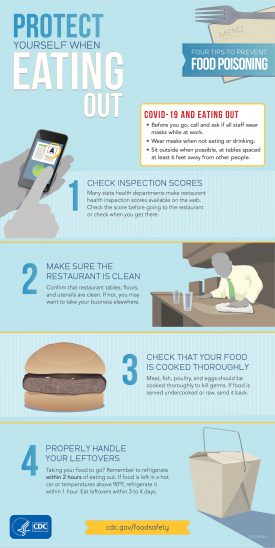
Food Safety Tips for Eating at Restaurants

  • Check inspection scores. Check a restaurant’s score at your health department’s website, ask the health department for a copy of the report, or look for it when you get to the restaurant.
  • Look for certificates that show kitchen managers have completed food safety training. Proper food safety training can help improve practices that reduce the chance of spreading foodborne germs and illnesses.
  • Look for safe food-handling practices. Sick food workers pdf icon[272 KB] can spread their illness to customers. Most kitchens are out of the customer’s sight, but if you can see food being prepared, check to make sure workers are using gloves or utensils to handle foods that will not be cooked further, such as deli meats and salad greens.
  • Order food that’s properly cooked. Certain foods, including meat, poultry, and fish, need to be cooked to a temperature high enough to kill harmful germs that may be present. If you’re served undercooked meat, poultry, seafood, or eggs, send them back to be cooked until they are safe to eat.
  • Avoid food served lukewarm. Cold food should be served cold, and hot food should be served hot. If you’re selecting food from a buffet or salad bar, make sure that the hot food is steaming, and the cold food is chilled. Germs that cause food poisoning grow quickly when food is in the danger zone, between 40˚F and 140˚F.
  • Ask your server if they use pasteurized eggs in foods such as Caesar salad dressing, custards, or hollandaise sauce. Raw or undercooked eggs can make you sick unless they’re pasteurized to kill germs.
  • Take care of your leftovers quickly. Refrigerate within 2 hours of eating out. If it is above 90ºF outside, refrigerate leftovers within 1 hour. Eat leftovers within three to four days. Throw them out after that time.

Protect Yourself When Eating Out

Information – 10 Dangerous Food Safety Mistakes

CDC

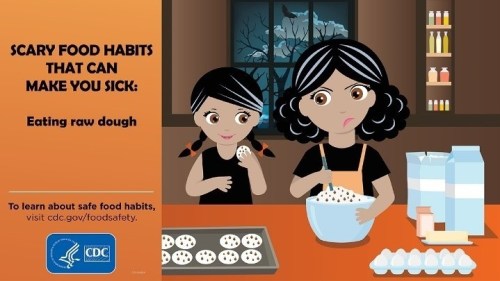
We all want to keep our families safe and healthy. But sometimes a simple mistake in the way we handle and prepare food can lead to serious sickness. With some germs like Salmonella, just a small amount in undercooked food is enough to cause food poisoning. And just a tiny taste of food with botulism toxin can cause paralysis and even death.

You can protect your family by avoiding these common food safety mistakes.

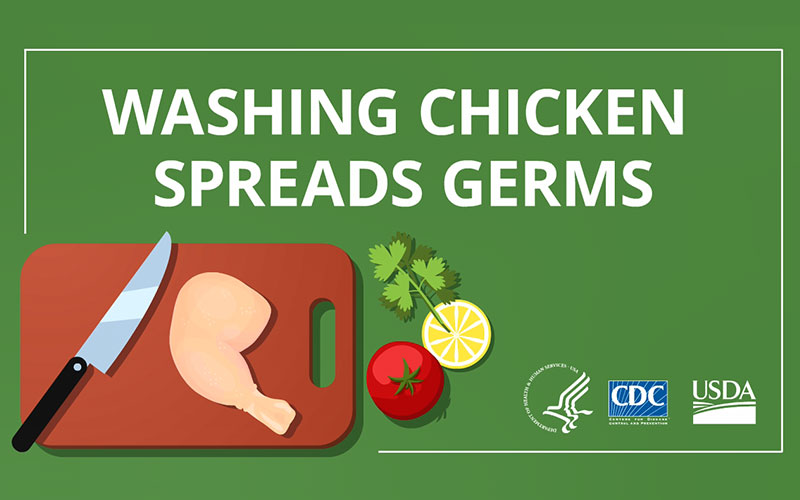
Washing Chicken Spreads Germs

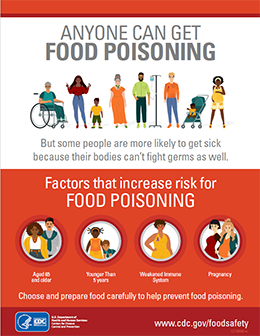
Thumbnail image of downloadable PDF about Food Poisoning.

cdcookie

USA – Egg Rolls Recalled Because They Were Produced Under Insanitary Conditions

Food Poisoning Bulletin

T&R Enterprise USA Inc. of St. Louis, Missouri, is recalling about 118,000 pounds of meat and poultry egg rolls because they were produced and packed under insanitary conditions. No illnesses have been reported to date in connection with this recall. The recall notice did not go into more discussion about the potential problems with these products.

These meat and poultry egg rolls were produced on dates ranging from August 1, 2019 to September 25, 2019. They include:

  • 2 ounce cases containing 80 pieces of “SILVER LABEL PORK & VEGETABLE PROTEIN EGG ROLL.”
  • 2 ounce cases containing 120 pieces of “Dai Kin PORK & TEXTURED VEGETABLE PROTEIN EGG ROLL.”
  • 2 ounce cases containing 120 pieces of “TITA’S PORK & TEXTURED VEGETABLE PROTEIN EGG ROLL.”
  • 2 ounce cases containing 120 pieces of “TITA’S CHICKEN & TEXTURE VEGETABLE PROTEIN EGG ROLL.”

These products all have the establishment number “EST. 33792” or “P33792” inside the USDA mark of inspection. They were shipped to institutions in Georgia and Missouri.

USA -Another Case of Hepatitis A via a food service worker

Food Poison Journal

A case of Hepatitis A has been confirmed in a food worker at Popeyes Louisiana Kitchen on earl Core Road, according to the Monongalia County Health Department.

“While the risk of contracting Hepatitis A from a food worker is low, people who have not been vaccinated against Hepatitis A who have consumed food from the restaurant within the past two weeks should consider getting a Hepatitis A vaccine to prevent infection,” said Dr. Lee B. Smith, MCHD executive director and county health officer

RASFF Alerts – Aflatoxin – Dried Figs – Rice -Groundnut Kernels – Hazlenuts

RASFF-Logo

RASFF – aflatoxins (B1 = 255.4 / B1 = 30.8 µg/kg – ppb) in dried figs from Turkey in Italy

RASFF – aflatoxins (B1 = 19 µg/kg – ppb) in rice from Myanmar in Portugal

RASFF – aflatoxins (B1 = 20; Tot. = 23 µg/kg – ppb) in groundnut kernels from the United States in the Netherlands

RASFF – aflatoxins (B1 = 13.4; Tot. = 33 µg/kg – ppb) in dried figs garland from Turkey in Malta

RASFF – aflatoxins (B1 = 12.44 µg/kg – ppb) in shelled hazelnuts from Turkey in Italy

RASFF – aflatoxins (B1 = 20.4; Tot. = 22.1 µg/kg – ppb) in groundnuts with shell from the United States in Germany

RASFF – aflatoxins (B1 = 30.12; Tot. = 31 µg/kg – ppb) in dried figs from Turkey in Italy