Category Archives: Food Hazrd

France – REBLOCHON 450G – STEC E.coli

Gov France

Product Category
Food
Product subcategory
Milk and dairy products
Product brand name
GOURMET COUNTRY®
Model names or references
REBLOCHON 450G
Product identification
GTIN Batch Date
26065144 KU4225B Minimum durability date 05/12/2024
Start/End of marketing date
From 09/30/2024 to 11/13/2024
Storage temperature
Product to be kept in the refrigerator
Health mark
FR 74.303.050 CE
Geographic area of ​​sale
Regions: Auvergne-Rhône-Alpes, , , , , Grand-Est
Distributors
ALDI

Iceland – E. coli O145 confirmed in children and mixed mince

MAST

Foodborne infection has been confirmed at the Mánagardı nursery school in Reykjavík. The causative agent is E. coli bacteria of a type known as STEC and of serotype O145. Analysis of samples at Matís confirmed that the same serotype, i.e. E. coli O145 was found both in faecal samples from children from the kindergarten and in a sample of minced meat used in cooking at the kindergarten. Their sequencing of the bacteria’s genetic material showed that the origin is the same.

After detailed interviews with the parents of the children, who fell ill, attention soon turned to Thursday, October 17 last. The Reykjavík Health Authority went to the site and took numerous samples for analysis of the food used in the cooking that day, such as minced meat, vegetables, lentils, melons, oatmeal and more. All food samples were negative for E. coli except for the mince. A few children who normally do not eat meat also fell ill, but it is not possible to confirm the route of infection for them. They may have been infected by other children who attended the kindergarten after they got sick but before the kindergarten was closed.

The mince turned out to be mixed beef and sheep mince from Kjarnaföð. It did not go on general sale, but only sold to larger kitchens, such as restaurants, canteens and kindergartens. Matvælastofnun contacted the representatives of the company when suspicion was directed at the mince, and the same day the company contacted all parties who received mince from the same production batch that was used in the Mánagard nursery school. During the recall, it was found that buyers had already used it in their operations. There have been no reports of infection or sickness among consumers at other kitchens.

E. coli bacteria are part of the natural intestinal flora of humans and animals and can be introduced into water, meat, vegetables and other foods during their production. Different types of E. coli exist. Most types of E. coli are harmless, but Shigatoxin-producing E. coli (STEC) carry genes that encode toxins that can cause illness (virulence genes). However, their strains can be highly pathogenic.

According to legislation on meat production, producers are not required to ensure that all meat is free of E. coli before it goes to market. However, meat producers should do everything in their power to reduce the chance of contamination of carcasses and meat products in the process. It is primarily done with clean grips, proper hand techniques and clean equipment. Sampling in the process is therefore aimed at checking whether working methods are adequate. The Food Agency reported on a screening of the presence of pathogenic bacteria in Icelandic meat on the Icelandic market in 2018. It stated that STEC virulence genes were found in almost 30% of lamb samples and 11.5% of beef samples.

Cleanliness and proper handling of meat and adequate cooking by users/consumers is therefore key to preventing infection caused by E. coli , including STEC from meat. The steering group’s research has revealed that the handling of the minced meat in this respect during cooking in the kindergarten was insufficient.

It is common practice that beef, lamb and horse steaks are served without being deep-fried. Raw cuts of meat have bacteria on the surface of the meat but not inside the muscle. They are therefore killed when the meat is fried or grilled at high temperatures. Hamburgers and other dishes made from minced meat are different, because during the mincing process, microorganisms spread throughout the mince. Insufficient heating/frying does not kill bacteria present deep inside the mince. In order to kill E. coli and other disease-causing microorganisms, hamburgers and other mincemeat dishes must be fried through or so that the core temperature is at least 75°C.

RASFF Alerts – Histamine – Tuna

RASFF

Histamine in Tuna Fillet from Sri Lanka in  Belgium, Germany, Hong Kong, Latvia, Netherlands, Sweden.

RASFF

Histamine in tuna from France in Belgium


Italy – SALAME MANTOVANO – SALAME LOTTI 0703274 – 190424 – Salmonella

Salute

Brand : SALUMIFICIO CATTINI

Name : SALAME MANTOVANO – SALAME LOTTI 0703274 – 190424

Reason for reporting : Recall due to microbiological risk

Publication date : 2 July 2024

Documentation

Documentation

RASFF Alert- Fumonisins – White Maize Flour

RASFF

Aflatoxins and fumonisins in white maize flour from Serbia in Switzerland

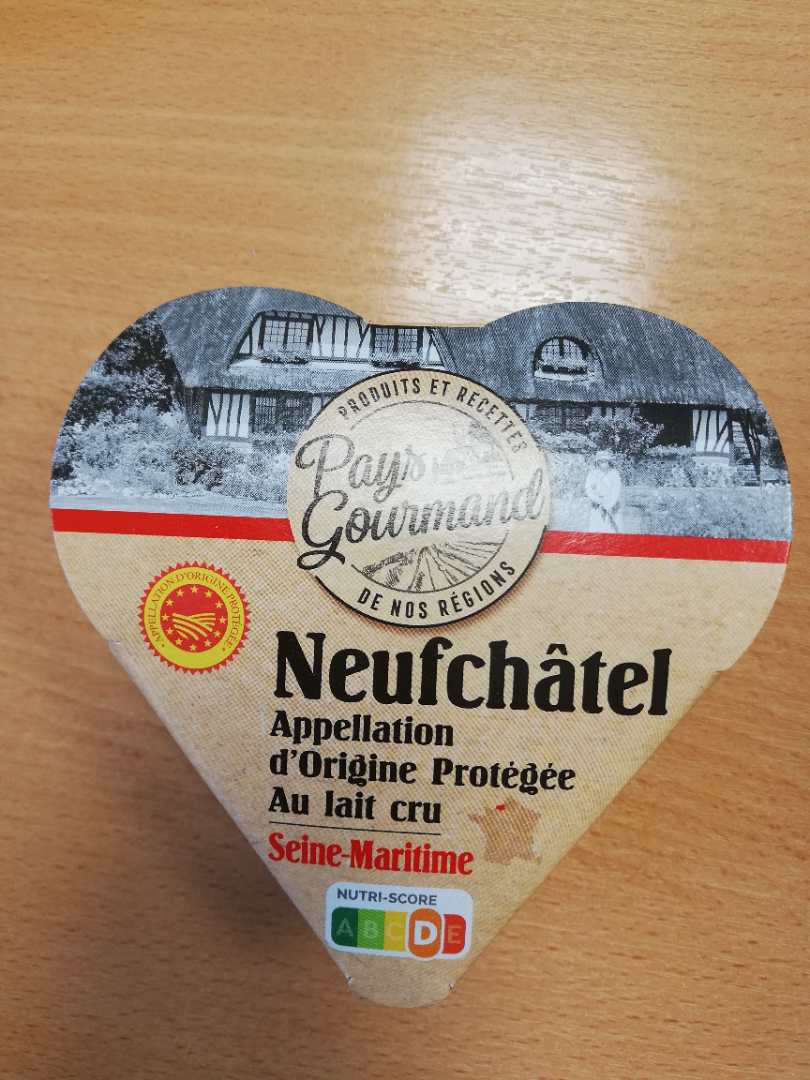
France – NEUFCHÂTEL AOP 200G – Listeria monocytogenes

Gov France

Product category
Food
Product subcategory
Milk and dairy products
Product brand name
GOURMET COUNTRY®
Model names or references
NEUFCHÂTEL AOP 200G
Product identification
GTIN Batch Date
26064857 210224FP5 Minimum durability date 04/21/2024
Packaging
200g
Start/end date of marketing
From 03/15/2024 to 04/09/2024
Storage temperature
Product to keep in the refrigerator
Health mark
FR 76.462.001 CE
Geographical sales area
Regions: Auvergne-Rhône-Alpes, , , , , , , , Burgundy-Franche-Comté, , , , , , , , Brittany, , , , , , , , Centre-Val de Loire, , , , , , , , Grand-Est, , , , , , , , Hauts-de-France, , , , , , , , Île-de-France, , , , , , , , Normandy, , , , , , , , New Aquitaine, , , , , , , , Pays-de-la-Loire, , , , , , , , Provence-Alpes-Côte d’Azur
Distributors
ALDI

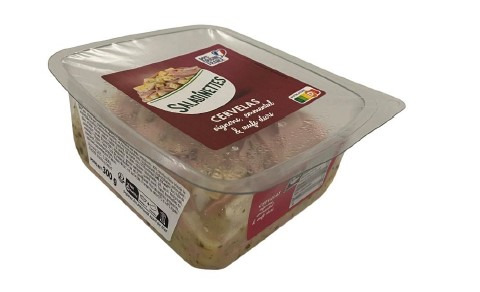
France – Alsatian salad 300g – Microbiological Risk

Gov France

Product category
Food
Product subcategory
Prepared meals and snacks
Product brand name
Saladinettes
Model names or references
Alsatian salad 300g
Product identification
GTIN Batch Date
4056489614302 407310 Use-by date 04/10/2024
Packaging
300g tray
Start/end date of marketing
From 03/14/2024 to 03/20/2024
Storage temperature
Product to keep in the refrigerator
Geographical sales area
See the list of affected stores
Distributors
Some Lidl supermarkets (see list)
List of points of sale
Store_list.pdf

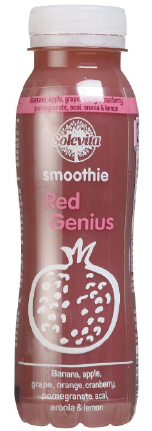
Luxembourg – 100% fruit smoothie – Red Genius from the Solevita brand – Patulin

SAP

The following product is recalled in Luxembourg:

Name 100% fruit smoothie – Red Genius
Brand Solevita
Unit 250ml
Barcode 20803896
DLC/DDM 03/13/2024

Danger  : Possible presence of patulin

The product can be distributed by different points of sale in Luxembourg.

Information Source: Recall Notification

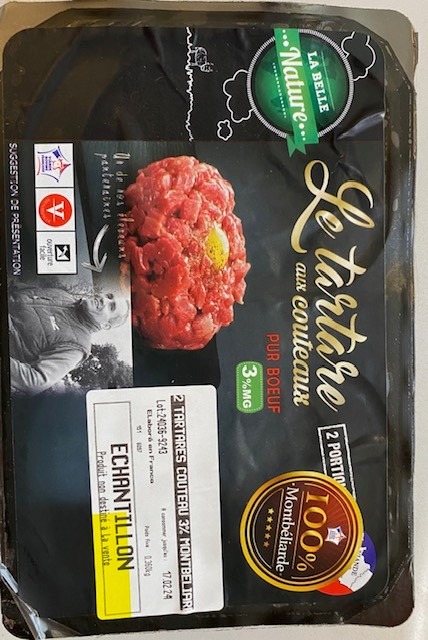
France – 2X KNIFE TARTARES 3% MONTBELIARD – Salmonella

Gov France

Product category
Food
Product subcategory
Meats
Product brand name
Beautiful nature
Model names or references
2X KNIFE TARTARES 3% MONTBELIARD
Product identification
GTIN Batch Date
3700502707243 24036-9243 Use-by date 02/17/2024
Products List
product_list.pdfAttachment
Packaging
TRAY 2X180G
Start/end date of marketing
From 02/05/2024 to 02/17/2024
Storage temperature
Product to keep in the refrigerator
Health mark
FR 13.097.003 CE
Geographical sales area
Departments: PYRENEES-ATLANTIQUES (64), VAR (83)
Distributors
PEDAVIA-TSA MEAT
List of points of sale
customer_list.pdf

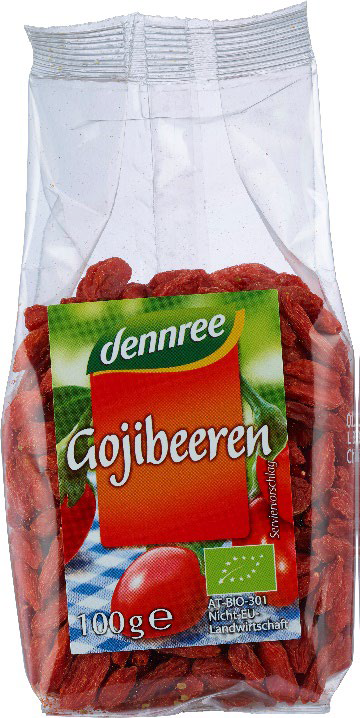
Germany – Dennree dried goji berries 100 g Dennree dried goji berries 250 g – Salmonella

Lebensmittelwarnung

Alert type:

Groceries

Date of first publication:

12/22/2023

Product name:

Dennree dried goji berries 100 g Dennree dried goji berries 250 g

Product images:

Goji 1.png
Goji 2.png
Manufacturer (distributor):

Dennree GmbH

Reason for warning:

Salmonella

Packaging Unit:

100g and 250g

Durability:

100 g with the best-before dates March 28, 2024 – July 21, 2024; 250 g with the best before dates 03/28/2024 – 07/18/2024

Additional Information:

Salmonella infection manifests itself within a few days of infection with diarrhea, abdominal pain and occasionally vomiting and a slight fever. The symptoms usually go away on their own after several days. In particular, infants, small children, seniors and people with weakened immune systems can develop more severe illnesses. People who have eaten this food and develop severe or persistent symptoms should seek medical attention and report a possible salmonella infection. Seeking preventive medical treatment without symptoms does not make sense. Further information about the pathogen can be found here: http://www.kritiksschutz.de/erregersteckbriefe/salmonellen

Manufacturer’s homepage: