Category Archives: food death

India – Boy dies after food poisoning

The Hindu

A minor boy died while his sister and grandmother are reported to have recovered after they consumed food at home which had turned bad. Ellavva of Hanuman Nagar in the district headquarters and her grandchildren were hospitalised after they ate some food prepared at home and took medicine from a local medical practitioner. Later, they were shifted to hospital. While Ravi died while being shifted to a hospital on Thursday evening, Ellavva and her granddaughter are being treated at the hospital and their health was reported to be stable.

Information -Food Poisoning

foodsafety.gov

Food poisoning—any illness or disease that results from eating contaminated food—affects millions of Americans each year. While the American food supply is among the safest in the world, the Federal government estimates that there are about 48 million cases of foodborne illness annually—the equivalent of sickening 1 in 6 Americans each year. And each year these illnesses result in an estimated 128,000 hospitalizations and 3,000 deaths.

Causes of Food Poisoning

  • Bacteria and Viruses: Bacteria and viruses are the most common cause of food poisoning. The symptoms and severity of food poisoning vary, depending on which bacteria or virus has contaminated the food.
  • Parasites: Parasites are organisms that derive nourishment and protection from other living organisms known as hosts. In the United States, the most common foodborne parasites are protozoa, roundworms, and tapeworms.
  • Molds, Toxins, and Contaminants: Most food poisoning is caused by bacteria, viruses, and parasites rather than toxic substances in the food. But some cases of food poisoning can be linked to either natural toxins or added chemical toxins.
  • Allergens: Food allergy is an abnormal response to a food triggered by your body’s immune system. Some foods, such as nuts, milk, eggs, fish, crustacean shellfish, tree nuts, peanuts, wheat or soybeans, can cause allergic reactions in people with food allergies.

Click the link above for more information.

Information USA – What Are the Symptoms of Common Foodborne Pathogens?

CDC

Burden of Foodborne Illness: Findings

CDC estimates that each year roughly 1 in 6 Americans (or 48 million people) gets sick, 128,000 are hospitalized, and 3,000 die of foodborne diseases.


These estimates provide the most accurate estimates yet of which known foodborne pathogens (bacteria, viruses, and parasites) are causing the most illnesses in the United States, and how many foodborne illnesses are caused by unspecified agents. The estimates also show that much work remains to be done—specifically in focusing efforts on the top known pathogens and identifying the additional causes of foodborne illness and death.

CDC provides estimates for two major groups of foodborne illnesses

Known foodborne pathogens — 31 pathogens known to cause foodborne illness. Many of these pathogens are tracked by public health systems that track diseases and outbreaks. Read the report >

Unspecified agents — Agents with insufficient data to estimate agent-specific burden; known agents not yet identified as causing foodborne illness; microbes, chemicals, or other substances known to be in food whose ability to cause illness is unproven; and agents not yet identified. Because you can’t “track” what isn’t yet identified, estimates for this group of agents started with the health effects or symptoms that they are most likely to cause, such as acute gastroenteritis. Read the report >


Total number of foodborne illnesses each year

CDC estimated the number of illnesses, hospitalizations, and deaths caused by both known and unspecified agents. CDC then estimated what proportion of each were foodborne. The first table below provides estimates for domestically acquired foodborne illnesses, and the second table provides estimates for domestically acquired illnesses caused by all transmission routes (foodborne, waterborne, person-to-person contact, animal contact, environmental contamination, and others).

Estimated annual number of domestically acquired, foodborne illnesses, hospitalizations, and deaths due to 31 pathogens and the unspecified agents transmitted through food, United States
Foodborne agents Estimated annual number of illnesses Estimated annual number of hospitalizations Estimated annual number of deaths
Number (90% credible interval) % Number (90% credible interval) % Number (90% credible interval) %
31 known pathogens 9.4 million
(6.6–12.7 million)
20 55,961
(39,534–75,741)
44 1,351
(712–2,268)
44
Unspecified agents 38.4 million
(19.8–61.2 million)
80 71,878
(9,924–157,340)
56 1,686
(369–3,338)
56
Total 47.8 million
(28.7–71.1 million)
100 127,839
(62,529–215,562)
100 3,037
(1,492–4,983)
100
Estimated annual number of illnesses, hospitalizations, and deaths due to 31 pathogens and the unspecified agents, United States
Foodborne agents Estimated annual number of illnesses Estimated annual number of hospitalizations Estimated annual number of deaths
Number (90% credible interval) % Number (90% credible interval) % Number (90% credible interval) %
31 known pathogens 37.2 million
(28.4–47.6 million)
21 228,744
(188,326–275,601)
47 2,612
(1,723–3,819)
42
Unspecified agents 141.8 million 79 258,033 53 3,574 58
Total 179 million 100 486,777 100 6,186 100


Pathogens causing the most foodborne illnesses, hospitalizations, and deaths each year

Top five pathogens contributing to domestically acquired foodborne illnesses
Pathogen Estimated number of illnesses 90% credible interval %
Norovirus 5,461,731 3,227,078–8,309,480 58
Salmonella, nontyphoidal 1,027,561 644,786–1,679,667 11
Clostridium perfringens 965,958 192,316–2,483,309 10
Campylobacter spp. 845,024 337,031–1,611,083 9
Staphylococcus aureus 241,148 72,341–529,417 3
Subtotal 91

 Top of Page

Top five pathogens contributing to domestically acquired foodborne illnesses resulting in hospitalization
Pathogen Estimated number of hospitalizations 90% credible interval %
Salmonella, nontyphoidal 19,336 8,545–37,490 35
Norovirus 14,663 8,097–23,323 26
Campylobacter spp. 8,463 4,300–15,227 15
Toxoplasma gondii 4,428 2,634–6,674 8
E. coli (STEC) O157 2,138 549–4,614 4
Subtotal 88
Top five pathogens contributing to domestically acquired foodborne illnesses resulting in death
Pathogen Estimated number of deaths 90% credible interval %
Salmonella, nontyphoidal 378 0–1,011 28
Toxoplasma gondii 327 200–482 24
Listeria monocytogenes 255 0–733 19
Norovirus 149 84–237 11
Campylobacter spp. 76 0–332 6
Subtotal 88

India – Food poisoning leaves 2 dead, 22 in hospital

Times of India

KANNUR: Two inmates how now  died and 22 others have been hospitalised following food poisoning at a destitute home near Oduvally. The inmates suffered food poisoning apparently after they consumed ghee rice, chicken curry and salad.


USA – Colorado county reports first foodborne botulism death in more than decade

Food Safety News

Foodborne botulism is rare but potentially deadly.

The death of an El Paso County, CO, woman who died this past Sept.20 has since been officially blamed on foodborne botulism, the first death of its kind in a decade.

Cardiovascular disease and diabetes contributed to death, according to the autopsy report. Were it not for botulism, however, the 80-year-old woman could still be alive.

The source of the botulism was previously frozen potatoes stored at room temperature for two weeks. After eating the pre-prepared potatoes, the woman developed trouble breathing; her eyes bulged, her speech slowed, and her muscles became weakened.

The woman’s botulism death was the first in El Paso County since 2008.

Austria – Austrian Listeria infections linked to German meat producer

Food Safety News

Austrian officials have linked six Listeria infections to a German meat producer.

Products from Wilke Waldecker Fleisch- und Wurstwaren are suspected to be behind a Listeria outbreak in Germany involving 37 people and three deaths. One infection was recorded in 2014, three in 2016, four in 2017, 21 in 2018 and at least eight in 2019.

Between May 24 and Aug. 8, 2019, six people in Austria contracted an identical Listeria strain identified as Listeria monocytogenes IIa.

Following illnesses in the federal states of Carinthia, Styria, and Vienna the Federal Ministry of Labor, Social Affairs, Health and Consumer Protection (BMASGK) asked the Austrian Agency for Health and Food Safety (AGES) to investigate the outbreak.

Authorities in the Waldeck-Frankenberg district of Germany stopped production at a Wilke facility in Twistetal, Berndorf in October.

USA – Outbreak of Salmonella Infections Linked to Ground Beef Final Update

CDC

Final Outbreak Information
Illustration of a clipboard with check marks on it.
  • As of December 30, 2019, this outbreak appears to be over.
  • Thirteen people infected with the outbreak strain of Salmonella Dublin were reported from eight states.
    • Illnesses started on dates ranging from August 8, 2019, to October 22, 2019.
    • Nine hospitalizations were reported, including one death reported from California.
  • Epidemiologic, traceback, and laboratory evidence indicated that contaminated ground beef was the likely source of this outbreak.
  • On November 15, 2019, Central Valley Meat Co. in Hanford, Calif., recalledexternal icon 34,222 pounds of ground beef products that may have been contaminated with Salmonella Dublin.
    • A single, common supplier of ground beef that accounts for all of the illnesses was not identified.

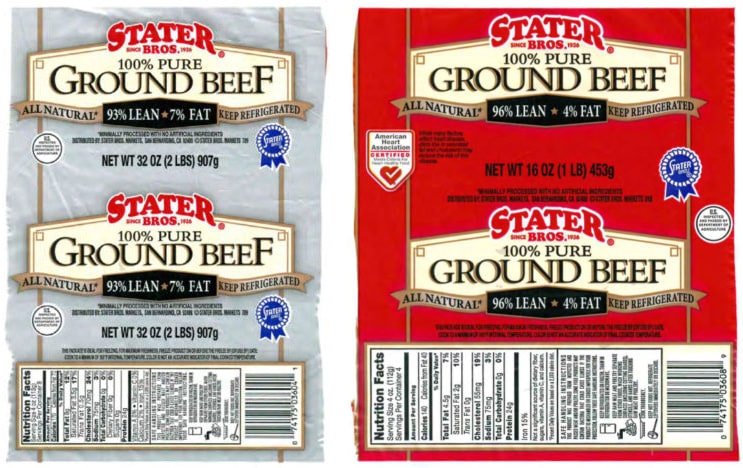
Photo of packaging.

USA – Meijer recalls diced eggs used in salad bars – Listeria monocytogenes

Food Safety News

Meijer is recalling frozen hard boiled egg products used on salad bars at two stores because of possible Listeria monocytogenes contamination. The stores with the salad bars are located in Grand Rapid, MI.

The company recall says that it is initiating the recall “in conjunction with Almark Foods.”

The Almark egg facility has been confirmed to be contaminated with the same strain of Listeria monocytogenes that public health officials have found in patients involved in a multi-state outbreak. One person has died.

USA – Death by Norovirus tied to Puritan Backroom in New Hampshire

Food Poison Journal

The New Hampshire Office of the Chief Medical Examiner (OCME) has determined that norovirus was a contributing cause of death in the person who passed away after attending an event at the Puritan Backroom in Manchester, New Hampshire, on November 24, 2019. The OCME completed its final report today after conducting an autopsy last month.

South Africa -South African Listeria outbreak impacted food choices of students

Food Safety News

The Listeria outbreak linked to a brand of polony in South Africa had a negative impact on student’s consumption patterns of cold meat, according to researchers.

The study analyzed the effect of the Listeria monocytogenes outbreak on consumption patterns of processed cold meat products by students at North West University, Mmabatho South Africa.

The 2017-2018 listeriosis outbreak was traced to contaminated processed meats produced by Enterprise Foods, a subsidiary of Tiger Brands, in Polokwane. About 1,060 cases were confirmed and 216 people died.

The North West University Mafikeng Campus has 12,864 registered students. Surveys and interviews were conducted from June to July 2018. Recently findings published in the IOP Conference Series: Earth and Environmental Science journal.