Category Archives: food contamination

UK -Boy, 9, ‘hospitalised with E.coli after falling severely ill on Bulgaria holiday’

The Mirror

A nine-year-old British boy was hospitalised for six days with E.coli after returning home from a £5,400 family beach holiday in Bulgaria, his parents say.

Keegan-Rhys Vickers was allegedly struck down by symptoms including sickness and diarrhoea just days into the Swansea family’s two-week break in Sunny Beach.

His symptoms were so severe that they continued when the family returned home and his worried parents took him to a hospital in Swansea for treatment.


Kenya – Kebs withdraws 17 maize flour brands over high Aflatoxin

Daily Nation

The Kenya Bureau of Standards has suspended 17 maize flour brands, saying they contain high levels of aflatoxin.

In a statement dated January 29, Kebs said the withdrawal of the products from the market followed surveillance and tests.

Among the affected brands are Dola (Eldoret Grain Millers), African King (African Kings Maize Millers), Unique (Ndosha Limited), ML0 (Bidii), City Corn (Central Afya Bora Millers), Sarafina (Century Millers) and Tosha (Godmesa Foods and Allied Limited).

Also withdrawn from the market are Shiba (Grango Suba Millers), Hakika Best (Halisi Maize Mills), Budget (Karibu Four Mills), Wema (Luma Millers Limited) and Jomba (Machakos Millers).

The rest are Adardere Mupa (Mbaitu Maize Million), Afya (Meru Multipurpose Cooperative Society), Uzima (Sigose Unga Millers), Sungura (Eldoret Grain Millers) and Tetema (Eldoret Grains Limited).

While warning of legal action, Market Surveillance Director Peter Kaigwara asked the manufacturers to ensure their products are removed from supermarkets.

Unga wa Dola has not been withdrawn from the market, the manufacturer Kitui Flour Mills has said.

Information – Raw Flour: A Hazardous Ingredient?

Lancaster Farming

Recent recalls of flour are important to note, but a recall is not the only time to be concerned about the safety of uncooked flour.

In recent years, there have been numerous recalls and illnesses associated with uncooked flour and products containing uncooked flour, like boxed cake mix. While it is appropriate to be concerned about getting sick from those batches of recalled flour, that concern should apply to all brands and types of flour, regardless of a recall.

Flour is a raw agricultural product. Wheat is grown outside in a field where birds and other animals fly over and wander through the field, which can introduce contaminants. The wheat is harvested, taken to a mill and ground into powder. Flour is not treated in the factory to destroy potential pathogens such as E. coli. These bacteria will eventually be killed by cooking, baking or frying food. When you use flour at home as an ingredient in recipes, treat it with the same care as raw eggs and meat. Symptoms of E. coli infection can include stomach cramps, bloody diarrhea and vomiting. Severe infections lead to kidney damage.

USA – Vicksburg restaurant worker exposes customers to Hepatitis A

Food Safety News

The Mississippi State Department of Health (MSDH) is investigating a case of hepatitis A in a Warren County restaurant employee that may have led to exposure for customers.  MSDH has set up free hepatitis A vaccinations today and tomorrow  for those who might have been exposed to the virus

An employee of the Gumbo Pot, 3401 Halls Ferry Road #5 in Vicksburg, has been diagnosed with a hepatitis A infection. While infectious, the employee worked at the restaurant on Jan. 17, 18 and 22. Customers who ate at the restaurant on those days may have been exposed to hepatitis A.

Vaccination can prevent hepatitis A only if given within 14 days of exposure. Because those who ate at the restaurant on Jan. 17 and 18 would have been exposed more than 14 days ago, they should watch for any possible symptoms of hepatitis A and see their doctor if they become ill. Those who ate at the restaurant on January 22 should get the hepatitis A vaccination if they have not been previously vaccinated.

UK – Sixteen people food poisoned after eating ‘runny’ uncooked pate at Essex golf club

Essex Live

Sixteen guests were food poisoned and had “cramps and diarrhoea” after eating “runny” uncooked chicken liver pate at an Essex golf club.

The club’s then-operating company Crown Golf Operators Ltd, have now been fined £60,000, after the guests fell ill after eating at Stapleford Abbots Golf Club in Romford on June 17, 2017.

After playing golf that day around 24-25 guests sat down for a three-course meal, which included the pate as a starter and a carvery for mains from a set menu.

Within a day after this meal, 16 of the guests reported being ill. Some of them were ill for up to two weeks and some had to be hospitalised.

On January 29, Crown Golf Operators Ltd, were sentenced at Basildon Crown Court after pleading guilty to placing food on the market at the Romford club that was unsafe and unfit for human consumption.

The head chef at the club, Chris James, who was a co-defendent and had cooked the chicken liver pate, entered a not-guilty plea. At his trial last year, he was offered a formal caution, which he accepted.

Stapleford Abbots Golf Club is currently under new ownership after it was sold and taken over in February 2019.


USA – Multistate Outbreak of Salmonella Infections Linked to Raw Turkey Products — United States, 2017–2019

CDC

Summary

What is already known about this topic?

Salmonella Reading is a serotype that is uncommonly associated with human illness. Salmonella outbreaks have previously been associated with ground turkey and turkey burgers.

What is added by this report?

During November 2017–March 2019, a multistate outbreak of S. Reading involving 356 cases in 42 states occurred. Patients reported exposure to various turkey products, suggesting industry-wide contamination, a novel type of outbreak in which contamination is not isolated to a single food or facility.

What are the implications for public health practice?

Interventions should target all parts of the supply chain, including slaughter and processing facilities and upstream farm sources. Public health agencies and industry can take steps to provide more consumer education about food safety.

Hungary – Hungary tries to prevent repeat of Listeria outbreak

Food Safety News

A system in Hungary to prevent a repeat of the deadly Listeria outbreak traced to a frozen vegetable factory in the country in 2018 is working well, according to those involved.

The Hungarian Deep Freezing and Canning Association (MHKSZ) revealed the first-year operational experience of the system was positive.

After the outbreak source was found nearly a year and a half ago, some members of MHKSZ and Campden BRI Hungary Nonprofit Ltd. developed a voluntary audited Listeria Prevention System. It includes Listeria troubleshooting, identifying potential contaminant sources and focal points as well as possible routes of contamination.

USA – Flax seed pills test positive for Salmonella

Food Poison Journal

Salud Natural Entrepreneur, Inc. of Waukegan, IL is voluntarily recalling Nopalina Flax Seed Fiber (powder) and Nopalina Flax Seed Fiber (capsule) products due to possible Salmonella contamination in one of the ingredients used on the formula of Nopalina Flax Seed Fiber.

This recall is being made with the knowledge of the Food and Drug Administration.

The recall is the result of an FDA sampling of senna leaves powder, an ingredient used to manufacture the Nopalina Flax Seed Fiber (powder) and Nopalina Flax Seed Fiber (capsules), that tested positive for three types of Salmonella including Salmonella Gaminara, Salmonella Kentucky, and Salmonella Oranienburg. The company has ceased the use of the suspect ingredient.

Canada-Bottled clams from Cielo Glamping Maritime recalled due to potential presence of dangerous bacteria -Clostridium botulinum

CFIA

CDC Clost Spore

Image CDC

Recall details

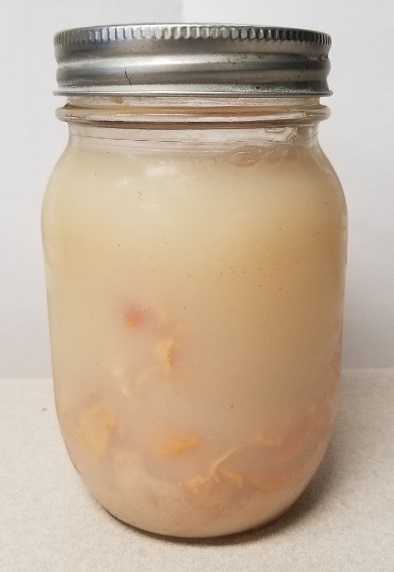
Ottawa, February 1, 2020 – Cielo Glamping Maritime is recalling bottled clams from the marketplace because they may permit the growth of Clostridium botulinum. Consumers should not consume the recalled products described below.

Recalled products

Brand Product Size UPC Codes
None Bottled clams (no label) 500 ml None None – Sold from Cielo Glamping Maritime, 232 Chemin des Huîtres, Haut-Shippigan NB
None Bottled clams (no label) 1 L None None – Sold from Cielo Glamping Maritime, 232 Chemin des Huîtres, Haut-Shippigan NB

What you should do

If you think you became sick from consuming a recalled product, call your doctor.

Check to see if you have the recalled products in your home. Recalled products should be thrown out or returned to the store where they were purchased.

Food contaminated with Clostridium botulinum toxin may not look or smell spoiled but can still make you sick.

Symptoms in adults can include facial paralysis or loss of facial expression, unreactive or fixed pupils, difficulty swallowing, drooping eyelids, blurred or double vision, difficulty speaking, slurred speech, and a change in sound of voice, including hoarseness.

Symptoms of foodborne botulism in children can include difficulty swallowing, slurred speech, generalized weakness and paralysis. In all cases, botulism does not cause a fever.  In severe cases of illness, people may die.

Background

This recall was triggered by the Canadian Food Inspection Agency’s (CFIA) inspection activities. The CFIA is conducting a food safety investigation, which may lead to the recall of other products. If other high-risk products are recalled, the CFIA will notify the public through updated Food Recall Warnings.

The CFIA is verifying that industry is removing the recalled products from the marketplace.

Illnesses

There have been no reported illnesses associated with the consumption of these products.

Product photos

Printer ready version of photos

  • Bottled clams (no label)
  • Bottled clams (no label) - Lid


Research – Come on in: Bile acids open the door to Norovirus infection

BCM

Some people call it the ship cruise virus, but norovirus can be found in many other places. People can catch this very contagious virus from an infected person, contaminated food or water or by touching contaminated surfaces. The virus causes acute gastroenteritis – the stomach and/or the intestines get inflamed, and this leads to stomach pain, nausea, diarrhea and vomiting. Noroviruses are the leading cause of foodborne illness.

“In the Science paper, we showed that bile, a yellowish fluid produced by the liver that helps digest fats in the small intestine, was key to successfully culturing certain strains of norovirus in the lab,” said Victoria R. Tenge, graduate student of molecular virology and microbiology in the Estes’s lab. “The work discussed here (of which Tenge is co-first author) shows the results of our continuing investigations to identify the bile components that are involved in promoting norovirus infection.”