Category Archives: FDA

USA – FDA Investigation of Cronobacter Infections: Powdered Infant Formula (February 2022)

FDA

If you want to check if your powdered formula is part of the recall, you can enter the product lot code on the bottom of your package on the company’s websiteExternal Link Disclaimer.

If you have questions or need information about the recall, you can Submit Questions/Get Assistance.

If your infant is experiencing symptoms related to Cronobacter infection, such as poor feeding, irritability, temperature changes, jaundice, grunting breaths, or abnormal movements; contact your health care provider to report their symptoms and receive immediate care.

To report an illness or adverse event, you can

The FDA, along with CDC and state and local partners are investigating consumer complaints and/or reports of infant illness related to products from Abbott Nutrition’s Sturgis, MI facility. All of the ill patients are reported to have consumed powdered infant formula produced from Abbott Nutrition’s Sturgis, MI facility.

To provide clarity about which products are included in the Abbott Nutrition recall, FDA is publishing a full list of recalled brands  that have been included in the initial and expanded recall. Recalled products should no longer be available for sale, but if consumers have these products in their homes, they should check the lot code on the bottom of the package to determine if it is included in the recall.

The FDA is also providing additional information for parents and caregivers  of infants receiving medical specialty infant formula and individuals using certain medical foods.

We understand that infant formula is the sole source of nutrition for many infants and is an essential product. FDA is continuing to work with Abbott Nutrition to better assess the impacts of the recall and understand production capacity at other Abbott facilities that produce some of the impacted brands. We are also working with Abbott Nutrition on safe resumption of production at the Sturgis, MI facility. FDA is continuing to investigate and will update this advisory should additional consumer safety information become available.

Recommendation

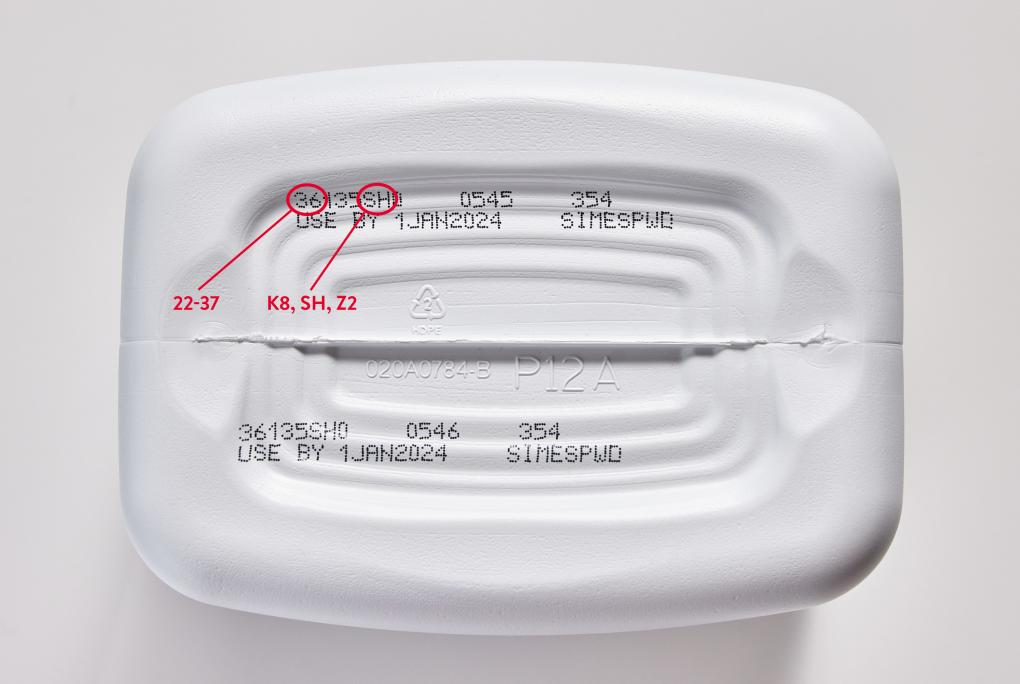
The FDA is advising consumers not to use recalled Similac, Alimentum, or EleCare powdered infant formulas. Recalled products can be identified by the 7 to 9 digit code and expiration date on the bottom of the package (see image below). Products are included in the recall if they have all three items below:

  • the first two digits of the code are 22 through 37 and
  • the code on the container contains K8, SH, or Z2, and
  • the expiration date is 4-1-2022 (APR 2022) or later.

In addition to products described above, Abbott Nutrition has recalled Similac PM 60/40 with a lot code 27032K80 (can) / 27032K800 (case). At this time, Similac PM 60/40 with lot code 27032K80 (can) / 27032K800 (case) is the only type and lot of this specialty formula being recalled. Additional recall information for the initial recall is available on the FDA website. Parents can also enter their product lot code on the company’s websiteExternal Link Disclaimer to check if it is part of the recall.

Additional information for parents and caregivers of infants receiving medical specialty infant formulas and individuals using certain medical foods is available below.

Additional Information for Parents and Caregivers:

The recalls do not include liquid formula products.

Parents and caregivers should never dilute infant formula and should not make or feed homemade infant formula to infants. Consumers should also avoid purchasing imported formula through online sales, as it has the potential to be counterfeit.

If your regular formula is not available, contact your child’s healthcare provider for recommendations on changing feeding practices.

If you get infant formula through WIC, do not throw the formula out. Instead, you should take it to the store for a refund and exchange or call the company at 1-800-986-8540 to help you. WIC recipients should be able to obtain a different brand of similar formula. Call your local WIC clinic for more guidance. Also see:

More information on Cronobacter and infant formula is available on CDC’s website.

Recalled powdered infant formulas have the potential to be contaminated with Cronobacter, a bacterium that can cause severe foodborne illness primarily in infants. Cronobacter infections are rare but are especially high risk for newborn infants (see symptoms below).

Cronobacter bacteria can cause severe, life-threatening infections (sepsis) or meningitis (an inflammation of the membranes that protect the brain and spine). Symptoms of sepsis and meningitis may include poor feeding, irritability, temperature changes, jaundice (yellow skin and whites of the eyes), grunting breaths, and abnormal movements. Cronobacter infection may also cause bowel damage and may spread through the blood to other parts of the body.

If your child is experiencing any of these symptoms, you should notify your child’s healthcare provider and seek medical care for your child immediately. Healthcare providers and health departments are encouraged to report any confirmed cases of Cronobacter sakazakii to CDC.

USA – FDA: Salmonella removed from Infant Formula Outbreak – Cronobacter sakazakii still cause of 4 illnesses with 2 deaths

Food Poison Journal

Total Adverse Events: 4
Hospitalizations: 4
Reported Deaths: 2
Illness Onset Date Range: 9/6/2021 – 1/4/2022
States with Adverse Events: MN (1), OH (2), TX (1)
Product Distribution: Nationwide and International

The FDA, along with CDC and state and local partners are investigating consumer complaints and/or reports of infant illness related to products from Abbott Nutrition’s Sturgis, MI facility. All of the ill patients are reported to have consumed powdered infant formula produced from Abbott Nutrition’s Sturgis, MI facility.

The Salmonella Newport illness previously included in this investigation of complaints and illnesses has been removed. In the early stages of this investigation, FDA included all consumer complaints of illness with exposure to products from the Sturgis, MI, facility. After further investigation, the FDA has determined that there is not enough information to definitively link this illness to powdered infant formula. CDC confirmed that this single Salmonella illness is not linked to an outbreak. The FDA and CDC are continuing to monitor for Salmonella cases and consumer complaints that may be related to this incident.

Cronobacter infection surveillance is not handled the same way as infection with more common foodborne pathogens, such as Salmonella or E. coli O157:H7. Cronobacter is not nationally notifiable and not reportable except in one state, which means doctors and labs are not required to report cases to their health department. Because Cronobacter is not a nationally notifiable pathogen, FDA relies on consumer complaints of illness sent to the Agency and on health care providers informing FDA directly about infants with Cronobacter infections. In addition, because Cronobacter is not nationally notifiable, whole genome sequencing (WGS) is rarely performed on these isolates. To date, no outbreaks of Cronobacter have been detected using WGS.

When single cases of Cronobacter are reported, the FDA conducts a thorough review of each complaint, conducts sampling of products, and initiates inspections as appropriate. FDA collaborates with CDC, which has developed a detailed questionnaire specifically for Cronobacter infections that is often used by state health departments in instances of Cronobacter sakazakii infection.

USA – Felix Custom Smoking Enjoined From Distributing Seafood Products – Listeria

Food Poisoning Bulletin

Felix Custom Smoking has been enjoined from distributing seafood products through a consent decree filed on March 9, 2022 by the FDA and the U.S. Justice Department. The owner of that establishment, Diane Zollinger, has allegedly violated the Federal Food, Drug, and Cosmetic Act (FDCA) by distributing “adulterated ready-to-eat seafood products, including fish jerky and cold- and hot-smoked salmon,” according to the complaint.

The business sells products directly to consumers from its location and through farmers markets, as well as providing custom processing for fishermen and other wholesalers. The facility is located in Monroe, Washington. The claims made in the complaint are allegations that, if the case were to proceed to trail, the government must prove by a preponderance of the evidence.

FDA inspectors visited the facility in 2021 and found “a significant infestation of flies and other filthy conditions that can create an ideal environment for the growth of harmful bacteria, such as Listeria monocytogenes,” according to the complaint. The FDA took multiple samples at the facility and confirmed the presence of Listeria monocytogenes in and around food preparation areas.

Genetic testing showed that the same strain of Listeria Monocytogenes had been present in the facility since at least 2018, and a sample of seafood from one of the company’s customers also showed the same strain of Listeria, according to the complaint. FDA issued a public health alert against purchasing or eating Felix Custom Smoking seafood products on August 27, 2021

The injunction requires the company to eliminate Listeria monocytogenes at their facility, make sanitation improvements, and comply with federal food safety regulations before processing or distributing any more seafood.

USA – FDA Core Investigation Table

FDA

Date
Posted
REF Pathogen
Product(s)
Linked to
Illnesses

(if any)
Total
Case Count

Status
Outbreak
Status
2/17/

2022

1056 Cronobacter
sakazakii
Powdered
Infant
Formula
See
Advisory
Active Ongoing
See
Advisory
2/9/

2022

1040 Listeria
monocytogenes
Not Yet
Identified
14 Active Ongoing
See Advice
2/2/

2022

1054 Enteroinvasive
E. coli
O143:H26
Not Yet
Identified
16 Closed Ended
See Advice
1/10/

2022

1050 E. coli
O121:H19
Romaine 4 Closed Ended
12/29/

2021

1052 E. coli
O157:H7
Packaged
Salad
See Outbreak
Advisory
Closed Ended
See Outbreak
Advisory
12/20/

2021

1039 Listeria
monocytogenes
Packaged
Salad
See Outbreak
Advisory
Closed Ended
See Outbreak
Advisory
12/15/

2021

1048 Listeria
monocytogenes
Packaged
Salad
See Outbreak
Advisory
Active Ongoing
See Outbreak
Advisory

USA – FDA Core Investigation Table Update

FDA

Date
Posted
Ref
Pathogen
Product(s)
Linked to
Illnesses

(if any)
Total
Case Count

Status
2/17/2022 1056 Cronobacter
sakazakii

&
Salmonella
Newport
Powdered
Infant
Formula
See
Advisory
Active
2/9/2022 1040 Listeria
monocytogenes
Not Yet
Identified
14 Active
2/2/2022 1054 Enteroinvasive
E. coli
O143:H26
Not Yet
Identified
16 Closed
1/10/2022 1050 E. coli
O121:H19
Romaine 4 Closed
12/29/2021 1052 E. coli
O157:H7
Packaged
Salad
See Outbreak
Advisory
Closed
12/20/2021 1039 Listeria
monocytogenes
Packaged
Salad
See Outbreak
Advisory
Active
12/15/2021 1048 Listeria
monocytogenes
Packaged
Salad
See Outbreak
Advisory
Active

USA – FDA Investigation of Cronobacter and Salmonella Complaints: Powdered Infant Formula (February 2022)

FDA

If you want to check if your powdered formula is part of the recall, you can enter the product lot code on the bottom of your package on the company’s websiteExternal Link Disclaimer.

If you have questions or need information about the recall, you can Submit Questions/Get Assistance.

If your infant is experiencing symptoms related to Cronobacter or Salmonella infection, such as poor feeding, irritability, temperature changes, jaundice, grunting breaths, abnormal movements, lethargy, rash, or blood in the urine or stool; contact your health care provider to report their symptoms and receive immediate care.

To report an illness or adverse event, you can

The FDA, along with CDC and state and local partners are investigating consumer complaints and/or reports of infant illness related to products from Abbott Nutrition’s Sturgis, MI facility. All of the ill patients are reported to have consumed powdered infant formula produced from Abbott Nutrition’s Sturgis, MI facility.

As of February 28, CDC has announced one additional illness of Cronobacter sakazakii with exposure to powdered infant formula produced at Abbott Nutrition’s Sturgis, MI facility. Cronobacter infection may have been a contributing cause of death for this patient. In total, this investigation includes four reports of Cronobacter sakazakii infections in infants (three from FDA complaints and one from a CDC case finding) and one complaint of a Salmonella Newport infection in an infant. All five (four Cronobacter infections and one Salmonella Newport infection) illnesses resulted in hospitalization and Cronobacter may have contributed to death in two patients.

The most recent patient was reported to have consumed Abbott Nutrition’s Similac PM 60/40 product with the lot code 27032K800 prior to Cronobacter sakazakii infection. FDA and CDC informed the firm of these findings and on February 28, 2022, Abbott Nutrition voluntarily recalled Similac PM 60/40 powdered infant formula with the lot code 27032K800. This is a specialty formula for certain infants who would benefit from lowered mineral intake and was not included in the previous recall. At this time, Similac PM 60/40 with lot code 27032K80 (can) / 27032K800 (case) are the only type and lots of this specialty formula being recalled.

This particular lot of Similac PM 60/40 was distributed to the U.S. and Israel. If your regular formula is not available, contact your child’s healthcare provider for recommendations on changing feeding practices.

We understand that infant formula is the sole source of nutrition for many infants and is an essential product. FDA is working with Abbott Nutrition to better assess the impacts of the recall and understand production capacity at other Abbott facilities that produce some of the impacted brands. We are also working with Abbott Nutrition on safe resumption of production at the Sturgis, MI facility. FDA is continuing to investigate and will update this advisory should additional consumer safety information become available.

Recommendation

The FDA is advising consumers not to use recalled Similac, Alimentum, or EleCare powdered infant formulas. Recalled products can be identified by the 7 to 9 digit code and expiration date on the bottom of the package (see image below). Products are included in the recall if they have all three items below:

  • the first two digits of the code are 22 through 37 and
  • the code on the container contains K8, SH, or Z2, and
  • the expiration date is 4-1-2022 (APR 2022) or later.

In addition to products described above, Abbott Nutrition has recalled Similac PM 60/40 with a lot code 27032K80 (can) / 27032K800 (case). At this time, Similac PM 60/40 with lot code 27032K80 (can) / 27032K800 (case) are the only type and lots of this specialty formula being recalled.

Additional recall information for the initial recall is available on the FDA website. Parents can also enter their product lot code on the company’s websiteExternal Link Disclaimer to check if it is part of the recall.

Additional Information for Parents and Caregivers:

The recalls do not include liquid formula products. Consumers should continue to use all product not included in the recalls.

Parents and caregivers should never dilute infant formula and should not make or feed homemade infant formula to infants. Consumers should also avoid purchasing imported formula through online sales, as it has the potential to be counterfeit.

If your regular formula is not available, contact your child’s healthcare provider for recommendations on changing feeding practices.

If you get infant formula through WIC, do not throw the formula out. Instead, you should take it to the store for a refund and exchange or call the company at 1-800-986-8540 to help you. WIC recipients should be able to obtain a different brand of similar formula. Call your local WIC clinic for more guidance. Also see:

More information on Cronobacter and infant formula is available on CDC’s website.

Recalled powdered infant formulas have the potential to be contaminated with Cronobacter, a bacterium that can cause severe foodborne illness primarily in infants. Cronobacter infections are rare but are especially high risk for newborn infants (see symptoms below).

Cronobacter bacteria can cause severe, life-threatening infections (sepsis) or meningitis (an inflammation of the membranes that protect the brain and spine). Symptoms of sepsis and meningitis may include poor feeding, irritability, temperature changes, jaundice (yellow skin and whites of the eyes), grunting breaths, and abnormal movements. Cronobacter infection may also cause bowel damage and may spread through the blood to other parts of the body.

If your child is experiencing any of these symptoms, you should notify your child’s healthcare provider and seek medical care for your child immediately. Healthcare providers and health departments are encouraged to report any confirmed cases of Cronobacter sakazakii to CDC.
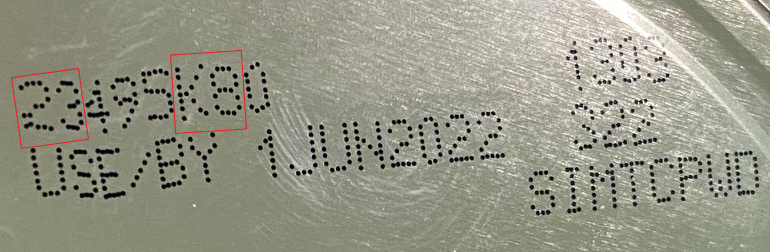

Product Images

Sample Product Image from the FDA Investigation of Cronobacter and Salmonella Complaints about Powdered Infant Formula (February 2022)
Powdered Infant Formation Container with Product Coding

Case Counts

Total Adverse Events: 5 (4 Cronobacter, 1 Salmonella)
Hospitalizations: 5
Reported Deaths: 2*
Adverse Event Dates: 9/16/2021 – 1/4/2022
States with Adverse Events: MN (1), OH (2), TX (2)
Product Distribution: Nationwide and International
* Two deaths have been reported. Cronobacter infection may have contributed to the cause of death for both ill patients.


International Product Distribution

The recall impacts Alimentum, EleCare, and Human Milk Fortifier for markets outside the U.S. No other Abbott Nutrition products distributed outside of the U.S. are affected by this recall. According to the firm, recalled products were distributed to the following countries/locations: Australia, Bahrain, Barbados, Bermuda, Canada, Chile, China, Colombia, Costa Rica, Dominican Republic, Ecuador, Egypt, Guam, Guatemala, Hong Kong, India, Indonesia, Israel, Jordan, Kuwait, Lebanon, Malaysia, Mexico, New Zealand, Oman, Peru, Puerto Rico, Qatar, Saudi Arabia, Singapore, South Africa, Sudan, Taiwan, Thailand, United Arab Emirates, United Kingdom, and Vietnam ANI South.

For additional information, international officials and customers can visit the company’s recall page for contact informationExternal Link Disclaimer.

Cronobacter Surveillance

Cronobacter infection surveillance is not handled the same way as infection with more common foodborne pathogens, such as Salmonella or E. coli O157:H7. Cronobacter is not nationally notifiable and not reportable except in one state, which means doctors and labs are not required to report cases to their health department. Because Cronobacter is not a nationally notifiable pathogen, FDA relies on consumer complaints of illness sent to the Agency and on health care providers informing FDA directly about infants with Cronobacter infections. In addition, because Cronobacter is not nationally notifiable, whole genome sequencing (WGS) is rarely performed on these isolates. To date, no outbreaks of Cronobacter have been detected using WGS.

When single cases of Cronobacter are reported, the FDA conducts a thorough review of each complaint, conducts sampling of products, and initiates inspections as appropriate. FDA collaborates with CDC, which has developed a detailed questionnaire specifically for Cronobacter infections that is often used by state health departments in instances of Cronobacter sakazakii infection.

USA – Baby formula recall expands to include Similac PM after another baby dies of Cronobacter

USA Today

Abbott Nutrition’s baby formula recall has been expanded to include one lot of Similac PM 60/40.

The Food and Drug Administration said in an update Monday that health officials were investigating an additional illness of Cronobacter sakazakii with exposure to powdered infant formula produced at the company’s Sturgis, Michigan facility. That baby also died of Cronobacter.

“The most recent patient was reported to have consumed Abbott Nutrition’s Similac PM 60/40 product with the lot code 27032K800 prior to Cronobacter sakazakii infection,” the FDA said.

Similac PM is considered “a specialty formula for certain infants who would benefit from lowered mineral intake.” It was not included in the previous recall for select lots of Similac, Alimentum and EleCare formulas announced Feb. 17.

RECALL DATABASE:  Check USA TODAY’s recall resource for the latest updates

USA – Company recalls yeast because of potential Salmonella contamination

Food Safety News

Mitsubishi International Food Ingredients Inc. is recalling a yeast extract because of potential contamination.

The Food and Drug Administration reported today that the Dublin, OH, company has recalled 15-kilogram — 33-pound —  bags of “Yeast Extract Ajirex” packed in boxes because of potential contamination with Salmonella.

There is concern that the product may be in the stream of commerce or in homes or businesses because of the long shelf life, which extends into August this year.

The company reports that the recalled yeast was distributed in Georgia, Illinois, Pennsylvania and Texas.

One customer, GFS, has reported using the yeast in products, but the FDA notice did not report what products.

The recalled yeast can be identified by the following label information: Batch/Lot: AR21B13401 Product Number: 6225796 205 01M Expiration Date: Aug 2, 2022.

USA – Vadilal Industries (USA) Recalls “Custard Apple Pulp” Because of Possible Health Risk – Salmonella

FDA

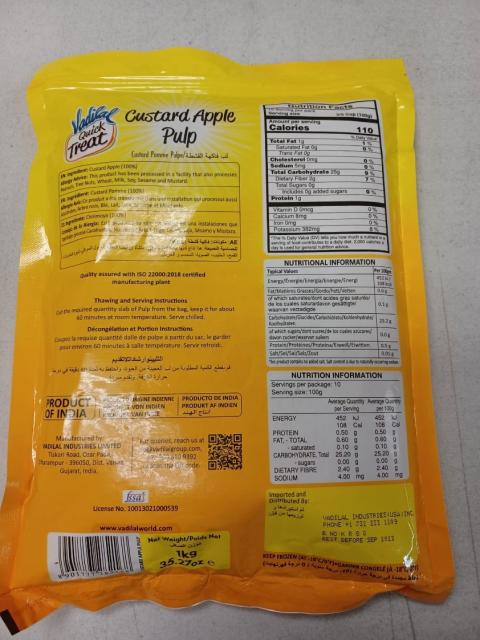
Vadilal Custard Apple Pulp packet, back label

Summary

Company Announcement Date:
FDA Publish Date:
Product Type:
Food & Beverages
Reason for Announcement:
Salmonella
Company Name:
Vadilal Industries Inc.
Brand Name:
Vadilal
Product Description:
frozen custard apple pulp

Company Announcement

Vadilal Industries (USA) Inc. of Newark, NJ is voluntarily recalling two batches of frozen Custard Apple Pulp because it has the potential to be contaminated with Salmonella, an organism which can cause serious and sometimes fatal infections in young children, frail or elderly people, and others with weakened immune systems. Healthy persons infected with Salmonella often experience fever, diarrhea (which may be bloody), nausea, vomiting and abdominal pain. In rare circumstances, infection with Salmonella can result in the organism getting into the bloodstream and producing more severe illnesses such as arterial infections (i.e., infected aneurysms), endocarditis and arthritis.

The product was distributed nationwide through retail stores and is sold in 35.27-ounce packets. The packets are labeled as “Custard Apple Pulp” and the batch codes are printed on the back of the packet. The product code, description, lot code, UPC and Best Before information are noted below.

Product Code Product Description & Size Batch /lot code UPC Best Before
FPEP44302 Custard Apple Pulp KWHO, KRQO 8901777282168 September 2023

The recall was initiated after FDA received a single complaint reporting 5 illnesses and FDA sampling revealed the presence of Salmonella in the product.

Consumers who have purchased Custard Apple Pulp with these batch codes should discontinue use or return it to the store of purchase for a full refund. Retailers that may have further distributed the recalled lot codes should share this notice with their customers.

Customers with questions may contact the Vadilal Industries at +1 732-333-1209 Monday to Friday from 9:00 AM to 5:00 PM (EST).

Company Contact Information

Vadilal Industries (USA)
7323331209
ib@vadilalgroup.com


Company Contact Information

Consumers:
Vadilal Industries
 +1-732-333-1209

USA – FDA Core Investigation Table

FDA

Date
Posted
Ref
#
Pathogen
Product(s)
Linked to
Illnesses

(if any)
Total
Case Count
Investigation
Status
2/17/

2022

1056 Cronobacter
sakazakii

&
Salmonella
Newport
Powdered
Infant
Formula
Active
2/9/

2022

1040 Listeria
monocytogenes
Not Yet
Identified
14 Active
2/2/

2022

1054 Enteroinvasive
E. coli
O143:H26
Not Yet
Identified
16 Closed
1/10/

2022

1050 E. coli
O121:H19
Romaine 4 Closed
12/29/

2021

1052 E. coli
O157:H7
Packaged
Salad
12/20/

2021

1039 Listeria
monocytogenes
Packaged
Salad
Active
12/15/

2021

1048 Listeria
monocytogenes
Packaged
Salad
Active