Category Archives: FDA

USA – FDA Core Outbreak Table- Investigations of Foodborne Illness Outbreaks

FDA

What’s New

  • For the Listeria monocytogenes outbreak (reference #1127), the product linked to illnesses has been updated to imported enoki mushrooms. CDC posted an investigation notice on this incident.
  • For the Salmonella Typhimurium outbreak in a not yet identified food (reference #1113), the case count has increased from 264 cases to 269 cases, and sample collection and analysis have been initiated.
  • For the E. coli O157 (reference #1121) in a not identified food, the investigation status has ended.

USA – FDA – Core Outbreak Table Update


FDA

What’s New

  • A new outbreak of Salmonella Typhimurium (reference #1113) in a not yet identified food has been added to the table and traceback has been initiated. There are currently 264 cases. The FDA is working closely with federal, state, and local partners to investigate multiple food items of interest to determine the source of this outbreak and will update the public when more information becomes available.
  • For the E. coli O157:H7 outbreak in a not yet identified food (reference #1121), the outbreak status has changed to “Ended”.

USA – Green Day Produce, Inc. Recalls Enoki Mushrooms Because of Possible Health Risk – Listeria monocytogenes

FDA

Company Announcement

Green Day Produce, Inc. of Vernon, CA is recalling its 200g/ 7.05oz packages of ENOKI MUSHROOM (Product of Korea) sold from September 2022 – October 2022 because it has the potential to be contaminated with Listeria monocytogenes, an organism which can cause serious and sometimes fatal infections in young children, frail or elderly people, and others with weakened immune systems. Although healthy individuals may suffer only short-term symptoms such as high fever, severe headache, stiffness, nausea, abdominal pain and diarrhea, Listeria infection can cause miscarriages and stillbirths among pregnant women.

The recalled Enoki Mushroom was distributed nationwide to distributors and retail stores.

The Enoki Mushroom comes in a 200g/7.05oz clear plastic package with the following description “Enoki Mushroom” in the front and Green Day Produce, Inc. in the back. The UPC is 16430-69080 is located on the back side of the package. There is no lot code or dates on the package.

No illnesses have been reported to date in connection with this problem. The distribution of the product has been suspended.

The potential for contamination was discovered after a retail sample was collected and analyzed by Michigan Department of Agriculture and Rural Development (MDARD) and revealed the presence of Listeria monocytogenes in 200g/7.05 oz. package of Enoki mushroom.

This recall is being made with the knowledge of the U.S. Food and Drug Administration and CDPH.

Consumers who have purchased 200g/7.05 oz. packages of Enoki are urged to return them to the place of purchase for a full refund. Consumers with questions may contact the company at (323) 587-4688 or william@greendayinc.com

USA – Seven Seas International USA, LLC Voluntarily Recalls Giant Food Private Label Wild Caught Alaskan Sockeye Smoked Salmon Because of Possible Health Risk – Listeria monocytogenes

FDA

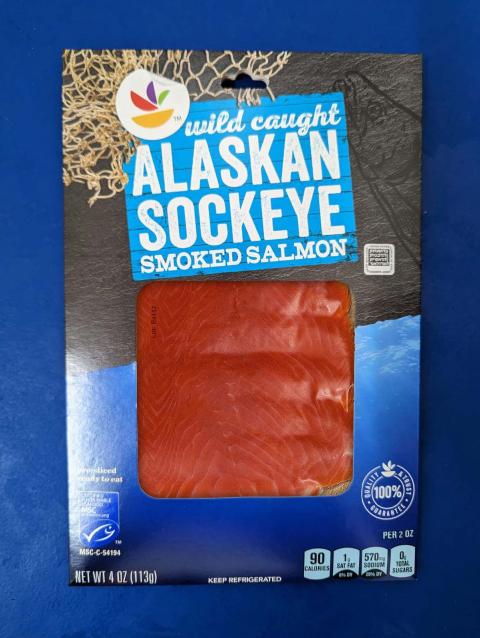
Image – Product Labeling, Giant Brand Wild Caught Alaskan Sockeye Smoked Salmon, 4oz

Company Announcement

Product Name: Giant Private Label Wild Caught Alaskan Sockeye Smoked Salmon
UPC # 68826715832
Lot Code: R4132

Seven Seas International USA, LLC of St. Petersburg, Florida is voluntarily recalling 540 cases of Giant Food Private Label Sockeye Smoked Salmon, because it has the potential to be contaminated with Listeria monocytogenes, an organism which can cause serious and sometimes fatal infections in young children, frail or elderly people, and others with weakened immune systems. Although healthy individuals may suffer only short-term symptoms such as high fever, severe headache, stiffness, nausea, abdominal pain and diarrhea, Listeria infection can cause miscarriages and stillbirths among pregnant women.

The product was distributed by Giant Food in Maryland, Virginia, Washington D.C. and Delaware.

The Giant Brand Wild Caught Sockeye Smoked Salmon, 4 oz. is packaged in a fully printed cardboard sleeve with a sleeve window to display the fish. It is a refrigerated item. Only packages with UPC 68826715832 sold with Lot number R4132 (printed on the clear plastic vacuum bag visible through the sleeve window) are affected by this recall.

The issue was discovered through routine regulatory testing conducted by the Maryland Department of Health.

Consumers who purchased the product with Lot code R4132 are advised to immediately discard and discontinue use of the product, or return it to the place of purchase for a full refund.

No illnesses have been reported to date.

The FDA and the company continue their investigation as to what caused the problem.

Consumers with additional questions may contact the company at 1-888-627-5668 between 9:00 AM and 5:00 PM EST.


Company Contact Information

Consumers:
Seven Seas International USA, LLC
 1-888-627-5668

USA – Comercializadora PepsiCo S. de R.L. de C.V. Issues Voluntary Recall of Gamesa® Arcoiris Marshmallow Cookies Due to Possible Health Risk – Salmonella

FDA

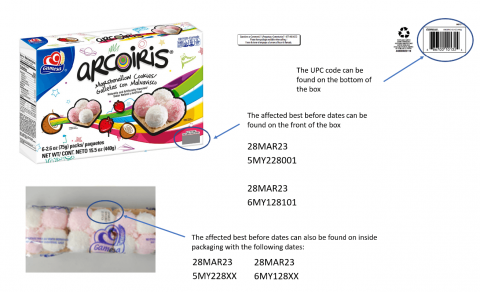
Product Labeling Arcoiris Marshmallow Cookies

Company Announcement

Comercializadora PepsiCo S. de R.L. de C.V. today issued a voluntary recall for 15.5 oz, 6 count box of Gamesa Arcoiris Marshmallow Cookies due to the potential presence of Salmonella.

The recall was initiated as the result of a routine sampling program by the company, which revealed the finished product may contain SalmonellaSalmonella is an organism that can cause serious and sometimes fatal infections in young children, frail or elderly people, and others with weakened immune systems. Healthy persons infected with Salmonella often experience fever, diarrhea, nausea, vomiting and abdominal pain. In rare circumstances, infection with Salmonella can result in the organism getting into the bloodstream and producing more severe illnesses such as arterial infections, endocarditis and arthritis.

The company initiated the voluntary recall on the product below out of a commitment to and concern for consumers. The product covered by this recall was distributed to warehouses in California and Texas and may have reached consumers through select retail stores.

Product Description Size UPC Best Before
Gamesa Arcoiris Marshmallow Cookies, Naturally and Artificially Flavored 15.5 Oz, 6 Count 6 86700 10132 4 28MAR23
5MY228001
28MAR23
6MY128101

The company is working closely with the Food and Drug Administration (FDA) to further investigate this issue and ensure the recalled product is removed from store shelves and is no longer distributed. No illnesses related to Salmonella have been confirmed to date.

Consumers who have purchased the above product are advised not to consume it and urged to dispose of it immediately. Consumers may also contact Gamesa Consumer Relations for product questions and further details at 1-877-842-6372 (9 a.m. – 4:30 p.m. CST, Monday-Friday) or visit https://contact.pepsico.com/gamesaExternal Link Disclaimer


Company Contact Information

Consumers:
Gamesa Consumer Relations
 1-877-842-6372
Media:
Gamesa Media Relations
 pepsicomediarelations@pepsico.com

USA- Kalera Voluntarily Recalls Fresh Lettuce Products Because of Possible Health Risk – Salmonella

FDA

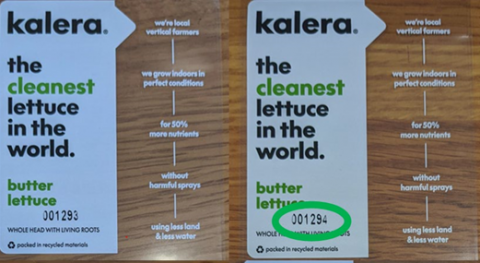
Label Image – kalera, butter lettuce, with coding

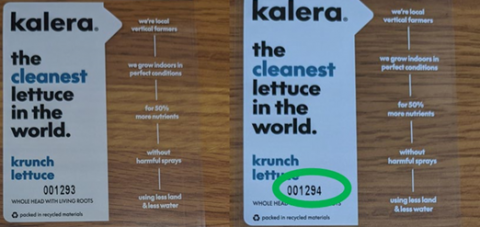
Label Image – kalera, krunch lettuce, with coding

ORLANDO, Fla., November 3, 2022 (FOR DISTRIBUTION) – Kalera Public Limited Company (“Kalera” or the “Company”) (Nasdaq: KAL), is voluntarily recalling 633 cases of Krunch, Butter and Romaine whole head variety lettuce with lot codes 001293 and 001294 on the label and sold under the Kalera brand because it has the potential to be contaminated with Salmonella, an organism which can cause serious and sometimes fatal infections in young children, frail or elderly people, and others with weakened immune systems. Healthy persons infected with Salmonella often experience fever, diarrhea (which may be bloody), nausea, vomiting and abdominal pain. In rare circumstances, infection with Salmonella can result in the organism getting into the bloodstream and producing more severe illnesses such as arterial infections (i.e., infected aneurysms), endocarditis and arthritis.

Distribution was limited to a small number of retail and foodservice customers in Florida. The Company has notified these customers and is working with them to ensure consumers do not receive any of the products affected by the recall.

Kalera’s food safety testing procedures indicated the potential presence of Salmonella in some of its whole head lettuce SKUs.  The Company promptly reported this issue to the FDA, and, to the Company’s knowledge, no illnesses have occurred or been reported to date.

Only those products that are named in this announcement, produced in the Orlando farm and sold in the state of Florida are being recalled. No other Kalera products are affected by the recall.

In the event consumers have the recalled products in their refrigerators, they should be discarded and not consumed. To obtain a refund or for more information, consumers may contact the company at (407) 574-8204 M-F from 9 a.m. to 5 p.m. Eastern Time. Media representatives should contact Aric Nissen, company spokesperson, aric.nissen@kalera.com.


Company Contact Information

Consumers:
 (407) 574-8204
Media:
Aric Nissen
 aric.nissen@kalera.com

USA – FDA Warning Letter – Bakkavor Foods USA Inc. – Listeria monocytogenes

FDA

August 08, 2022

RE: CMS #: 630545

WARNING LETTER

Dear Mr. Anchirayco:

The United States Food and Drug Administration (FDA) inspected your ready-to-eat (RTE) dips, soups, salad bases, burritos, entrée style meals, and seafood products manufacturing facility located at 2700 Westinghouse Blvd, Charlotte, NC, 28273-0113, on February 7-11, 15, and 23, 2022. During our inspection, we collected environmental samples (swabs) from various areas in your facility. FDA laboratory analyses found the presence of Listeria monocytogenes (L. monocytogenes), a human pathogen, in your facility. Additionally, FDA found serious violations of the Current Good Manufacturing Practice, Hazard Analysis, and Risk-Based Preventive Controls for Human Food regulation (CGMP & PC rule), Title 21, Code of Federal Regulations, Part 117 (21 CFR Part 117) and Seafood Hazard Analysis and Critical Control Point (HACCP) regulation, Title 21, Code of Federal Regulations, Part 123 (21 CFR Part 123).

Based on FDA’s inspectional findings and the analytical results for the environmental swabs, we have determined that the ready-to-eat products manufactured in your facility are adulterated within the meaning of section 402(a)(4) of the Federal Food, Drug, and Cosmetic Act (the Act) [21 U.S.C. § 342(a)(4)], in that they were prepared, packed, or held under insanitary conditions whereby they may have been rendered injurious to health. Furthermore, in accordance with 21 CFR 123.6(g), failure of a processor of fish or fishery products to have and implement a HACCP plan that complies with this section or otherwise operate in accordance with the requirements of Part 123, renders the fish or fishery products adulterated within the meaning of Section 402(a)(4) of the Act, 21 U.S.C. § 342(a)(4). In addition, failure of the owner, operator, or agent in charge of a covered facility to comply with the preventive controls provisions of the CGMP & PC rule (located in Subparts A, C, D, E, F, and G of Part 117) is prohibited by section 301(uu) of the Act (21 U.S.C. § 331(uu)). You may find the Act, further information about the CGMP & PC rule, and the seafood HACCP regulation through links in FDA’s home page at http://www.fda.gov.External Link Disclaimer

At the conclusion of the inspection, the FDA investigators issued your facility a Form 483 (FDA-483), Inspectional Observations. You provided responses to the inspection and sample findings on March 16, April 16, May 13, and June 15, 2022, describing corrective actions taken by your firm. Based on our review of the inspectional findings and the responses that your firm provided, we are issuing this letter to advise you of FDA’s continuing concerns and to provide detailed information describing the findings at your facility.

USA – Core Outbreak Table – Investigations of Foodborne Illness Outbreaks

FDA

What’s New

  • A new outbreak of E. coli O157:H7 (reference #1121) in a not yet identified product has been added to the table and traceback has been initiated.
  • For the outbreak of Salmonella Litchfield in seafood, (reference #1105), FDA issued an Outbreak Advisory on 10/19/2022.
  • Based on CDC’s epidemiological investigation of two large multistate outbreaks of Cyclospora cayetanensis (reference #1080 and #1084), ill people reported eating a variety of leafy greens before becoming sick. For both investigations, CDC, FDA, and state and local partners conducted epidemiologic and traceback investigations and collected and analyzed product and environmental samples. All samples collected were reported as negative for Cyclospora. Due to the lack of additional detail in the epidemiological data and the absence of supporting evidence collected from traceback and sample collection, FDA could not identify a specific product as the source of either outbreak.
  • For the outbreak of Salmonella Senftenberg (reference #1087) in a not identified product, one additional case was reported, the outbreak has ended, and FDA’s investigation has closed.
  • For the adverse illness event series in frozen food (reference #1076), the outbreak has ended, and the FDA investigation has closed.

FDA Works to Protect Consumers from Foodborne Illness and other Adverse Events

FDA

A Conversation with Stic Harris, Conrad Choiniere, and Michael Rogers on Foodborne Illness and other Adverse Events 

Each year, the FDA receives approximately 9,600 reports of foodborne illness or other adverse events related to FDA-regulated human food and dietary supplement products submitted by individual consumers, public health professionals, or industry.[1] In addition, the FDA’s Coordinated Outbreak Response & Evaluation (CORE) Network evaluates an average of 75 incidents annually that may potentially constitute a national, multi-state outbreak. 

The FDA takes its responsibility to safeguard the food supply very seriously and is committed to being transparent about how FDA approaches its food safety mission, particularly about how the agency responds when it receives reports of foodborne illness and other adverse events.   

That is what three foods program leaders will discuss in this conversation about challenges and opportunities they face every day in working to protect consumers from potential hazards in the complex, global food system.

Stic Harris, DVM, MPH, is the director of FDA’s Coordinated Outbreak Response & Evaluation (CORE) Network, which is on the frontline of foodborne illness outbreak investigations.

Conrad Choiniere, Ph.D., is the director of the Office of Analytics and Outreach at FDA’s Center for Food Safety and Applied Nutrition (CFSAN). His office evaluates consumer complaints and reports of potential hazards associated with FDA-regulated food, dietary supplements and cosmetic products.

Michael Rogers, MS, is the Assistant Commissioner for Human and Animal Food Operations in FDA’s Office of Regulatory Affairs (ORA), the inspection and enforcement arm of the FDA. In his role he works with ORA’s consumer complaint coordinators and investigators in the field, who are the agency’s boots on the ground in this work to keep foods safe.

These three leaders represent different aspects of the agency’s food safety work and, together, they will provide an overview of how FDA is doing its job and what it can, and will, do to continually improve in this space.

USA – FDA Core Outbreak Table

FDA

What’s New

  • For the outbreak of E. coli O121:H19 linked to Frozen Falafels (reference #1115), FDA has initiated traceback and sample collection and analysis.
  • For the outbreak of E. coli O157:H7 in an unidentified product (reference #1081), the FDA investigation has closed.
  • For the outbreak of Salmonella Senftenberg in an unidentified product (reference #1087), the case count has increased from 33 to 34 cases.
  • For the outbreak of Cyclospora cayetanensis in an unidentified product (reference #1084), the case count has increased from 42 to 43 case.