Category Archives: Eurofins Laboratories

European Alerts – Salmonella, Listeria, E.coli and Lactic Acid Bacteria

RASFF – Salmonella in Duck Breasts in Sweden sourced in France

RASFF – Salmonella in Chicken Breast in Italy sourced in Romania

RASFF – E.coli in Mussels in Italy sourced in Spain

RASFF – Lactic Acid Bacteria in Whiskey Sauce in Denmark

Belgium – Blood Sausage with Listeria monocyotgenes

Norway – Salmonella Outbreak

Australia – Cruise Ship Virus Strikes Again – Norovirus

The Telegraph

BOARDING of the mega liner Voyager of the Seas was thrown into chaos yesterday following an outbreak of a gastrointestinal illness thought to be norovirus.

Some 135 passengers already aboard the ship, which arrived from New Zealand on Thursday, were struck by the illness, along with eight staff, a spokeswoman confirmed, adding this was about 4 per cent of the ship’s guests.

“Those affected by the short-lived illness have responded well to over the counter medication administered on board the ship”‘ Royal Carribbean said in a statement late yesterday.

Canada – Recall – Ham Sausages – Listeria monocytogenes

CFIA

The Canadian Food Inspection Agency (CFIA) and Capital Packers Inc. (EST 231) are warning the public not to consume Capital brand and Compliments brand Ham Sausages described below because the products may be contaminated with Listeria monocytogenes.

The following products are affected by this alert:

Brand Product Size UPC Code
Capital Ham Sausage 300 g 0 64946 51100 6 2012 DE 26
Compliments Ham Sausage 375 g 0 68820 10061 4 2012 DE 26

The CFIA has suspended the licence to operate at Establishment 231, Capital Packers Inc. effective today. The CFIA is conducting a food safety investigation and the public warning may be updated if additional food products are identified which are deemed to be a health risk.

These products may have been distributed nationally.

There have been no reported illnesses associated with the consumption of these products.

USA – Pet Food Recall – Salmonella

FDA

Carolina Prime Pet Inc., a manufacturer and distributor of dog treats, is voluntarily recalling the following product:

Priority Total Pet Care All Natural Bullstrips in a 5-count package
UPC: 0-21130-42080-3
Lot Code: 20082712 S 3195 and Lot Code: 20090312 S3195

The UPC can be located on the back label of each package. The lot Code is located on a sticker on the back of each bag of the 5 count product.

This lot of product has yielded a positive test for Salmonella when tested by the Colorado Dept. of Agriculture. Carolina Prime Pet is not aware of any reported cases of illness related to this product.

Salmonella can affect animals eating the products and there is risk to humans from handling contaminated pet products, especially if they have not thoroughly washed their hands after having contact with the products or any surfaces exposed to these products.

Research – Inhibition of Clostridium and Detection of Enterotoxigenic Staph.

Wiley Online

Abstract:  Inhibition of Clostridium perfringens spore germination and outgrowth in reduced sodium roast beef by a blend of buffered lemon juice concentrate and vinegar (MoStatin LV1) during abusive exponential cooling was evaluated. Roast beef containing salt (NaCl; 1%, 1.5%, or 2%, w/w), blend of sodium pyro- and poly-phosphates (0.3%), and MoStatin LV1 (0%, 2%, or 2.5%) was inoculated with a 3-strain C. perfringens spore cocktail to achieve final spore population of 2.5 to 3.0 log CFU/g. The inoculated products were heat treated and cooled exponentially from 54.4 to 4.4 °C within 6.5, 9, 12, 15, 18, or 21 h. Cooling of roast beef (2.0% NaCl) within 6.5 and 9 h resulted in <1.0 log CFU/g increase in C. perfringens spore germination and outgrowth, whereas reducing the salt concentration to 1.5% and 1.0% resulted in >1.0 log CFU/g increase for cooling times longer than 9 h (1.1 and 2.2 log CFU/g, respectively). Incorporation of MoStatin LV1 into the roast beef formulation minimized the C. perfringens spore germination and outgrowth to <1.0 log CFU/g, regardless of the salt concentration and the cooling time.

Practical Application:  Cooked, ready-to-eat meat products should be cooled rapidly to reduce the risk of Clostridium perfringens spore germination and outgrowth. Meat processors are reducing the sodium chloride content of the processed meats as a consequence of the dietary recommendations. Sodium chloride reduces the risk of C. perfringens spore germination and outgrowth in meat products. Antimicrobials that contribute minimally to the sodium content of the product should be incorporated into processed meats to assure food safety. Buffered lemon juice and vinegar can be incorporated into meat product formulations to reduce the risk of C. perfringens spore germination and outgrowth during abusive cooling.

Wiley Online

Abstract:  The aim of this study was to investigate the prevalence of enterotoxigenic Staphylococcus aureus in 122 samples, including 60 raw milk, 32 white cheese, 10 kashar cheese, 10 butter, and 10 ice cream samples obtained from Samsun province, Turkey. In this study, S. aureus was detected in 64 samples, including raw milk (45/60; 75%), white cheese (12/32; 37.5%), kashar cheese (3/10; 30%), butter (3/10; 30%), and ice cream (1/10; 10%) samples. A total of 81 isolates were identified as S. aureus by PCR with the presence of 16S rRNA and nuc genes. The presence of genes encoding the staphylococcal enterotoxins (SEs) SEA, SEB, SEC, and SED was detected by multiplex PCR. According to the analysis, seven isolates from the raw milk samples (7/51; 13.7%) were enterotoxigenic; five of them produced SEA (5/7; 71.4%), one produced SEB (1/7; 14.2%), and one produced SEA+SEB (1/7; 14.2%). Four isolates from the white cheese samples (4/21; 19%) produced the SEA (1/4; 25%), SEC (1/4; 25%), SED (1/4; 25%), and SEA+SED (1/4; 25%) toxins. Two isolates from the kashar cheese samples (2/4; 50%) were found to be enterotoxigenic; one produced SEA (1/2; 50%) and the other produced SED (1/2; 50%). One isolate from the butter samples (1/4; 25%) showed enterotoxigenic character (SEB, 1/1; 100%). The products were found to be potentially hazardous to public health because of the fact that levels of contamination were higher than 105–106 cfu/g ml in 39% (25/64, 17 raw milk, 7 white cheese, and 1 butter) of the analyzed samples.

Canada and USA – Cherry Tomato Recalls – Salmonella

CIFA

The Canadian Food Inspection Agency (CFIA) is warning the public not to consume the cherry tomatoes and store-made party trays containing cherry tomatoes described below because the products may be contaminated with Salmonella.

The following products are affected by this alert:

Brand Product Size UPC Dates sold
Krown Cherry tomatoes 551 ml 0 33383 65520 8 November 13 to 21, 2012, inclusive
None – Sold at Safeway stores Various store-made party trays containing cherry tomatoes Various Various November 14 to 21, 2012, inclusive

These products have been distributed in British Columbia, Alberta, Saskatchewan, Manitoba, Ontario, North West Territories and Yukon and may have been distributed nationally.

There have been no reported illnesses associated with the consumption of these products.

FDA

Rio Queen Citrus, Inc. of Mission, TX is recalling 840 cartons of 12/1 Dry Pints of Mexican cherry tomatoes in “Karol” brand boxes, because they have the potential to be contaminated with Salmonella, an organism which can cause serious and sometimes fatal infections in young children, frail or elderly people, and others with weakened immune systems. Healthy persons infected with Salmonella often experience fever, diarrhea (which may be bloody), nausea, vomiting and abdominal pain. In rare circumstances, infection with Salmonellacan result in the organism getting into the bloodstream and producing more severe illnesses such as arterial infections (i.e., infected aneurysms), endocarditis and arthritis.

The “Karol” cherry tomatoes were distributed through retail stores in the states of Texas & South Carolina.

The product was originally distributed in a bulk container of 12/1 Dry Pints in boxes labeled “Karol” with the Lot No. “01W45” stamped in the upper, right-hand corner on the face of the box. The box states “Distributed by Interstate Fruit & Vegetable”, which is an affiliated business of Rio Queen Citrus, Inc. These packages were distributed at the retail level between November 10th & November 19th, 2012. At the retail level, the tomatoes may have been packaged in an alternative container depending on the area and retailer.

No illnesses have been reported to date in connection with this problem.

European Alerts – Salmonella, E.coli, Aflatoxin, Mould, Histamine

RASFF – E.coli in Mussles in Italy sourced in Spain.

RASFF – Salmonella in Frozen Snails in France sourced in Greece

RASFF – Aflatoxin in Maize in Italy sourced in Spain

RASFF – Mould in Hazlenuts in UK from Turkey

RASFF – Histamine in Tuna in Ireland sourced in Thailand

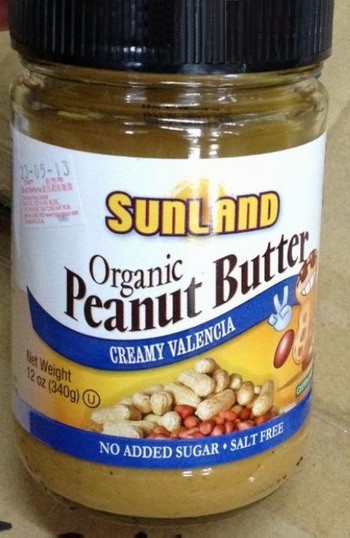
UK – FSA – Sunland and USA Peanut Butter Outbreak Hits UK

FSA

The Food Standards Agency (FSA) is warning consumers not to eat certain peanut butter and peanut-based products which have been imported from the US because of possible contamination with salmonella. Salmonella is a bacterium that causes food poisoning. The Agency has issued a Food Alert for Action.

An outbreak of a strain of salmonella called Salmonella Bredeney in the US has been linked to peanut butter produced by a company called Sunland Inc. As a result, the manufacturer is recalling a wide range of peanut butter and peanut-based products. Other products containing nuts and seeds are also being recalled.

USA – CDC – Multistate Outbreak of E.coli O157:H7 – Spinach

CDCE.coli O157

A total of 28 persons infected with the outbreak strain of Shiga toxin-producing Escherichia coliO157:H7 (STEC O157:H7) have been reported from five states, with most cases in New York.

42% of ill persons have been hospitalized. Two ill persons have developed hemolytic uremic syndrome (HUS), a type of kidney failure, and no deaths have been reported.

The outbreak was initially in New York. More recently, more ill persons in other states have been reported, and the investigation has expanded.

UK/Germany/Netherlands – Increase in Cryptosporidium Notifications in 2012

ECDC

An increase in Cryptodsporidim notifications has been observed in the UK, Netherlands and Germany since August 2012 that is likely to be real and not due to surveillance or notifcations artifacts.

The available information from investigations in the United Kingdom, the Netherlands and Germany indicates that there is not a single, common source, but rather a combination of several causes. These may include climatic drivers, such as the increased rainfall in the summer of 2012 in these countries or a widely distributed commonly consumed product. There is however no evidence for it at this stage and further investigations are ongoing.

 The overall threat for the European Union/European Economic Area (EU/EEA) is considered to be low.

 EU/EEA Member States should be alert to an increase in cases as observed in the United Kingdom, the Netherlands and Germany, particularly in relation to immunocompromised and other at-risk groups as they may present with a more severe manifestation of cryptosporidiosis.