Category Archives: eaeA

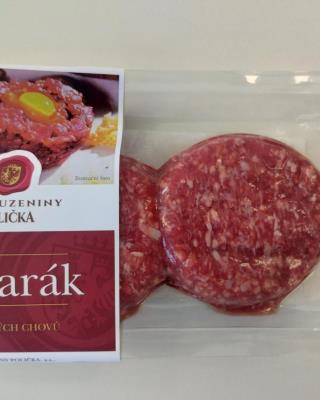
Czech Republic – Shelf Steak Tartar 250 g – Enteropathogenic Escherichia coli (EPEC) – Intimin (eaeA)

Potravinynapranyri

Illustrative photo #1

Place of inspection:
Olomouc ( Velkomoravská 488/29, 779 00 Olomouc )
ID: 26178541
Food group: Meat and meat products Non-heat-treated non-perishable products

Shelf Steak Tartar 250 g
Category: Dangerous foods
Invalid parameter:

Enteropathogenic Escherichia coli (EPEC) – Intimin (eaeA)

The presence of enteropathogenic Escherichia coli was detected in the food  . The presence of this bacterium in food intended for direct consumption represents a high risk of illness in the consumer.​

Batch: L: 145448
Expiration date: 09/08/2024
Packaging: plastic sealed foil
Quantity of the product in the package: 250 g
Manufacturer: Sausage meat, Polička, as, no. 300, 57201 Kamenec u Polička, Czech Republic
Date of sample collection: 31/07/2024
Reference number: 24-000513-SZPI-CZ
The sample was detected by the official control of the State Agricultural and Food Inspection.
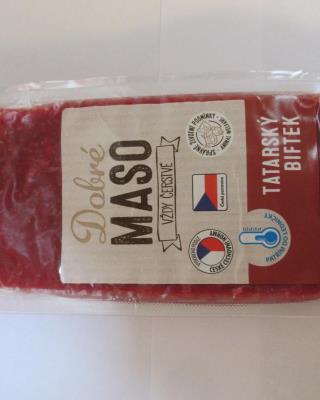
Czech Republic- GOOD MEAT Steak tartare – Enteropathogenic Escherichia coli (EPEC) – Intimin (eaeA)

Potravinynapranyri

Illustrative photo #1

Place of inspection:
Bystřice nad Pernštejnem ( Novoměstská 849, 59301 Bystřice nad Pernštejnem )
ID: 64945880
Food group: Meat and meat products Non-heat-treated non-perishable products

GOOD MEAT Steak tartare
Category: Dangerous foods
Invalid parameter:

Enteropathogenic Escherichia coli (EPEC) – Intimin (eaeA)

The presence of enteropathogenic E. coli was detected in the food . The presence of this bacterium in food intended for direct consumption represents a high risk of disease in the consumer.

The food was evaluated as harmful to health.

Batch: 07/08/2024
Expiration date: 07/08/2024
Packaging: PP
Quantity of the product in the package: 250 g
Manufacturer: Uzeniny Příbram, as, Antala Staška 1670/80, Prague 4
Country of origin:  Czechia
Date of sample collection: 26/06/2024
Reference number: 24-000410-SZPI-CZ
The sample was detected by the official control of the State Agricultural and Food Inspection.

Research – Shiga toxin-producing Escherichia coli (STEC) in meat and leafy greens available in the Swedish retail market – Occurrence and diversity of stx subtypes and serotypes

Science Direct

Abstract

Shiga toxin-producing Escherichia coli (STEC) is a major cause of foodborne illness, ranging from mild diarrhea to permanent kidney failure. This study summarizes the results of four surveys performed at different time periods, which investigated the occurrence and characteristics of STEC in beef, lamb and leafy greens available in the Swedish retail market. Such data is required when assessing the public health risk of varying types of STEC in different foods, and for establishing risk management measures. Samples from domestic and imported products were collected based on their availability in the retail market. The occurrence of STEC was investigated in 477 samples of beef, 330 samples of lamb and 630 samples of leafy greens. The detection of virulence genes (stx1stx2eae) was performed using real-time PCR followed by the isolation of bacteria from stx-positive enriched samples using immunomagnetic separation or an immunoblotting method. All STEC isolated from the food samples was further characterised in terms of stx subtyping and serotyping through whole genome sequencing. STEC was isolated from 2 to 14 % of beef samples and 20 to 61 % of lamb samples, depending on the region of origin. STEC was not isolated from samples of leafy greens, although stx genes were detected in 11 (2 %) of the samples tested. In total, 5 of the 151 sequenced STEC isolates from meat contained stx2 and eae, of which 4 such combinations had the stx2a subtype. The stx2 gene, stx2a in particular, is strongly associated with serious disease in humans, especially in combination with the eae gene. The isolates belonged to 20 different serotypes. Two isolates from beef and one from lamb belonged to the serotype O157:H7 and contained genes for stx2 and eae. Overall, several combinations of stx subtypes were found in isolates from beef, whereas stx1c, either alone or together with stx2b, was the dominant combination found in STEC from lamb. In conclusion, STEC was rare in whole meat samples of domestic beef in the Swedish retail market, whereas such bacteria were frequently found in minced meat and whole meat samples of imported beef and domestic and imported lamb. Although the number of isolates containing genes linked to an increased risk of severe disease was low, beef and lamb in the Swedish retail market is a common source of human exposure to potentially pathogenic STEC.

RASFF Alert- STEC E.coli – Bovine Meat

RASFF

STEC (stx+;eae+) in bovine meat from Belgium in France

RASFF Alerts – STEC E.coli – Raw Milk Goat Cheese – Beef Carpaccio

RASFF

Possible STEC (stx+;eae+) in raw milk goat cheese from Belgium in Germany

RASFF

STEC in beef carpaccio from the Netherlands in Belgium


RASFF Alert – STEC E.coli – Veal Burger

RASFF

STEC (stx+;eae+) in veal burger from Belgium in France, Italy Germany and Spain

Research – Prevalence and Characterization of Shiga Toxin Producing Escherichia coli Isolated from Animal Feed in Croatia

MDPI

A survey on prevalence and number of Shiga toxin-producing Escherichia (E.) coli (STEC) in animal feed was carried out over a period of nine years in the Republic of Croatia. A total of 1688 feed samples were collected from feed factories and poultry farms. Analysis included two standard procedures: sample enrichment and (a) immunomagnetic separation and plating on two selective media; or (b) plating on two selective media. Confirmation of STEC included morphological examination, biochemical tests, serotyping, and polymerase chain reaction. Morphological and biochemical characterization revealed 629 E. coli strains. Further serological screening method revealed 78 STEC and EPEC serotypes, while only 27 strains were confirmed as STEC with PCR. All positive samples (1.6%) originated from poultry farms and contained combination of virulence genes: eaeA, stx1, and/or stx2. Since the presence of stx (especially stx2) and eae are identified as risk factors for development of severe diseases in humans, results of this survey indicate that avian sources of STEC infections might be one of those “undefined sources” of human illnesses. Further research is necessary for evaluation of risks posed by contaminated feed, poultry, and environment.

Czech Republic – TARTAR DI MANZO – EPEC E.coli

Potravinynapranyri

Illustration photo no. 1

Place of inspection:
Ostrava ( Masarykovo namesti 2572/7, 702 00 Ostrava )
Company ID: 06433847
Food group: Meals Cold dishes

TARTAR DI MANZO
Category: Dangerous food
Unsatisfactory parameter:

Escherichia coli enteropathogenic (EPEC) – intimin (eaeA)

The food was found to have the pathogenic enteropathogenic bacterium  Escherichia coli (EPEC), which causes watery diarrhea, vomiting and fever.

Expiration date: 8/31/2021
Quantity of product in package: 100 g
Producer: Anebia food sro, Masarykovo namesti 2572/7, Ostrava
Sampling date: 31. 8. 2021
Reference number: 21-000545-CAFIA-CZ
The sample was found by an official inspection of the State Agricultural and Food Inspection Authority.