Category Archives: E.coli

USA – Three infected after eating ground beef from grocery store meat counters – E.col iO157

Food Safety News

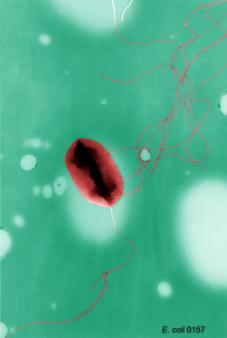
kswfoodworld E.coli O157

Image CDC


At least three people are sick with E. coli O157:H7 infections after eating ground beef sold by New Seasons Market stores. The retailer is recalling an unrevealed amount of meat.

Although the implicated ground beef was sold between Oct. 19 and 23, there is concern that some people may have it in their home freezers. The Oregon Health Authority issued a public notice urging customers who purchased the ground beef to throw it away immediately.

The recalled ground beef comes in 5 percent, 10 percent and 20 percent fat content varieties and is ground at individual New Seasons Market stores’ meat counters. The retailer has stores in Oregon, Washington and California.

Research -Synergistic effect of steam and lactic acid against Escherichia coli O157:H7, Salmonella Typhimurium, and Listeria monocytogenes biofilms on polyvinyl chloride and stainless steel

Science Direct

Abstract

This study was designed to investigate the individual and combined effects of steam and lactic acid (LA) on the inactivation of biofilms formed by Escherichia coli O157:H7, Salmonella Typhimurium, and Listeria monocytogenes on polyvinyl chloride (PVC) and stainless steel. Six day old biofilms were developed on PVC and stainless steel coupons by using a mixture of three strains each of three foodborne pathogens at 25 °C. After biofilm development, PVC and stainless steel coupons were treated with LA alone (immersed in 0.5% or 2% for 5 s, 15 s, and 30 s), steam alone (on both sides for 5, 10, and 20 s), and the combination of steam and LA. The numbers of biofilm cells of the three foodborne pathogens were significantly (p < 0.05) reduced as the amount of LA and duration of steam exposure increased. There was a synergistic effect of steam and LA on the viability of biofilm cells of the three pathogens. For all biofilm cells of the three foodborne pathogens, reduction levels of individual treatments ranged from 0.11 to 2.12 log CFU/coupon. The combination treatment of steam and LA achieved an additional 0.2 to 2.11 log reduction compared to the sum of individual treatments. After a combined treatment of immersion in 2% LA for 15 s or 30 s followed by exposure to steam for 20 s, biofilm cells of the three pathogens were reduced to below the detection limit (1.48 log). From the results of this study, bacterial populations of biofilms on PVC coupons did not receive the same thermal effect as on stainless steel coupons. Effectiveness of steam and LA may be attributed to the difference between Gram-negative and Gram-positive characteristics of the bacteria studied. The results of this study suggest that the combination of steam and LA has potential as a biofilm control intervention for food processing facilities.


RASFF Alert – E.coli – Ruccola

RASFF-Logo

RASFF – high count of Escherichia coli (1010 CFU/g) in ruccola from Germany in Germany

Canada -Updated Food Recall Warning – Various raw beef and raw veal products recalled due to E. coli O157:H7

CFIA

Ottawa, November 6, 2019 – The food recall warning issued on November 5, 2019 has been updated to include additional product information. This additional information was identified during the Canadian Food Inspection Agency’s (CFIA) food safety investigation.

Industry is recalling various raw beef and raw veal products from the marketplace due to possible E. coli O157:H7 contamination. Consumers should not consume and distributors, retailers and food service establishments such as hotels, restaurants, cafeterias, hospitals and nursing homes should not sell or use the recalled products described below.

The following products have been sold as indicated in the link above.

Ongoing investigation

See complete list of recalled products associated with this ongoing investigation.

Illnesses

There have been no reported illnesses associated with the consumption of these products.

Related recalls

2019-11-05 – Various raw beef and raw veal products recalled due to E. coli O157:H7

2019-11-04 – Various raw beef and raw veal products recalled due to E. coli O157:H7

2019-10-30 – Various raw beef and raw veal products recalled due to E. coli O157:H7

2019-10-29 – Various raw beef and raw veal products recalled due to E. coli O157:H7

2019-10-28 – Various raw beef and raw veal products recalled due to E. coli O157:H7

2019-10-25 – Various raw beef and raw veal products recalled due to E. coli O157:H7

2019-10-24 – Various raw beef and raw veal products recalled due to E. coli O157:H7

2019-10-23 – Various raw beef and raw veal products recalled due to E. coli O157:H7

2019-10-22 – Various raw beef and raw veal products recalled due to E. coli O157:H7

2019-10-21 – Various raw beef and raw veal products recalled due to E. coli O157:H7

2019-10-19 – Various raw beef and raw veal products recalled due to E. coli O157:H7

2019-10-18 – Various raw beef and raw veal products recalled due to E. coli O157:H7

2019-10-17 – Various raw beef and raw veal products recalled due to E. coli O157:H7

2019-10-16 – Various raw beef and raw veal products recalled due to E. coli O157:H7

2019-10-15 – Various raw beef and raw veal products recalled due to E. coli O157:H7

2019-10-12 – Various raw beef and raw veal products recalled due to E. coli O157:H7

2019-10-11 – Various raw beef and raw veal products recalled due to E. coli O157:H7

2019-10-10 – Various raw beef and raw veal products recalled due to E. coli O157:H7

2019-10-09 – Various raw beef and raw veal products recalled due to E. coli O157:H7

2019-10-08 – Ryding-Regency Meat Packers Ltd. brand raw beef products recalled due to E. coli O157:H7

2019-10-07 – Various raw beef and raw veal products recalled due to E. coli O157:H7

2019-10-06 – The Beef Boutique Ltd. brand raw beef products recalled due to E. coli O157:H7

2019-10-04 – Ryding-Regency Meat Packers Ltd. brand raw beef products recalled due to E. coli O157:H7

2019-10-03 – Ryding-Regency Meat Packers Ltd. brand raw beef products recalled due to E. coli O157:H7

Canada -Updated Food Recall Warning – Various raw beef and raw veal products recalled due to E. coli O157:H7

CFIA

kswfoodworld E.coli O157

Image CDC


Recall details

Ottawa, November 5, 2019 – The food recall warning issued on November 4, 2019 has been updated to include additional product information. This additional information was identified during the Canadian Food Inspection Agency’s (CFIA) food safety investigation.

Industry is recalling various raw beef and raw veal products from the marketplace due to possible E. coli O157:H7 contamination. Consumers should not consume and distributors, retailers and food service establishments such as hotels, restaurants, cafeterias, hospitals and nursing homes should not sell or use the recalled products described below.

The following products have been sold as indicated in the table below.

Ongoing investigation

See complete list of recalled products associated with this ongoing investigation.

Recalled products

Recalled products – Consumer

Brand Product Size UPC Codes Additional Information / Distribution
None Dry Aged Burgers 6.5oz Variable (clerk-served) None All ‘Packed on’ dates from 2019JUL09 up to and including 2019JUL23 Sold at Chantecler Boucherie, 1318 Queen Street West, Toronto
None Ribeye Variable (clerk-served) None All ‘Packed on’ dates from 2019JUL09 up to and including 2019JUL23 Sold at Chantecler Boucherie, 1318 Queen Street West, Toronto

What you should do

If you think you became sick from consuming a recalled product, call your doctor.

Check to see if you have the recalled products in your home or establishment. Recalled products should be thrown out or returned to the location where they were purchased.

Food contaminated with E. coli O157:H7 may not look or smell spoiled but can still make you sick. Symptoms can include nausea, vomiting, mild to severe abdominal cramps and watery to bloody diarrhea. In severe cases of illness, some people may have seizures or strokes, need blood transfusions and kidney dialysis or live with permanent kidney damage. In severe cases of illness, people may die.

Background

This recall was triggered by the CFIA’s inspection activities. The CFIA is conducting a food safety investigation, which may lead to the recall of other products. If other high-risk products are recalled, the CFIA will notify the public through updated Food Recall Warnings.

The CFIA is verifying that industry is removing the recalled products from the marketplace.

Illnesses

There have been no reported illnesses associated with the consumption of these products.

Related recalls

2019-11-04 – Various raw beef and raw veal products recalled due to E. coli O157:H7

2019-10-30 – Various raw beef and raw veal products recalled due to E. coli O157:H7

2019-10-29 – Various raw beef and raw veal products recalled due to E. coli O157:H7

2019-10-28 – Various raw beef and raw veal products recalled due to E. coli O157:H7

2019-10-25 – Various raw beef and raw veal products recalled due to E. coli O157:H7

2019-10-24 – Various raw beef and raw veal products recalled due to E. coli O157:H7

2019-10-23 – Various raw beef and raw veal products recalled due to E. coli O157:H7

2019-10-22 – Various raw beef and raw veal products recalled due to E. coli O157:H7

2019-10-21 – Various raw beef and raw veal products recalled due to E. coli O157:H7

2019-10-19 – Various raw beef and raw veal products recalled due to E. coli O157:H7

2019-10-18 – Various raw beef and raw veal products recalled due to E. coli O157:H7

2019-10-17 – Various raw beef and raw veal products recalled due to E. coli O157:H7

2019-10-16 – Various raw beef and raw veal products recalled due to E. coli O157:H7

2019-10-15 – Various raw beef and raw veal products recalled due to E. coli O157:H7

2019-10-12 – Various raw beef and raw veal products recalled due to E. coli O157:H7

2019-10-11 – Various raw beef and raw veal products recalled due to E. coli O157:H7

2019-10-10 – Various raw beef and raw veal products recalled due to E. coli O157:H7

2019-10-09 – Various raw beef and raw veal products recalled due to E. coli O157:H7

2019-10-08 – Ryding-Regency Meat Packers Ltd. brand raw beef products recalled due to E. coli O157:H7

2019-10-07 – Various raw beef and raw veal products recalled due to E. coli O157:H7

2019-10-06 – The Beef Boutique Ltd. brand raw beef products recalled due to E. coli O157:H7

2019-10-04 – Ryding-Regency Meat Packers Ltd. brand raw beef products recalled due to E. coli O157:H7

2019-10-03 – Ryding-Regency Meat Packers Ltd. brand raw beef products recalled due to E. coli O157:H7

Canada – The Daily Recall Update for E.coli O157 in Beef and Veal Products!

CFIA

Recall details

Ottawa, November 4, 2019 – The food recall warning issued on October 30, 2019 has been updated to include additional product information. This additional information was identified during the Canadian Food Inspection Agency’s (CFIA) food safety investigation.

Industry is recalling various raw beef and raw veal products from the marketplace due to possible E. coli O157:H7 contamination.  Consumers should not consume and distributors, retailers and food service establishments such as hotels, restaurants, cafeterias, hospitals and nursing homes should not sell or use the recalled products described below.

The following products have been sold as indicated in the table below.

Ongoing investigation

See complete list of recalled products associated with this ongoing investigation.

Recalled products

Recalled products – Consumer

Brand Common Name Size UPC Codes on Product Additional Info / Distribution
None – Foody World Beef Shank Variable (Clerk Served) Starting with 0200030 All units sold from
June 12, 2019 up to and including
June 15, 2019
Sold at Foody World, 8 William Kitchen Rd A, Scarborough, ON
None – Foody World Beef Flank Steak Variable (Clerk Served) Starting with 0200022 All units sold from
June 12, 2019 up to and including
June 15, 2019
Sold at Foody World, 8 William Kitchen Rd A, Scarborough, ON

What you should do

If you think you became sick from consuming a recalled product, call your doctor.

Check to see if you have the recalled products in your home or establishment. Recalled products should be thrown out or returned to the location where they were purchased.

Food contaminated with E. coli O157:H7 may not look or smell spoiled but can still make you sick. Symptoms can include nausea, vomiting, mild to severe abdominal cramps and watery to bloody diarrhea. In severe cases of illness, some people may have seizures or strokes, need blood transfusions and kidney dialysis or live with permanent kidney damage. In severe cases of illness, people may die.

Background

This recall was triggered by the CFIA’s inspection activities. The CFIA is conducting a food safety investigation, which may lead to the recall of other products. If other high-risk products are recalled, the CFIA will notify the public through updated Food Recall Warnings.

The CFIA is verifying that industry is removing the recalled products from the marketplace.

Illnesses

There have been no reported illnesses associated with the consumption of these products.

Related recalls

2019-10-30 – Various raw beef and raw veal products recalled due to E. coli O157:H7

2019-10-29 – Various raw beef and raw veal products recalled due to E. coli O157:H7

2019-10-28 – Various raw beef and raw veal products recalled due to E. coli O157:H7

2019-10-25 – Various raw beef and raw veal products recalled due to E. coli O157:H7

2019-10-24 – Various raw beef and raw veal products recalled due to E. coli O157:H7

2019-10-23 – Various raw beef and raw veal products recalled due to E. coli O157:H7

2019-10-22 – Various raw beef and raw veal products recalled due to E. coli O157:H7

2019-10-21 – Various raw beef and raw veal products recalled due to E. coli O157:H7

2019-10-19 – Various raw beef and raw veal products recalled due to E. coli O157:H7

2019-10-18 – Various raw beef and raw veal products recalled due to E. coli O157:H7

2019-10-17 – Various raw beef and raw veal products recalled due to E. coli O157:H7

2019-10-16 – Various raw beef and raw veal products recalled due to E. coli O157:H7

2019-10-15 – Various raw beef and raw veal products recalled due to E. coli O157:H7

2019-10-12 – Various raw beef and raw veal products recalled due to E. coli O157:H7

2019-10-11 – Various raw beef and raw veal products recalled due to E. coli O157:H7

2019-10-10 – Various raw beef and raw veal products recalled due to E. coli O157:H7

2019-10-09 – Various raw beef and raw veal products recalled due to E. coli O157:H7

2019-10-08 – Ryding-Regency Meat Packers Ltd. brand raw beef products recalled due to E. coli O157:H7

2019-10-07 – Various raw beef and raw veal products recalled due to E. coli O157:H7

2019-10-06 – The Beef Boutique Ltd. brand raw beef products recalled due to E. coli O157:H7

2019-10-04 – Ryding-Regency Meat Packers Ltd. brand raw beef products recalled due to E. coli O157:H7

2019-10-03 – Ryding-Regency Meat Packers Ltd. brand raw beef products recalled due to E. coli O157:H7

USA -King Arthur Flour Updates Three Lot Codes of Voluntarily Recalled Unbleached All-Purpose Flour (5 lb.)

FDA

King Arthur Flour, Inc. was notified by ADM Milling Co. that three additional product lot codes of Unbleached All-Purpose Flour 5 lb. were omitted from the original data they provided for the press release on October 3, 2019. The additional lot codes and their corresponding “Best Used By” dates are listed below:

Best Used by Date 12/09/19: Lot codes L18A09A L18A09C

Best Used by Date 01/08/20: Lot code A19A08A

This new information only applies to “Best Used By” dates already disclosed in the prior release. No additional Best Used By dates are introduced as a result of these three updated lot codes.

As stated in the prior release, we have undertaken this voluntary recall because of the potential presence of E. coli 026.

King Arthur Flour has not received any confirmed reports of illnesses to date related to this product.

Consumers who have any of these affected products should throw them away and may submit a claim for a refund or replacement at kingarthurflour.com/voluntaryrecallExternal Link Disclaimer, or by calling our King Arthur Flour Consumer Hotline at 866-797-9178.

Consumer safety is our top priority. Consumers are reminded to wash their hands, work surfaces, and utensils thoroughly after contact with raw dough products or flour, and to never eat raw dough or batter. The Centers for Disease Control (CDC) warns consumers to not consume raw products made with flour. E. coli O26 is killed by heat through baking, frying, sautéing, or boiling products made with flour. For more information, refer to the following: https://www.cdc.gov/features/no-raw-dough/index.html.

Bakers have trusted King Arthur Flour products in their kitchens for over 225 years. We remain committed to providing our consumers safe and superior products.

This information can be found online at kingarthurflour.com/voluntaryrecall.External Link Disclaimer Consumers with any questions regarding this recall or King Arthur Flour products are encouraged to call the King Arthur Flour Consumer Hotline at 866-797-9178.

Original Press Release

Research – Survey of Intact and Nonintact Raw Pork Collected at Retail Stores in the Mid-Atlantic Region of the United States for the Seven Regulated Serogroups of Shiga Toxin–Producing Escherichia coli

Journal of Food Protection

ABSTRACT

A total of 514 raw pork samples (395 ground or nonintact and 119 intact samples) were purchased at retail stores in Pennsylvania, Delaware, and New Jersey between July and December 2017. All raw pork samples were screened for serogroup O26, O45, O103, O111, O121, O145, or O157:H7 cells of Shiga toxin–producing Escherichia coli (STEC-7) using standard microbiological and molecular methods. In short, 21 (5.3%) of the 395 ground or nonintact pork samples and 3 (3.4%) of the 119 intact pork samples tested positive via the BAX system real-time PCR assay for the stx and eae virulence genes and for the somatic O antigens for at least one of the STEC-7 serogroups. However, none of these 24 presumptive-positive pork samples subsequently yielded a viable isolate of STEC displaying a STEC-7 serogroup-specific surface antigen in combination with the stx and eae genes. These data suggest that cells of STEC serogroups O26, O45, O103, O111, O121, O145, or O157:H7 are not common in retail raw pork samples in the mid-Atlantic region of the United States.

HIGHLIGHTS
  • None of the 514 retail raw pork samples were positive for STEC-7.

  • Four of 514 raw pork samples harbored E. coli of unknown serogroup containing stx and eae.

  • STEC-7 are uncommon in retail raw pork samples in the U.S. mid-Atlantic region.


Research – A Novel Aqueous Ozone Treatment as a Spray Chill Intervention against Escherichia coli O157:H7 on Surfaces of Fresh Beef

Journal of Food Protection

ABSTRACT

This experiment determined the efficacy of using a novel aqueous ozone treatment as a spray chill intervention to reduce Escherichia coli O157:H7 on surfaces of fresh beef compared with traditional water spray chill. Cutaneous trunci muscles were obtained from a local beef cattle processing plant. Muscles were divided into sixteen 25-cm2 sections, and each section was individually inoculated with E. coli O157:H7 to the final concentration of approximately 105 CFU/cm2. Muscle sections were collected and tested before and after simulated spray chill treatments of water or the novel aqueous ozone solution. Enumeration of survivors of each treatment was compared with that of the untreated muscle sections. Water spray chill reduced (P ≤ 0.05) E. coli O157:H7 0.60 log, whereas the aqueous ozone spray chill reduction (P ≤ 0.05) was 1.46 log on surfaces of fresh beef. Aqueous ozone spray chill reduced (P ≤ 0.05) aerobic bacteria 0.99 log, but water spray chill did not significantly (P > 0.05) reduce aerobic bacteria on surfaces of fresh beef. The findings indicate that aqueous ozone can be used as a spray chill intervention to enhance the safety of beef.

HIGHLIGHTS
  • Aqueous ozone spray chill could be an effective antimicrobial intervention.

  • Nanobubble technology may enhance the efficacy of ozone application.

  • These results need to be validated under commercial conditions.

USA – Romaine E. coli Outbreak happened in September and no one told you

Food Poison Journal Eurofins Food Testing UK

Today, the U.S. Food and Drug Administration is sharing news of a recent E. coli O157:H7 outbreak, involving 23 illnesses, that was likely associated with romaine lettuce. No deaths were reported. The active investigation has reached its end and the outbreak appears to be over. The FDA and the U.S. Centers for Disease Control did not identify actionable information for consumers during this investigation. Additionally, when romaine lettuce was identified as the likely source of the outbreak, the available data at the time indicated that the outbreak was not ongoing and romaine lettuce eaten by sick people was past its shelf life and no longer available for sale. The FDA is communicating details about the outbreak at this time to help ensure full awareness by the public and to highlight the ongoing importance of industry actions to help ensure the safety of leafy greens. Federal health officials do not believe there is a current or ongoing risk to public health.