Category Archives: E.coli

Research – Outbreak Investigation of E. coli O157:H7: Unknown Food (Fall 2020)

Food Poisoning News

The FDA and CDC, in collaboration with state and local partners, have completed the investigation on two of three multistate outbreak of E. coli O157:H7 infections in the U.S. this fall.

One of these investigations, Outbreak Unknown Source 3, identified 18 reported illnesses in nine states: California, Colorado, Illinois, Michigan, New York, Ohio, Pennsylvania, Virginia, Washington.

FDA completed a traceback investigation of several potential food vehicles identified in patient interviews and although no single farm was identified as a common source of the outbreak, FDA and state partners also conducted on-site investigations on farms of interest. However, information and samples collected in these inspections did not link these farms to the outbreak. The investigation of a farm does not mean that the farm is linked to an outbreak. The results of an investigation into a farm may well lead to that firm being ruled out of the investigation. On 12/18/2020, the CDC announced that this outbreak had ended.

The other completed outbreak investigation, Outbreak Unknown Source 1, identified 32 reported illnesses in 12 states: California, Illinois, Louisiana, Maryland, Michigan, Montana, New Jersey, Ohio, Utah, Virginia, Washington, Wisconsin. This strain of E. coli is genetically similar to a strain linked to a romaine outbreak that occurred in the spring of 2018, though a food was not linked to the current outbreak. FDA completed a traceback investigation and was unable to determine a common source of the outbreak. FDA and state partners also conducted on-site inspections on farms of interest, though information collected in these inspections did not link these farms to the outbreak. On 12/18/2020, the CDC announced that this outbreak had ended.

Investigations of a third E. coli outbreak of Unknown Source 2 continue.
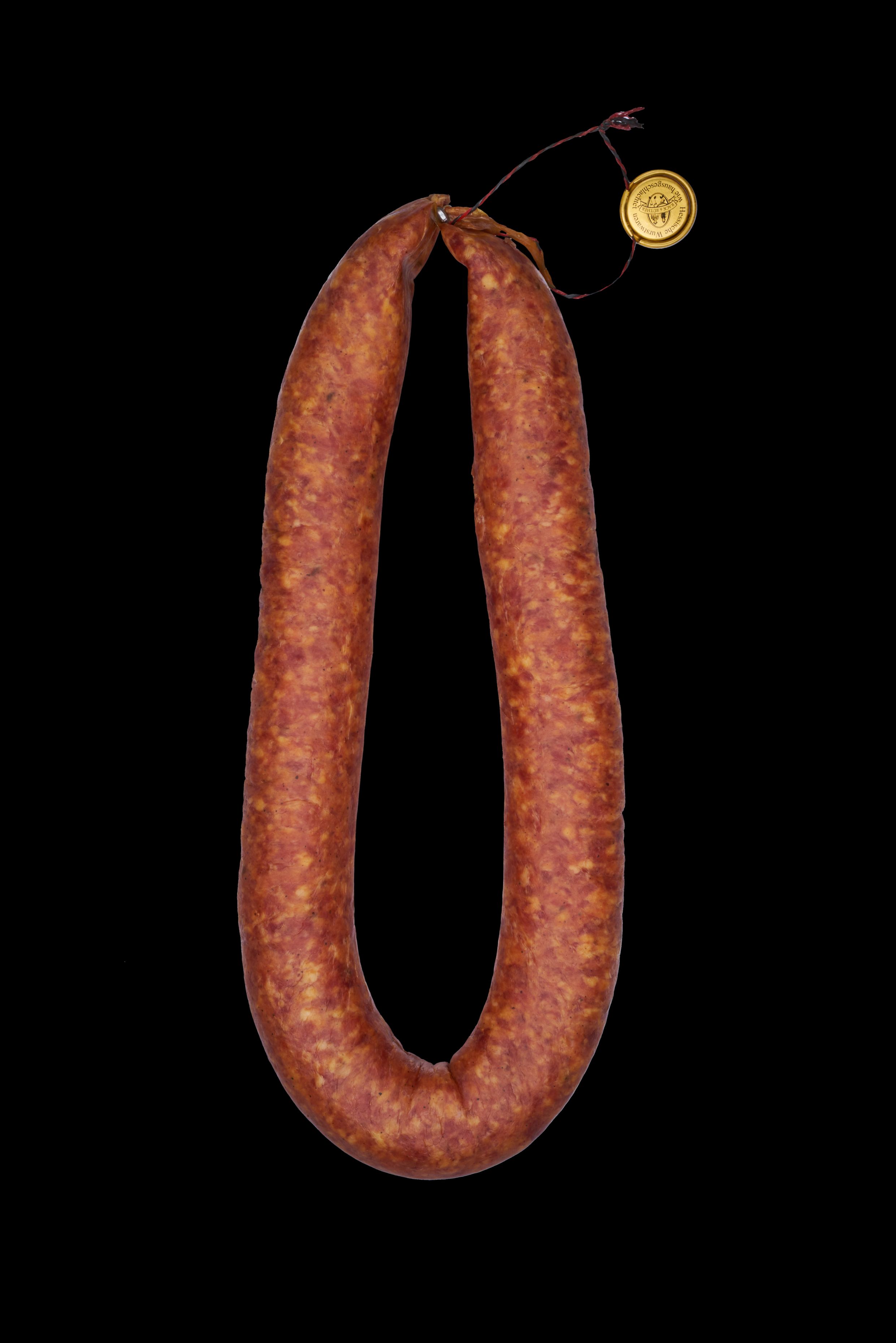
Germany – Farmer’s bratwurst, spreadable raw sausage – STEC E.coli

LMW

Alert type: Food
Date of first publication: 06.09.2022
Product name:

Farmer’s bratwurst, spreadable raw sausage

Product images:

Hessische_Bauernbratwurst_streichfaehig.jpg

Rack & Rüther GmbH

Manufacturer (distributor):

Rack & Rüther GmbH Steinbreite 14 34277 Fuldabrück

Reason for warning:

Detection of shigatoxin-producing Escherichia coli (STEC)

Durability: 09/30/2022
Lot identification: 238
Further information:

An EHEC (synonyms: STEC, VTEC) disease usually manifests itself within a week after infection with diarrhea and abdominal cramps. Babies, small children, the elderly and people with a weakened immune system in particular can develop more severe illnesses with bloody diarrhea. Rarely, especially in small children, acute kidney failure can occur in a second flare-up a few days after the onset of diarrhea. Anyone who has eaten this food and develops severe or persistent symptoms should seek medical attention and report possible EHEC infection. It makes no sense to seek preventive medical treatment without symptoms.

Further information on the pathogen can be found here: http://www.infectionsschutz.de/erregersteckbriefe/ehec/

For more information, please refer to the attached customer information.

Manufacturer’s website:

Research – Bacteriocin Production by Escherichia coli during Biofilm Development

MDPI

Escherichia coli is a highly versatile bacterium ranging from commensal to intestinal pathogen, and is an important foodborne pathogen. E. coli species are able to prosper in multispecies biofilms and secrete bacteriocins that are only toxic to species/strains closely related to the producer strain. In this study, 20 distinct E. coli strains were characterized for several properties that confer competitive advantages against closer microorganisms by assessing the biofilm-forming capacity, the production of antimicrobial molecules, and the production of siderophores. Furthermore, primer sets for E. coli bacteriocins–colicins were designed and genes were amplified, allowing us to observe that colicins were widely distributed among the pathogenic E. coli strains. Their production in the planktonic phase or single-species biofilms was uncommon. Only two E. coli strains out of nine biofilm-forming were able to inhibit the growth of other E. coli strains. There is evidence of larger amounts of colicin being produced in the late stages of E. coli biofilm growth. The decrease in bacterial biomass after 12 h of incubation indicates active type I colicin production, whose release normally requires E. coli cell lysis. Almost all E. coli strains were siderophore-producing, which may be related to the resistance to colicin as these two molecules may use the same transporter system. Moreover, E. coli CECT 504 was able to coexist with Salmonella enterica in dual-species biofilms, but Shigella dysenteriae was selectively excluded, correlating with high expression levels of colicin (E, B, and M) genes observed by real-time PCR. View Full-Text

Netherlands – Safety warning Jumbo Spinach Unwashed 450 grams from Jumbo (attention) – STEC E.coli

NVWA

Safety warning Jumbo Spinach Unwashed 450 grams from Jumbo

Jumbo warns about Jumbo Spinach Unwashed 450 grams. The product may contain the STEC bacteria. Do not eat the product! Eating the product may pose a health hazard, especially in pregnant women, young children, the elderly and people with weakened immune systems.

See Jumbo’s website

Which product is it?

  • Jumbo Spinach Unwashed 450 grams
  • Barcode: 8711715882363

Sincerely

The Dutch Food and Consumer Product Safety Authority

USA – E. coli Outbreak with Unknown Food Source

CDC

Fast Facts
  • Illnesses: 84
  • Hospitalizations: 38
  • Deaths: 0
  • States: 4
  • Recall: No
  • Investigation status: Active
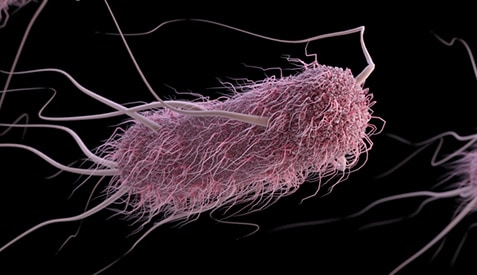
Illustration of E. coli pathogen
Update on the Source

A specific food has not yet been confirmed as the source of this outbreak, but many sick people reported eating sandwiches with romaine lettuce at Wendy’s restaurants in Indiana, Michigan, Ohio, and Pennsylvania before getting sick. Based on this information, Wendy’s has taken the precautionary measure of removing the romaine lettuce being used in sandwiches from restaurants in that region. Wendy’s uses a different type of romaine lettuce for salads. Investigators are working to confirm whether romaine lettuce is the source of this outbreak, and whether romaine lettuce used in Wendy’s sandwiches was served or sold at other businesses. Wendy’s is fully cooperating with the investigation.

What You Should Do

CDC is not advising that people avoid eating at Wendy’s restaurants or that people stop eating romaine lettuce.

  • Wendy’s has taken the precautionary measure of removing the romaine lettuce being used in sandwiches from restaurants in this region.
  • At this time, there is no evidence to indicate that romaine lettuce sold in grocery stores, served in other restaurants, or in people’s homes is linked to this outbreak.
  • CDC will update this advice if the investigation identifies foods to avoid.

Canada – Mother Dairy brand Paneer Fresh Cheese recalled due to generic E. coli

CFIA

Summary

Product
Paneer Fresh Cheese
Issue
Food – Microbial Contamination – E. Coli – non-pathogenic
What to do

Do not use, sell, serve or distribute the affected products.

Audience
Retail

Affected products

Issue

Mother Dairy brand Paneer Fresh Cheese recalled due to generic E. coli.

The recalled products have been sold in Alberta and Ontario.

Singapore – SFA recalls My Mum’s Cookies Premium Mao Shan Wang Snowskin Mooncake (Vegan) due to presence of E.Coli

SFA

The Singapore Food Agency (SFA) has detected Escherichia coli (E. Coli),at levels exceeding the microbial limits for Ready-To-Eat (RTE) food stated in the Singapore Food Regulations, in My Mum’s Cookies Premium Mao Shan Wang Snowskin Mooncake (Vegan).
2 As a precautionary measure, SFA has directed the importer, Easy Mix Pte. Ltd, to recall the implicated product. The recall is ongoing.
3 Under the Singapore Food Regulations, a person must not import, sell, manufacture or produce for sale, any article of RTE food that does not comply with any relevant microbiological standard specified in the Eleventh Schedule.
4 E. coli is a bacteria that is normally found in the intestines of people and animals. While most species of E. coli are harmless, some types can cause diarrhoea, stomach pain, cramps and fever. Vulnerable individuals with weakened immune systems may experience more severe symptoms. Foodborne pathogens like E. coli can be introduced during the production process when cross-contamination occurs, particularly when good hand hygiene is not practised.
5Consumers who have purchased the affected product should not consume it. Those that have consumed the implicated product and have concerns about their health should seek medical advice. Consumers can contact their point of purchase for enquiries.
6More information on the safety of mooncakes can be found here: https://www.sfa.gov.sg/food-information/risk-at-a-glance/safety-of-mooncakes

Canada – Life120 brand “Ricotta Di Bufala Campana Dop” recalled due to generic E. coli

CFIA

Summary

Product
“Ricotta Di Bufala Campana Dop”
Issue
Food – Microbial Contamination – E. Coli – non-pathogenic
What to do

Do not use, sell, serve or distribute the affected product.

Audience
Retail

Affected products

Issue

Life120 brand “Ricotta Di Bufala Campana Dop” recalled due to generic E. coli.

The recalled product has been sold in Quebec.

Research – Control Measurements of Escherichia coli Biofilm: A Review

MDPI

Escherichia coli (E. coli) is a common pathogen that causes diarrhea in humans and animals. In particular, E. coli can easily form biofilm on the surface of living or non-living carriers, which can lead to the cross-contamination of food. This review mainly summarizes the formation process of E. coli biofilm, the prevalence of biofilm in the food industry, and inhibition methods of E. coli biofilm, including chemical and physical methods, and inhibition by bioactive extracts from plants and animals. This review aims to provide a basis for the prevention and control of E. coli biofilm in the food industry. View Full-Text

Research – Pulsed light technology effectively kills harmful pathogens in new study

Science Daily

Novel food decontamination method inactivates pathogens like E. coli and Salmonella

A light-based, food sanitization technique successfully eliminated multiple harmful pathogens in a new study. The pulsed light technique shows promise as an effective alternative to the chemical, heat and water-based antimicrobial technologies commonly used in the food industry — and could be applicable more generally in sanitized environments such as hospitals, water treatment facilities and pharmaceutical plants, according to the researchers.