Category Archives: E.coli

UK -UKHSA issue warning as infections rise in East of England

EDP 24

Families visiting farms and petting zoos this summer are being urged to protect themselves following a rise in infections.

The UK Health Security Agency (UKHSA) has issued a warning about gastrointestinal infections such as salmonella, cryptosporidium and e.coli.

They can all be passed from farm animals to humans, causing illness.

There have already been 92 cases of cryptosporidium in the east of England so far this year, 14 more than in all of 2022.

So the UKHSA is urging anyone visiting a farm to remember the importance of thoroughly and frequently washing hands to avoid getting the bugs, which can make you seriously ill.

Quebec – Notice not to consume Alfredo Rosso sauce prepared and sold by the company Del Monaco – E.coli

Quebec

QUEBEC CITY ,  May 29, 2023 /CNW/ – The Ministry of Agriculture, Fisheries and Food (MAPAQ), in collaboration with the Food Inspection Division of the City of Montreal and the company Del Monaco , located at 2968, boulevard Saint-Charles , in Montreal ( Kirkland ), warns the public not to consume the product indicated in the table below, because this food is likely to contain the bacterium  E. coli .  

Product name

Format

Affected lot

“alfredo rosso sauce”

500ml

BEST BEFORE 09 NOV. 2023

The product that is the subject of this warning was offered for sale until May 24, 2023, and only at the establishment designated above. The product was packaged in a plastic container with a transparent snap-on lid and sold frozen. The product label included, in addition to its name, the words “www.delmonaco.ca”.

The operator is voluntarily recalling the product in question. It has agreed with MAPAQ and the Food Inspection Division of the City of Montreal to distribute this warning as a precautionary measure. In addition, people who have this product in their possession are advised not to consume it. They must return it to the establishment where they bought it or throw it away. Foods contaminated with E. coli bacteria do not necessarily show any visible spoilage or suspicious smell, but can still make a person who eats them sick. The possible symptoms are as follows: nausea, vomiting, more or less acute abdominal cramps and watery or bloody diarrhea.

It should be noted that no case of illness associated with the consumption of this food has been reported to MAPAQ to date.

RASFF Alert – E.coli – Clams

RASFF

Presence of Salmonella and E.coli in Japonica clams (Venerupis philippinarum) from Portugal in France, Netherlands and Spain

USA – Missoula County Health Officials issue warning about raw milk following possible Coxiella burnetii exposure

Food Poison Journal

Following potential exposure to bacteria from unpasteurized milk sold at a farmers’ market in Missoula County, the Missoula City-County Health Department is warning residents of the dangers of consuming unpasteurized, or “raw,” milk.

Milk that was recently sold at a local farmers market came from a herd where two cows tested positive for Coxiella burnetii, which is the bacteria that causes Q fever. While one of those cows had not yet produced milk, the other produced about 10% of the farmer’s yield.

“We don’t know if the cow was shedding the bacteria at the time it was milked, or if that cow’s milk was sold at the farmers market,” said Environmental Health Director Shannon Therriault. “So, we can’t say for sure whether anyone was exposed. However, what we do know is that unpasteurized milk can contain harmful bacteria that can make you and your loved ones sick.”

Unpasteurized milk products have been linked to outbreaks of E. coli, campylobacter, salmonella, brucella, listeria and cryptosporidium. In the case of Q fever, symptoms can take two or three weeks to present following exposure. According to the Centers for Disease Control and Prevention, symptoms of Q fever include fever, chills, fatigue, headache, muscle aches, nausea, vomiting, diarrhea, chest pain, stomach pain, weight loss and a non-productive cough.

RASFF Alert – E.coli – Clams

RASFF

E. Coli above 230 MPN in clams (Chamelea gallina) harvested in the type A production area from Italy in Spain

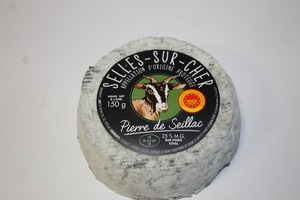
France – Selles-sur-cher AOP Pierre de Seillac – STEC E.coli

Gov france

Identification information of the recalled product

  • Product categoryFeed
  • Product subcategoryMilk and dairy products
  • Product brand nameSeillac
  • Model names or referencesSelles-sur-cher AOP bare
  • Identification of products
    Batch Date
    J30670023 Date of minimum durability 04/17/2023
    J30750017 Date of minimum durability 04/25/2023
  • Marketing start/end dateFrom 03/10/2023 to 04/25/2023
  • Storage temperatureProduct to be stored in the refrigerator
  • Health markEN 36.233.001 EC
  • Geographic area of ​​saleWhole France
  • DistributorsPROLAIDIS

Practical information regarding the recall

  • Reason for recallSuspicion of E.coli STEC contamination

New Research Links Foodborne E. Coli Infections to “Hundreds of Thousands” of UTIs in U.S.

Food Safety Magazine

A new study suggests that Escherichia coli infection from contaminated meat products may be responsible for hundreds of thousands of urinary tract infections in the U.S. each year.

A team of scientists led by George Washington University (GWU) Milken Institute School of Public Health researchers have developed a new genomic approach for tracking the origins of E. coli infections. Using this method, the team estimated that between 480,000 and 640,000 UTIs in the United States each year may be caused by foodborne E. coli strains.

According to GWU, E. coli is the most common cause of UTIs, causing upwards of 85 percent of cases each year. Women are at greater risk of developing UTIs, which can range from simple bladder infections to life-threatening bloodstream infections. At present, only specific types of diarrhea-causing E. coli, such as E. coli O157:H7, are rigorously monitored by the U.S. Food and Drug Administration (FDA), but the new findings from GWU suggest that other strains may also pose serious health risks.

In the study, researchers collected raw chicken, turkey, and pork from major grocery store chains in Flagstaff, Arizona, and isolated E. coli from the meat samples. Simultaneously, researchers collected urine and blood E. coli isolates from patients hospitalized at the Flagstaff Medical Center for UTIs.

Research – Norway records rise in outbreaks in 2022

Food Safety News

The number of outbreaks and people sick in them in 2022 went up from the year before, based on new data from Norway.

A total of 34 foodborne outbreaks were reported in 2022, which is up from 23 and 25 outbreaks in 2020 and 2021 but lower than the 46 outbreaks in 2019.

Overall, 628 people were sick this past year with the largest incident affecting 100 people, according to a report published by the Norwegian Institute of Public Health (FHI). In the 25 outbreaks in 2021, 327 patients were recorded.

Eight norovirus outbreaks sickened 135 people in 2022. Five outbreaks with 148 cases were caused by Salmonella. Cryptosporidium and Yersinia were behind three each with 14 and 51 patients, respectively.

Ten people were sick in two Listeria outbreaks. One Campylobacter outbreak had six patients and one E. coli event affected seven people. The agent was unknown for 11 outbreaks with 257 cases.

Most foodborne outbreaks were reported in connection with restaurants, cafes and other catering establishments.

Research – German testing finds Listeria and E. coli in raw milk

Food Safety News

Listeria and E. coli have been found during testing of unpasteurized, raw milk from farms in Germany.

From 2020 to 2022, the Chemical and Veterinary Investigation Office (CVUA) in Stuttgart tested 54 raw milk samples from vending machines for a range of agents.

Parameters examined included somatic cell count, total germ count, spoilage organisms, hygiene indicator germs such as Enterobacteriaceae and E. coli, and pathogens like Salmonella, Listeria, Campylobacter, and Shiga toxin-producing E. coli (STEC).

The sale of raw milk is mostly prohibited but it can be sold directly on the farm via self-service vending machines. The producers should put up notices telling the consumers to boil raw milk before consumption.

Some findings were positive as 30 samples were compliant but 24 had issues. Results highlight the importance of regular cleaning of milking machines, pipes, and tanks at dairy farms, said scientists. Insufficient cooling can also lead to contamination of raw milk.

France – SANTANE HARPAGOPHYTUM 60 CAPSULES – E.coli

Gov france

Identification information of the recalled product

  • Product category Feed
  • Product subcategory Diet foods and nutrition
  • Product brand name SANTANA
  • Model names or references SANTANE HARPAGOPHYTUM 60 CAPSULES
  • Identification of products
    GTIN Batch Date
    3401560061321 23-109178 Use-by date 31/01/2027
  • Packaging PILL BOX OF 60 CAPSULES
  • Marketing start/end date From 03/17/2023 to 04/21/2023
  • Storage temperature Product to be stored at room temperature
  • Geographic area of ​​sale Whole France
  • Distributors Product sold in Pharmacy

Practical information regarding the recall

  • Reason for recall Suspicion of Escherichia coli
  • Risks incurred by the consumer Escherichia coli